





 Portuguese
  English
  Spanish
  4 min of reading
  0 comments


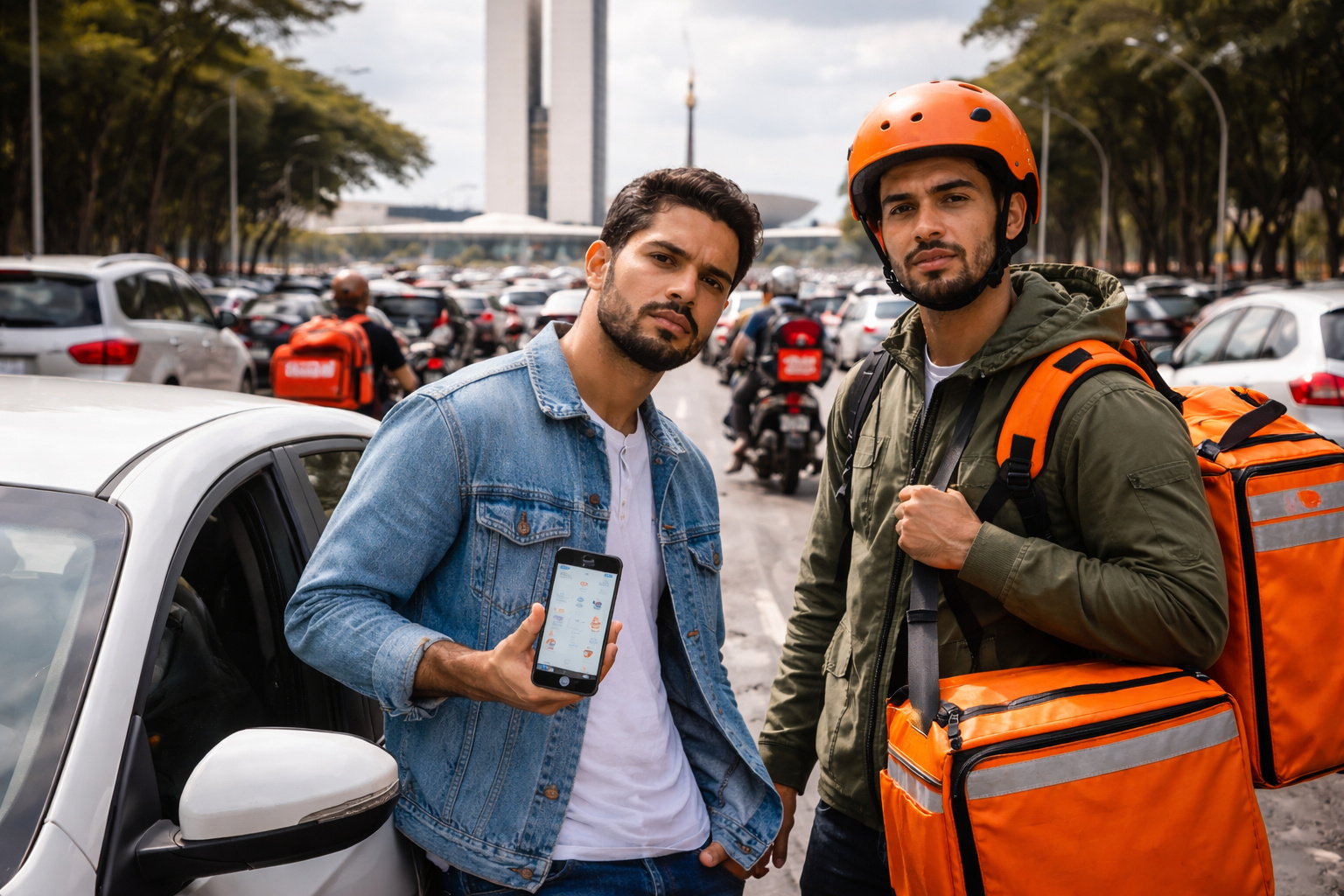
Proposal Discussed in the Chamber Aims to Create Rules for Digital Platforms, Establish Minimum Pay, and Reduce the Imbalance Between Companies and Workers
The federal government reiterated, on March 10, 2026, its support for the creation of rules for app-based work in Brazil.
According to the Minister of the Secretariat-General of the Presidency, Guilherme Boulos, regulation needs to advance in the Chamber of Deputies to guarantee minimum rights for drivers and delivery workers.
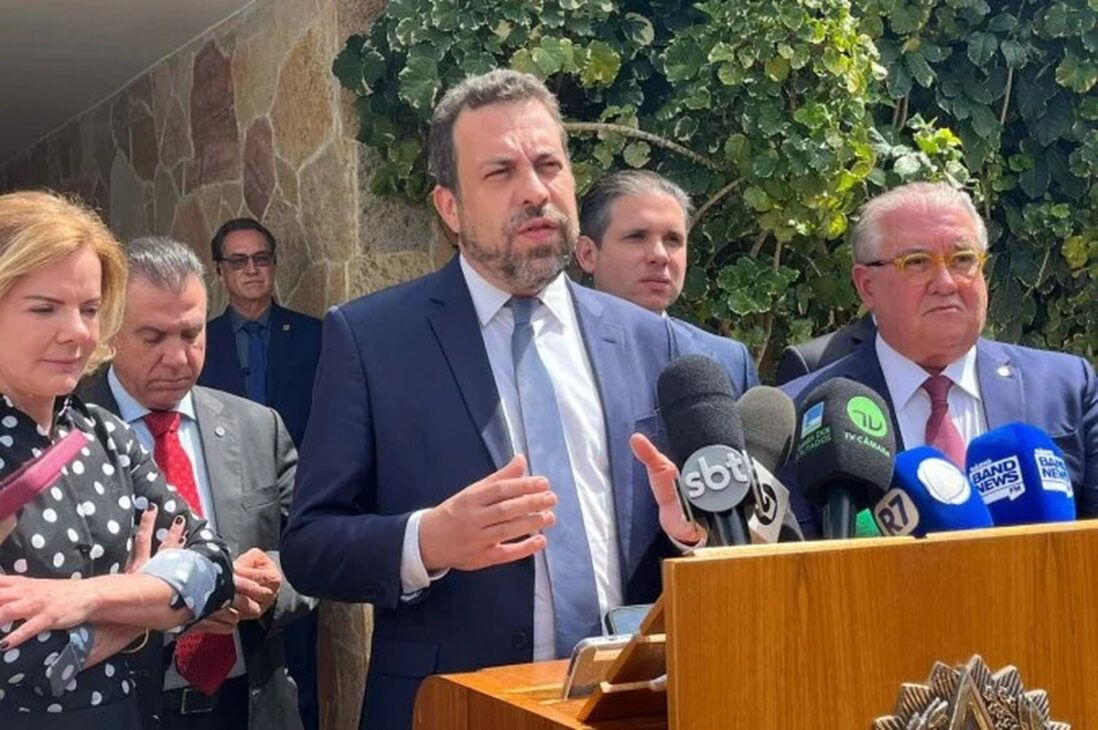
Currently, as the minister emphasized after a meeting in Congress, the lack of clear rules mainly benefits large digital platforms.
-
50 viaducts, 4 tunnels, 28 bridges, and 40 kilometers of bike paths: BR-262 in Espírito Santo will receive 8.6 billion reais for the largest engineering project in the state’s history, inspired by the Immigrant Highway in São Paulo.

-
Brazil produces too much clean energy and doesn’t know what to do with it: over 20% of solar and wind capacity was wasted in 2025 while investors flee and 509 renewable generation projects were abandoned in the last year.

-
Piauí will produce a new fuel that replaces diesel without needing to change anything in the truck’s engine and reduces pollutant gas emissions by half: truck drivers from all over the Northeast are already celebrating the news that will arrive later this decade.

-
A new Brazilian shopping center worth R$ 400 million will be built in an area equivalent to more than 4 football fields, featuring 90 stores, 5 cinemas, a supermarket, a college, and parking for 1,700 cars, potentially generating 3,000 jobs.


Meanwhile, workers continue to operate without labor guarantees or minimum protection, even assuming operational costs and risks of the activity.
The statement was made after a meeting held in the Chamber with the President of the House, Hugo Motta, the Minister of Labor, Luiz Marinho, the Minister of Institutional Relations, Gleisi Hoffmann, and the rapporteur of the proposal, Deputy Augusto Coutinho (Republicanos-PE).
Discussions on Regulation Advance in Congress
Initially, the minister explained that the government created a working group to discuss the regulation of the app sector.
This group was organized by Boulos himself in conjunction with the Minister of Labor, Luiz Marinho, also involving different ministries of President Luiz Inácio Lula da Silva.
During the discussions, drivers and delivery workers were heard directly.
In addition, representatives from the sector participated in meetings and presented demands regarding compensation, costs, and working conditions.
Simultaneously, the Chamber of Deputies created a special commission to analyze the regulation project, reported by Deputy Augusto Coutinho.
According to Boulos, the report prepared by the working group should be released in the coming days, consolidating the discussed proposals.
For the minister, however, the approval of the regulation must occur swiftly.
According to him, the current model favors the platforms and leaves workers without adequate protection.
Fees Charged by Platforms Are Central to the Debate
During the meeting, Boulos also criticized the fees charged by digital platforms on rides performed by app drivers.
According to him, companies can retain up to 50% of the amount paid by the passenger.
In an example cited by the minister, a ride costing R$ 100 may result in only R$ 50 for the driver.
Moreover, all operational costs are borne by the worker.
These include:
• The vehicle used for the rides
• The fuel needed for the service
• The maintenance and operational costs
For the minister, therefore, this compensation model is considered disproportionate.
Proposal Calls for Minimum Payment per Ride or Delivery
In addition to critiquing the platform fees, the government presented proposals deemed priority for the regulation of the sector.
Among them, the creation of a minimum payment per ride or delivery stands out.
The proposal advocated by the Executive provides for:
• Minimum payment of R$ 10 per ride or delivery
• Additional R$ 2.50 per kilometer traveled
According to Boulos, this demand arose directly from the workers heard during the discussions.
Therefore, the government intends to negotiate the inclusion of the proposal in the report by Deputy Augusto Coutinho.
If there is no agreement, however, the Executive may present the proposal as an amendment during the vote in the Chamber.
Grouped Deliveries Also Worry the Government
Another point discussed in the negotiations involves the grouped delivery model used by delivery apps.
In this system, a delivery person makes more than one delivery on the same route.
According to Boulos, in some cases, platforms charge the full price of each order from the customer.
However, the proportional payment to the delivery person does not always occur in the same way.
For this reason, the government believes that this model needs to be analyzed more thoroughly during the project’s progress.
Regulation Should Focus Only on Drivers and Delivery Workers
In addition to the compensation rules, Boulos also argued that the regulation should be restricted only to transportation and delivery workers.
According to him, broadening the scope could allow the creation of platforms for various professional activities outside traditional labor regulations.
In this scenario, companies could use apps to hire workers in different areas without a formal contract.
Another essential point for the government is to define the Labor Court as responsible for adjudicating conflicts between platforms and workers.
Negotiations Continue in the Coming Weeks
Despite divergences on some points, the government states that negotiations will continue in Congress in the coming weeks.
According to Boulos, there have already been advancements in certain aspects of the project.
Still, new meetings are expected to occur with the rapporteur Augusto Coutinho and parliamentarians involved in the proposal.
The goal, according to the minister, is to seek an agreement that allows for the approval of the regulation of app-based work in the country.
The discussion on the topic will continue in Congress as the government and parliamentarians attempt to balance the interests of digital platforms and the rights of workers.
In light of this scenario, a central question arises in the public debate: will the new app law be able to balance the technological innovation of the platforms and the protection of workers who depend on these services to live?









-

Uma pessoa reagiu a isso.