






 Portuguese
  Spanish




NASA Hybrid Giant Takes SLS Rockets to The Platform and Sustains Lunar Missions With 1960s Engineering
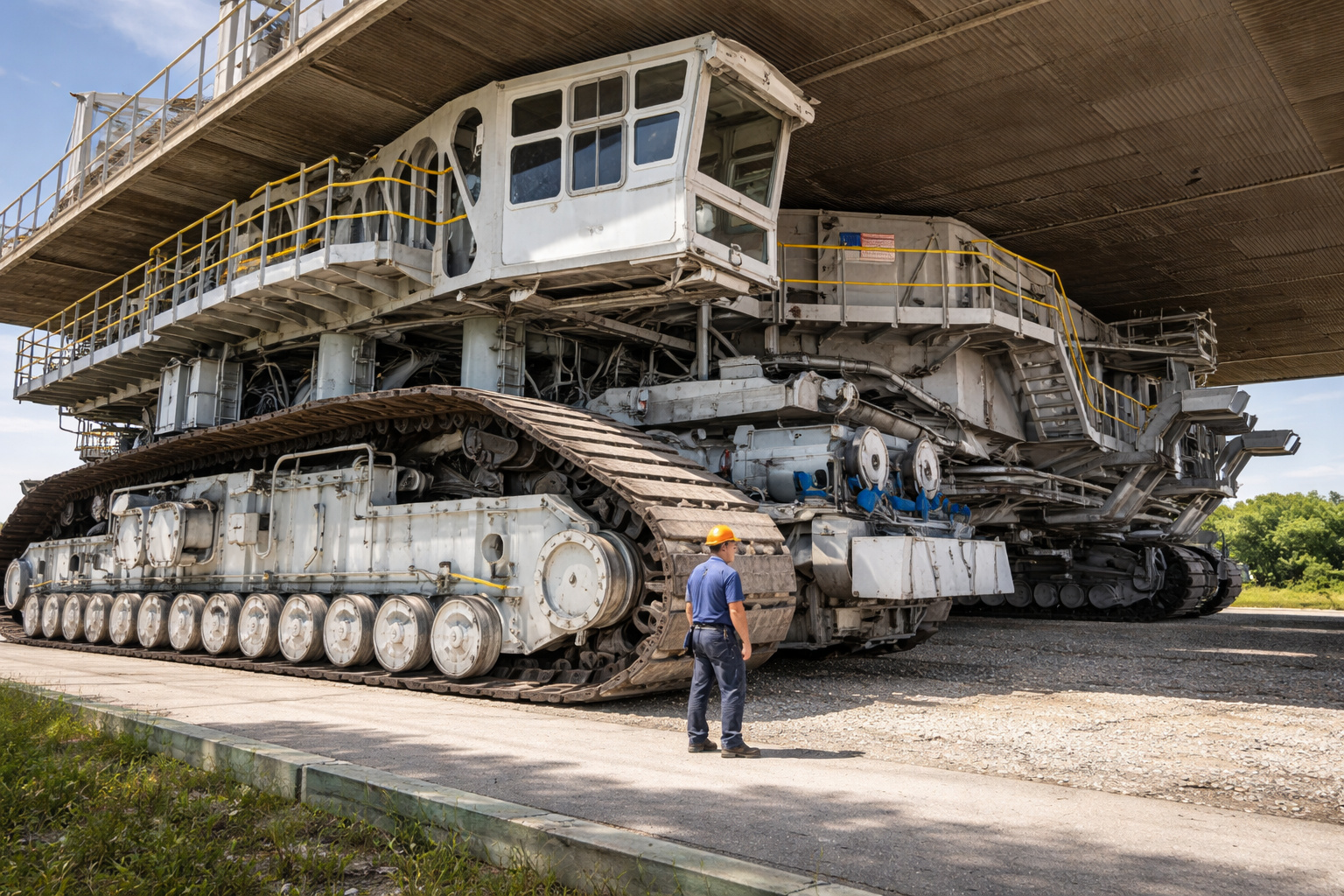
Before any launch to the Moon, the largest self-propelled vehicle on the planet comes into action. It is the Crawler-Transporter 2, from NASA, certified by Guinness World Records as the largest in the world. Moreover, the equipment has been upgraded to meet the requirements of the Artemis program. According to official information from NASA, the model has been operating at the Kennedy Space Center in Florida since 1965.
Colossal Dimensions and Extreme Consumption
Firstly, the Crawler-Transporter 2 has dimensions equivalent to a baseball field. Additionally, it weighs approximately 3,000 tons, that is, about 3 million kilograms.

Currently, the vehicle has been adapted to support the additional weight of the Space Launch System (SLS), the central rocket of the Artemis missions. Therefore, after structural and power upgrades completed in the last decade, it has informally been referred to as the Super Crawler.
-
AI Video Generator Automatically Creates Subtitles and Animated Captions

-
São Paulo Unveils Latin America’s Largest Underground Reservoir, Holding 900 Million Liters, in the Greater São Paulo Area

-
Chinese Teen Wins Gold in Germany for Invention Turning Air Moisture into Underground Irrigation in Drought-Stricken Areas

-
Desertification Threatens Brazil’s Caatinga: 85% of Semi-Arid Region Affected, 30 Million at Risk, and Efforts Underway to Restore 10 Million Hectares by 2045




Meanwhile, its speed rarely exceeds 1.6 km/h. Still, the transport occurs with millimetric precision. The route connects the assembly building to the launch pad.
However, the most striking fact is its consumption. The giant uses about 388 to 390 liters of diesel per kilometer traveled. Thus, the approximate yield is 0.002 km/l, an extremely low index, but necessary to support loads exceeding 2,600 tons.
Hybrid System with 18 Motors
In addition to its impressive size, the mechanical system also stands out. The vehicle uses two V16 diesel engines, originally developed by the American Locomotive Company (ALCO). These engines were designed for heavy freight trains in the United States and Australia.
Together, the engines generate approximately 5,500 horsepower. However, unlike conventional vehicles, they do not directly move the tracks.
In practice, the system works as a series hybrid system. That is, the diesel engines power generators. Then, the energy produced is sent to 16 traction electric motors.
This way, the total reaches 18 motors integrated into the system. As a result, the torque is adjusted with extreme precision. Thus, the rocket remains stable throughout the movement.
Over Six Decades in Operation
Since 1965, the Crawler-Transporter 2 has operated under the harsh climate of Florida. Still, its durability impresses experts.
According to historical data from NASA, the equipment has traveled over 3,700 kilometers over more than six decades of service.
Therefore, despite the evident energy inefficiency, the structural robustness remains a differentiating factor. Moreover, the engineering developed in the 1960s continues to be fundamental for current lunar missions.
Thus, while modern rockets symbolize the future of space exploration, the ground transport that takes them to the platform shows that tradition and innovation can coexist.
Given this, could one imagine the missions of the Artemis program without the silent and strategic support of this hybrid giant?







Pra que tudo isso? gasta montanha de dinheiro com tanta pobreza no planeta. não entendo
Pra quê isso? Pra descobertas científicas que trazem respostas para os problemas, inclusive remédios e plantações mais resistentes.
Com essa tipo de comentário, percebe-se a ignorância que te consome
Absurdo esse gasto com baboseira e uma grande parte da população mundial passando fome!
É só não fazer filho se não tem condições de sustentar, agora um filha da **** na África na Índia ou no nordeste brasileiro tem 20 filhos sem renda nenhuma, vai esperar o que?
O cara acha desperdício gastar dinheiro com exploração espacial, mas esquece que sem a exploração espacial nao teriamos a tecnologia que temos hoje.
Ineficiência energética evidente? Qual a eficiência? Qual o arraste de transportar milhões de kg (peso próprio e carga transportada)? Eu diria maravilha da engenharia, modernizada com arranho híbrido.