





 Portuguese
  English
  Spanish
  4 min of reading
  0 comments


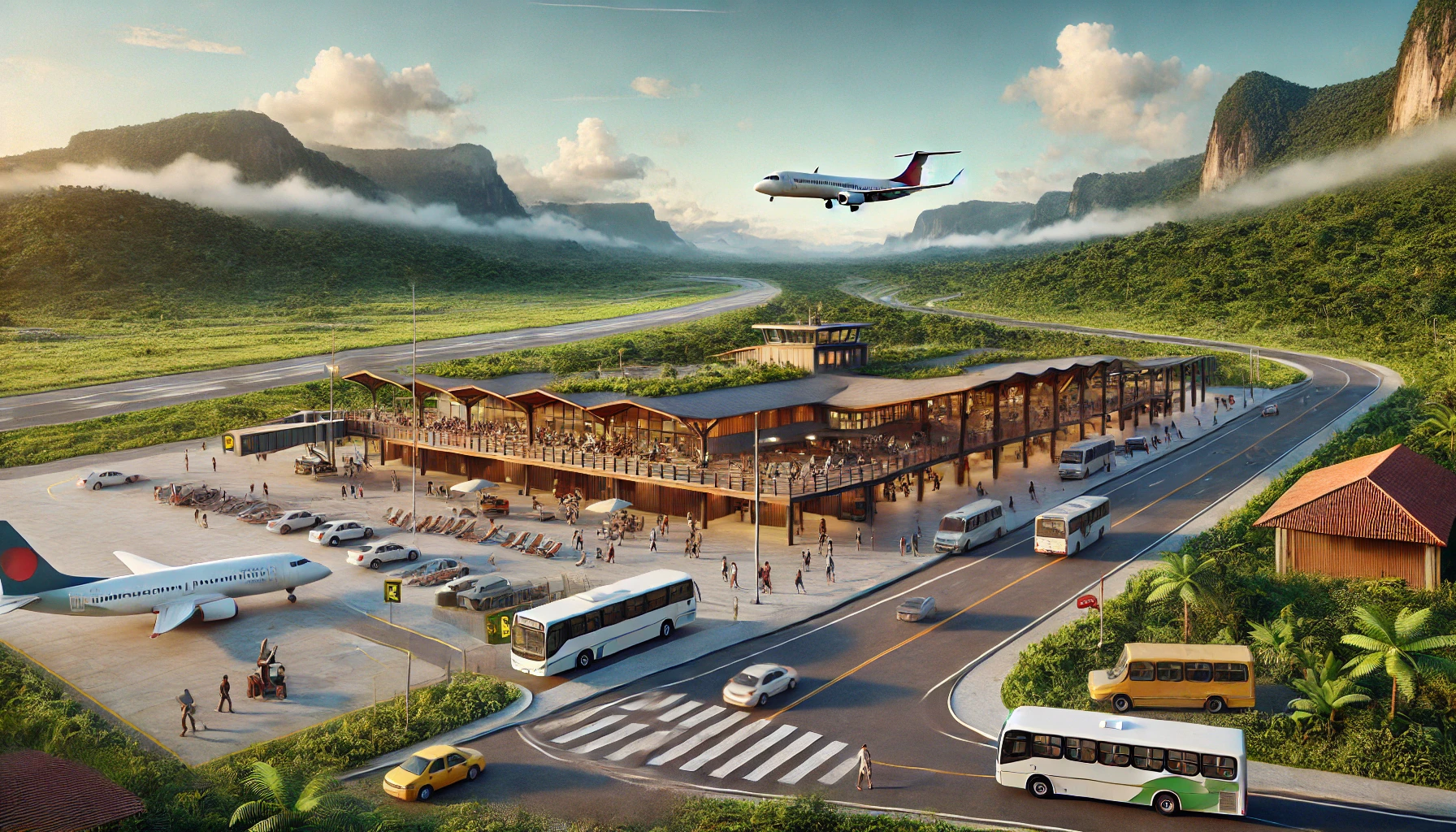
Federal Government Announces Ambitious Airport Expansion, With Restructuring of 130 Regional Airports to Boost Economy and Tourism in Remote Areas.
Behind the scenes of the federal government, bold plans are underway to transform Brazil’s airport infrastructure.
In an unprecedented initiative, the goal is to restructure and expand the number of airports across the country, especially in less accessible regions, with the aim of connecting rural communities to major urban centers.
This vision includes improvements in infrastructure, economic development, and promoting more integrated tourism.
-
A new Brazilian shopping center worth R$ 400 million will be built in an area equivalent to more than 4 football fields, featuring 90 stores, 5 cinemas, a supermarket, a college, and parking for 1,700 cars, potentially generating 3,000 jobs.

-
Larger than entire cities in Brazil: BYD is building a 4.6 km² complex in Bahia with a capacity for 600,000 vehicles per year, but the discovery of 163 workers in conditions analogous to slavery has shaken the entire project.

-
With an investment of R$ 612 million, a capacity to process 1.2 million liters of milk per day, Piracanjuba inaugurates a mega cheese factory that increases national production, reduces dependence on imports, and repositions Brazil on the global dairy map.

-
Brazilian city gains industrial hub for 85 companies that is equivalent to 55 football fields.


However, what lies behind this ambitious plan are the impacts and challenges of realizing what could be the largest revolution in the Brazilian aviation sector.
Government Bets on Regional Connectivity and Local Development
According to the Minister of Ports and Airports, Silvio Costa Filho, the plan is a long-range strategy aimed at integrating 130 airports into the national system.
He stated that this measure would not only reduce distances but also open doors for economic development in underexplored regional areas.
This large-scale project has been planned across three strategic development fronts and promises results in various sectors, including health, tourism, and the economy.
The first expansion front begins with the renovation of existing airports operated by private concessions.
About 30 smaller airports, which are part of concession blocks along with large terminals like Congonhas (SP) and Manaus (AM), will undergo improvements.
The responsible concessionaires will have until December of this year to complete the first batch of these renovations, marking the start of the largest regional aviation program in the country.
Infraero Takes Over Terminals in Smaller Cities
In addition to private airports, the federal government is expanding Infraero’s involvement, which will begin managing some terminals that were previously under state and municipal administration.
This move comes after a period in which the state-owned company only operated Santos Dumont (RJ). According to Costa Filho, this decision is due to a pursuit for greater efficiency and safety in the development of these terminals, especially in smaller, tourist cities.
Among the 20 airports that will be modernized by Infraero, the international airport of Olímpia (SP) stands out, which is expected to boost tourism in the region.
The minister claims that the federal government made this decision after noticing that for some cities, direct federal management could result in greater dynamism and security for local operations.
This phase of the project strengthens state presence in areas with potential for tourism and economic growth but that continue to struggle with connectivity.
Innovative Model for Managing Regional Airports
The third and most innovative phase of the project focuses on the concession of Guarulhos Airport (SP), one of the largest in the country.
As announced by the government, the concessionaire currently managing the airport will have its concession extended in exchange for the responsibility of managing other smaller regional airports.
This model, which is still awaiting approval from the Federal Court of Accounts (TCU), could become a reference for future concessions in Brazil.
If approved, approximately 80 regional airports will be integrated into the concessionaire contracts, enabling broader interconnection between regional terminals and major cities.
“This system aims to strengthen regional aviation in various regions of Brazil, promoting the integration of small towns into the national and international market,” explained Costa Filho in an interview with CNN.
According to the minister, this partnership aims to make air transport more accessible, faster, and safer for millions of Brazilians.
Impacts on Tourism, Health, and Regional Economy
According to the government, the restructuring of the airport system will bring direct benefits to essential sectors.
Regional tourism, for instance, is expected to experience substantial growth with increased connectivity between previously inaccessible areas or those with low flight availability.
This boost in internal tourism should strengthen local economies, generating jobs and invigorating the services sector.
Beyond tourism, the health sector could also benefit from the project. Remote areas lacking medical infrastructure will have quicker access to health centers in capitals, allowing for rapid transport of patients and medical supplies.
The local economy may also benefit, as areas with logistical challenges will see improved transportation of goods and services.
Challenges and Expectations for the Coming Years
Although the project has a visionary scope, there are challenges to be faced, such as bureaucratic issues, high financial investments, and the meeting of deadlines.
Another crucial factor will be the acceptance of the mixed concession model, which relies on approval from the TCU and the adherence of concessionaires.
Still, the federal government is betting that, in the next five years, the country will witness a new chapter in regional aviation, with the consolidation of a broader and more accessible air transport system.
Given the magnitude and ambition of this project, it remains for the public to await the next steps and monitor the execution of what promises to be the largest investment in regional aviation in Brazil’s history.
Do you believe that this transformation could finally bring the promised benefits to Brazil? Leave your opinion in the comments!








Seja o primeiro a reagir!