





 Portuguese
  English
  Spanish
  3 min of reading
  0 comments


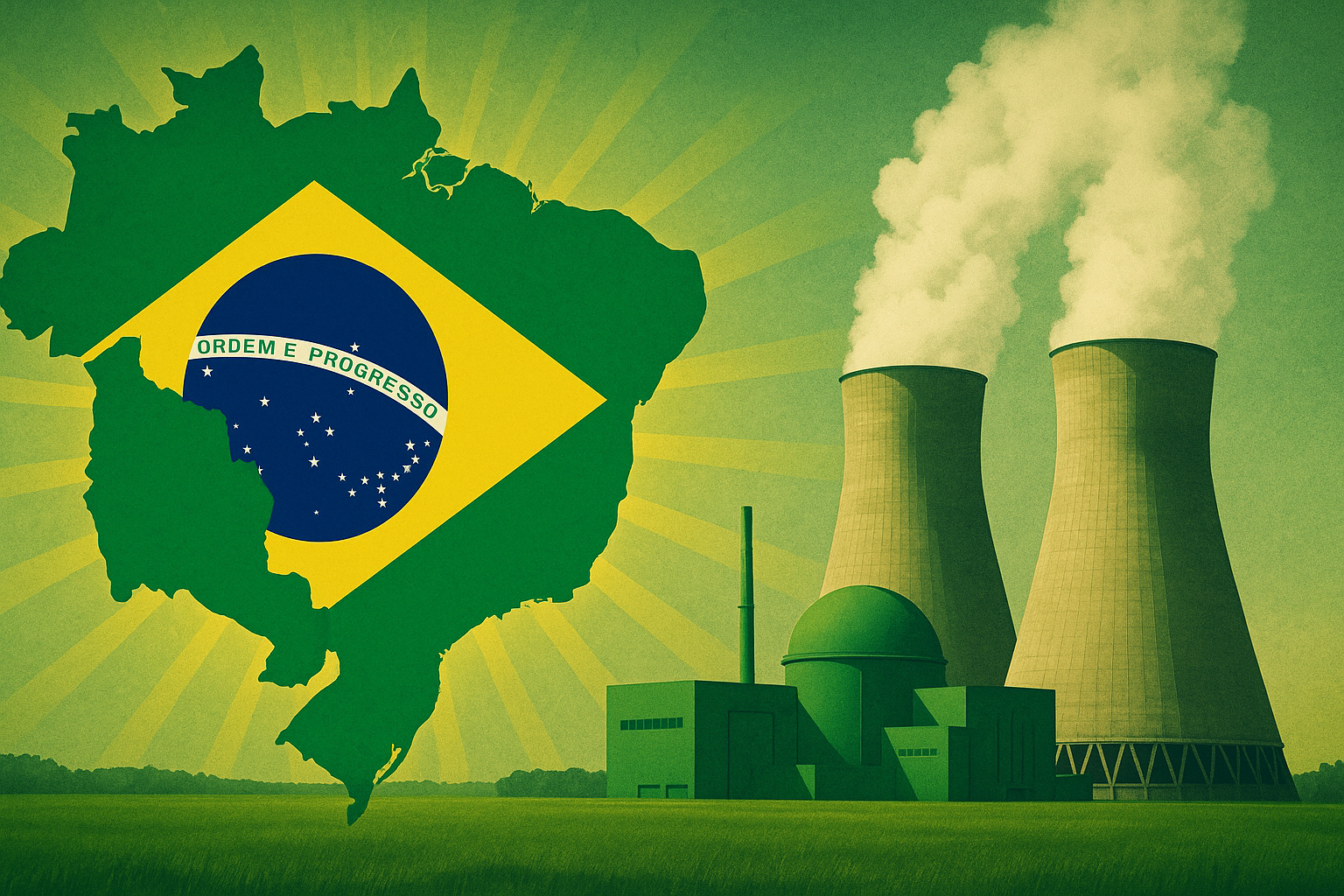
Uranium: A Sleeping Giant in the Brazilian Energy Matrix
The federal government is studying the issuance of a presidential decree to regulate the private exploration of uranium in Brazil, as provided for in law no. 14,514 of 2022, according to PlatôBR.
The publication is expected by November, in parallel with the national critical minerals policy, developed by the Ministry of Mines and Energy (MME).
The idea is simple, yet ambitious: to allow private companies to participate in the extraction of the mineral, in partnership with the state-owned Indústrias Nucleares do Brasil (INB), which holds the legal monopoly.
This new regime, inspired by pre-salt sharing contracts, aims to combine private capital with the expertise of the state-owned company to accelerate production and make the use of uranium in nuclear plants feasible.
Sharing Regime: A Lesson from Pre-Salt Applied to the Nuclear Sector
The model under discussion mandates that private companies undergo prior qualification, demonstrating technical and financial capacity and competing for areas through public bids.
The INB would remain responsible for enrichment, industrialization, and trade of the mineral, while the private partner would finance extraction and part of the processing.
-
The government requests the Federal Revenue Service for a new system to automate the income tax declaration, reducing errors, time, and bureaucracy for millions of Brazilians.

-
Pix in installments, international Pix, and contactless payment without internet: the Central Bank revealed the new features coming to the tool that is already used by almost every adult in Brazil.

-
Mercado Livre has just started selling medications with delivery in up to three hours to your door, and this move could completely change the way Brazilians buy medicines on a daily basis.

-
In Dubai, rising tensions from the war in the Middle East are causing super-rich individuals to leave the Gulf and direct their fortunes to a new financial refuge in Asia.


Unlike oil, Brazilian uranium would have exclusive allocation to the domestic market.
Exports are not on the radar, as Brazil is a signatory to non-proliferation treaties, which prevent the sale of the material for military purposes.
Promising Reserves: Brazil Among the Largest in the World
According to the Geological Survey of Brazil, the country has 276,800 tons of identified uranium, the sixth largest reserve worldwide.
This number, however, may just be the tip of the iceberg: a large part of the national territory has never been properly mapped.
Today, the INB holds 10 reserves distributed across 8 states, but almost all still depend on environmental licensing.
The proposal under study aims to replace the old Pró-Urânio Program and elevate national production to up to 7,000 tons per year, making Brazil a key player in nuclear energy.
Clean Energy or New Strategic Dilemma?
The government views uranium as an ally in the energy transition.
With nuclear plants capable of generating clean and stable energy, the mineral could help reduce emissions without compromising supply security.
On the other hand, critics warn of the risks: dependence on leases, oversight costs, environmental impacts, and the challenge of ensuring transparency in contracts with large private companies.
Moreover, there remains the question of whether the country will have the capacity to turn reserves into viable projects without repeating past mistakes.
What’s at Stake
The opening of the uranium market promises to attract investments and expand the Brazilian energy matrix.
But it also raises a central question: Is Brazil prepared to balance national security, environmental preservation, and private interests in such a sensitive sector?
Leave your opinion in the comments.








-

-

2 pessoas reagiram a isso.