





 Portuguese
  English
  Spanish
  3 min of reading
  3 comments


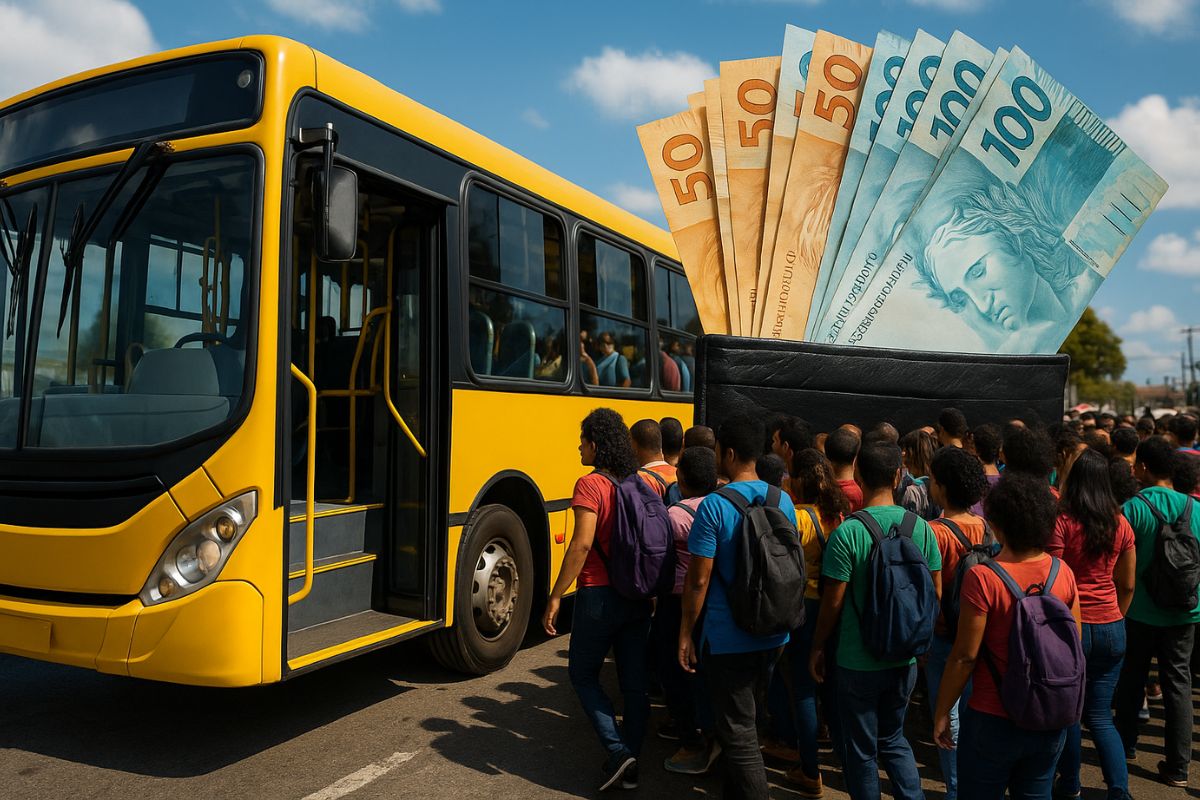


Government Proposes Free Or Symbolic Fare Buses on Sundays and Holidays. Government Measure Aims to Expand Social Inclusion and Reduce Family Spending on Public Transport.
The government proposes free or symbolic fare buses on Sundays and holidays, according to Folha de S. Paulo. The initiative, advocated by the government, seeks to facilitate access to public transport, ease family budgets, and expand mobility during leisure and work periods.
The proposal is still in the study phase and should undergo extensive public debate, involving municipalities, transport companies, and society. The objective is to find a model that allows the benefit without compromising service quality.
What Is at Stake in the Proposal
According to the government, the idea is to create a policy of zero fare or symbolic price on specific days, ensuring that workers and families have more access to cultural, sports, and leisure activities. The president requested the Minister of Finance, Fernando Haddad, to analyze the costs and funding sources for the program.
-
A new Brazilian shopping center worth R$ 400 million will be built in an area equivalent to more than 4 football fields, featuring 90 stores, 5 cinemas, a supermarket, a college, and parking for 1,700 cars, potentially generating 3,000 jobs.

-
Larger than entire cities in Brazil: BYD is building a 4.6 km² complex in Bahia with a capacity for 600,000 vehicles per year, but the discovery of 163 workers in conditions analogous to slavery has shaken the entire project.

-
With an investment of R$ 612 million, a capacity to process 1.2 million liters of milk per day, Piracanjuba inaugurates a mega cheese factory that increases national production, reduces dependence on imports, and repositions Brazil on the global dairy map.

-
Brazilian city gains industrial hub for 85 companies that is equivalent to 55 football fields.


The measure has the potential to transform the population’s relationship with public transport, providing relief at a time when many cities have recorded increases in fare prices.
Expected Social and Economic Impacts
The project is centered on social inclusion, allowing low-income people to use public transport without cost being a barrier. In addition, local commerce can be benefited, as greater mobility may stimulate consumption in central and leisure areas.
Another point highlighted by the government is that savings for families can be significant, especially for those who need to travel on Sundays and holidays. This incentive can reduce inequalities in access to services and opportunities.
Implementation Challenges
Despite the popular appeal, the proposal faces financial and logistical challenges. The government needs to define where the resources will come from to subsidize the free fare and whether the transport system can absorb the increased demand without compromising quality.
Currently, elderly people already have the right to free public transport, which shows that similar policies are possible. However, the national scale of such a measure requires direct negotiation with municipalities and transport companies.
The fact that the government proposes free or symbolic fare buses on Sundays and holidays opens an important discussion about urban mobility and social inclusion. If implemented, the policy could become a milestone in reducing inequalities, but it depends on solid planning to avoid negative impacts on public finances and on the services provided.
What do you think, do you believe that free public transport on Sundays and holidays really improves people’s lives, or are you concerned that it might compromise public finances? Leave your opinion in the comments.







Toda vez que vejo, ouço e leio qq notícia como essa: GOVERNO ESTUDA, VAI OU QUER, demandar GRATUIDADE, me pergunto; SERÁ QUE DESSA VEZ QUEM VAI PAGAR A CONTA SERÁ JESUS, MAOMÉ, BUDA, ****? Não, sempre a população paga tudo, mas eu não aceito mais, ACORDA BRASIL
Já existe em Maricá município no RJ cujo prefeito é do PT, onde é tarifa zero
Vc foi perguntado se queria pagar?