





 Portuguese
  English
  Spanish
  4 min of reading
  0 comments


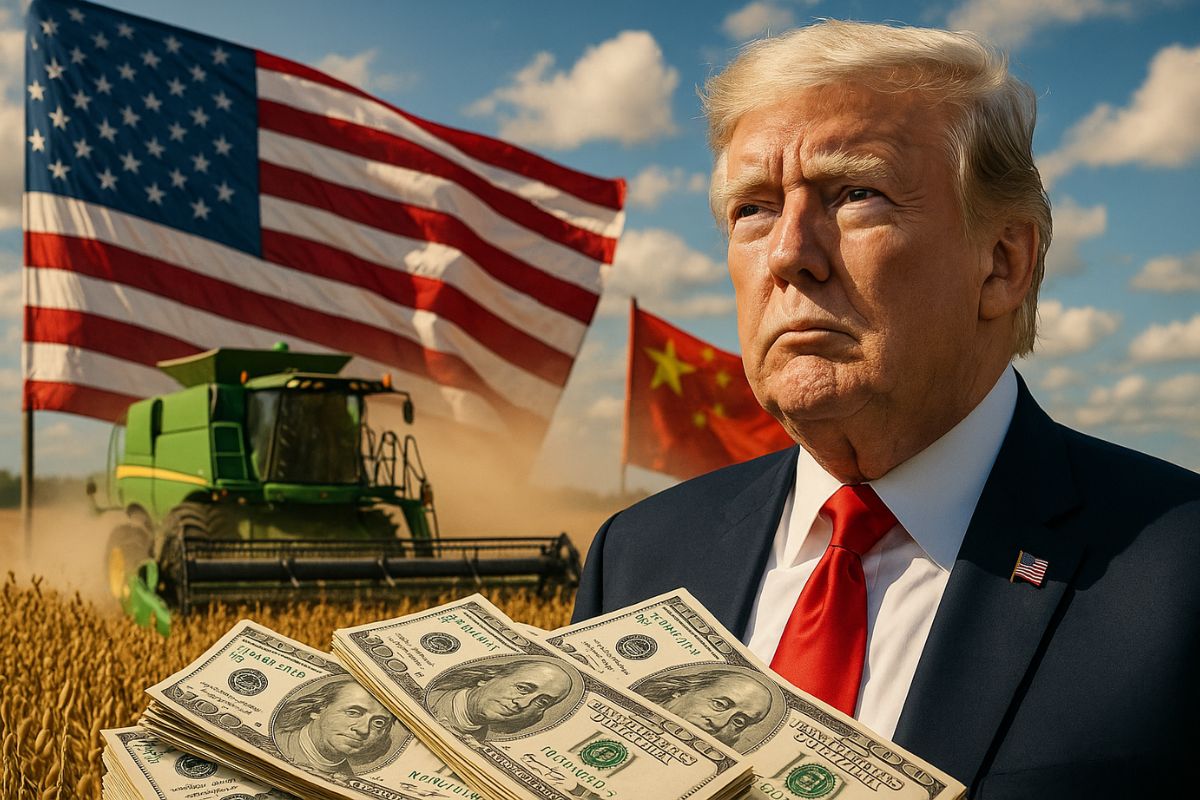
The American Agriculture Faces Severe Crisis Due to the Trade War Between the United States and China, and the White House Is Considering a Billion-Dollar Relief Package to Mitigate the Impact of Falling Exports and Rising Costs in the Field
The American agriculture is among the most affected sectors by the trade war reignited between the United States and China during Donald Trump’s second term. The drop in soybean exports, which plummeted 80% in sales to the Chinese market, led the government to evaluate an emergency package of up to US$ 10 billion to alleviate the losses of rural producers.
The measure under study by the White House aims to stabilize agricultural income and compensate for rising input and labor costs. The plan, still under discussion with the Treasury and the Department of Agriculture, also reflects the political weight of the rural sector, an important support base for the Trump administration in key states.
Soybeans Are the Epicenter of the Crisis in American Agriculture
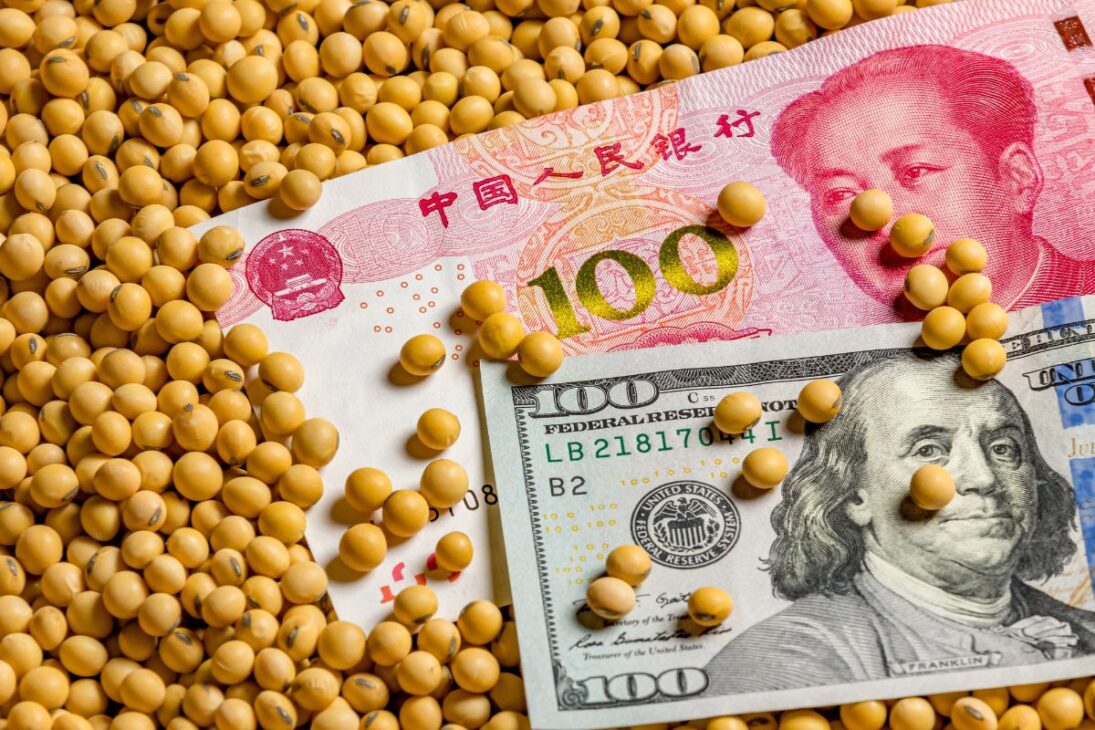
Soybeans are the primary product affected by the tariff war between Washington and Beijing.
-
They said no to 26 million dollars and would do it all over again: mother and daughter from Kentucky reject a million-dollar offer from a mysterious company that wants to build the largest data center in the state on more than 2,000 acres of rural land.

-
While corn requires rain and is expensive, sorghum produces almost the same volume per hectare at a cost up to 80% lower and uses less water, and it is revolutionizing dairy farming in the Triângulo Mineiro, where producers save hundreds of reais per hectare.
-
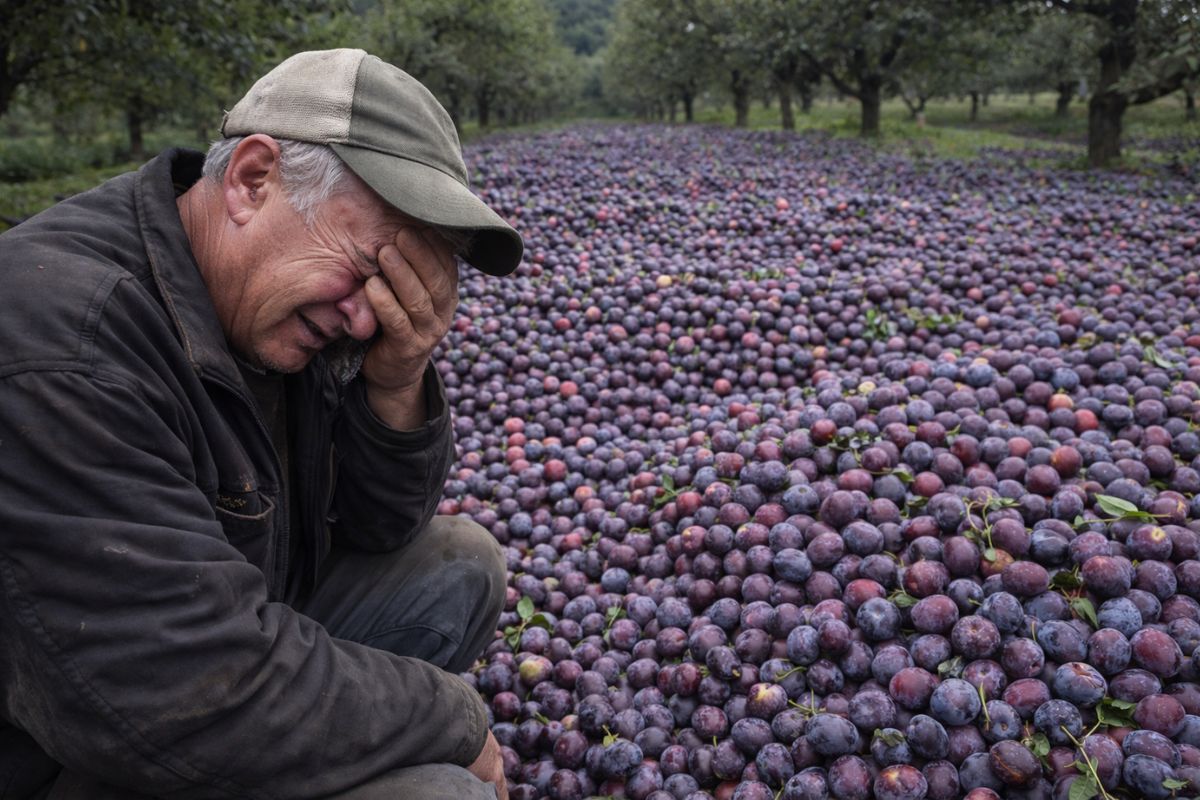
A rural producer from Urubici cries as he shows 50 tons of plums thrown on the ground because no one wanted to buy them, and in desperation, he records a video asking anyone to come to the property to pick the fruits before they rot.
-
Unable to pass through Hormuz, Brazil activated a plan B that uses Turkey as a gateway to the Middle East: the route through Gibraltar and the Mediterranean is longer and more expensive but ensures that chicken, beef, and corn continue to reach Arab markets.


Exports to China fell from 1 billion to 200 million bushels between January and August 2025, according to official data.
Each bushel is equivalent to about 27.2 kilograms, which means a loss of hundreds of millions of tons over the year.
The drastic cut in sales reduced the revenue of thousands of farms and pressured the domestic price of the grain.
The Department of Agriculture estimates that total sector expenses will reach US$ 467.4 billion in 2025, an increase of US$ 12 billion compared to the previous year.
The scenario combines rising costs, declining demand, and record defaults: requests for creditor protection have reached the highest level since 2021.
The Billion-Dollar Package Under Debate at the White House
The relief plan discussed by the Trump administration foresees a direct transfer of up to US$ 10 billion to the agricultural sector.
The idea would be to allocate most of the funds to soybean producers but also include crops such as corn, cotton, and sorghum, which are also affected by the export crisis.
One of the hypotheses under analysis is that part of the money could come from revenue generated from tariffs on imported products, which would mean that the relief would originate from the very trade conflict.
Another possibility is to release subsidized credit through the Department of Agriculture and regional banks.
Sources within the U.S. government say that the announcement could occur in the coming weeks, depending on the fiscal impasse that threatens to paralyze part of the public sector.
Pressure on China and Attempted Agreement
Donald Trump is also trying to turn the agricultural crisis into a diplomatic pressure tool. According to the Wall Street Journal, the president plans to pressure Xi Jinping to resume purchases of American soybeans during a meeting expected to take place in South Korea.
An eventual agreement with Beijing could reduce the need for direct relief, but experts consider it unlikely that China will quickly reverse its import preferences, as it has begun to diversify suppliers and increase soybean purchases from Brazil and Argentina.
The effect of the dispute spreads across the global market and even influences prices in Mercosur.
The Political and Economic Weight of American Agriculture
The agricultural sector plays a central role in the economy and politics of the United States.
In addition to employing millions of people, the American agriculture represents a decisive electoral base in states like Iowa, Nebraska, and Kansas, which often define presidential contests.
In political discourse, Trump has been reinforcing the role of farmers as “pillars of American prosperity,” while trying to contain discontent in the field.
For medium-sized producers, the billion-dollar relief would be a temporary relief, but many warn that true recovery depends on reopening foreign markets and reducing reciprocal tariffs.
The Challenge of Rebuilding Competitiveness
Even with emergency support, the challenge for American agriculture goes beyond financial compensation.
The country faces a cycle of rising costs and labor shortages, exacerbated by stricter immigration policies and the strengthening of the dollar.
The Secretary of Agriculture, Brooke Rollins, recently acknowledged that the sector “faces a significant challenge.”
According to her, the pressure on soybeans, corn, cotton, and sorghum requires coordination between the government and producers to avoid loss of international competitiveness.
The US$ 10 billion package is, therefore, another symptom of a structural problem: the dependence of American agriculture on foreign markets, especially China, and the vulnerability this creates in times of trade war.
The current crisis shows how American agriculture has become a hostage of a geopolitical dispute between economic powers.
While the Trump administration tries to balance the game with emergency measures and diplomatic negotiations, rural producers await concrete answers to ensure the survival of their crops and the financial stability of their farms.









Seja o primeiro a reagir!