





 English
  Francês
  Alemão
  Italiano
  Japonês
  Norueguês
  Portuguese
  Spanish
  3 min of reading


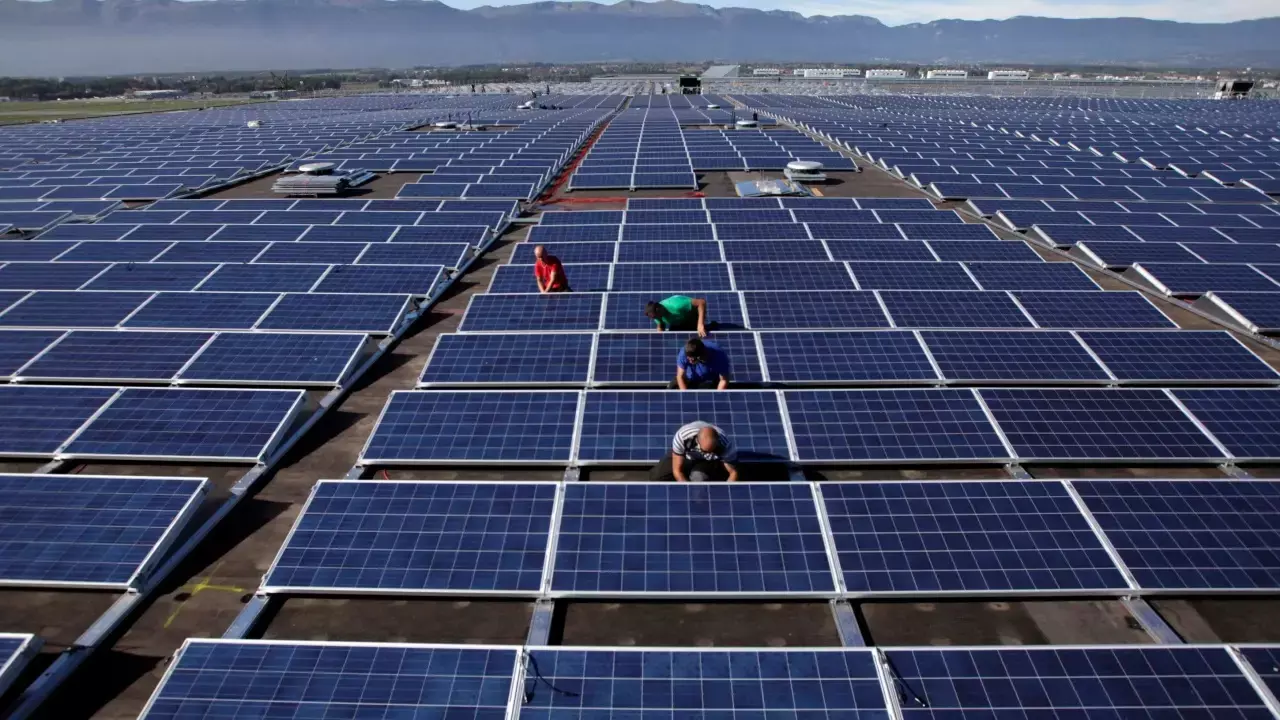
Focusing on Incentivizing the Use of Clean Energy, the Federal Government Decided to Zero Taxes on the Purchase of Solar Panels and May Stop Accumulating Up to R$ 600 Million This Year.
The Federal Government zeroed the taxes charged on solar panels. The information was disclosed in the Official Gazette of the Union (DOU) this Wednesday (29). The exemption, which promotes the use of solar panels for clean energy generation, will be valid until December 31, 2026.
Understand Which Taxes Were Zeroed by the Federal Government
Among the taxes that will not be charged on solar panels are the import tax, Industrialized Products Tax (IPI), Social Integration Program (PIS), and Contribution for Financing Social Security (Cofins). Among the companies that will benefit for clean energy production are those that make up the Technological Development Support Program for the Semiconductor Industry (PADIS), created in 2007.
The Ministry of Development, Industry, Commerce and Services (MDIC) states that this initiative aims to encourage investment in solar panels and in new solar energy plants. According to the entity, under the guidance of Vice President Geraldo Alckmin (PSB), with the expansion of the program for the solar panel industry, one of the most dynamic currently, the expectation is that there will be a significant increase in investments in the coming years, generating quality jobs in several states of Brazil.
-
Unemployment rises again to 5.8% at the beginning of 2026, raising alarms about the end of temporary positions and its impact on the Brazilian job market.

-
Document organization can cut invisible costs in small businesses, a simple step that prevents waste, rework, and losses in daily operations.

-
Renewable energy advances over protected areas in Brazil, and a survey by the Energy Transition Observatory reveals silent impacts that challenge environmental conservation and pressure sensitive traditional territories.

-
Rio Grande do Sul accelerates energy transition: State invests in renewable technologies and consolidates decarbonization strategies and pathways to attract billions in new industrial investments.

The initiative comes after the country set a record in clean energy generation in 2022, and with the tax exemption, the Federal Government will forgo collecting R$ 600 million. It is worth mentioning that PADIS has proven essential for the production of various electronic devices such as smartphones, computers, televisions, and industrial automation systems.
The entity emphasizes that microelectronic components and semiconductors are of utmost importance to ensure the viability of Industry 4.0 (industry adapted to the technological revolution).
Jobs in the Solar Energy Sector Will Be Generated in Several States
The semiconductor industry in Brazil has generated over R$ 3 billion annually, which accounts for only 0.2% of the global supply of these components. In 2019, the last year with concrete data available, investment in research and development in the area reached R$ 90.2 million, and the products manufactured by PADIS resulted in the collection of R$ 59.2 million in federal taxes.
According to MDIC, the expansion of the Federal Government’s tax exemption program for the solar panel industry will boost the production of semiconductors and the generation of quality jobs in several states across the country.
For the ministry, the expansion of the semiconductor industry could foster innovation in other important competitiveness areas such as artificial intelligence and cloud computing. Regarding solar energy, the ministry emphasizes that PADIS will increase investments in green infrastructure and new clean energy plants in various locations across the country.
Solar Energy in Brazil
Currently expanding, solar photovoltaic energy is already a reality worldwide, also achieving a significant number in Brazil. According to data from the Brazilian Solar Energy Agency (Absolar), in January 2023 solar energy reached an incredible milestone, holding the second position in the Brazilian electrical matrix, surpassing wind energy and only falling behind hydropower, totaling 11.2% representation, with about 24 GW of installed capacity.
Also according to the association’s data, the segment has already generated around R$ 125 billion in investments and over R$ 39 billion in tax collection. The expectation is that, this year, an additional 10 GW of installed capacity will be added, accumulating an incredible total capacity of 43 GW, which represents an expansion of over 50%.








Seja o primeiro a reagir!