





 Portuguese
  English
  Spanish
  3 min of reading
  0 comments



Elected by Time Out as the Most Beautiful Cinema in the World, the Grand Rex Combines Historical Facade, Atmospheric Interiors, Artificial Starry Sky, Diverse Programming, and Century of Cultural Relevance in Paris
Famous among film enthusiasts from different countries, Le Grand Rex has solidified its position as one of the most emblematic venues dedicated to the seventh art. The recent accolade reinforced this image: the site Time Out elected the Art Deco building as the most beautiful cinema in the world. The recognition highlights not only the aesthetic grandeur but also the unique atmosphere that surrounds each screening.
A Dream Inaugurated in 1932
The story of the Grand Rex began in 1932 when producer Jacques Haïk envisioned a monumental cinema in the heart of Paris’s Grands Boulevards.
The proposal combined references from the grand movie palaces of America with the elegance of European Art Deco.
-
Friends have been building a small “town” for 30 years to grow old together, with compact houses, a common area, nature surrounding it, and a collective life project designed for friendship, coexistence, and simplicity.

-
This small town in Germany created its own currency 24 years ago, today it circulates millions per year, is accepted in over 300 stores, and the German government allowed all of this to happen under one condition.

-
Curitiba is shrinking and is expected to lose 97,000 residents by 2050, while inland cities in Paraná such as Sarandi, Araucária, and Toledo are experiencing accelerated growth that is changing the entire state’s map.

-
Tourists were poisoned on Everest in a million-dollar fraud scheme involving helicopters that diverted over $19 million and shocked international authorities.


The result was a space designed to impress from the very first visit, uniting innovation, luxury, and entertainment.
The striking facade, with its ornaments and classic details, was designed by architect Auguste Bluysen in collaboration with engineer John Eberson.
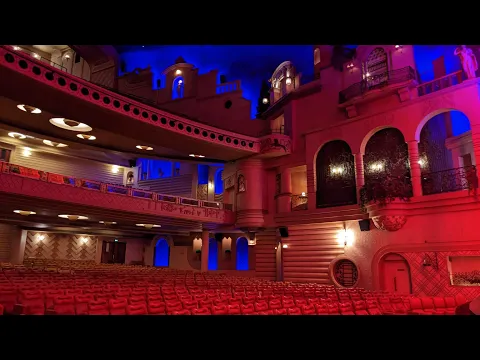
A specialist in “atmospheric theaters,” Eberson helped create interiors that evoke a Mediterranean environment under an artificial starry sky.
This aesthetic choice transformed the cinema into a visual experience even before the films began.

Architecture That Engages the Audience
More than a screening room, the Grand Rex has become an artistic monument. The complex features seven projection rooms, including the renowned Grande Salle.
With a capacity for over 2,700 spectators, distributed across three levels, the space impresses with its dome that simulates a night sky filled with stars.
Every detail contributes to a rare immersion sensation in the traditional circuit.
In the corridors and interior halls, murals evoke Mediterranean outdoor scenes. The decoration reinforces the theatrical character of the place, where the audience is invited to dive into a universe that surpasses mere cinematic exhibition.
Preserved and Revitalized Heritage
Recognized as a French Historic Monument since 1981, the Grand Rex has undergone careful restorations in recent years.
Among the interventions, the revitalization of the facade stands out, restoring the original style of 1932. The works enhanced the splendor of the building and contributed to the recent recognition by Time Out, which had already highlighted the cinema in previous international rankings.
Cinema Goes Beyond the Screens
In addition to hosting major premieres and classic films, the Grand Rex maintains a diverse programming schedule, with themed nights, retrospectives, and special events.
The complex also includes the Rex Club, a nightclub, and the Rex Studios space, where visitors discover the behind-the-scenes of film production through an interactive journey.
Over nearly a century, the Grand Rex has built a reputation that blends memory, art, and entertainment.
Today, it remains a vibrant meeting point, capable of enchanting new generations and reaffirming its central role in Parisian cultural life.
With information from Parissecret.









-

-

-

-

-

-

6 pessoas reagiram a isso.