





 Portuguese
  English
  Spanish
  6 min of reading
  0 comments


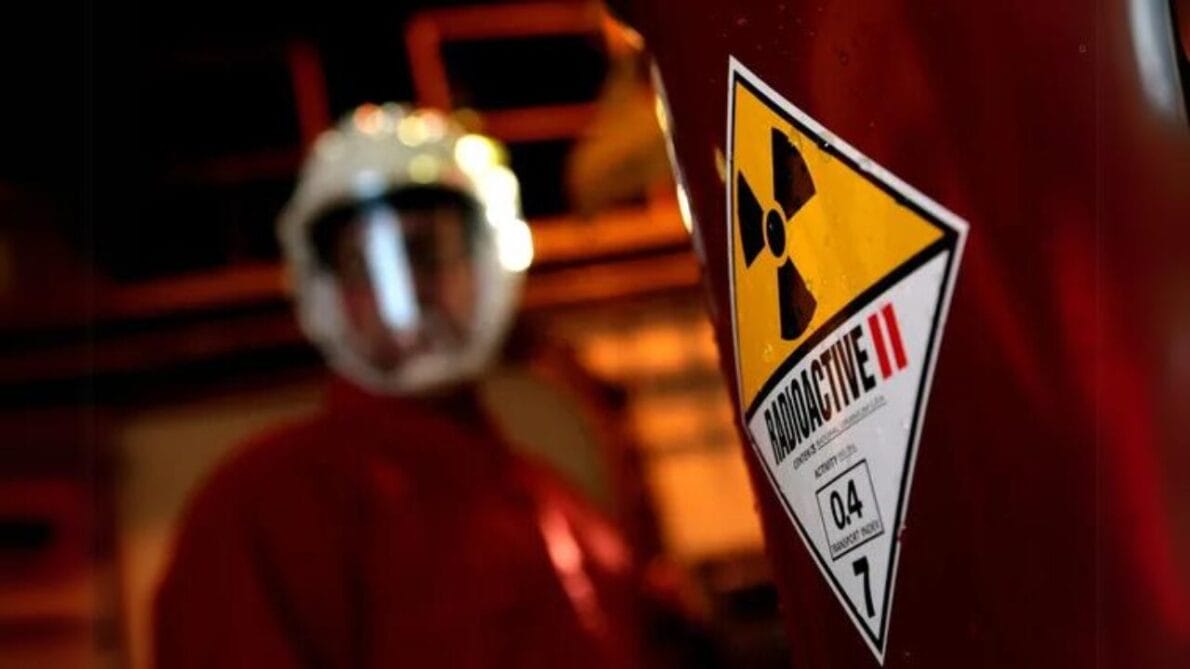
Next-Generation Nuclear Power Reactors Bring Great Hope, But Also Security Fears: Advanced Fuel Could Be Diverted Into Nuclear Weapons by Terrorists
Next-generation nuclear power reactors are fueling the debate about whether their fuel could be used to make bombs, putting at risk efforts to prevent the proliferation of nuclear weapons.
The uranium present in the fuel could theoretically be used to develop a nuclear weapon. Older reactors use such low concentrations that they do not pose a real proliferation threat, but advanced reactors would use higher concentrations, making them potential targets for terrorist groups or other countries that might want to use the fuel to develop their own nuclear weapons, some experts warn.
They argue that the United States has not yet adequately prepared to protect itself against this worst-case scenario and are urging Congress and the Department of Energy to assess the potential security risks posed by the fuel for advanced reactors.
-
Motorola launched the Signature with a gold seal from DxOMark, tying with the iPhone 17 Pro in camera performance, Snapdragon 8 Gen 5 that surpassed 3 million in benchmarks, and a zoom that impresses even at night.

-
Satellites reveal beneath the Sahara a giant river buried for thousands of kilometers: study shows that the largest hot desert on the planet was once traversed by a river system comparable to the largest on Earth.

-
Scientists have captured something never seen in space: newly born stars are creating gigantic rings of light a thousand times larger than the distance between the Earth and the Sun, and this changes everything we knew about stellar birth.

-
Geologists find traces of a continent that disappeared 155 million years ago after separating from Australia and reveal that it did not sink, but broke into fragments scattered across Southeast Asia.

Some experts maintain that the United States has not prepared adequately to protect itself against this worst-case scenario.
Other experts and industry groups still believe that it is unlikely for such a disastrous scenario to materialize, but the issue is beginning to gain importance as nuclear power reactors become a more attractive energy source, which has generated a rare display of bipartisan support in Congress.
Nuclear reactors generate electricity without producing the greenhouse gas emissions that cause climate change. And unlike solar and wind energy, which fluctuate with the weather and time of day, nuclear reactors provide a constant source of electricity similar to gas and coal plants. Earlier this month, President Joe Biden signed a bipartisan bill aimed at accelerating the development of next-generation nuclear reactors in the United States by streamlining approval processes.
Next-generation reactors are smaller and modular, making them cheaper and easier to build than traditional nuclear plants. In addition to generating electricity, small reactor designs could also be used to produce high-temperature heat for industrial facilities.
Last year, the U.S. Nuclear Regulatory Commission (NRC) certified for the first time the design of a small modular advanced reactor. And it is likely to be years before commercial plants are operational. But if the United States wants to reach that point, it will also need to build a supply chain for the fuel that these advanced reactors would consume. The Inflation Reduction Act includes $700 million to develop this domestic fuel supply.
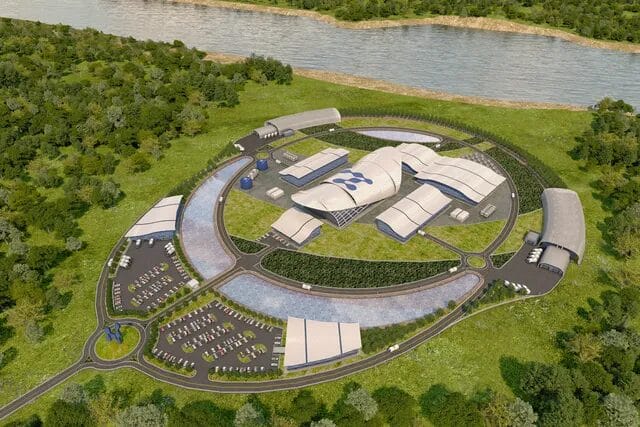
Current reactors typically operate with fuel made from an isotope of uranium called U-235. Natural uranium has quite low concentrations of U-235; it needs to be “enriched,” usually to a concentration of 5% U-235 for a traditional reactor. Smaller and advanced reactors would operate with higher energy density fuel, enriched to between 5% and 20% U-235, known as HALEU (an acronym for high-assay low-enriched uranium).
This higher concentration is what concerns some experts. “If the weaponizable potential of HALEU is confirmed, then even a single reactor would raise serious security issues,” says a policy analysis written by a group of nuclear proliferation experts and engineers published in Science last month (including one author credited as being one of the architects of the first hydrogen bomb).
Fuel with a concentration of at least 20% is considered highly enriched uranium, which could potentially be used to develop nuclear weapons. Given that HALEU designs reach 19.75% U-235, the authors argue, it is time for the United States to seriously reflect on the security that the next generation of nuclear power reactors would have against malicious intentions.
“We need to ensure that we are not getting ahead of ourselves and that all safety measures are in place before we start sending [HALEU] across the country,” says R. Scott Kemp, associate professor of nuclear science and engineering and director of the MIT Nuclear Security and Policy Lab.
This 20% threshold dates back to the 1970s, and malicious actors apparently have more information and computational tools at their disposal to develop weapons, Kemp and his co-authors write in the paper. It might even be possible to manufacture a bomb with HALEU well below the 20% threshold, the paper argues.
“This is not a minor theft.”
Fortunately, this would be incredibly difficult to accomplish. “This is not a minor theft,” says Charles Forsberg, a senior research scientist at MIT and previously a corporate fellow at Oak Ridge National Laboratory. A group might need to steal a couple of years’ worth of fuel from a small advanced reactor to manufacture the kind of bomb described in the paper, he says.
Even with a functioning weapon design, he says a sophisticated group of at least several hundred people would be needed to carry out all the necessary steps to convert that fuel into metallic uranium for a viable weapon. “Unless they are much better than me and the colleagues I work with, a subnational group [like a terrorist group] has no chance.”


An adversarial nation would have more capability than a small group, but still does not believe it is worthwhile for them. With their resources, they could proceed and build a plant to produce weapon-grade uranium, typically enriched above 90% U-235. A more plausible risk, he says, would be that another country might start producing and storing HALEU for future reactors, but actually have more nefarious intentions in mind. Once they are enriching uranium for HALEU, they will have already started increasing their capacity to reach weapon-grade uranium. “That is the concern we have with any nation-state that decides to produce HALEU,” says Forsberg. “They have taken some steps… they are approaching the finish line.”
In addition to calling on Congress for an updated security assessment of HALEU, the document suggests establishing a lower uranium enrichment limit based on new research or ramping up security measures for HALEU to bring them closer to those of weaponizable fuels. Unlike the authors of the Science article, Forsberg believes that adequate precautions have already been taken to keep next-generation nuclear reactors and HALEU safe in the United States. The security risks are known and have been discussed for decades, he says, although much of that information is classified. That is part of what makes it difficult to allay fears.
“The opinions of the authors of this study do not bring any new information that should discourage the development and deployment of HALEU in accordance with the already strict requirements established by U.S. and international regulatory agencies,” said Jennifer Uhle, vice president of technical and regulatory services at the Nuclear Energy Institute, in a statement emailed to The Verge.
Some of the fears surrounding nuclear power after the disasters at Chernobyl in 1986 and Fukushima in 2011 have dissipated with the need to find energy sources that do not contribute to climate change and with the promises of more advanced technologies. But not everyone is convinced, and the security concerns that arise with the HALEU design coincide with other issues that critics raise about nuclear energy.
“Unless there is a really good reason to switch to fuels that involve greater risks of nuclear proliferation, then it is irresponsible to do so,” says Edwin Lyman, director of nuclear energy security at the Union of Concerned Scientists and another author of the paper. Lyman has also expressed concern over nuclear reactor radioactive waste over the years. “There is no good reason.”








Seja o primeiro a reagir!