





 Portuguese
  English
  Spanish
 5 min of reading
  0 comments


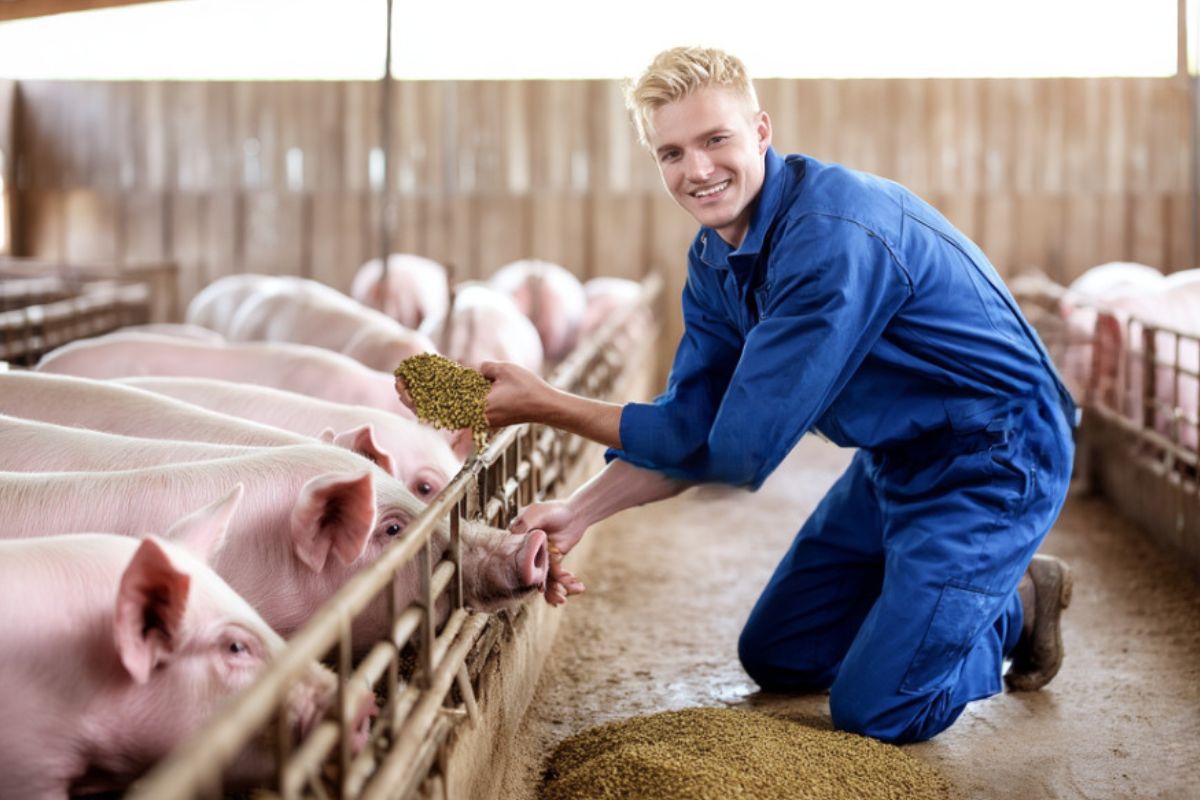
Technified Pig Farms Will Have to Follow New Biosecurity Measures in Santa Catarina. The Sape Ordinance No. 50/2025 Brings Clear Rules on Hygiene, Access, and Waste Management. The Government Will Offer Credit Lines of Up to R$ 70,000 per Farm, with a 40% Subsidy, a One-Year Grace Period, and Payment in Five Installments.
Technified pig farms will have to implement biosecurity measures established in a new ordinance published by the State Secretary of Agriculture and Livestock (Sape) and the Integrated Agricultural Development Company of Santa Catarina (Cidasc), according to a report published on the Imprensa News Sul portal.
The subject may seem distant, but it has a direct impact on everyone’s lives, as it involves health, food production, and also the state’s economy.
Imagine what happens when an entire farm has to deal with the presence of diseases. In addition to the risk to the animals, there is the chance of losses affecting producers, cooperatives, and even consumers.
-
While Russia dominates the global wheat market, Brazil emerges as an unexpected competitor in the Cerrado, offering grain available in July and August when stocks in the Northern Hemisphere are at their lowest point of the year.

-
China returned almost 20 Brazilian ships with soybeans, but now everything could change: the country that buys 80% of the grain is considering relaxing regulations after impurities held up shipments of thousands of tons and caused million-dollar losses.

-
The drought of the cerrado was considered an enemy of wheat, but Brazilian scientists turned the lack of rain into a competitive advantage by creating a grain with quality that is already attracting the attention of international mills around the world.

-
THE OWNER of Brazil: a farmer who came from laundries, created an ’empire’ and today runs a company valued at R$ 42 billion after tripling its value in less than a year and receiving a billion-dollar investment from the USA.

This is why the Sape Ordinance No. 50/2025 was created. It provides guidelines that will become mandatory in 60 days and that establish minimum standards for care, hygiene, and management.
This news did not arise suddenly. Many pig farms had already adopted some measures voluntarily, precisely because they understand that caring for the animals’ health strengthens production. Now, these practices will become a legal requirement.
Another piece of news accompanying this decision is the launch of the Animal Biosecurity Program SC, which aims to provide financial support to producers who need to adapt. The objective is that no one is left out, not even small producers who do not yet have all the necessary infrastructure.
This package of actions does not just mean more rules, but rather an investment so that Santa Catarina continues to be a reference in pig farming. It is worth noting that, in 2024, Santa Catarina’s pork reached 78 countries, generating US$ 1.7 billion.
What Changes with the New Ordinance
The Sape Ordinance No. 50/2025 establishes a set of practices that will become mandatory in technified pig farms. These include simple measures, such as controlling who enters the location, to others that require greater adaptations, such as changes in hygiene and management structures.
Access control, for example, means that only authorized people will be allowed to enter specific areas, reducing the risk of introducing microorganisms that could affect the animals.
Another important point is disinfection, which becomes a rule for equipment, vehicles, and footwear of those who circulate within the breeding areas.
The correct disposal of waste has also been included in the list. Improper management can lead to contamination and harm both the animals and the environment.
These measures have different deadlines for implementation. Some need to be followed from the ordinance’s validity, while others will have adaptation periods of 12 to 24 months.
This flexibility was designed precisely so that producers have time to adjust their structures without compromising the operation of pig farms.
Financial Support for Producers
To ensure that everyone can meet the new requirements, the Government of Santa Catarina launched the Animal Biosecurity Program SC. The initiative offers financing of up to R$ 70,000 per farm, with attractive conditions: subsidy of up to 40%, a one-year grace period, and payment in five annual installments.
This support is seen as essential for small and medium producers to invest in improvements without compromising the property’s cash flow. After all, some changes require construction, the purchase of equipment, or adaptations that require an initial investment.
The State Secretary of Agriculture and Livestock, Carlos Chiodini, highlighted that the measure was developed in dialogue with different sectors of the production chain. According to him, both agribusinesses and representative entities and technicians participated in the drafting of the ordinance, ensuring it was practical and feasible for all.
Meanwhile, the president of Cidasc, Celles Regina de Matos, emphasized that biosecurity had already been practiced by cooperatives and integrators, but now it will be expanded to independent producers.
This means that the entire production chain will have a minimum standard of care, further strengthening the image of Santa Catarina’s pork in the market.
Impacts for the Future of Santa Catarina’s Pig Farming
The reinforcement of biosecurity brings benefits that go beyond animal health. It strengthens the sector’s competitiveness, opens doors to new markets, and ensures more confidence for those purchasing Santa Catarina’s meat.
In 2024, products from Santa Catarina reached 78 countries, generating US$ 1.7 billion in exports. Asia stands out as the main destination, but the reach demonstrates the strength of a production that has health as its differential.
With the new ordinance, this advantage tends to grow. Standardizing the measures reduces the risk of outbreaks in pig farms, protects the state’s image as a reliable producer, and contributes to closing more deals abroad.
Another expected impact is the appreciation of the work of small producers. With financial support and clear rules, they will be able to adapt and compete on equal terms with large integrators. This creates a more balanced environment within the production chain.
The package of measures regarding pig farms shows that the goal goes beyond compliance with regulations: it is an investment in the future of Santa Catarina’s pig farming.
By ensuring healthier animals, production gains solidity and sustainability, two factors that weigh more and more in the global market.
Santa Catarina shows, once again, that combining animal health, financial support, and clear rules can be the path to ensure solid results for producers, consumers, and the economy.








Seja o primeiro a reagir!