





 Portuguese
  English
  Spanish
  5 min of reading
  3 comments





Under Promises Of Progress, BYD’s Factory In Bahia Reveals Its Darker Side: Workers Face Mistreatment, Assaults And Sub-Human Conditions. With Investigations Ongoing, The Case Raises Questions About The Real Cost Of Technological Advancement.
The ambitious project of BYD, a Chinese automaker that took over the space left by Ford in Camaçari, Bahia, faces controversy after reports about the treatment of workers during the construction of the new factory.
A publication by journalist André Uzêda from the Agência Pública portal, shows allegations of physical assaults, unhealthy conditions, and exhausting shifts imposed on Chinese workers living here, calling into question the execution of the project, which promises to be a milestone for Brazil’s transition to electric vehicles.
Although BYD has denied direct involvement with the irregularities, shifting responsibility to its contracted construction companies, the accusations have attracted the attention of oversight bodies and reignited the debate about working conditions in large infrastructure projects in the country.
-
A brand new car starts at around R$ 75,000 in Brazil, but what stands out the most is seeing streets filled with SUVs and expensive sedans in a country where millions remain in debt.

-
Brazilian city bets on the business environment to generate jobs and attract investments in the energy sector — secretary reveals strategy at Macaé Energy 2026.

-
50 viaducts, 4 tunnels, 28 bridges, and 40 kilometers of bike paths: BR-262 in Espírito Santo will receive 8.6 billion reais for the largest engineering project in the state’s history, inspired by the Immigrant Highway in São Paulo.

-
Brazil produces too much clean energy and doesn’t know what to do with it: over 20% of solar and wind capacity was wasted in 2025 while investors flee and 509 renewable generation projects were abandoned in the last year.


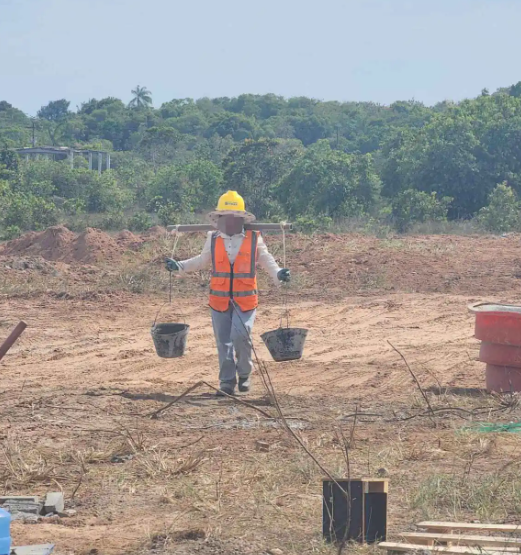
Promise Of Development Versus Reality On The Construction Site
Since announcing its arrival in Brazil, BYD promised to revolutionize the national electric vehicle market, with an initial investment of R$ 5.5 billion and the generation of up to 20,000 direct and indirect jobs.
The industrial plant in Camaçari, located on a 4.6 million square meter plot of land provided by the state government, is seen as a key point to consolidate the automaker in the Brazilian market.
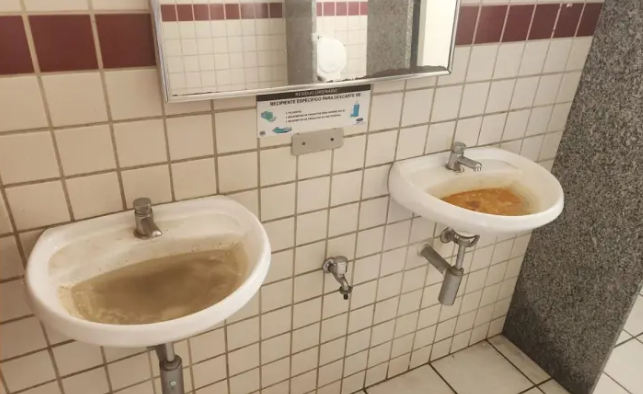
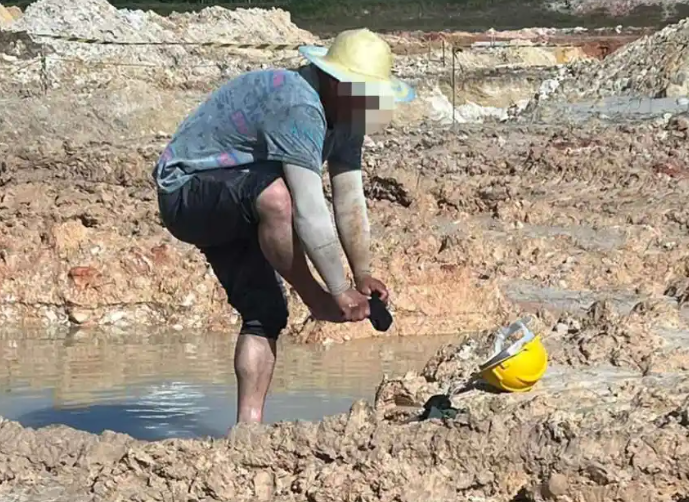
According to André Uzêda, the construction, however, is hindered by reports of abuses. Images circulating on social media show Chinese workers drinking water from puddles due to the lack of adequate supply on site.
Additionally, videos recorded on the construction site show moments of physical violence, such as punches and kicks inflicted by supervisors, who apparently used force as a method of discipline.
These facts have raised questions about compliance with workplace safety standards and labor rights stipulated in Brazilian legislation.
According to the Consolidation of Labor Laws (CLT), all employees, whether national or foreign, must have access to safe conditions, regulated hours, and adequate breaks.
Contracting Outsourced: Who Is Responsible?
The accusations largely fall on the construction companies contracted by BYD to carry out the project.
Jinjiang Group, responsible for earthworks and construction, has been identified as the main focus of the allegations.
According to documents revealed by Agência Pública, the Chinese workers, numbering about 470, were placed in precarious conditions, with work shifts exceeding 12 hours a day and without proper breaks for meals or rest.
The automaker BYD, in a statement, claimed that the responsibility for complying with labor standards lies with the contracting companies and that it is monitoring the progress of the investigations conducted by the Labor Public Prosecutor’s Office (MPT).
Still, activists and labor rights experts question the lack of direct oversight by the company regarding the conditions on site.
For André Uzêda, the journalist who brought the allegations to light, the situation exposes a structural problem in global supply chains: “Multinational companies often outsource responsibilities to contractors, complicating the identification of direct perpetrators in cases of abuse.”
Action Of The Labor Public Prosecutor’s Office
After the repercussions of the allegations, the Labor Public Prosecutor’s Office began an investigation at the construction site of the factory.
According to André Uzêda, during a recent inspection, inspectors identified specific irregularities, but did not conduct a full assessment of all spaces and accommodations.
The inquiry remains open, and its conclusions could lead to fines, work stoppages, or even the holding of BYD accountable if negligence in overseeing its contractors’ activities is proven.
For experts, it is essential that the case be treated rigorously, as it could set an important precedent for foreign companies operating in Brazil.
Impacts For The Project And For BYD’s Reputation
The BYD factory in Camaçari is considered one of the company’s main projects outside of China, especially due to the potential of the Brazilian market for electric vehicles.
Production at the unit will include everything from automobiles to batteries and components, with a focus on exports to other countries in Latin America.
However, the controversy generated by the allegations could impact both the schedule and the company’s image.
The first phase of the project, initially scheduled for completion in December 2024, has been postponed to January 2025.
Moreover, the reported conditions may deter future investors or even consumers who expect high ethical standards from brands associated with sustainability.
Rights Of Foreign Workers In Brazil
Brazilian law is clear about the protection of the rights of foreign workers. They have the same rights as nationals, including fair remuneration, regulated work hours, and dignified working conditions.
Additionally, international conventions signed by Brazil ensure the safety and well-being of migrant workers, imposing additional responsibilities on employers.
However, in practice, Chinese workers face cultural and language barriers that hinder the formalization of complaints.
The absence of interpreters or mediators on site contributes to the isolation of these workers, who often rely solely on their employers to resolve conflicts or deal with bureaucratic issues.


The State Government And Oversight
The participation of the Bahia government, which granted the land of the former Ford factory to BYD, has also been criticized.
For some analysts, enthusiasm for the project may have overshadowed the need for more rigorous oversight.
Governor Jerônimo Rodrigues, present at the contract signing ceremony, has yet to make an official statement regarding the allegations.
Future Perspectives And Lessons
Although the allegations against BYD are serious, they are not an isolated case.
In Brazil, large-scale projects frequently face similar criticisms, whether for failing to comply with labor standards or for neglecting to ensure dignified conditions for workers.
The situation at the Camaçari factory underscores the importance of stricter oversight and greater accountability for contracting companies.
For experts, transparency and commitment to human rights should be fundamental pillars of any venture, especially in high-visibility sectors such as electric vehicles.
As investigations proceed, it remains to be seen whether BYD can overcome the impact of these allegations and reaffirm its commitment to the sustainability and innovation values it so promotes.
What do you think about this alleged differential treatment of Chinese employees at the factory in Brazil, reader? Leave your opinion in the comments!








Seria interessante algum video para evidenciar, uma vez que os carros da BYD está vendendo igual água e os concorrentes com carros ruins, ultrapassados e com os IMPOSTOS do amor, fora que pagamos muito para uma Lata velha sem qualidade alguma e ainda utilizamos combustível fóssil…..Não esqueçamos! BAHIA terra de Gal, Gil e Caetano tudo deles, tudo deles a tiurma da carreta furacão que está nos levando como um foguete a ser um país de 1º mundo.
Esse é o padrão chinês, seja aqui como em qq outro lugar. Já relato de coisas semelhantes acontecendo na África, os nativos sendo assim maltratados
A china sendo china,