





 Portuguese
  English
  Spanish
  5 min of reading
  1 comment


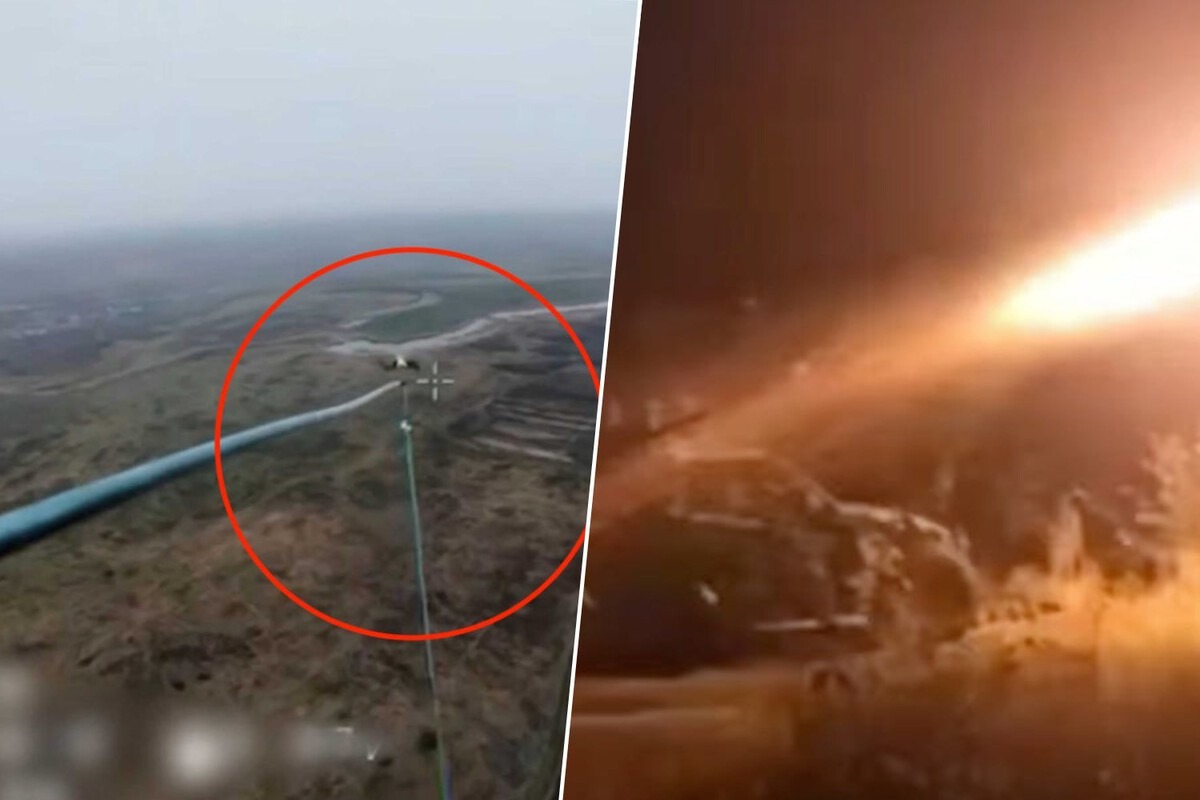


Under Continuous Night Attacks, Ukrainian Forces Rely on Improvised and Mobile Solutions to Face Shahed Drones and Russian Decoys, Reducing Costs, Gaining Agility, and Preserving Traditional Systems
Amid repeated night attacks with drones, Ukraine has begun to adopt mobile and low-cost solutions for air defense, prioritizing volume, speed, and repetition in the face of Russian waves of Shahed drones and decoys launched to saturate the airspace and pressure traditional systems.
The war with drones has ceased to be a point duel and has become a volume contest, where repetition is as important as precision.
For Ukraine, this means finding answers that work not just once, but dozens, sometimes hundreds, of times in a single night.
-
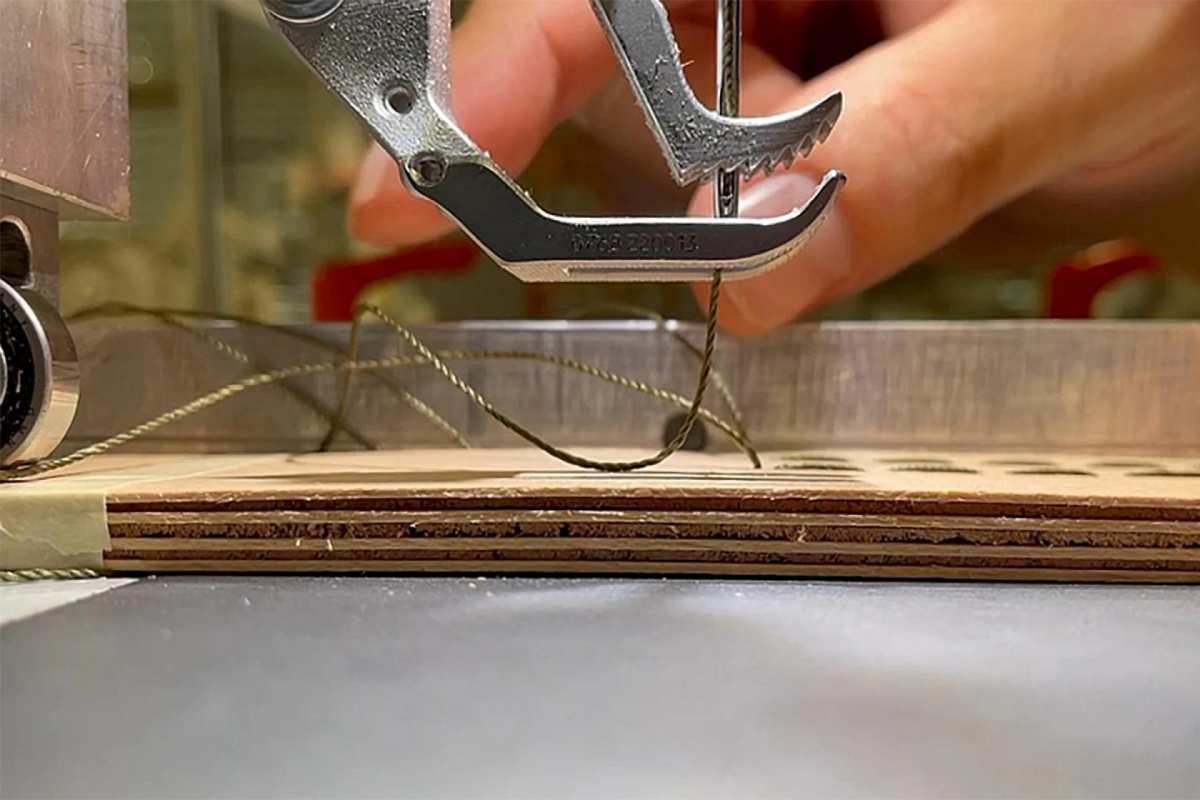
A simple stitch in wood with nylon thread can reduce adhesives, speed up production, and make sheets up to 4 times stronger and 14 times more difficult to break.
-
The gigantic steel shell built to contain Chernobyl for a century has been pierced by a drone, exposing a critical system and creating a hole that could cost over 500 million euros to repair.

-
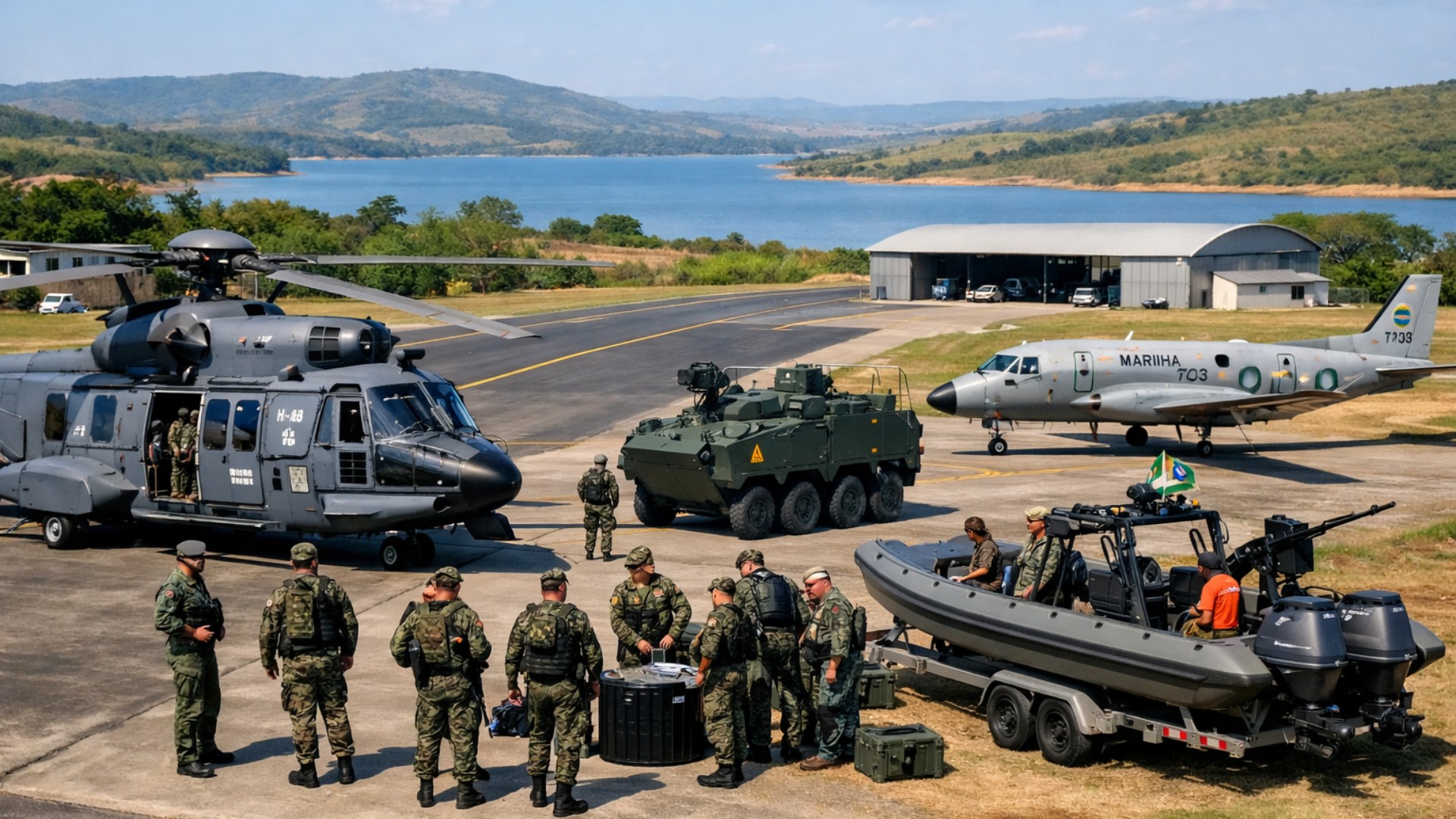
Brazilian Navy reaches a new level by taking over an airport with a 1,600-meter runway used by 1,800 military personnel and autonomous attack drone testing.
-
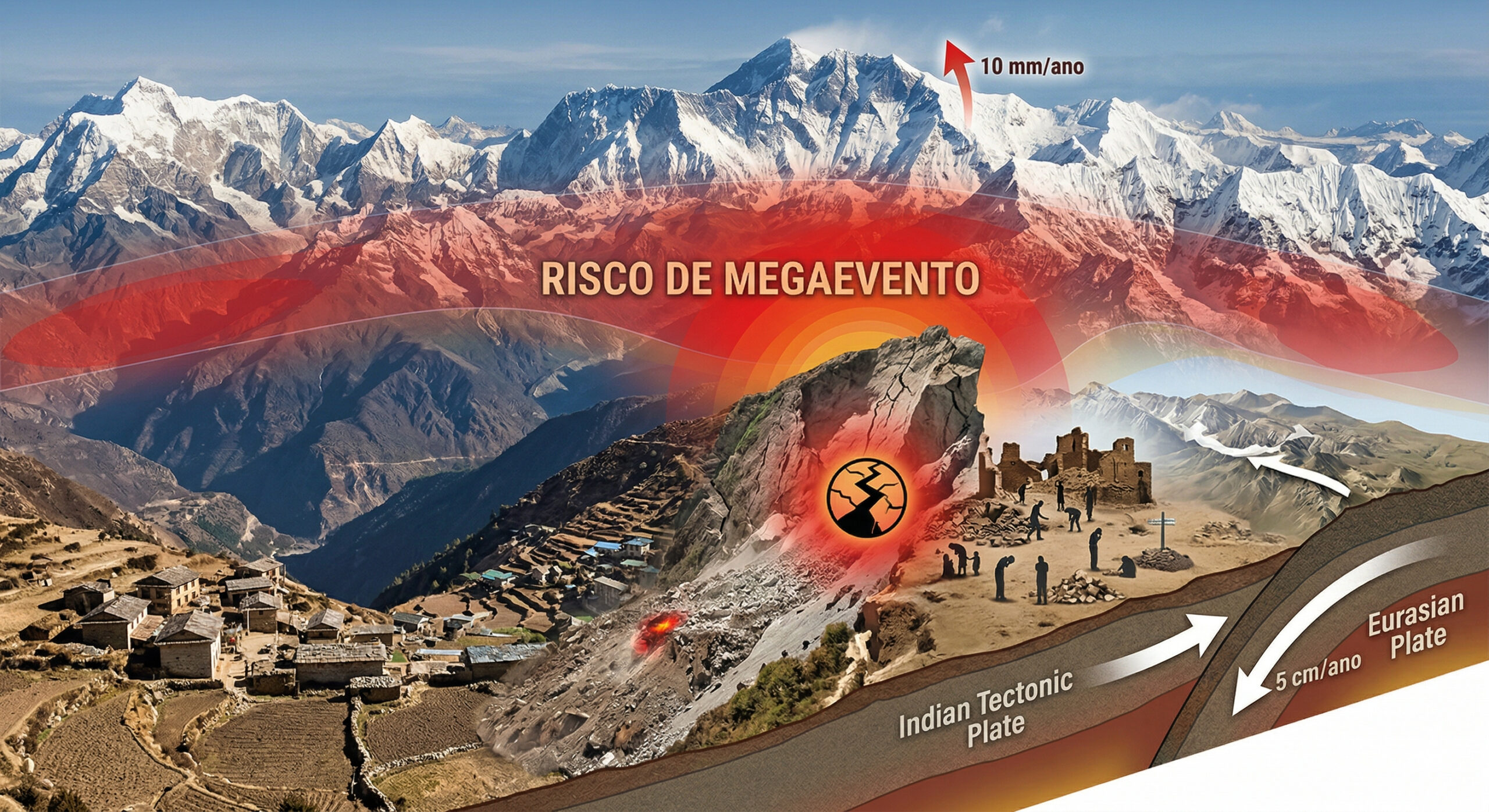
The Himalayas continue to grow to this day, with tectonic plates advancing 5 cm per year, mountains rising up to 10 mm annually, and the 2015 earthquake that killed 9,000 people may have increased the risk of an even larger seismic mega-event.

The Russian strategy of launching successive waves of Shahed drones, accompanied by decoy devices, aims to saturate defenses, force high expenditures, and create temporary gaps in the airspace.
This pattern pressures systems based on expensive missiles, heavy radars, and limited platforms.
In this scenario, the Ukrainian response has followed a pragmatic path, less focused on perfect solutions and more centered on the ability to react quickly, move even faster, and shoot down enough targets to keep the sky usable.

Creativity Without Luxury and Focus on Mobility
What emerges is a mobile, improvised, and adaptable air defense, where refined design gives way to immediate functionality.
The logic is simple: if the enemy turns the air into a highway of cheap threats, shooting them down needs to become a simple gesture.
This mentality explains the emergence of ideas that, at first glance, seem absurd, but reveal a harsh operational logic.
Light vehicles armed with missiles and interceptor drones with improvised rods reflect this adaptation forced by the battlefield.
An Armed Buggy to Hunt Drones
The first of these solutions catches attention for its improvised appearance: a lightweight four-wheeled vehicle, similar to an off-road buggy, capable of moving through mud, open fields, and backroads without heavy support.
At the back, a dual launcher for guided missiles turns the vehicle into a mobile anti-air platform. Its value lies not only in firing but in the speed with which it can reach the right point.
The Shahed drones fly at over 160 km/h, drastically reducing the margin between detection, positioning, and engagement.
In this equation, mobility ceases to be an advantage and becomes a condition for operational survival.
Instead of waiting for the target, the system heads toward it, chooses the most favorable location, fires, and moves again. This dynamic reduces predictability and increases the chances of success in short windows.
The reported performance by a single team, with over twenty confirmed kills, suggests that, in specific sectors, the vehicle functions as a “quick sky closure,” without relying on large fixed infrastructures.
Hellfire Adapted for Ground Combat
The most striking technical detail is in the ammunition used. By its shape, the launcher resembles the American Hellfire missile, originally designed for helicopters and armed drones, now adapted for ground use.
In advanced variants, this missile operates in a “fire-and-forget” mode, guided by radar, reducing the need for human tracking after launch.
This represents a leap from emergency solutions based on machine guns.
However, this choice exposes the central tension of this war: destroying a relatively cheap drone with a comparatively expensive missile is, from an economic standpoint, uncomfortable and difficult to sustain indefinitely.
Still, the conflict is not decided solely by unit cost. Preventing damage to critical infrastructure, preserving other scarce munitions, and avoiding strategic impacts can justify higher expenses at decisive moments.
The “Fishing Rod” That Became an Air Weapon
The second solution seems to come straight from a trench. It consists of an interceptor drone equipped with a protruding rod and a thin cord hanging down, tensioned by a small metal weight.
The aim is not to explode the target but to snag the propellers of enemy drones, especially quadcopters.
By losing rotation, the drone simply falls, defeated by basic physics, not by electronic sophistication.
In practice, the interceptor passes over the target and lets the line do the work. It does not require direct impact or extreme precision, just proximity and repetition, turning a simple gesture into an effective weapon.
This approach gains value as drones become more resistant to electronic jamming. Mechanisms that cannot be “corrected” by software regain relevance in an increasingly digital battlefield.
Anti-Interference and Return to the Physical
These tactics reveal a deeper adaptation. The duel between electronic interference and countermeasures has ceased to guarantee stable results, forcing the combination of digital solutions with direct physical responses.
Networks, ropes, cheap interceptors, and in-flight captures indicate a clear trend: shooting down small drones starts to resemble less classical air defense and more like close-range air combat.
Even outside of Ukraine, similar devices have been tested, but there the innovation does not arise from laboratories. It comes from units that need something to work immediately, without luxury or waiting.
Two Distinct Threats, Complementary Responses
These solutions do not compete with each other. Each has been shaped for a specific type of target. The missile-equipped vehicle targets fixed-wing drones like Shahed, used in massive and repetitive attacks.
The “fishing rod,” on the other hand, operates against quadcopters that operate close to the front line, conducting reconnaissance, fire correction, or attacks with light ammunition. It is a surgical response to local threats.
One solution hunts targets from afar, while the other resolves close-quarters combat in the air. Together, they show that there is no search for a miraculous system, but rather for a set of complementary tools.
Tactical Accounting at the Center of the War
In the end, everything converges to the same dilemma: how to shoot down many targets without spending a fortune. Fast FPV interceptors are already in use due to their low cost, but they require trained operators and pursuit time.
The buggy with missiles offers cleaner kills and less human intervention in final guidance but requires careful selection of firing moments. The rod does the opposite, betting on extreme economy.
In other words, air defense has ceased to be only advanced technology. It has become tactical accounting applied minute by minute, where each decision weighs on the budget, time, and operational survival, even with small execution failures.
With information from Xataka.







Muito interessante esse sistema de “vara de pescar” para efetuar a defesa do espaço aéreo contra drones. Bem criativo e eficaz.