





 English
  Francês
  Alemão
  Italiano
  Japonês
  Norueguês
  Portuguese
  Spanish
  3 min of reading
  0 comments


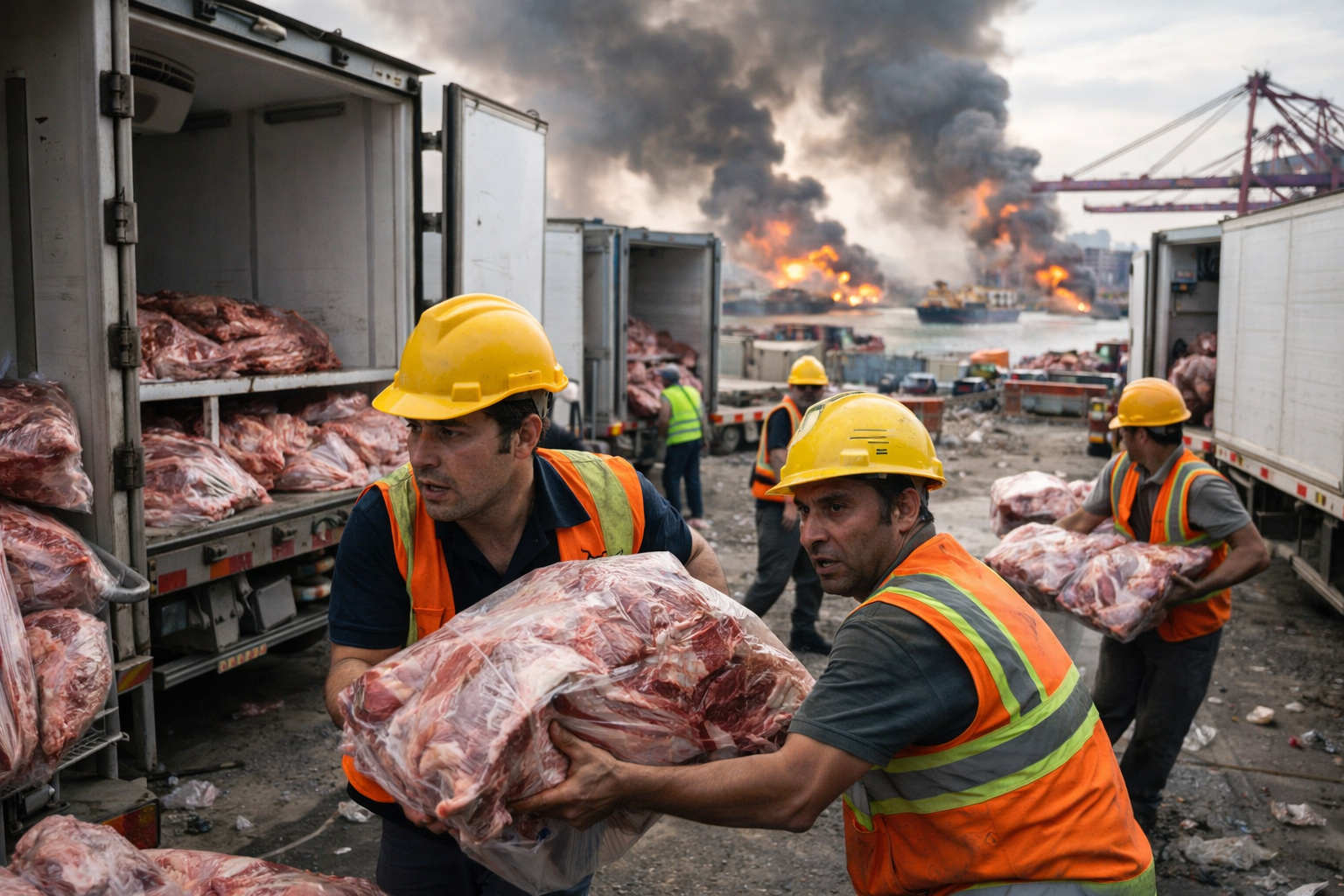
Conflict In The Region Pressures Global Logistics, Raises Transportation Costs And Ignites Alert In The Animal Protein Export Sector Of Brazil
The escalation of the war in the Middle East, observed in the last weeks of 2026, has started to concern the Brazilian animal protein export sector.
According to the president of the Brazilian Association of Exporters of Meat (Abiec), Roberto Perosa, the conflict may compromise between 30% and 40% of Brazilian beef exports.
Furthermore, the risk arises from the strong logistical dependence of the region for the international transportation of Brazilian production.
-
Middle East War Hits Fertilizers and Transportation and May Strain Brazilian Wallets
-
Russia Considers Suspending Gas to Europe After Surge in Energy Prices
-
Iran-U.S. War Drives Up Oil Prices and Pressures Global Financial Markets
-
Agricultural Parliamentary Front Presses For Safeguards In The Mercosur Agreement


Although the Middle East accounts for about 10% of the final destination of Brazilian beef exports, a much larger portion of the shipments uses ports in the region as an intermediate route.
Consequently, shipments then continue to strategic markets, such as China and Southeast Asian countries.
Thus, any interruption in these maritime routes can directly impact the Brazilian beef export chain.
Logistics Investigation Reveals Vulnerability In Trade Routes
Firstly, the Brazilian Association of Exporters of Meat (Abiec) has reinforced the alert for the sector. According to Roberto Perosa, the geopolitical crisis has created significant vulnerability in logistics operations.
This happens because many Brazilian shipments use Middle Eastern ports as a connection point for international trade. Therefore, even when the final destination of the cargo is not in the region, maritime transportation depends on these routes.
Consequently, any interruption caused by the war can lead to direct impacts on the global export flow.
In this way, the sector monitors every new development of the conflict closely.
Container Shortage And War Surcharge Increase Foreign Trade Costs
Moreover, according to Roberto Perosa, the effects of the crisis are already appearing in logistics operations. Initially, operators report shortages of containers available for maritime transport. Subsequently, companies have temporarily suspended new booking reservations for some destinations.
Additionally, when transportation becomes available, carriers charge an additional surcharge. This charge, known as “war surcharge”, can reach up to US$ 4,000 per container.
Consequently, logistical costs of Brazilian exports are increasing significantly, putting pressure on commercial operations.
Impact Will Depend On The Duration Of The Geopolitical Crisis
On the other hand, the total impact on foreign trade directly depends on the duration of the war in the Middle East. If the impasse ends quickly, logistical effects tend to be limited. In this scenario, maritime transportation may gradually regain its normalcy.
However, if the conflict prolongs for weeks, international logistical flow may suffer more intense interruptions. Consequently, a significant portion of Brazilian exports may face difficulties.
Currently, according to data cited by Roberto Perosa, Brazil exports between 200,000 and 250,000 tons of beef per month.
Therefore, any stoppage in maritime routes can affect substantial volumes of national production.
Export Sector Looks To Discuss Measures With The Brazilian Government
In light of this scenario of instability, the Brazilian Association of Exporters of Meat (Abiec) intends to bring the sector’s concerns to the federal government.
Thus, representatives of the entity should discuss possible strategies to mitigate the effects of the geopolitical crisis on foreign trade.
The objective will be to evaluate measures capable of minimizing the logistical impacts caused by the war.
Furthermore, the initiative seeks to protect the flow of beef exports, one of the main animal protein chains in the Brazilian economy.
Meanwhile, the sector closely monitors the evolution of the war in the Middle East and its reflections on global trade routes.
In light of this uncertain scenario, will Brazil manage to maintain the stability of beef exports if the conflict in the region prolongs for a longer time?










Seja o primeiro a reagir!