





 Portuguese
  English
  Spanish
  6 min of reading
  0 comments


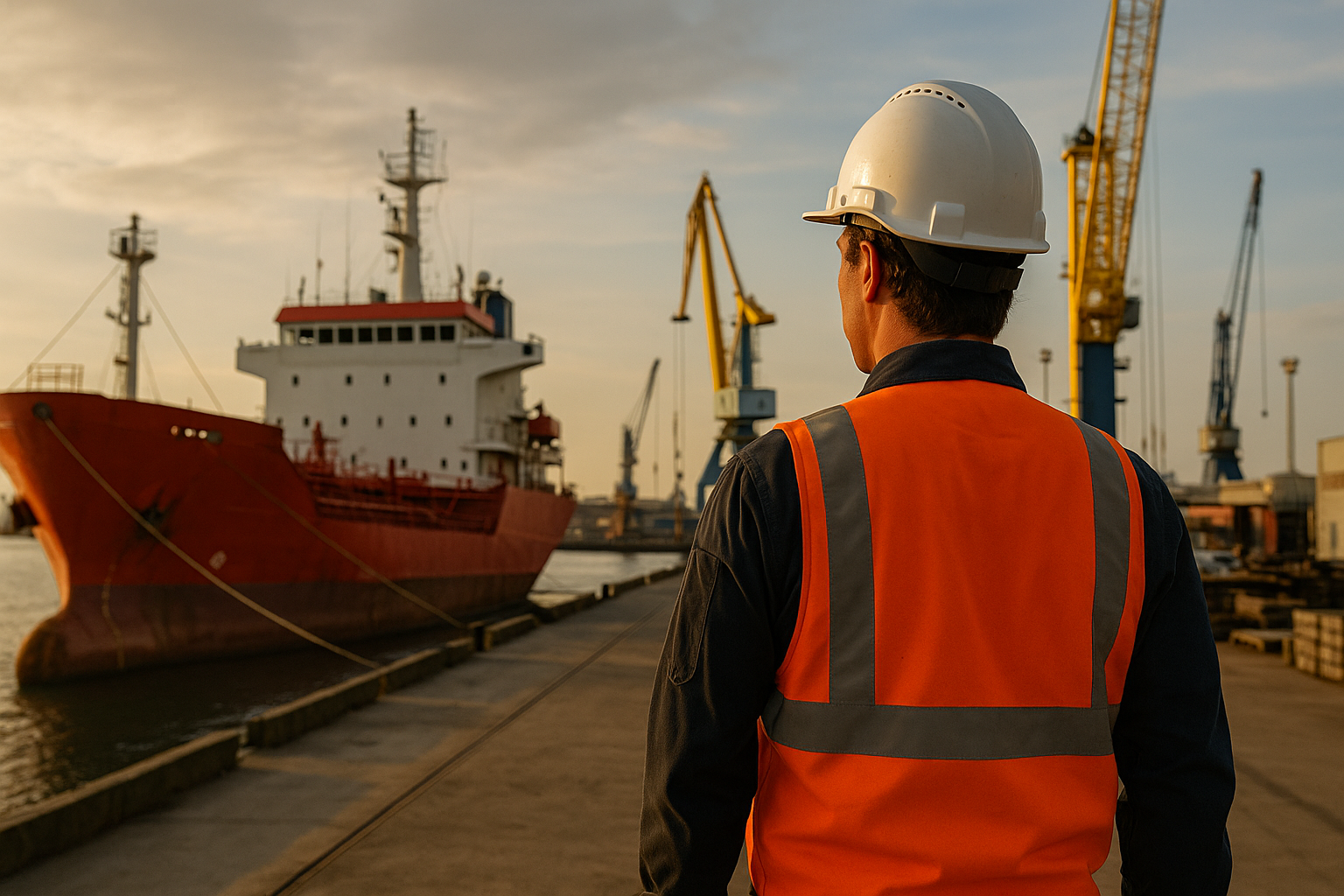
Discover The Main Positions In The Naval Industry, Their History, Functions, And How To Start A Solid Career In This Essential Sector Of The Global Economy.
The naval industry represents one of the oldest and most fundamental pillars of the world economy.
Since the times of the great navigations to the modern era of cargo ships and offshore platforms, this industry moves goods, explores natural resources, and develops maritime technologies.
Therefore, understanding the positions in the naval industry becomes essential for those who wish to enter this sector or simply better understand its functioning.
-
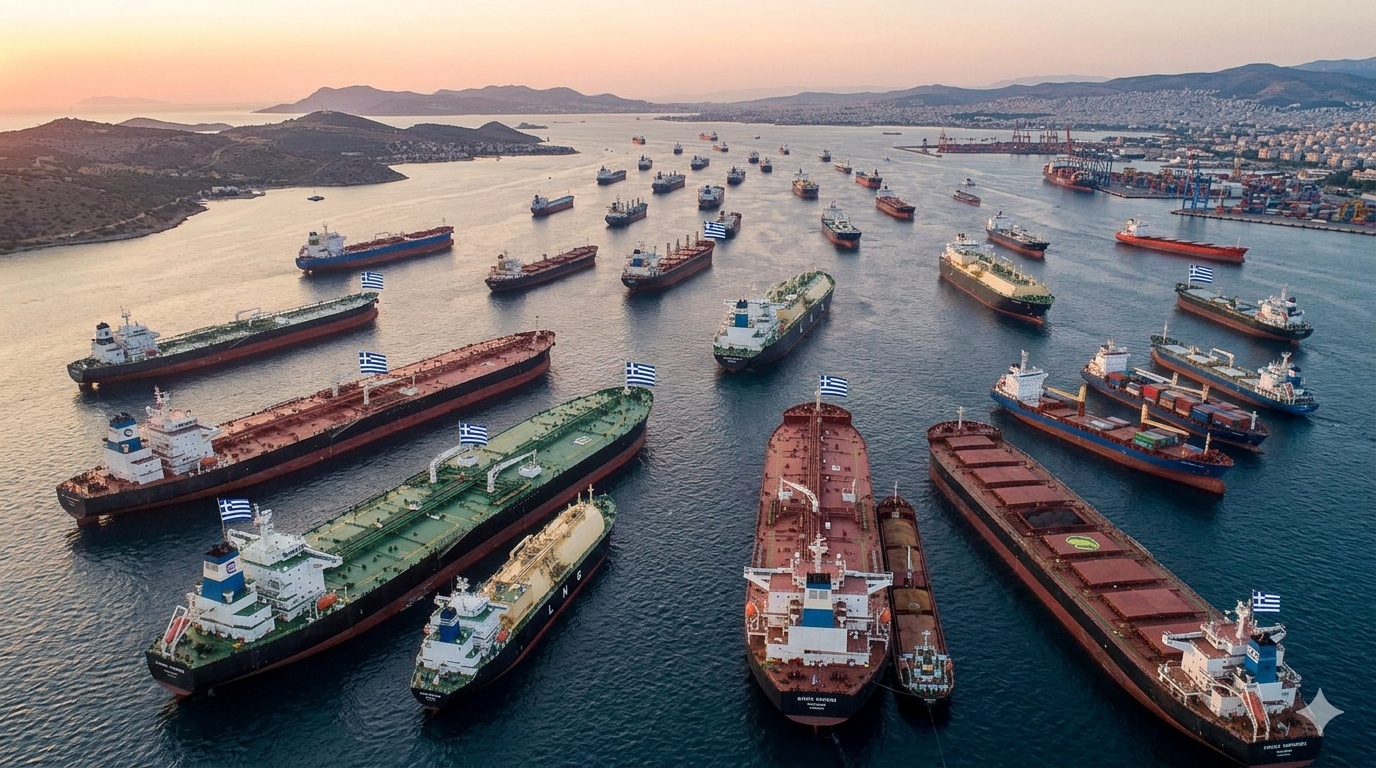
Neither the USA nor China: a small European nation has become one of the largest maritime powers on the planet, controlling one of the largest merchant fleets in the world with thousands of ships and dominating the global transportation of oil and strategic cargo.
-
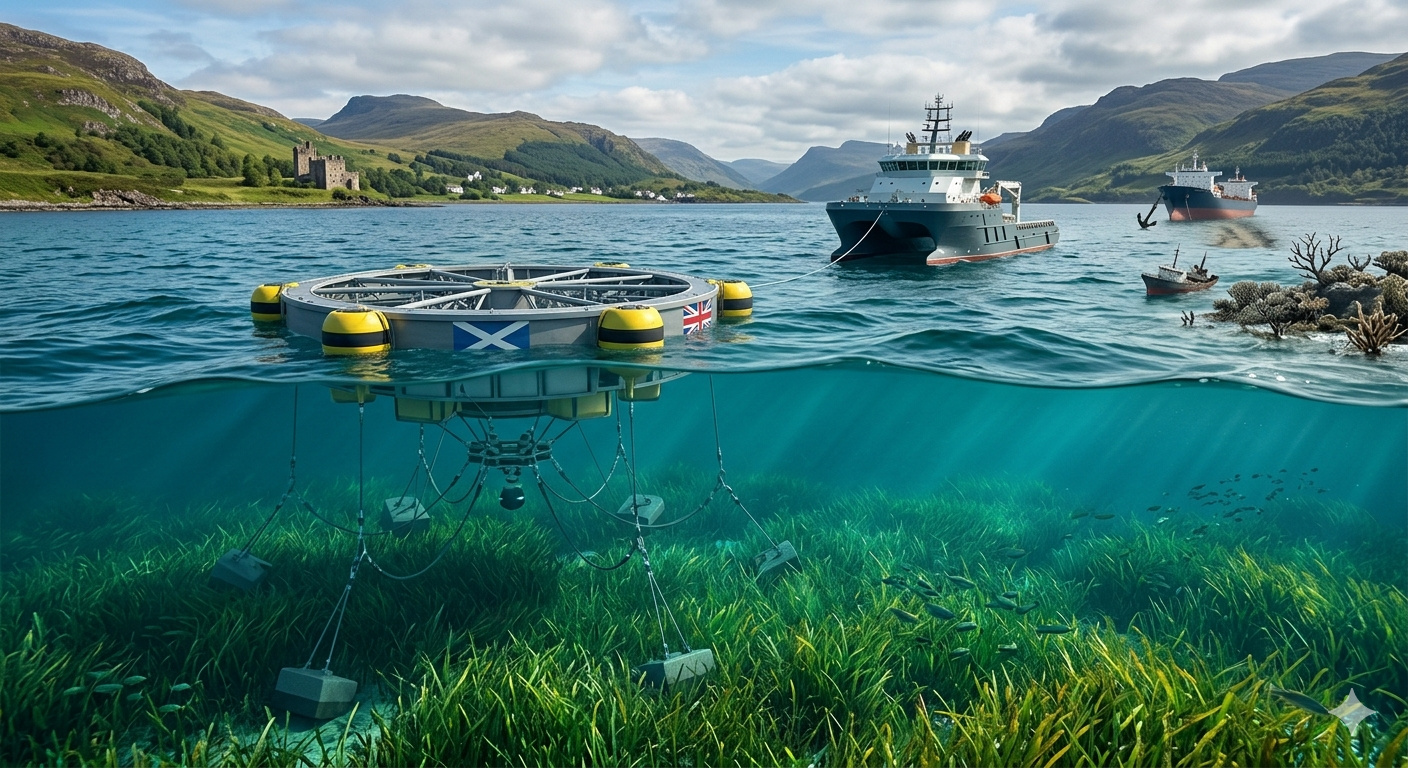
Scotland and the United Kingdom have created a new anchoring system that floats in the water without touching the seabed, after discovering that the current from a conventional anchor destroys up to 50 m² of seagrass meadow per event and that ship-damaged reefs showed no signs of recovery even ten years later.
-
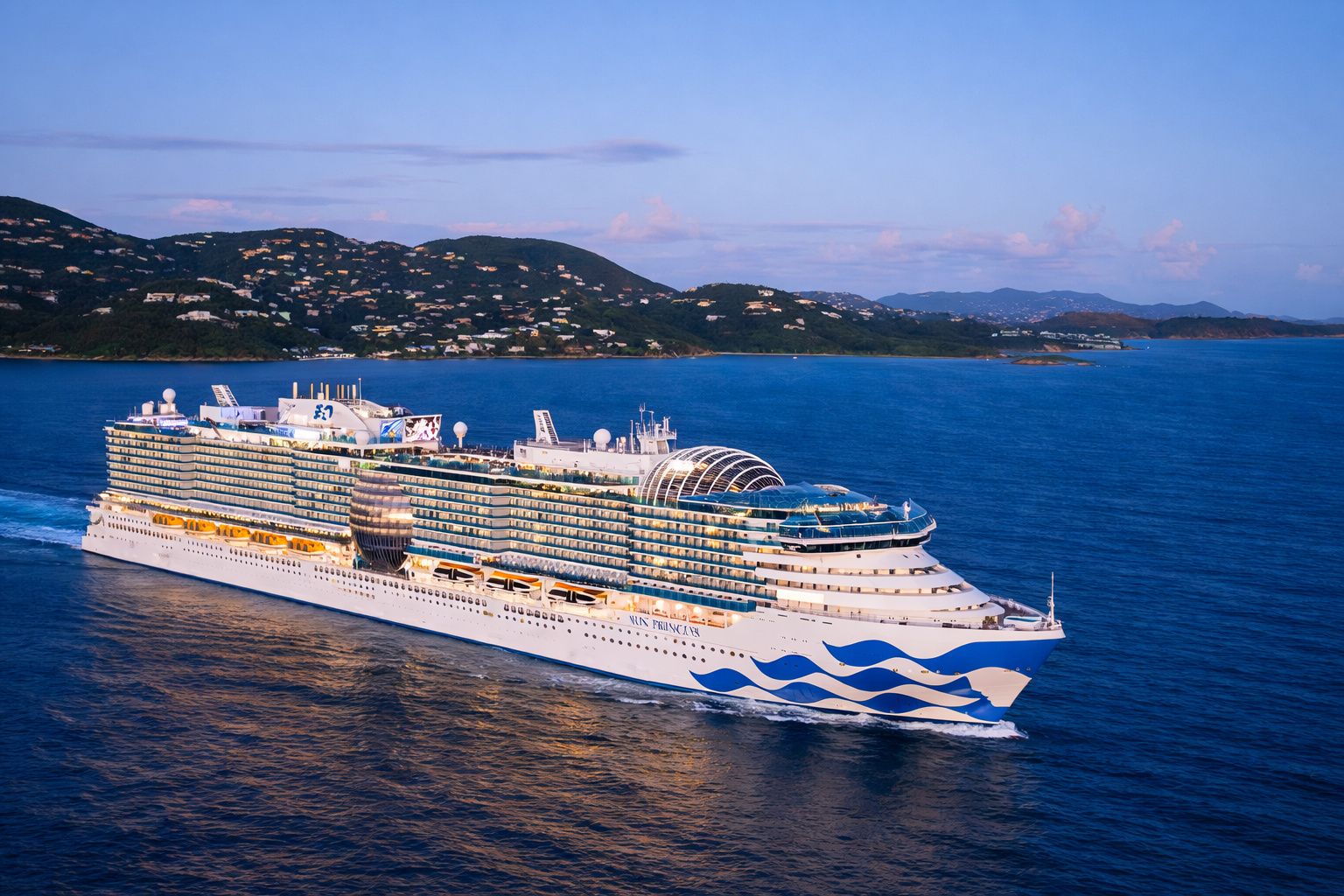
Weighing 175,500 Tons, Measuring 345 Meters Long, and With Capacity for Over 4,300 Passengers, the Sun Princess Becomes the Largest Ship Ever Built by Princess Cruises and Attracts Global Attention for Its Huge Glass Dome Inspired by Santorini’s Architecture Installed on Top of the Vessel
-
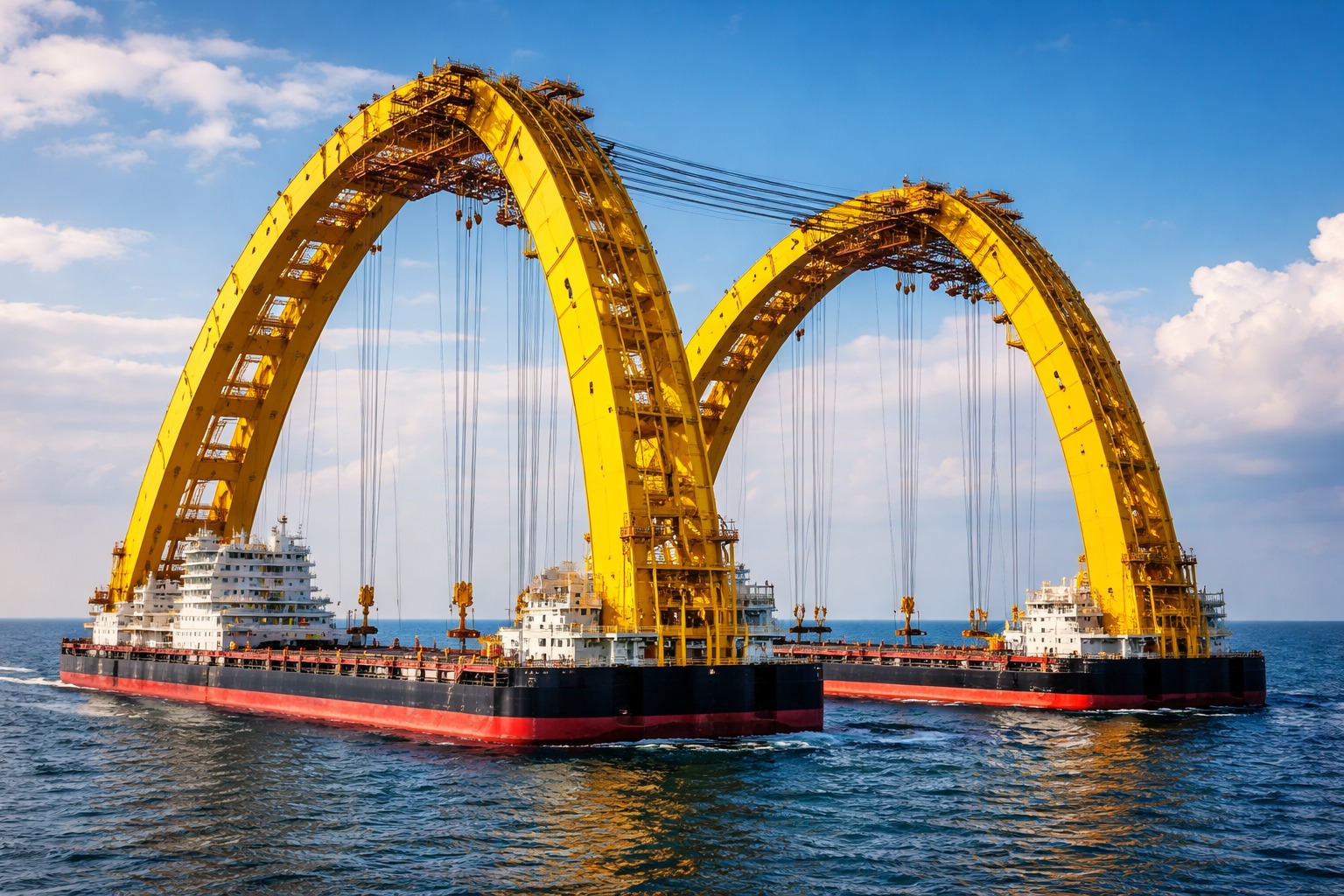
TX-10, The Colossus of The Sea: Largest Lifter Ship in The U.S., With Two Giant Barges, 73-Meter Tall Structure, and Strength to Raise 7,500 Tons of Sunken Oil Rigs

Historically, the first activities related to the naval sector emerged with ancient civilizations.
According to data from the United Nations Educational, Scientific and Cultural Organization (UNESCO), peoples such as the Egyptians, Phoenicians, Greeks, and Romans developed rudimentary vessels as early as 3000 B.C.
These vessels served for trade, war, and river and maritime navigation.
As humanity progressed, knowledge and shipbuilding techniques also evolved.
The Industrial Revolution, which occurred in the 18th and 19th centuries, represented an important milestone.
According to the Brazilian Association of Naval and Ocean Engineering (ABENAV), this phase brought the replacement of wood with steel and the use of steam engines, which allowed for the construction of larger, faster ships with greater cargo capacity.
With the 20th century, innovations continued.
The creation of the SOLAS Convention (Safety of Life at Sea), in 1914, regulated by the International Maritime Organization (IMO), reinforced the need for specific positions on board, with clear responsibilities to ensure the safety of maritime voyages.
The Brazilian Navy, through the Directorate of Ports and Coasts, follows these regulations to train officers and qualified crew, adhering to international standards.
Structure of Positions In The Naval Industry: Land And Sea
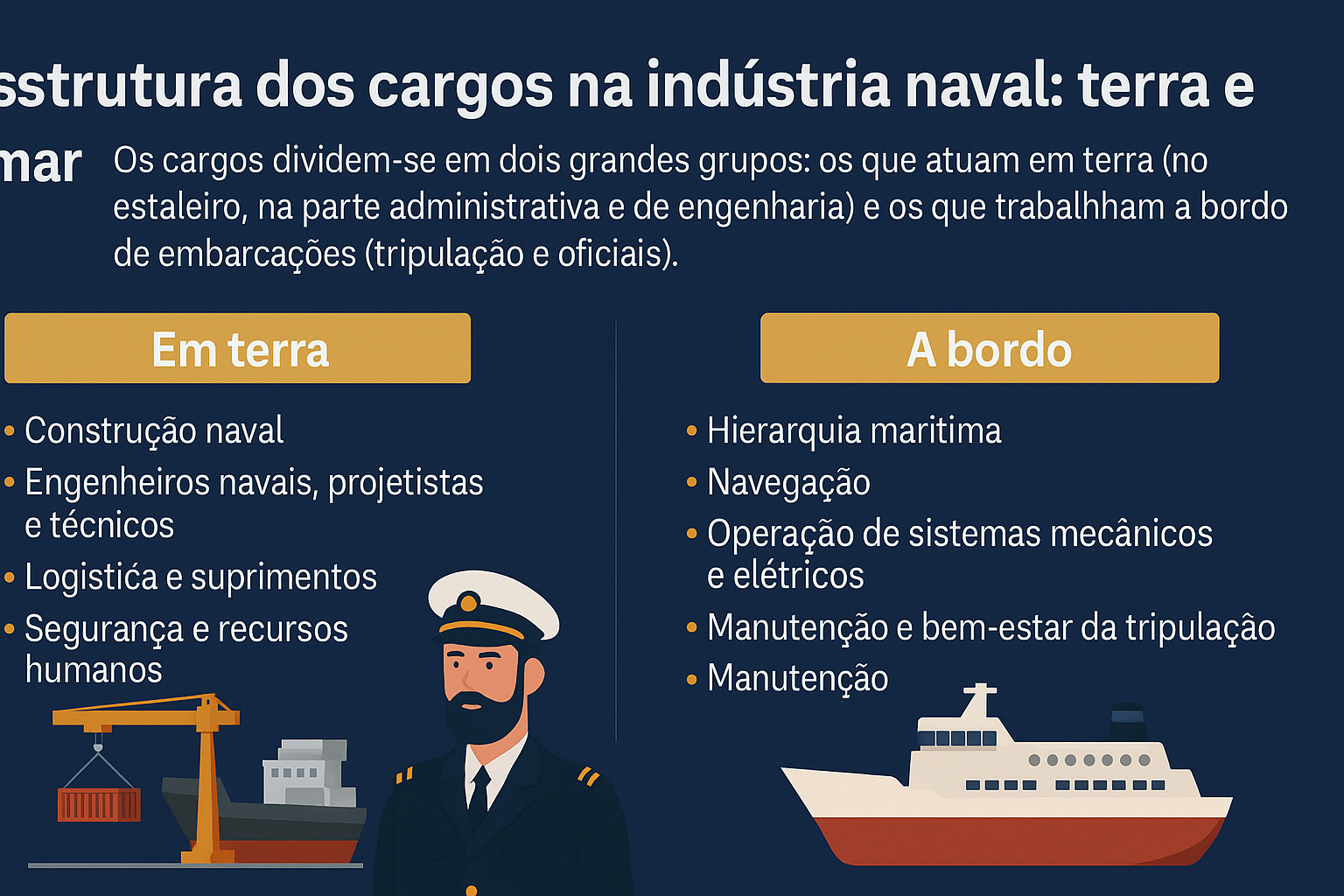
The positions are generally divided into two main groups: those that operate on land (in the shipyard, in the administrative and engineering areas) and those that work aboard vessels (crew and officers).
On land, shipbuilding requires highly qualified professionals. Naval engineers, designers, and technicians play fundamental roles in the design, development, and maintenance of ships.
There are also positions related to logistics, security, supplies, and human resources that ensure the smooth operation of activities.
According to the IBGE, Brazilian shipyards continue to grow and modernize their facilities to meet domestic and international demand, increasing the need for specialized professionals.
In many modern shipyards, automation and robotics are part of the process. This requires training in technology and innovation.
On the other hand, aboard, positions follow a rather traditional maritime hierarchy, influenced by centuries of naval tradition. As the Brazilian Navy clarifies, the professionals on board are responsible for navigation, the operation of mechanical and electrical systems, the maintenance of the ship, and the well-being of the crew.
This rigid organization ensures the safety of operations at sea, where any failure can have serious consequences.
Technical And Operational Professionals In The Naval Industry
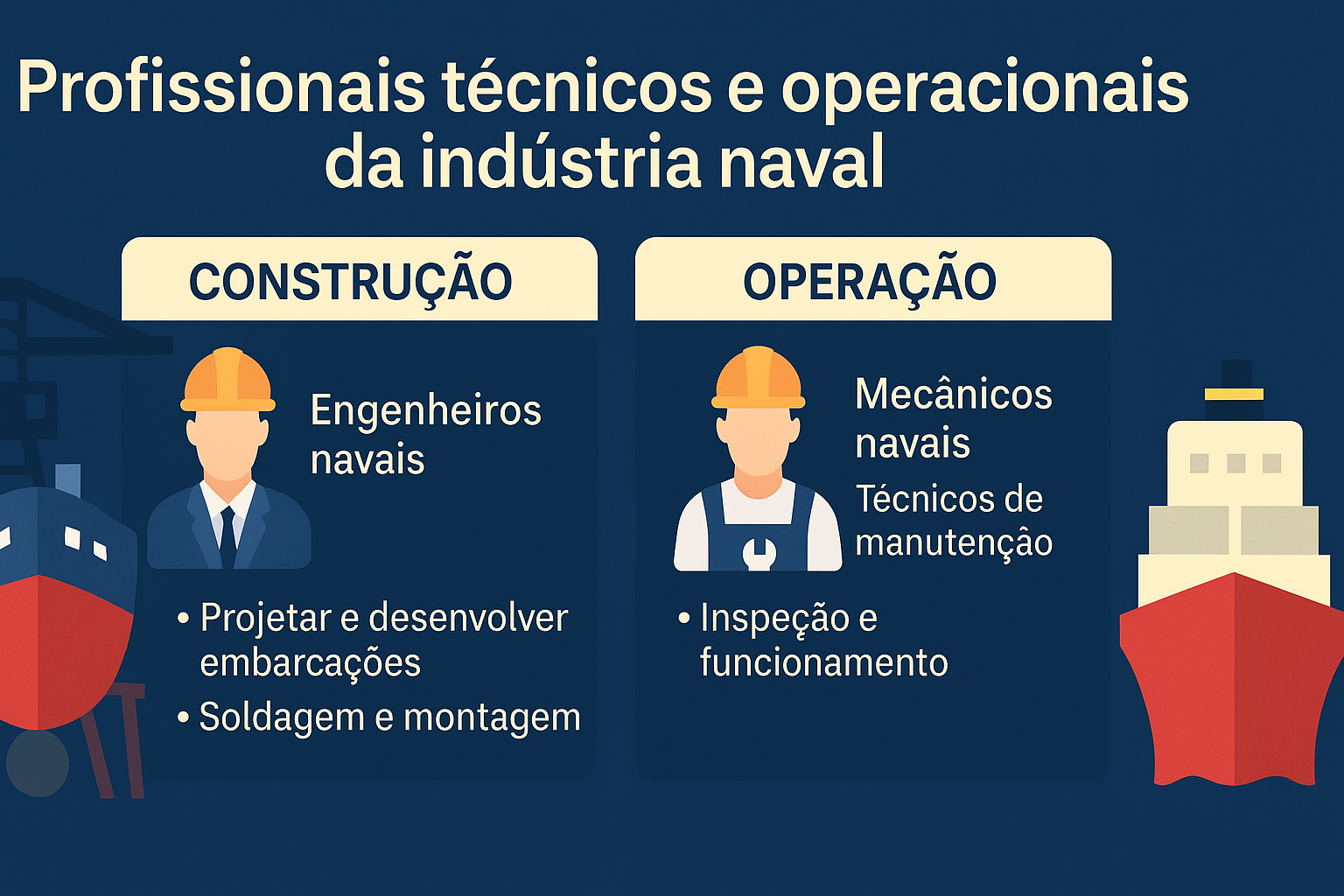
Technical and operational positions operate directly in the construction, maintenance, and operation of ships.
For example, naval engineers design and develop vessels, considering aspects such as hydrodynamics, material resistance, propulsion systems, and stability.
Furthermore, shipbuilding technicians play crucial roles, such as welding, assembling metal structures, and installing electrical and hydraulic systems.
These professionals usually work in shipyards and specialized workshops, ensuring that vessels meet the required safety and quality standards.
The Brazilian Association of Naval and Ocean Engineering emphasizes that the training of these technicians is fundamental for the technological advancement of the sector, as they are responsible for the practical implementation of projects and innovation.
At sea, positions such as naval mechanic, onboard electrician, and maintenance technician are part of the daily routine of many ships. They ensure that all equipment operates correctly during crossings.
On larger vessels, these teams work in shifts to maintain the continuous operation of the systems.
Command And Management Positions On Board
Within a vessel, positions in the naval industry include leadership roles.
The captain (or master) is the highest authority onboard. He is responsible for the safety of the crew, the navigation of the vessel, and compliance with international maritime transport regulations.
Below the captain, the first officer acts as the ship’s operational manager. He supervises loading and unloading, organizes the tasks of the sailors, and assists the captain in important decisions.
This role requires significant experience, people management skills, and a deep knowledge of maritime operations.
This hierarchy is regulated by the STCW Convention, adopted by the International Maritime Organization, which defines standards for the training, certification, and supervision of maritime personnel.
Other management positions include navigational officers, responsible for navigation and watchkeeping, and engineering officers, who command the propulsion and energy systems of the ship.
These roles require technical qualifications and, in many cases, specific courses provided by maritime training schools.
Additionally, these professionals need to be updated with safety regulations and international laws. This ensures the legal compliance of operations.
Support And Essential Services Positions
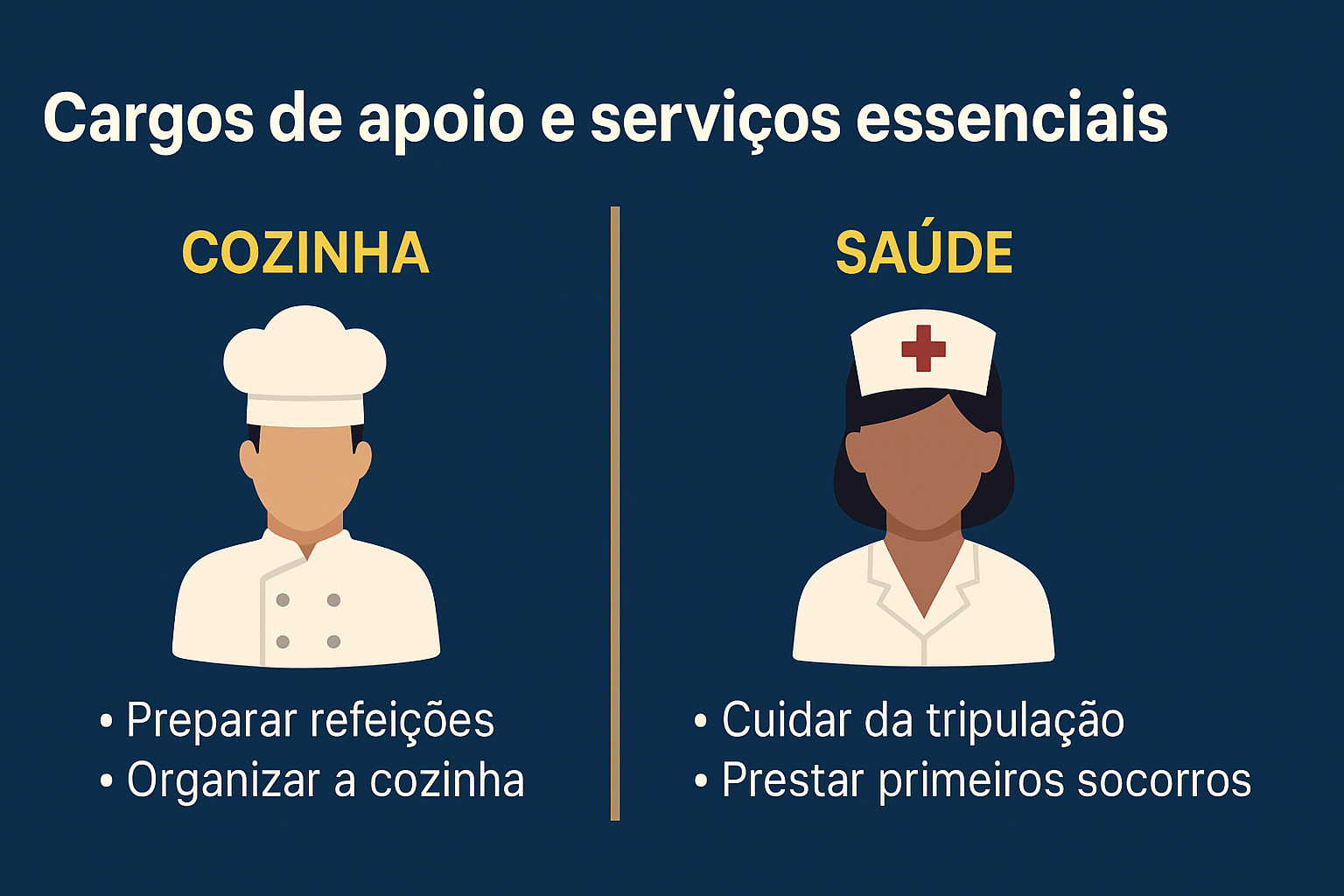
A ship does not only rely on engineering and navigation. Just like in any other organizational structure, there are support positions.
The cook, for instance, plays an indispensable role on long voyages. He prepares meals for the crew, taking care of both nutrition and the organization of the kitchen on board.
The messman acts as an assistant to the cook and, in some cases, helps with the cleaning and organizing of common areas.
The nurse or nursing technician takes care of the health of the crew members and provides first aid in case of accidents.
On larger vessels, psychologists and social workers may also work to care for the mental well-being of the crew, recognizing the importance of emotional health in confined environments for long periods.
These positions often receive less attention, but the operation of the ship directly depends on them.
They maintain the comfort and quality of life for those living aboard for weeks or even months.
The integration between these professionals and the technical team ensures the harmony and success of maritime operations.
Training And Qualifications For Positions In The Naval Industry
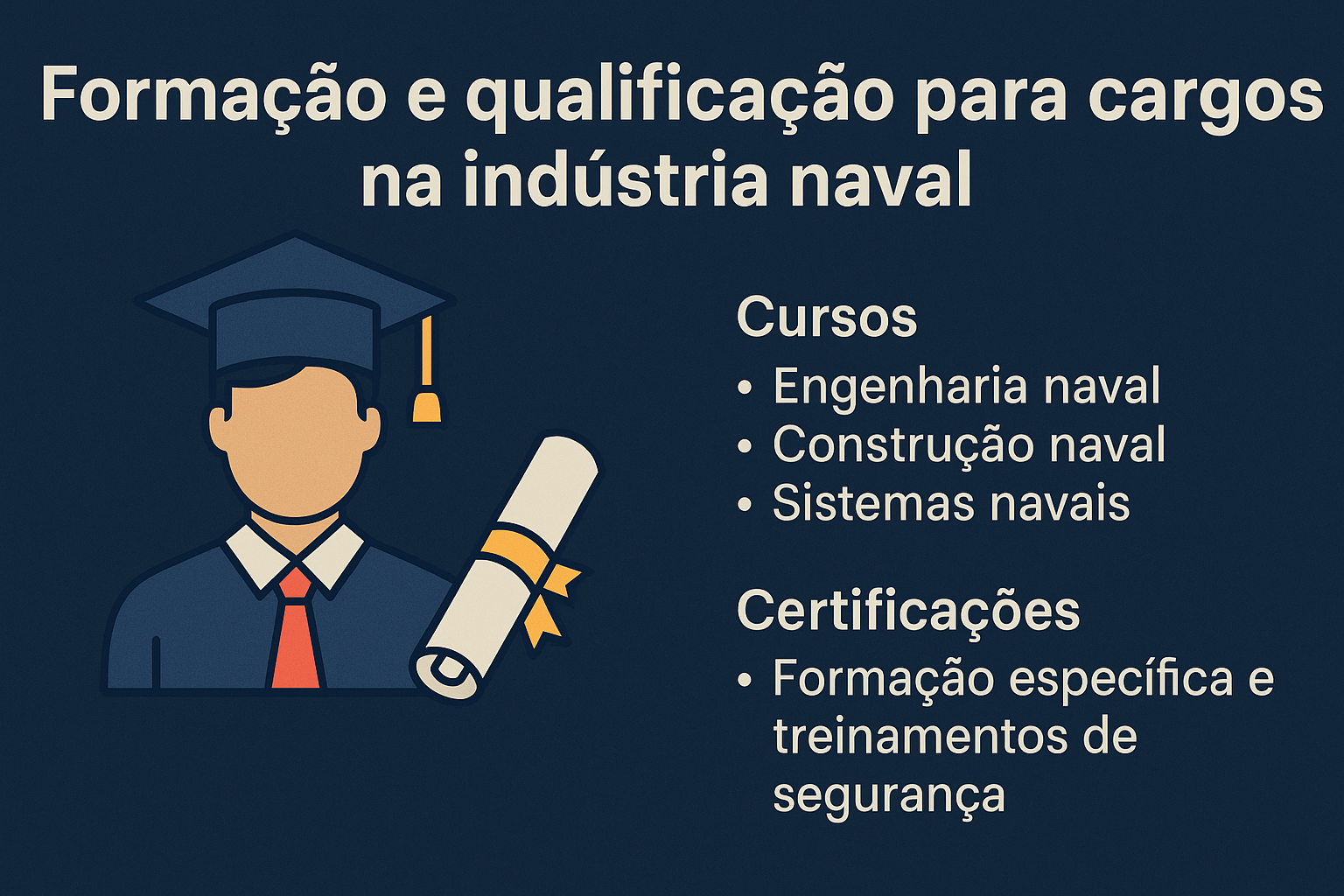
Those who wish to pursue a career in the naval industry need to understand that this area requires technical or higher education, depending on the position.
Maritime schools, federal institutes, and universities offer specific courses in naval engineering, shipbuilding, and technology in naval systems, among others.
For onboard positions, training courses and certifications are also required according to the standards of the Navy and international maritime organizations.
Additionally, many professionals undergo safety training, first aid, firefighting, and survival at sea.
These qualifications ensure personal safety as well as that of the ship and the cargo being transported.
Practical experience is another key point. Just as in other sectors, moving up the hierarchy within the naval industry requires time in service, continuous training, and responsibility.
Mobility between positions, specialization in specific areas, and adaptation to new technologies help professionals grow and stand out in the market.
The Future Of The Naval Industry And Its Opportunities
With technological advancements and the growth of global maritime trade, the naval industry continues to expand.
Vessels are becoming increasingly modern and automated, requiring qualified professionals, especially in the areas of technology, robotics, and sustainability.
The search for less polluting ships opens doors for positions focused on renewable energy and energy efficiency.
Furthermore, the cruise and offshore platform sector offers opportunities in various roles, both technical and administrative.
The use of artificial intelligence for monitoring and predictive maintenance creates demand for specialists in maritime information technology.
Another important point is the appreciation of diversity in the naval industry.
More and more women are entering this sector, taking on technical, operational, and leadership positions, contributing to the renewal of maritime culture.
This inclusion enriches the work environment, brings new perspectives, and helps break old stereotypes.
According to data from the International Labor Organization (ILO) of 2023, the presence of women in the naval sector has been steadily increasing, promoting greater equality of opportunities.
Therefore, the positions in the naval industry form a vast and dynamic universe that goes far beyond the classic image of the sailor at sea.
It is a sector that combines tradition, technology, and innovation, offering diverse paths for those who want to be part of the movement of the seas.









Seja o primeiro a reagir!