





 Portuguese
  English
  Spanish
  5 min of reading
  0 comments


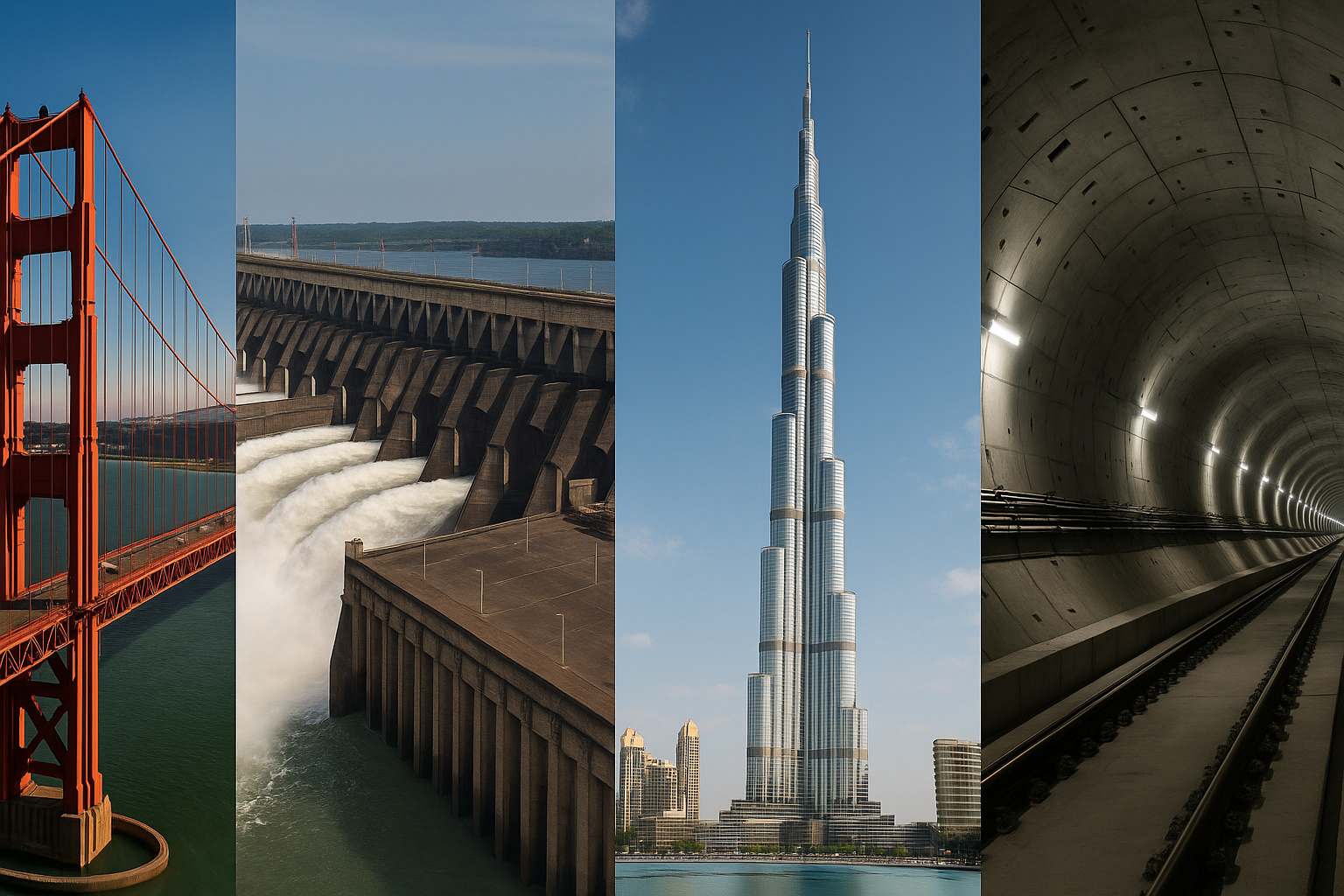
Understand How Major Engineering Works Have Marked History and Continue to Transform the World with Innovation, Technique, and Social and Environmental Impact.
Major engineering works have always fascinated humanity.
From the pyramids of Egypt to modern skyscrapers, bridges, dams, and tunnels, these projects represent more than technical achievements: they symbolize the human capacity to turn ideas into reality, overcoming physical, environmental, and social limits.
Therefore, in this guide, we will explore the universe of major engineering works in an accessible way, bringing historical context, basic concepts, and timeless examples that inspire professionals and curious minds around the world.
-
Abandoned house for 15 years disappears in the woods, shocks owner with unrecognizable scenery and is reborn in an intense transformation after almost 90 hours of work in just 10 days.

-
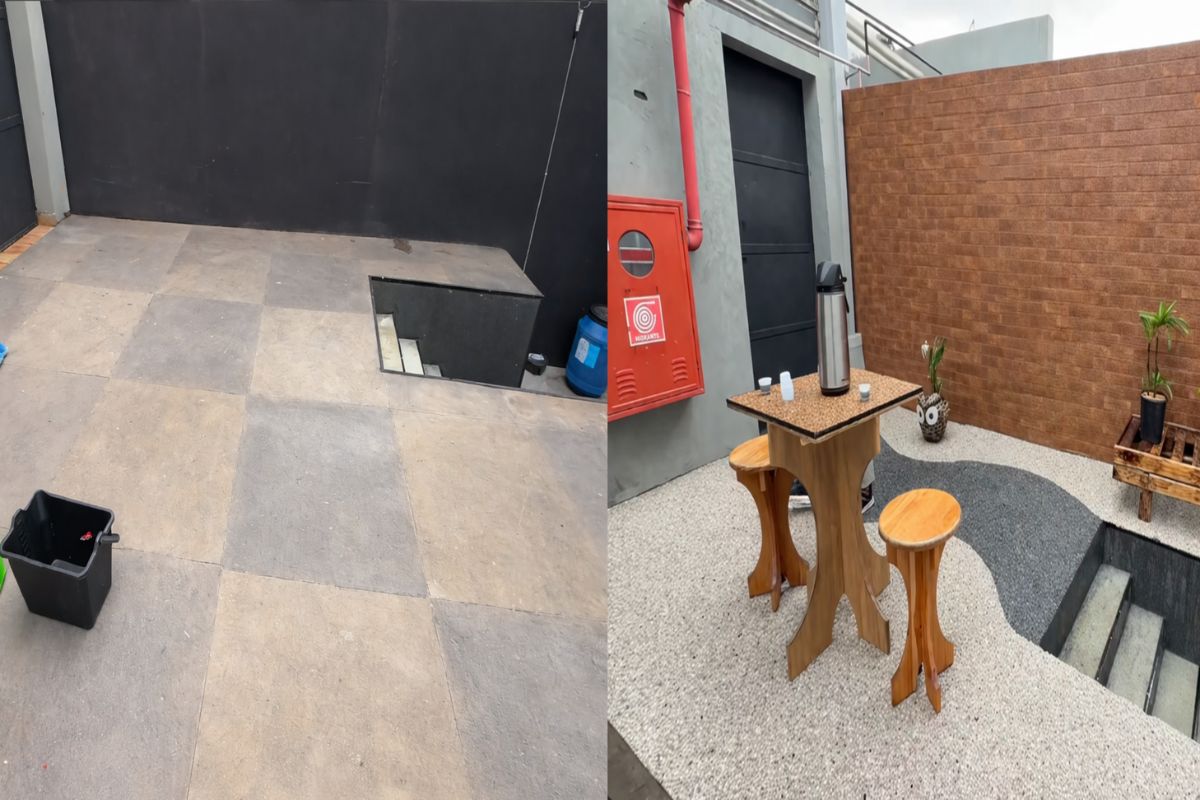
In just three hours, a natural stone floor transforms the entrance of the house with an organic effect, immediate drainage, and a sophisticated non-slip finish that doesn’t puddle water, dries quickly, and impresses with the final result.
-
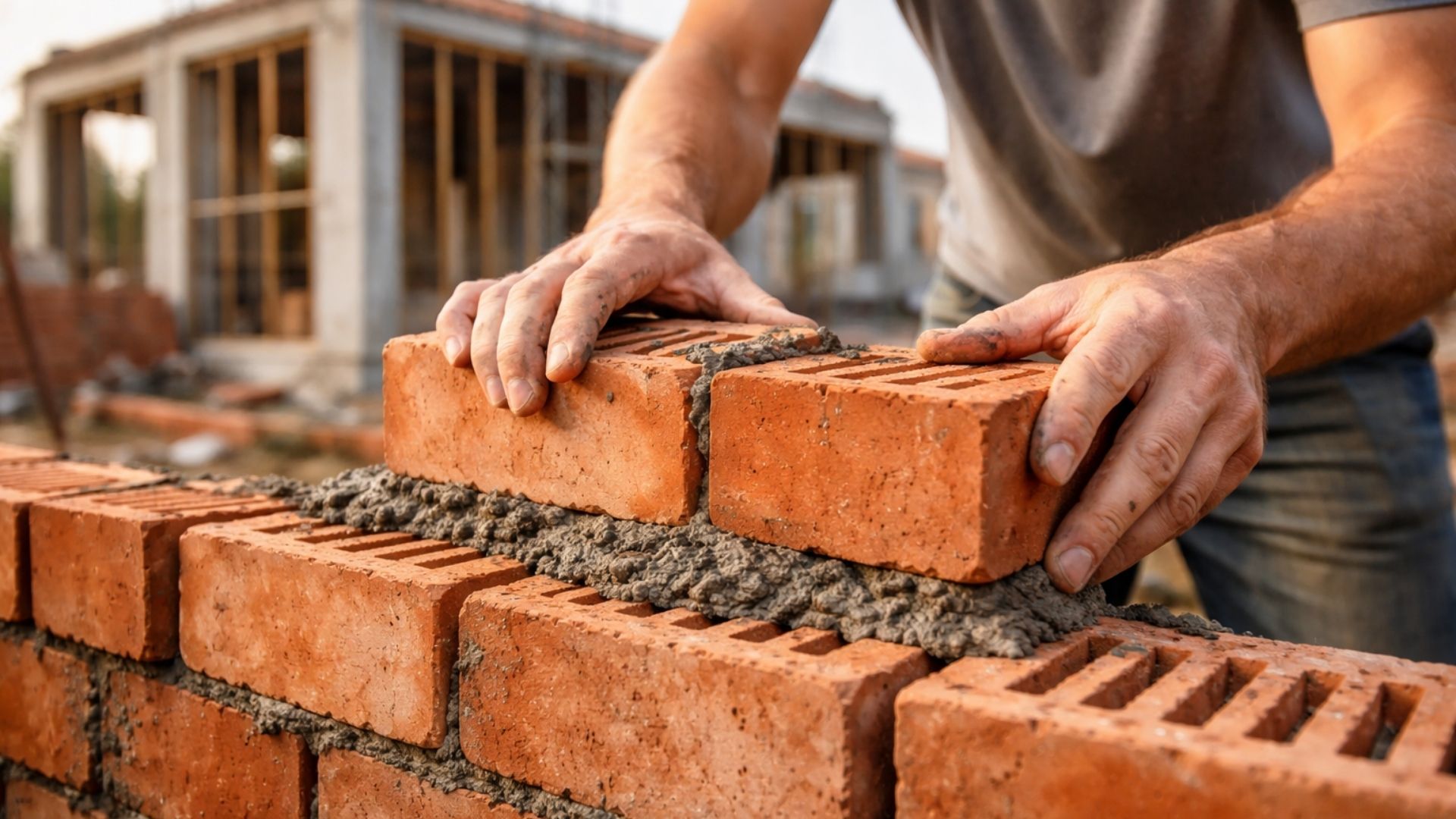
‘Interlocking brick’ made of earth arrives in the construction industry with cost reductions of up to 40% on the project.
-
Espírito Santo will receive the largest engineering project in its history with the duplication of BR 262, which will have 50 viaducts, 28 bridges, and 2-kilometer tunnels cutting through the most challenging mountainous region of the entire state.


The history of major engineering works dates back to Antiquity, long before engineering solidified as a profession.
Moreover, the ziggurats of Mesopotamia and the walls of Babylon reflect the social organization and technical mastery of these civilizations, as highlighted by the British Museum.
These structures served both protective and religious functions, showing that engineering was directly linked to the political and cultural needs of the time.
During the Roman Empire, according to the American Society of Civil Engineers (ASCE), the development of aqueducts, roads, and the Colosseum exemplifies significant advancements.
The Romans created hydraulic concrete and used arches that allowed for larger and more resilient constructions, which transformed the infrastructure of the time and influenced engineering to this day.
The Middle Ages saw the construction of gothic cathedrals, such as Notre-Dame de Paris, which employed pointed arches to reach impressive heights, according to the Encyclopedia Britannica.
In the Renaissance, scientific advancement propelled engineering forward. Leonardo da Vinci, for example, applied physical principles in his designs, including bridges and machines, anticipating techniques that would only be formally studied centuries later.
Industrial Revolution and the Transformation of Major Engineering Works
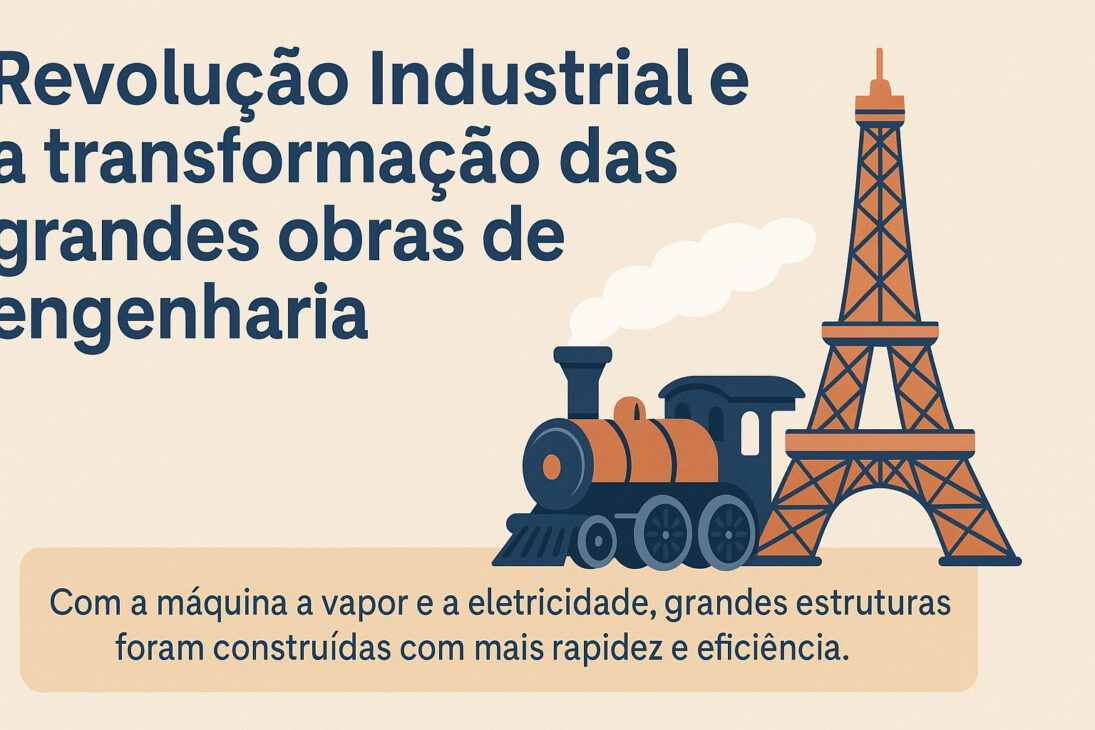
With the Industrial Revolution, which took place between the 18th and 19th centuries, engineering underwent a true transformation, according to the Chicago Museum of Science and Industry.
The invention of the steam engine and the spread of electricity allowed for the construction of railways, power plants, and large structures with much greater speed and efficiency.
The Eiffel Tower, inaugurated in 1889 and documented by the official site of the monument, became a symbol of modern engineering.
Its metal structure represented an innovation that still impresses, especially for its pioneering use of wrought iron on a large scale.
Another landmark was the Panama Canal, completed in 1914, whose construction required technical solutions for river diversions and water level control.
According to Panama Canal S.A., the work transformed global trade by shortening the maritime route between the Atlantic and the Pacific.
The 20th century consolidated technological advancements and a greater concern for sustainability, according to the World Bank.
Works such as the Golden Gate Bridge, inaugurated in 1937, and the Rio-Niterói Bridge, completed in 1974, show the evolution of civil engineering, including integration with urban planning and social impact.
Additionally, the construction of the Itaipu Hydroelectric Plant, completed in 1984, as reported by the National Electric Energy Agency (ANEEL), represented an unprecedented international cooperation between Brazil and Paraguay. The plant remains one of the largest producers of clean energy in the world today.
New Challenges and Technologies in Contemporary Engineering
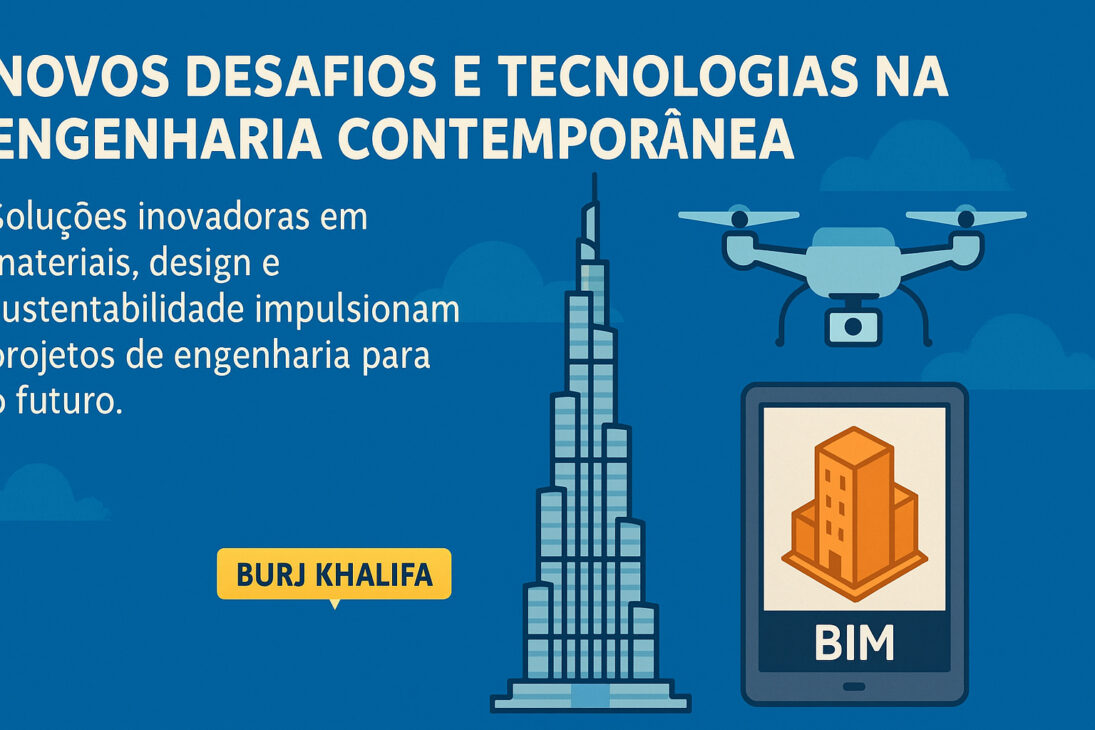
Today, engineers face challenges such as population growth, climate change, and the demand for sustainable infrastructure, as reported by the Council on Tall Buildings and Urban Habitat (CTBUH).
Projects such as the Burj Khalifa in Dubai, completed in 2010, demonstrate the pinnacle of structural engineering, with innovative solutions in materials and design.
The Gotthard Base Tunnel, inaugurated in 2016 and highlighted by the Swiss Federal Railways (SBB), is the longest railway tunnel in the world and a milestone in geotechnical engineering and sustainability.
Moreover, emerging technologies such as BIM (Building Information Modeling), 3D printing, and the use of drones for monitoring are revolutionizing construction execution.
According to the International Federation of Consulting Engineers (FIDIC), these innovations increase precision and efficiency, reducing costs and environmental impacts.
What Defines a Major Engineering Work?

What characterizes a major engineering work is not only its scale but also innovation, social and economic impact, functionality, and durability.
As explained by the Federal Council of Engineering and Agronomy (CONFEA), these projects involve multidisciplinary teams of civil, mechanical, electrical, environmental engineers, and others.
The main types of major works include infrastructure (roads, railways, airports), hydraulic (dams, canals), industrial (power plants, factories), and urban (buildings, overpasses).
Each one requires specific knowledge, but all aim to promote development and quality of life.
Engineering education requires solid knowledge in mathematics, physics, and applied sciences.
However, interpersonal skills and problem-solving ability are also essential, as advised by the Project Management Institute (PMI).
In addition, effective project management is crucial.
Controlling costs, deadlines, and quality requires clear communication and detailed planning.
Especially in large-scale projects that can last for years and involve unforeseen events, such as climate changes and political issues.
Sustainability and Major Engineering Works in the 21st Century
Currently, sustainability is essential in any major engineering work.
The United Nations (UN) emphasizes that projects should consider environmental and social impacts.
By adopting practices such as using recyclable materials, reducing carbon emissions, and protecting natural areas.
In Brazil, the Cantareira System, which supplies millions in São Paulo, the Transposition of the São Francisco River, aimed at the semiarid region, and the Port of Suape in Pernambuco.
These recent examples illustrate these principles, according to data from the National Water Agency (ANA) and the Ministry of Infrastructure.
These projects also seek to integrate local communities, valuing regional labor and respecting cultural heritage.
This helps to minimize negative impacts and distribute benefits.
In summary, major engineering works reflect the evolution of humanity.
They keep pace with social needs and scientific advancements, offering beginners a vast field for study and professionals the opportunity to leave a lasting legacy.
Thus, by combining technique, vision, and responsibility, engineering shapes the world we live in — brick by brick, bridge by bridge, tunnel by tunnel.










-

-

-

4 pessoas reagiram a isso.