





 Portuguese
  English
  Spanish
  5 min of reading
  0 comments


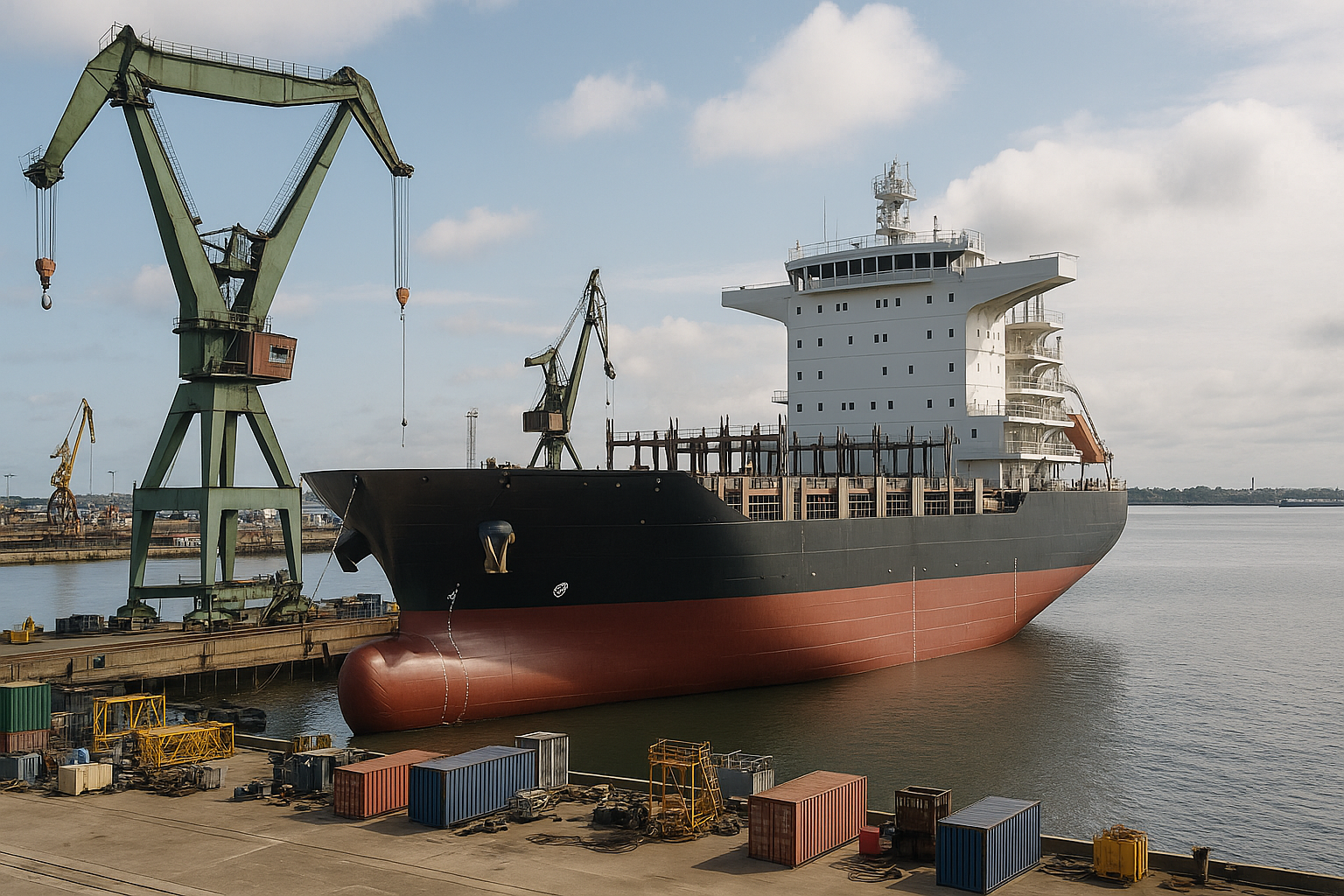
Understand How the Shipbuilding Industry Market Evolved Over Time and Discover the Main Areas of Action and Opportunities, Whether You Are a Beginner or a Sector Professional.
The shipbuilding industry market is one of the oldest and most relevant sectors of the global economy. It encompasses activities related to the construction, operation, and maintenance of vessels, such as ships, platforms, and submarines.
Moreover, it is directly linked to water transportation, the defense industry, and the exploration of natural resources.
Since ancient times, this market has influenced the progress of civilizations. As naval historian Roger Smith explains, Egyptians, Phoenicians, and Greeks used vessels to expand trade and warfare.
-
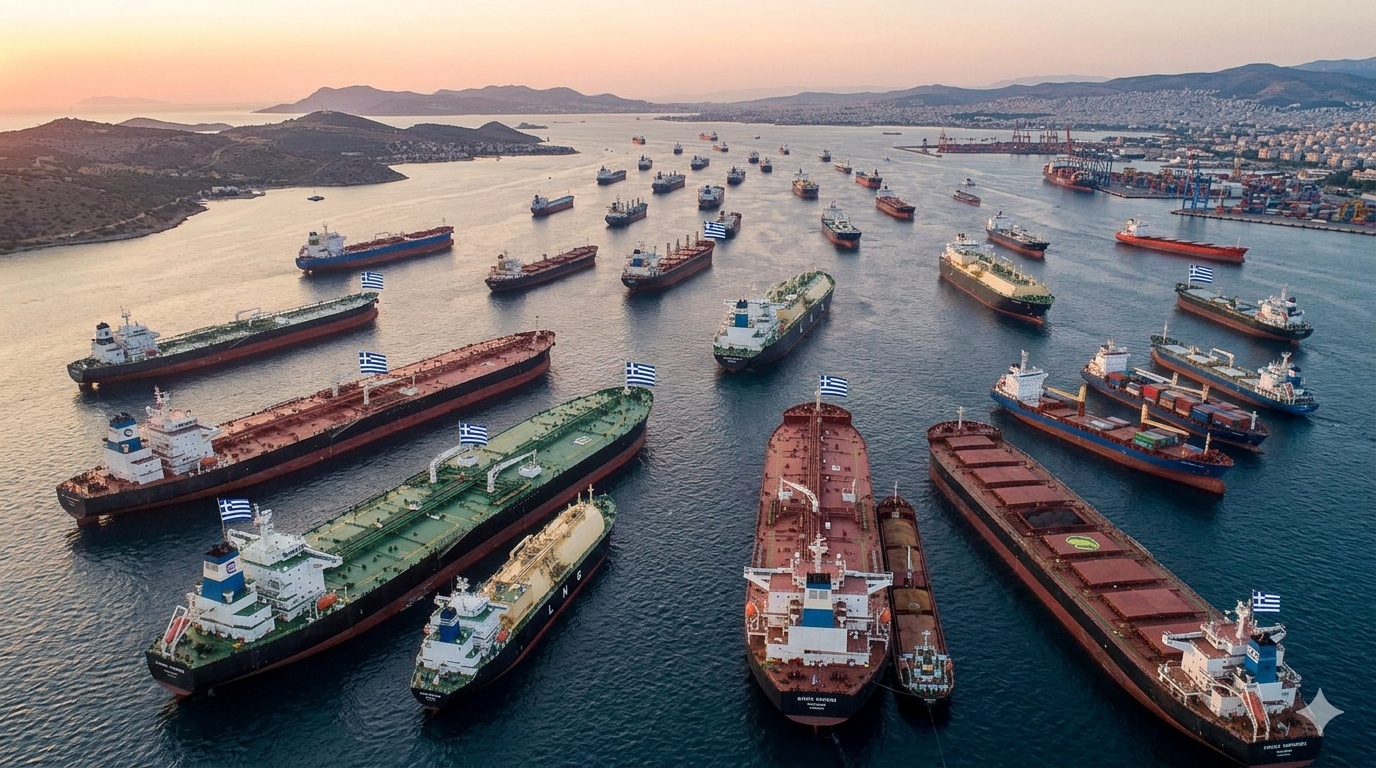
Neither the USA nor China: a small European nation has become one of the largest maritime powers on the planet, controlling one of the largest merchant fleets in the world with thousands of ships and dominating the global transportation of oil and strategic cargo.
-
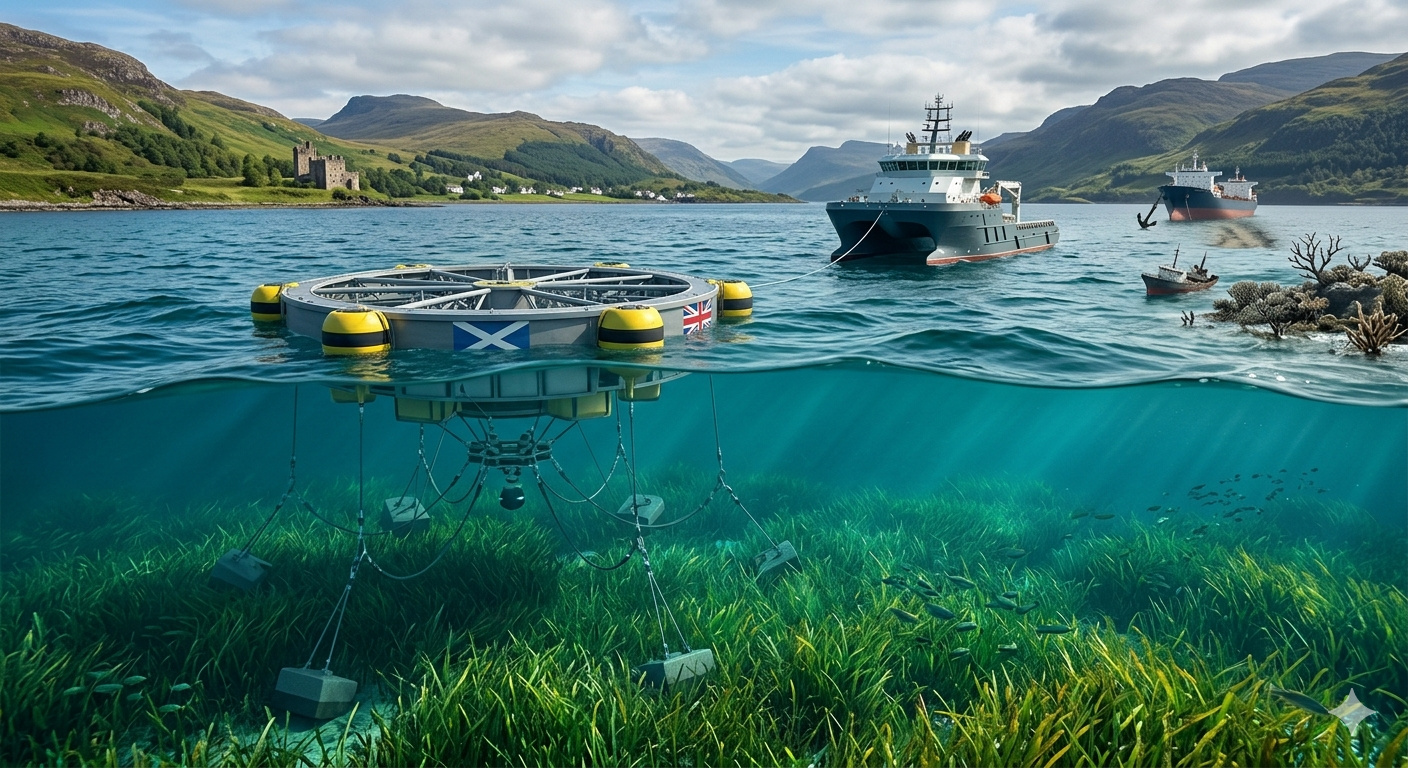
Scotland and the United Kingdom have created a new anchoring system that floats in the water without touching the seabed, after discovering that the current from a conventional anchor destroys up to 50 m² of seagrass meadow per event and that ship-damaged reefs showed no signs of recovery even ten years later.
-
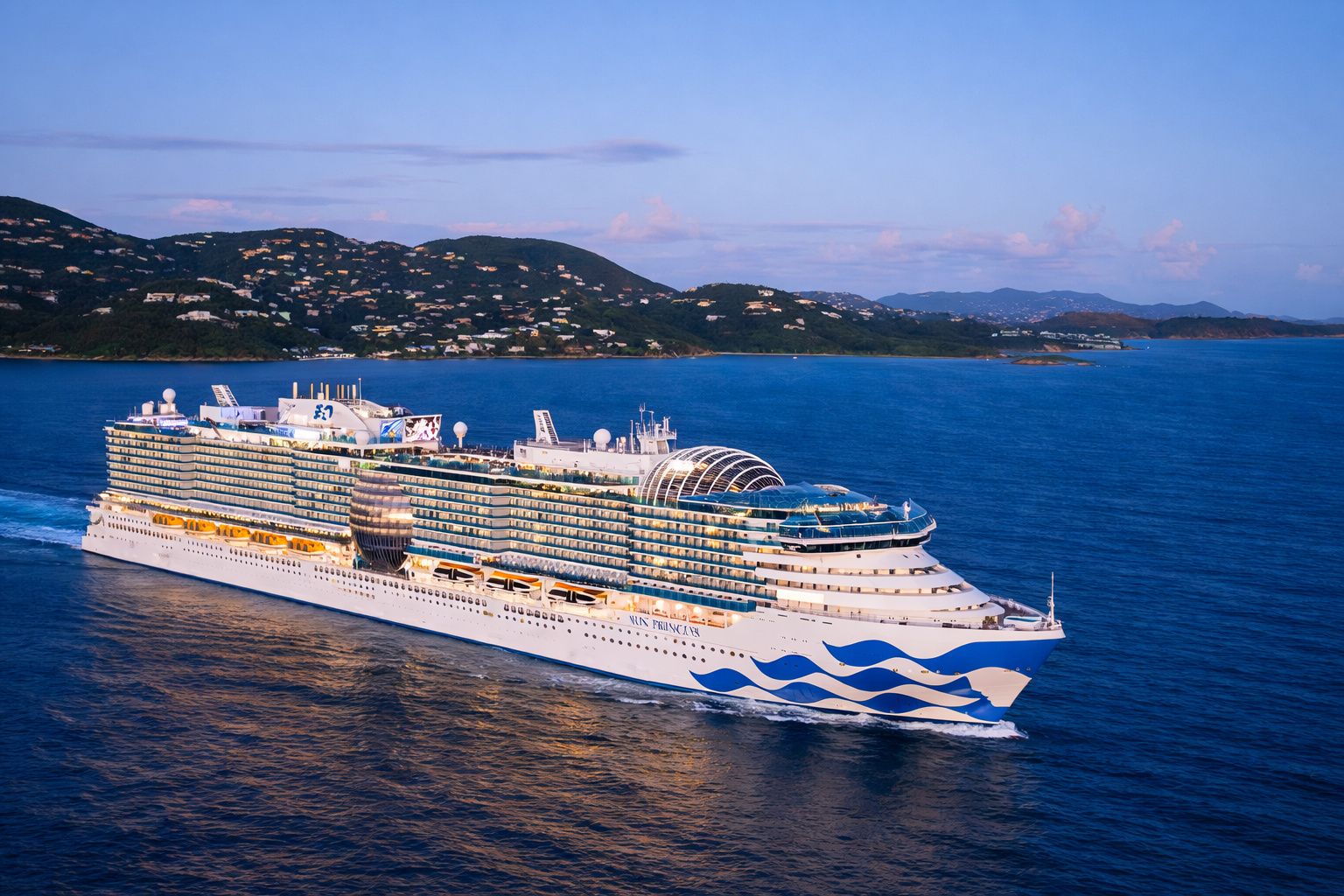
Weighing 175,500 Tons, Measuring 345 Meters Long, and With Capacity for Over 4,300 Passengers, the Sun Princess Becomes the Largest Ship Ever Built by Princess Cruises and Attracts Global Attention for Its Huge Glass Dome Inspired by Santorini’s Architecture Installed on Top of the Vessel
-
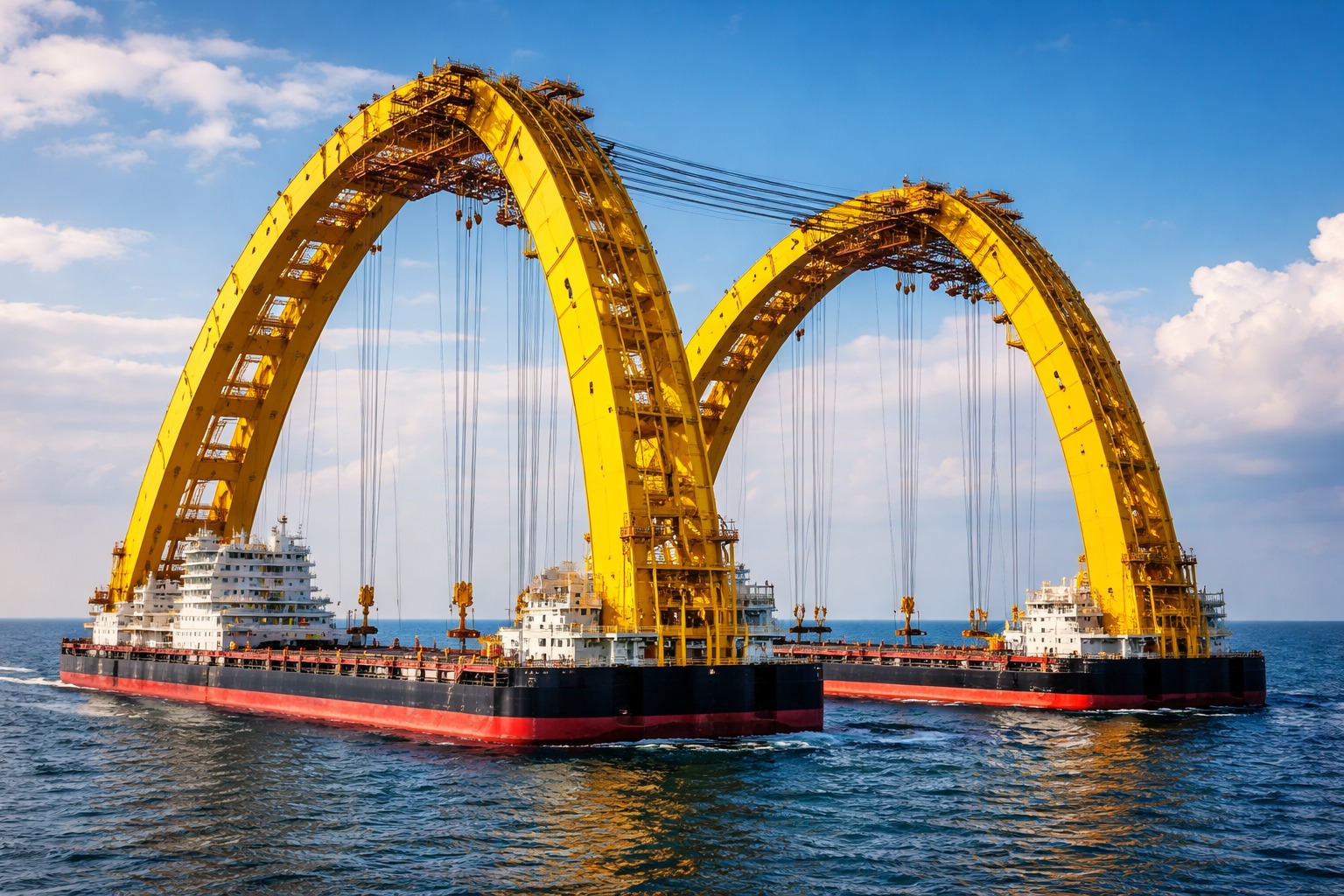
TX-10, The Colossus of The Sea: Largest Lifter Ship in The U.S., With Two Giant Barges, 73-Meter Tall Structure, and Strength to Raise 7,500 Tons of Sunken Oil Rigs
During the Age of Exploration, European countries such as Portugal, Spain, and England used naval power to conquer new territories and become global powers, a movement detailed in documents from the Portuguese Navy and in historical records from the British Admiralty.
Over time, shipbuilding evolved considerably. In the Middle Ages, master carpenters passed down artisanal knowledge.
By the Industrial Revolution, as highlighted by the Institute of Applied Economic Research (IPEA), shipyards modernized, adopting steel and steam propulsion, which revolutionized the capacity and speed of ships.
Governments began to invest heavily in naval fleets, both for trade and defense, further reinforcing the strategic importance of the sector.
The Consolidation of Maritime Transport and the Modernization of the Sector
During the 19th century, maritime transport consolidated as the primary route for the flow of goods between continents.
According to economic historian Anthony Tully, the emergence of steamships made travel faster and more reliable, boosting international trade.
Over the years, modernization in the shipbuilding industry accelerated. Shipyards began to build larger and more specialized vessels, utilizing durable materials and advanced technologies.
Tanker ships, container ships, cruise ships, military vessels, and grain transport ships emerged, each requiring specific solutions in design and operation.
Currently, the sector moves about 90% of global trade volume, according to data from the International Maritime Organization (IMO).
Food, fuels, household appliances, vehicles, and various products directly rely on maritime logistics. This demonstrates how the shipbuilding industry market remains essential for the modern world.
Additionally, onboard automation, digital navigation systems, and remote data analysis have become integrated into modern ships.
This has created a new reality: Shipbuilding Industry 4.0, where technology and connectivity become indispensable, as reported by the International Maritime Engineering Association (IAMI).
Segments of the Shipbuilding Industry and Their Areas of Action
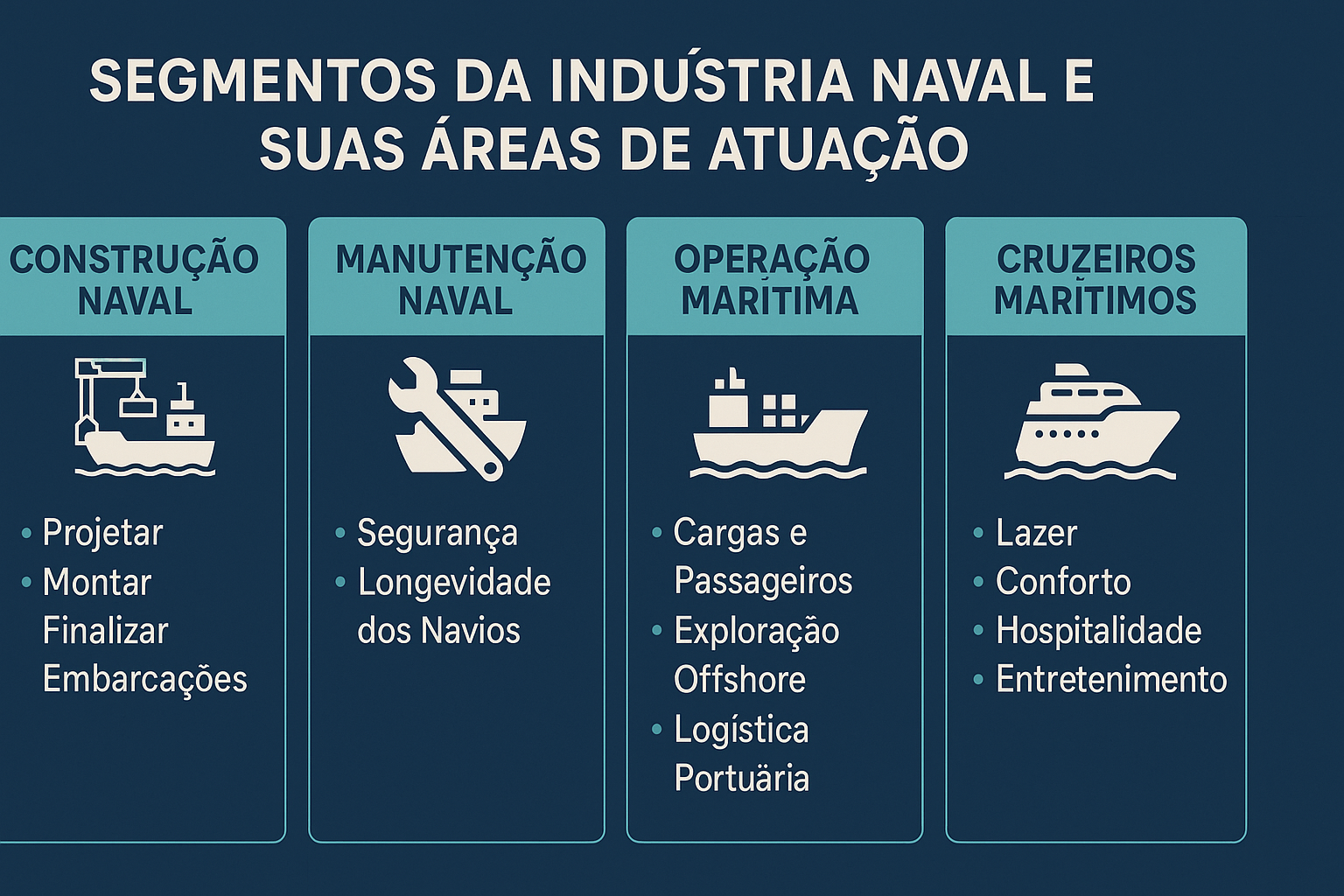
The naval sector is extremely broad and divides into various interdependent segments. The shipbuilding involves the process of designing, assembling, and finishing vessels.
Next, naval maintenance ensures safety and longevity of ships in operation.
Maritime operation involves the navigation of cargo and passengers, the exploration of oil and gas offshore, port logistics, and nautical support services.
As a result, different professions are demanded, including naval engineers, logistics operator technicians, administrators, and foreign trade specialists.
In recent years, the growing concern for the environment has influenced the shipbuilding industry.
According to a report from the International Energy Agency (IEA), sustainable solutions have emerged, such as liquefied natural gas (LNG)-powered ships, hybrid propulsion systems, and technologies to reduce pollutant emissions.
The sector strives to align economic growth with environmental responsibility.
Additionally, cruise ships are gaining prominence as a promising segment. These vessels operate as true floating resorts, offering complete leisure and comfort experiences.
Consequently, the need for professionals in hospitality, entertainment, design, and safety onboard is increasing.
The Overview of the Shipbuilding Industry in Brazil
Historically, Brazil has held a prominent position in the naval landscape, especially during the 1970s and 2000s.
According to a study by the Institute of Applied Economic Research (IPEA) published in 2020, the strong resumption of investments in shipbuilding, offshore, and hull industries since the 2000s has had significant impacts on the Brazilian economy.
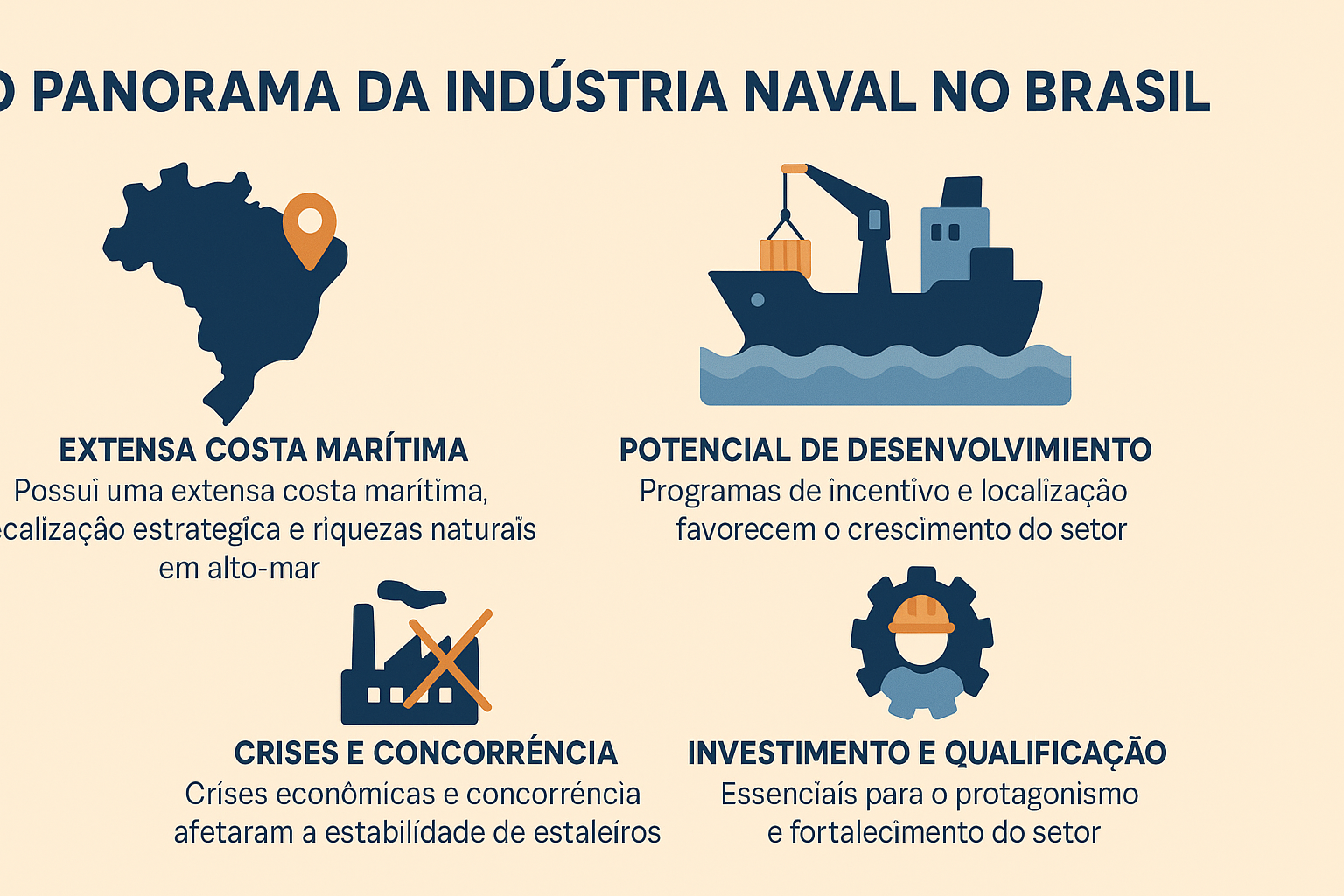
However, the sector also faced economic and political crises that affected its stability. International competition and lack of incentives compromised the sustainability of various shipyards.
As a result, many of them ceased operations, harming the entire production chain, as analyzed by the Federation of Industries of the State of Rio de Janeiro (FIRJAN).
Despite this, the country continues to have strong potential. It has an extensive maritime coast, strategic location, and natural wealth offshore.
Moreover, cabotage incentive programs, such as BR do Mar, sanctioned in 2022 by the Federal Government, aim to stimulate competition and reduce transportation costs between Brazilian ports, according to information from the Ministry of Infrastructure.
For this, it is essential to invest in technology, professional training, and long-term policies. This way, Brazil can regain prominence in the shipbuilding industry and contribute more strongly to global trade and maritime security.
Opportunities for Those Who Want to Enter or Specialize
Those wishing to enter the shipbuilding industry must prepare adequately. Technical and undergraduate courses in naval engineering, logistics, port operations, and foreign trade provide a solid foundation.
Additionally, visiting shipyards, attending fairs, and seeking internships helps develop a practical understanding of the sector.
For professionals already active, specializations are essential. Areas such as project management, onboard automation, data analysis, and sustainability present high demand.
Knowing technical English and digital tools increases the chances of integration into the global market.
The shipbuilding sector is not limited to vessel construction. It also involves areas such as intermodal logistics, fishing industry, maritime tourism, and ocean research. The diversity of action makes this market highly promising.
Moreover, the growth of startups linked to the blue economy opens new doors. They develop technological solutions for sustainable use of the oceans, creating innovative business models that integrate environmental preservation and income generation.
Therefore, if you wish to grow professionally in a strategic, dynamic market that is constantly evolving, the shipbuilding sector is an excellent choice.
Prepare, update, and be ready to navigate purposefully towards a promising future.










Seja o primeiro a reagir!