





 English
  Francês
  Alemão
  Italiano
  Japonês
  Norueguês
  Portuguese
  Spanish
  3 min of reading
  0 comments


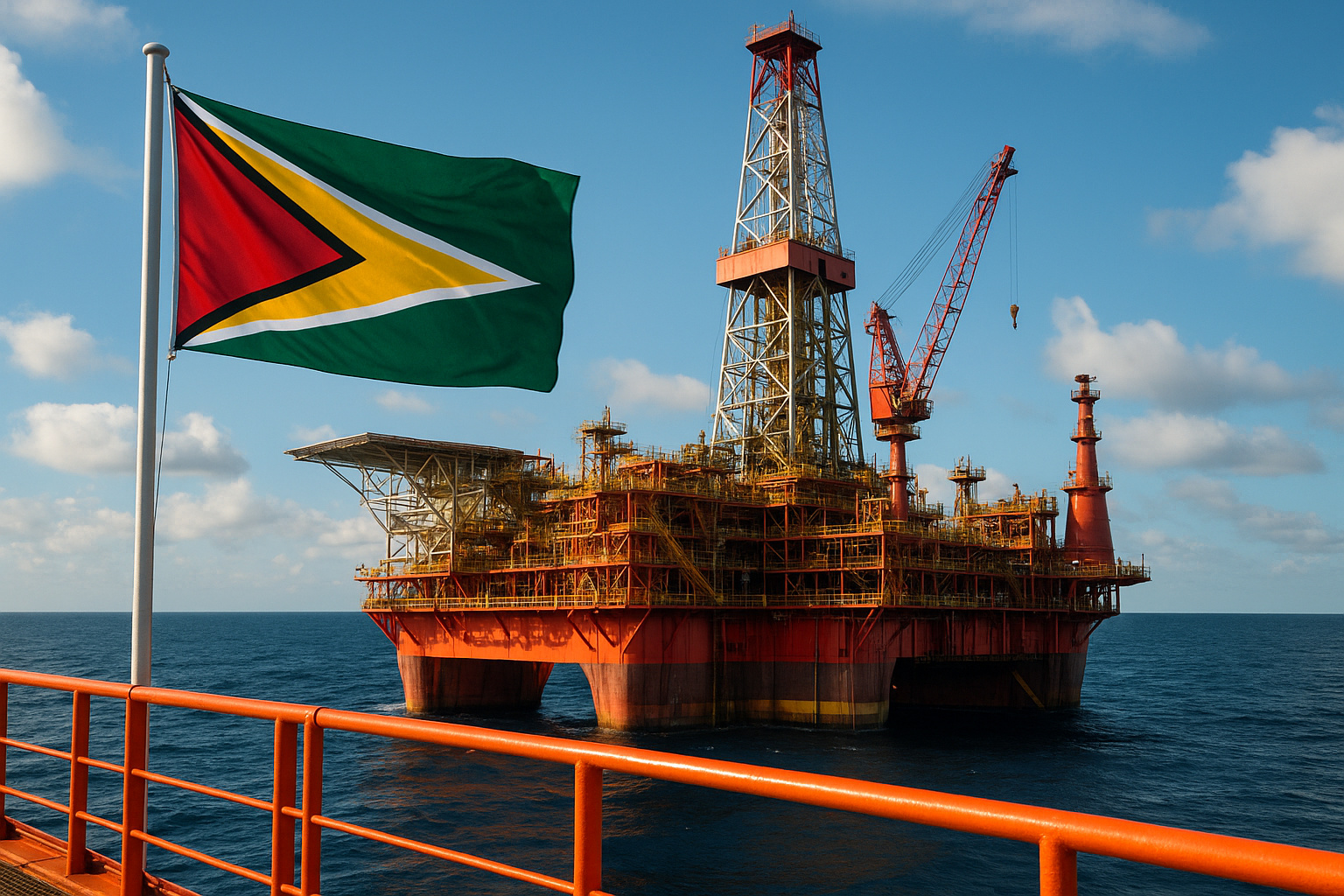
Investment of US$ 6.8 Billion Promises to Change the Energy Balance of South America
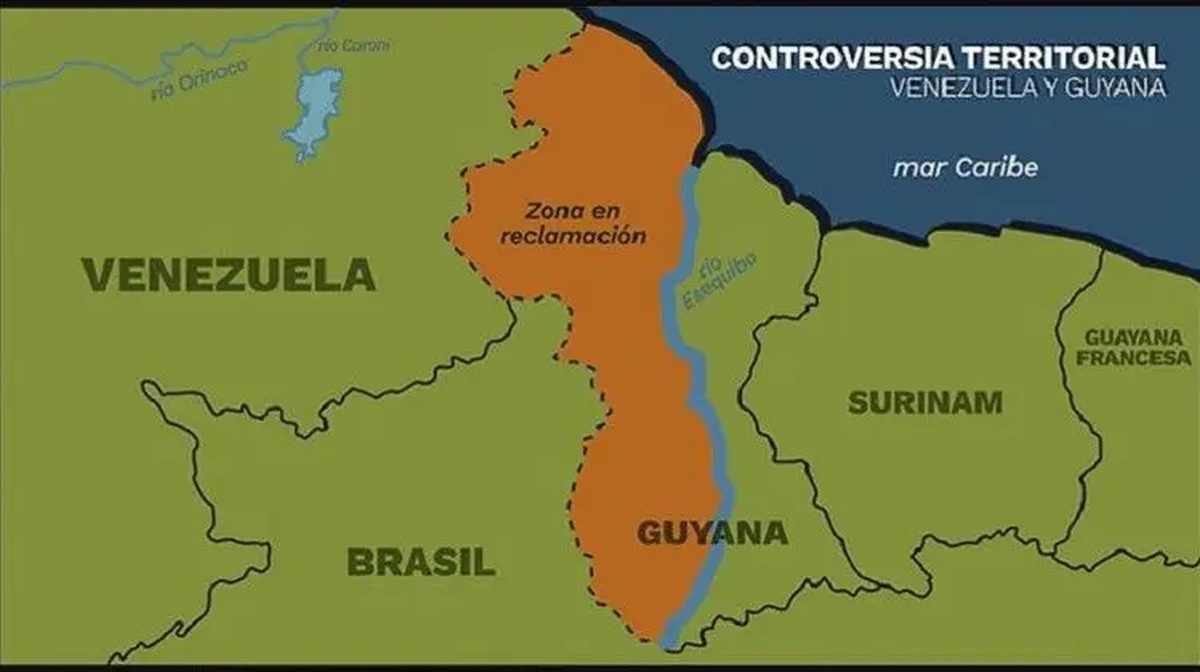
The Guyana approved on September 22, 2025 the Hammerhead maritime project, in the Stabroek block, The Guyana approved on September 22, 2025 the Hammerhead maritime project, in the Stabroek block, located in waters near the disputed Essequibo. Consequently, the investment of US$ 6.8 billion (R$ 36.3 billion) from ExxonMobil and its partners is expected to transform the country into one of the world’s largest oil powers within the next decade.
Increasing Production Expected to Multiply National Capacity
According to the Guyana Ministry of Natural Resources, the Hammerhead field has estimated reserves of 445 million barrels. Therefore, production is expected to begin in 2029, with 150,000 barrels per day (bpd).
Furthermore, official projections indicate that when the field reaches full capacity, the country could achieve 1.5 million bpd, a figure that represents more than double the current production of 650,000 bpd.
-
Brazilian giant expands borders in the Southeast: Petrobras confirms new oil discovery in ultra-deep waters in the pre-salt of the Campos Basin.

-
Alert in the global energy market: Severe tropical cyclone hits the coast and disrupts gas production at major plants in Australia, threatening global supply.

-
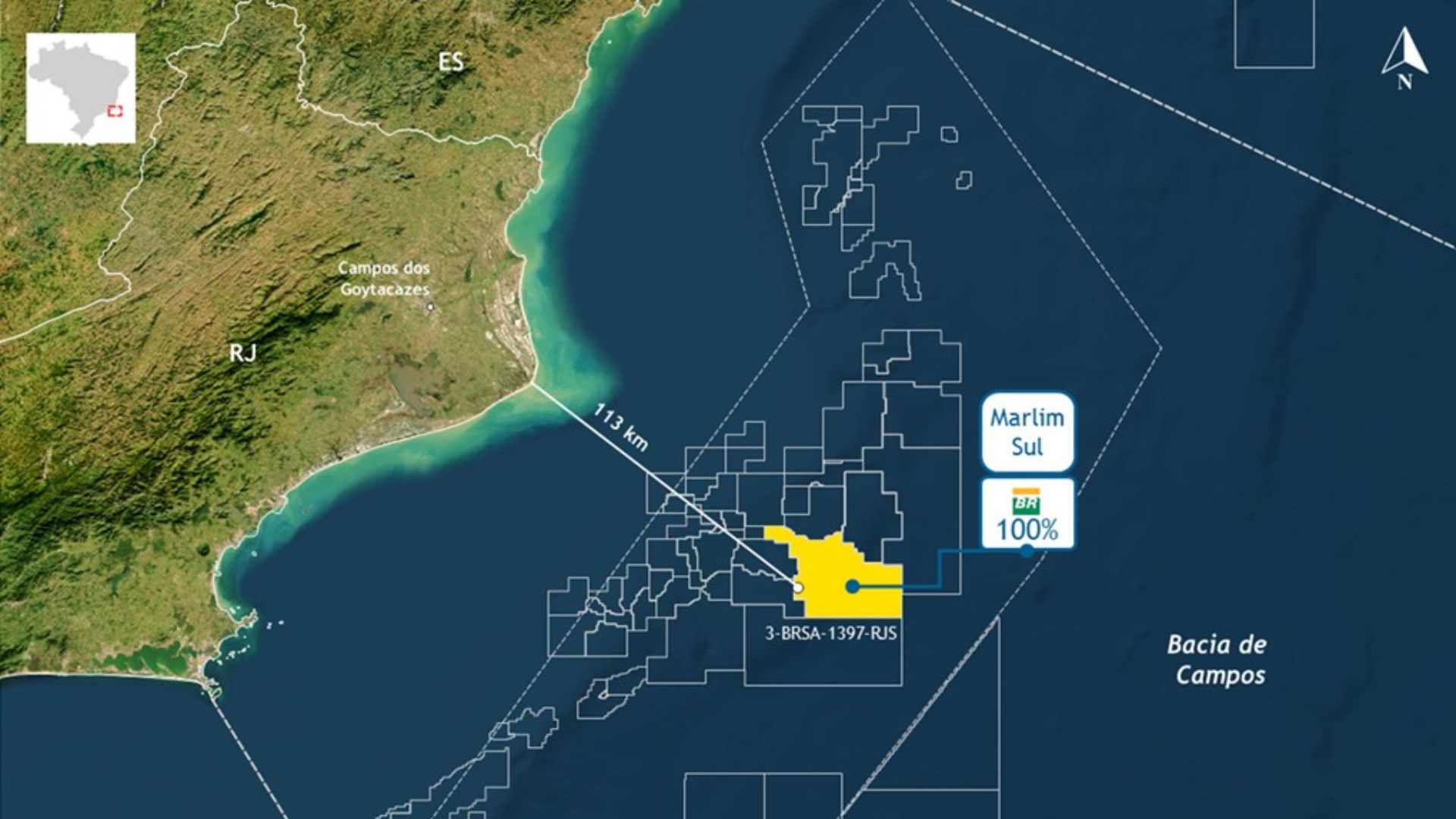
Petrobras finds high-quality oil in the pre-salt at 113 km from RJ and reignites expectations about strategic reserves in the Campos Basin.
-
Ocyan opens registrations for startups focused on innovation in the oil and gas sector and will select projects for Innovation Day with the support of Nexio.


Thus, this growth will position Guyana in a unique place in the international market, allowing to compete directly with major South American exporters.
Strategic Location Increases Rivalry with Caracas
The Hammerhead is located in a maritime area close to the Essequibo, territory historically claimed by Venezuela.
Therefore, industry analysts highlight that Guyana’s decision intensifies geopolitical tension, as the new production may put Georgetown on a path of direct competition with Caracas in oil exports.
Additionally, the strategic location reinforces the country’s position in global energy negotiations, consolidating a new power center on the continent.
State-of-the-Art Structure Supports the Project
Production will be carried out by a floating production storage and offloading (FPSO) platform, built by the Japanese MODEC.
To ensure efficiency, the structure will operate with:
- 10 production wells,
- 8 gas injection wells,
- transport pipelines to the mainland.
At the same time, two new plants are already under construction to support the megaproject:
- one unit of 300 megawatts,
- one natural gas liquids plant.
Therefore, this infrastructure set ensures that exploration is sustainable and integrated with Guyana’s energy needs.
ExxonMobil Leads Billion-Dollar Expansion
ExxonMobil stated that its investments in Guyana are expected to exceed US$ 60 billion (R$ 320 billion) in the coming years.
Thus, the company and its partners — Chevron (which incorporated Canadian Hess) and CNOOC Petroleum from China — aim to transform Guyana into a global benchmark for offshore oil.
Currently, these companies are already extracting 650,000 bpd in the country. However, according to official data, the forecast is to reach 900,000 bpd by the end of 2025, even before the Hammerhead begins operations.
Potential Economic and Social Impact
According to the Guyana government, the Hammerhead project will be essential to:
- strengthen energy security,
- boost industrialization,
- generate direct and indirect jobs,
- attract foreign investments.
Furthermore, analysts emphasize that Guyana, until recently one of the countries with the lowest GDP per capita in the region, is on the brink of joining the ranks of the most dynamic economies in Latin America.
A Watershed Moment for Guyana
The approval of Hammerhead is not limited to the energy sector. On the contrary, it represents Guyana’s definitive entry into the map of major oil powers, with direct effects on its economy and South American geopolitics.
Therefore, authorities assert that the coming years will be critical to ensure that growth is sustainable, transparent, and regulated, avoiding risks of excessive dependence on oil.
Thus, the question that remains is: should Guyana bet on a rapid expansion to establish itself as a global oil power, or, on the contrary, adopt a more cautious pace to balance economic development and environmental preservation?






-

Uma pessoa reagiu a isso.