





 Português
  Inglês
  Espanhol
  5 min de leitura
  0 comentários


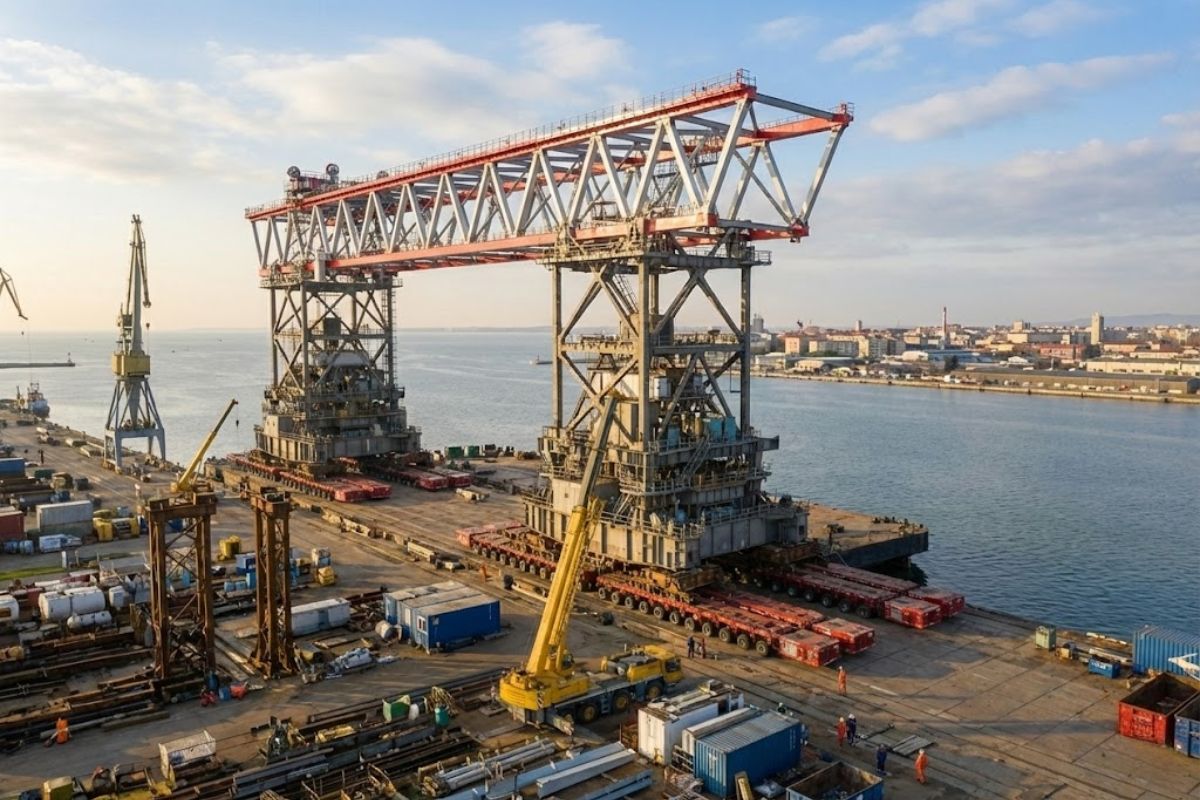
European Project of Cimolai Technology Installs Goliath Crane on Tracks Nearly 110 Meters High and 118 Meter Span in Chioggia, Completely Tested Before Going by Barge to the Monfalcone Shipyard, Where It Will Erect Naval Blocks of Up to 1,600 Tons in Heavy Complex Commercial Shipbuilding Programs
In December 2025, Cimolai Technology achieved a milestone at the Port of Chioggia, in the Val da Rio area, by lifting and installing the main beam of the first Goliath crane on tracks with a capacity of 800 tons, a critical step in one of the largest heavy engineering projects currently underway in Europe. The progress consolidates the structural phase of the equipment, which will be one of the largest track-mounted Goliath cranes ever built for naval and industrial applications.
By the end of December 2025, the complete assembly of the first crane will be concluded, while the second unit will have its assembly finalized in the spring of 2026. Starting in the summer of 2026, each Goliath crane will be transported fully assembled by dedicated barge to the Monfalcone shipyard, near Trieste, where the two units, operating independently or together, will handle ship blocks and modules of up to 1,600 tons.
Extreme Dimensions and Heavy Lifting Capacity

The project developed by Cimolai Technology provides for two Goliath cranes with an individual capacity of 800 tons, designed to support large naval operations.
-
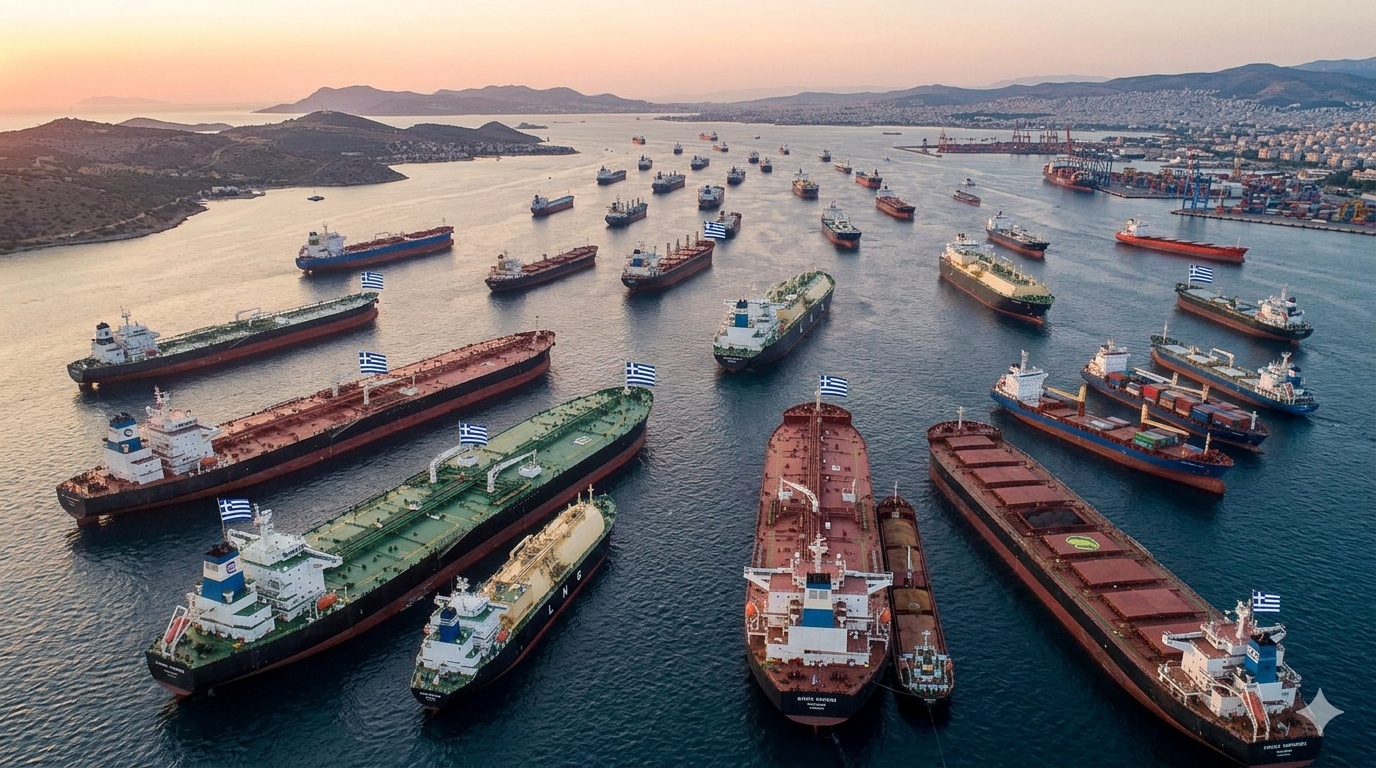
Neither the USA nor China: a small European nation has become one of the largest maritime powers on the planet, controlling one of the largest merchant fleets in the world with thousands of ships and dominating the global transportation of oil and strategic cargo.
-
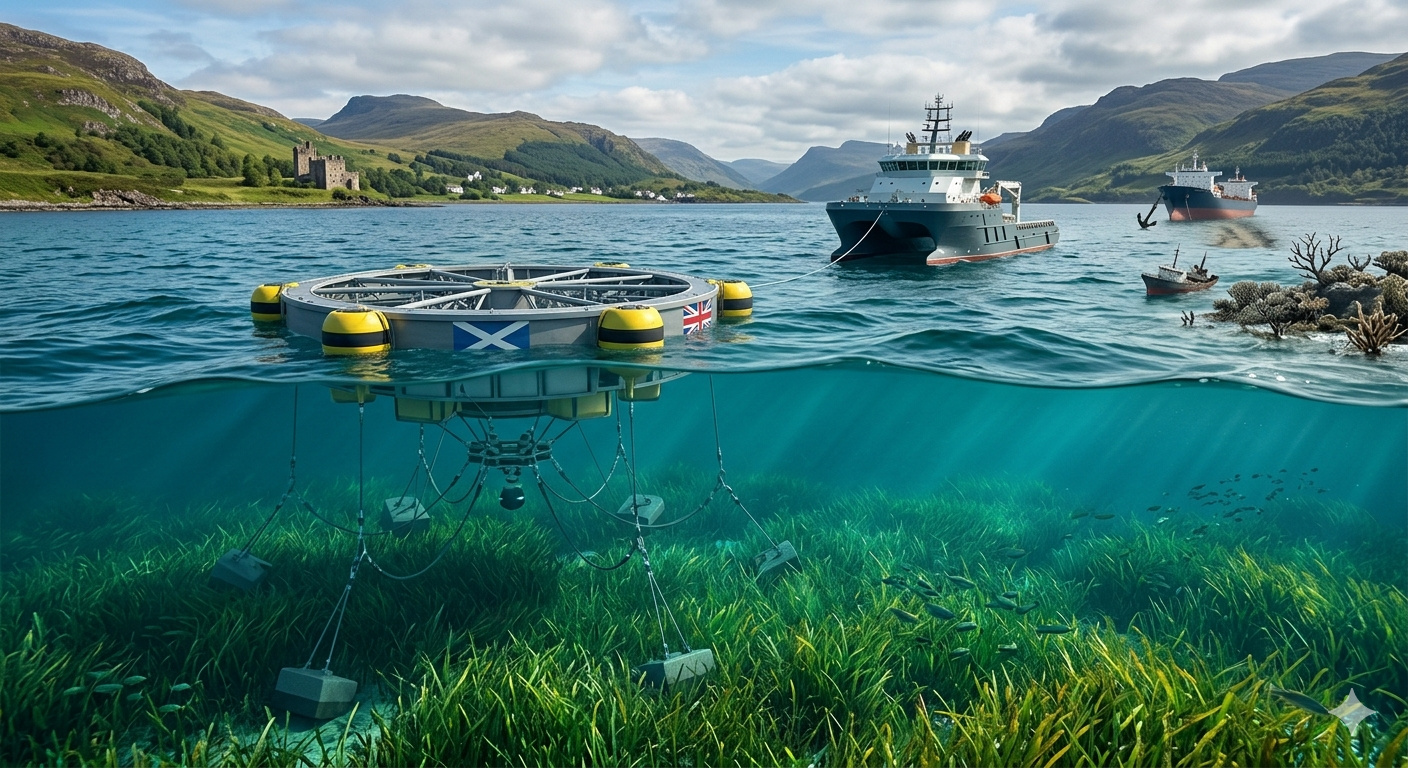
Scotland and the United Kingdom have created a new anchoring system that floats in the water without touching the seabed, after discovering that the current from a conventional anchor destroys up to 50 m² of seagrass meadow per event and that ship-damaged reefs showed no signs of recovery even ten years later.
-
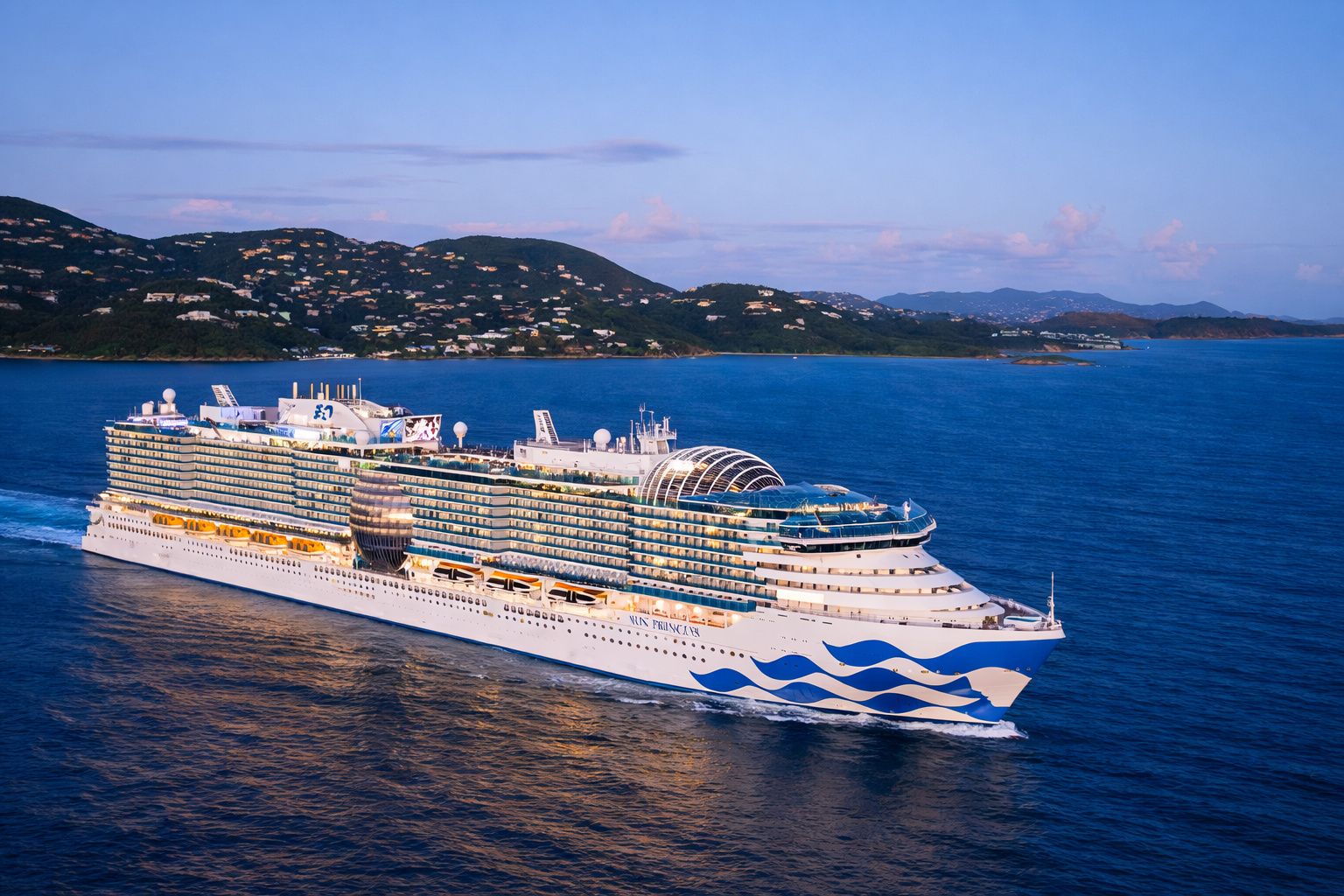
Weighing 175,500 Tons, Measuring 345 Meters Long, and With Capacity for Over 4,300 Passengers, the Sun Princess Becomes the Largest Ship Ever Built by Princess Cruises and Attracts Global Attention for Its Huge Glass Dome Inspired by Santorini’s Architecture Installed on Top of the Vessel
-
TX-10, The Colossus of The Sea: Largest Lifter Ship in The U.S., With Two Giant Barges, 73-Meter Tall Structure, and Strength to Raise 7,500 Tons of Sunken Oil Rigs
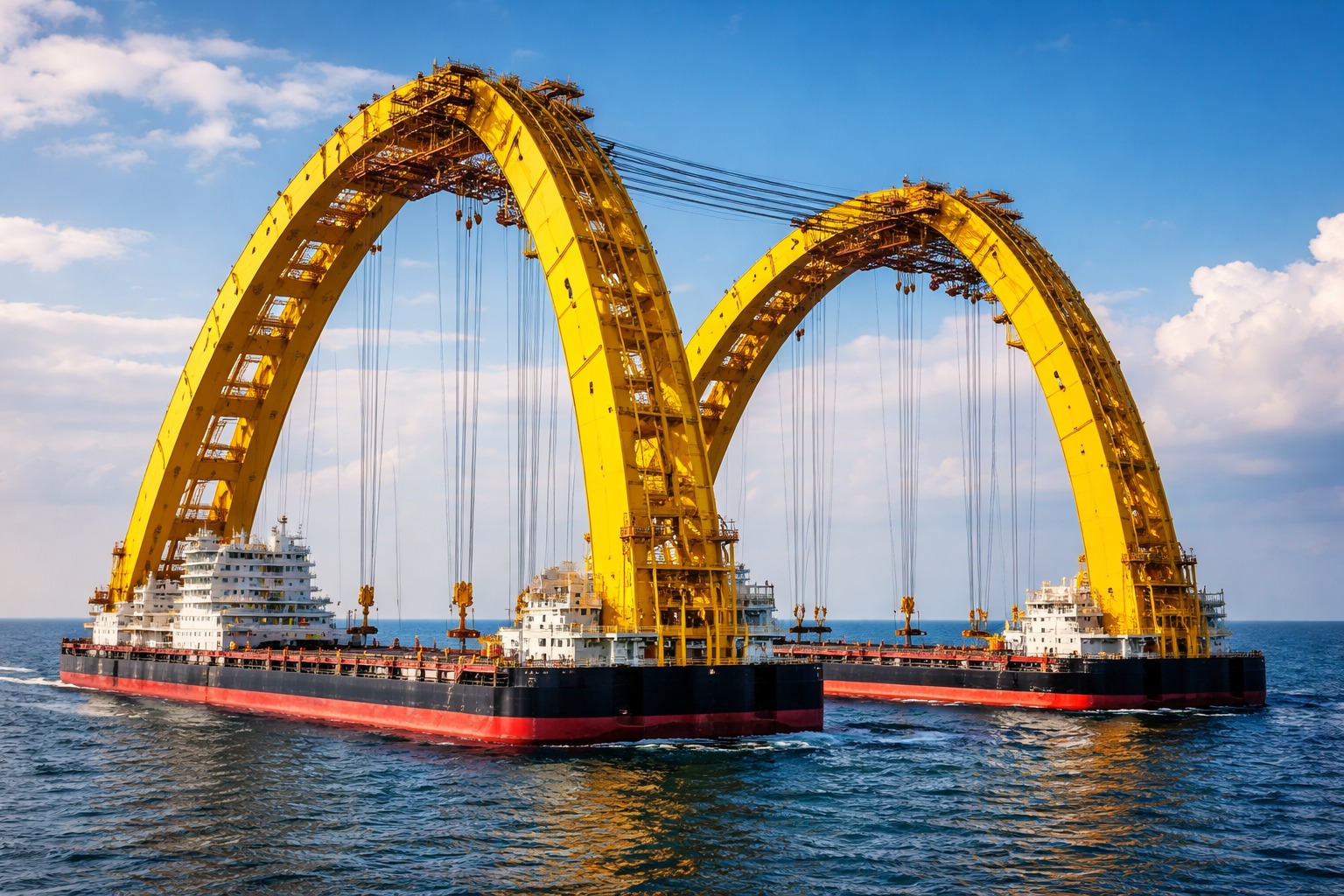

Each unit will be nearly 110 meters tall and have a span of 118 meters, characteristics that place the set among the largest track-mounted Goliath cranes intended for shipbuilding and heavy industrial applications.
These dimensions allow the Goliath crane to operate in extensive shipyard areas, crossing assembly lines and large dry docks without the need for intermediate structures.
When operating in tandem, the two cranes will achieve a combined capacity of up to 1,600 tons, sufficient to lift large sections of hulls, pre-fabricated blocks, and complex modules typical of large commercial shipbuilding programs.
By concentrating so much capacity in just two coordinated units, the Monfalcone shipyard gains flexibility to reorganize production lines, anticipate assembly stages, and reduce dependence on multiple operations with smaller cranes, which require more complex coordination and involve larger downtime windows.
Integrated Engineering at the Port of Chioggia
A distinguishing feature of the project is the decision to build, assemble, and fully test the cranes at the Port of Chioggia, instead of performing the main assembly directly at the destination shipyard.
Cimolai Technology utilizes its logistics and production area in Val da Rio as a pre-assembly center, dimensional verification, system testing, and preparation for maritime transport.
With over 45,000 square meters dedicated to port industrial activities, the Chioggia facility operates in accordance with the Port Master Plan, with infrastructure aimed at large special loads.
The main beam of the Goliath crane, already lifted and installed, demonstrates the complex’s capacity to handle large structural elements with precision and safety, an essential step before shipping by barge.
ACCS – Armando Cimolai Centro Servizi is responsible for manufacturing the steel structural components, while Cimolai Technology coordinates executive design, assembly, instrumentation, functional testing, and logistical preparations.
This division of responsibilities highlights an integrated engineering model, where manufacturing, assembly, and logistics are planned as parts of a single industrial flow.
Complete Maritime Transport to Monfalcone
Another central point is the delivery concept.
After being fully assembled, each Goliath crane will be loaded onto a dedicated heavy transport barge, departing from Chioggia to the Monfalcone shipyard already in operational condition.
This reduces the need for large assembly yards at the client site, avoids prolonged occupation of critical shipyard areas, and decreases the time between the arrival of the equipment and the effective start of lifting operations.
By opting for maritime transport of the already complete crane, Cimolai Technology also reduces exposure to risks associated with large assemblies in an active production environment, such as interference with other operations, space constraints, and tight weather windows.
The strategy allows the Monfalcone shipyard to maintain its shipbuilding pace while receiving one of the largest track-mounted cranes on the market, with accelerated commissioning expected after the summer of 2026.
The solution requires detailed planning of stability, structural securing, and maritime routes, considering drafts, channel widths, and navigation conditions in the Adriatic.
The planned maintenance dredging of 250,000 cubic meters in the Val da Rio area, announced by the Port Authority of the Northern Adriatic Sea, helps ensure the nautical access necessary for operations of this scale.
Role of Chioggia in the Special Industrial Cargo Chain
The advancement of the Goliath crane in Chioggia reinforces the port’s role in the special industrial cargo segment.
The facility becomes a benchmark in projects that combine heavy metal manufacturing, assembly of large structures, and maritime shipping of complete equipment.
According to the Port Authority of the Northern Adriatic Sea, continuous investments in infrastructure are planned to support initiatives of this scale, including improvements to docks, storage areas, and navigation support services.
A permanent office of the port authority is also planned to be launched in Chioggia in 2026, enhancing coordination with port users, industrial companies, and the local community.
This collaboration between Cimolai Technology, ACCS, and the port authority transforms Chioggia into a hub of heavy engineering applied to the maritime sector, with the ability to handle complex projects requiring integration between structural design, assembly, testing, and logistics for maritime export.
The Goliath crane functions, in this context, as a showcase of local capability to deliver complete large-scale solutions.
Leadership of Cimolai Technology in Heavy Lifting
According to the CEO of the Cimolai Technology Group, Roberto Cimolai, the completion of the installation of the first main beam of the crane represents a symbolic achievement of the company’s innovative capabilities.
The project consolidates the group’s position as a global leader in heavy load lifting systems for the naval, infrastructure, and industrial markets, while also executing one of the most ambitious crane programs in the European maritime sector.
Cimolai Technology’s role is not limited to the delivery of the equipment.
The company is responsible for the entire engineering cycle, from the structural design of the Goliath crane to the configuration of tracks, moving systems, controls, and operational safety.
Tests conducted in Chioggia aim to validate performance, reliability, and alignment with specific requirements of the Monfalcone shipyard before shipment.
At the destination shipyard, the combination of two Goliath cranes with a total capacity of 1,600 tons is likely to redesign production flows, allowing for greater pre-fabrication of blocks and modules outside the dock and subsequent lifting already at a high degree of completion.
This reduces time spent in critical shipbuilding structures and can increase productivity in large commercial ship programs.
In the face of this continental operation, in your opinion, should projects like the Goliath crane in Monfalcone prioritize maximum lifting capacity, assembly speed, or reducing impact on existing port infrastructure?










Seja o primeiro a reagir!