





 Portuguese
  English
  Spanish
  4 min of reading
  0 comments


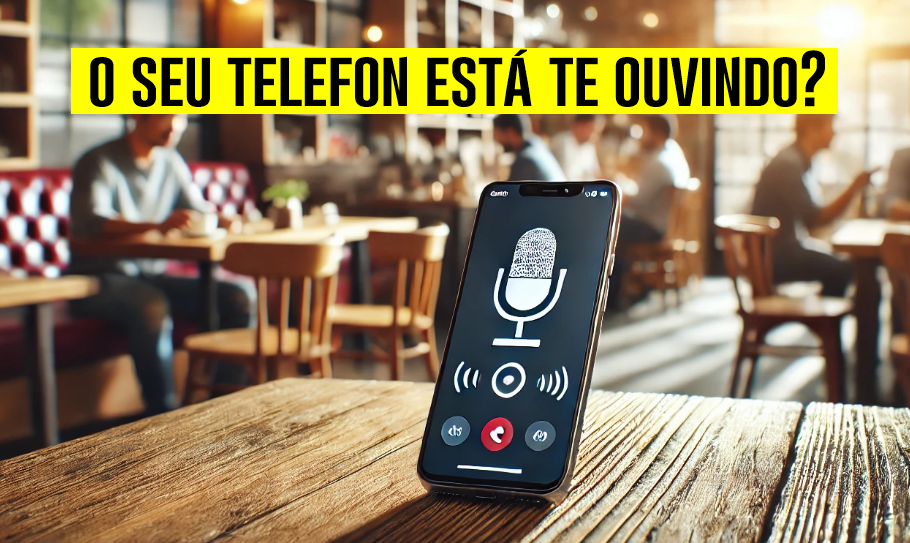
We Reveal The Signs That Your Phone May Have Been Hacked. Learn How To Identify Spying And Protect Your Privacy Against Intrusions.
With the growing concern about digital privacy, many people have been wondering if their devices are indeed listening to their conversations and collecting personal information. Cybersecurity experts from NordVPN conduct a simple test to answer that question: Is Your Phone Hacked?
In four quick steps, anyone can test if their smartphone is spying on their conversations and contributing to targeted advertising.
The Four-Step Test – Is It Hacked?
The test developed by NordVPN starts with something simple: choose a unique topic, something you have never researched or thought about before. This subject should be completely different from your usual interests, to ensure there is no chance of it appearing in ads.
-
Scientists have discovered a gigantic magnetic anomaly hidden beneath the soil of Australia that mirrors the shape of the entire continent and holds geological records of two and a half billion years that could change what we know about the Earth.

-
The heatwave that has been affecting Brazil in recent weeks is coming to an end: a cyclonic vortex is moving in during Holy Week with heavy rains, and a cold air mass is already threatening to lower temperatures in the South starting in April.

-
(VIDEO) Cameras from an astronomical observatory captured two meteors falling over Santa Maria in Rio Grande do Sul with only a one-minute difference and such close trajectories that scientists are now investigating whether the two objects have the same origin.

-
Fireballs shoot across the skies of the USA and meteor explosions draw attention: what is causing this mysterious wave of sightings?


The idea is for the topic to be new to your devices and that they have no information about it.
The first step of the test is to choose the topic. It could be something like “Finland“, “Orangutan“, or any other theme you have never researched or mentioned. The important thing is that the topic is strange enough not to appear in your social media feeds organically.

The second step involves discussing the chosen topic near your phone. Make sure your device can hear the conversation. The more natural the discussion, the better.
During this process, avoid researching the topic or interacting with related content in any way. The goal is for your device to only listen and store information without any external influence.
After completing the first two steps, you should proceed to the third phase: wait. Wait a few days and monitor your social media feeds and other ads to see if the topic appears. In tests conducted by NordVPN, participants started seeing ads related to what they discussed within days.
Is Your Phone Listening To You?
The results of the tests conducted by NordVPN indicate that most participants saw relevant ads shortly after talking about a topic they had never researched.
One participant discussed Saudi Arabia and, three days later, started seeing hotel offers on Booking.com, specifically in Al Ula, Saudi Arabia. Another participant did the same with the term “Orangutan” and saw ads from organizations supporting the conservation of that species within a day.
Although these results do not prove that devices are indeed spying, the coincidence between discussed topics and displayed ads raises serious questions about user privacy. It suggests that devices may indeed be listening to our conversations, collecting data, and directing advertising in a non-transparent way.
Privacy And Legality: What Does The Law Say?
Although many users are concerned about the idea of their phones listening to them, it is important to know that, most of the time, this practice is not illegal. This happens because users often grant permissions without fully understanding what they are authorizing.
When you allow the use of virtual assistants like Google Assistant, Siri, or Alexa, you are effectively allowing these services to collect information about you.
Virtual assistants are always attentive to your wake phrase. They may be listening constantly, which can lead to recordings of your conversations. This makes accessing your devices easier without manual commands, but it also means you are being “recorded” continuously.
Additionally, some apps, even those that seem harmless, may also have access to your device’s microphone. These apps, by collecting data, could contribute to the gathering and selling of information without users realizing.
How To Protect Yourself From Your Phone’s Spying
If you are concerned about privacy and want to ensure that your phone is not spying on your conversations, there are some simple measures you can take. The first is to disable your device’s virtual assistant.
On iPhone, for example, just go to “Settings”, find the Siri section, and disable the voice activation and constant listening options. On Android, the process is similar: go to “Google Assistant” in the settings and turn it off.
Another important step is to check app permissions. Apps may request access to the microphone, and if you do not check this, you may be granting permission to be listened to without realizing it. In cases like the Deliveroo app, for example, users authorize microphone use for voice calls, but they can easily revoke this permission at any time.
Conclusion
While it may be convenient for virtual assistants and other technologies, it is also essential to be aware of the privacy risks. With small adjustments to your settings and attention to app permissions, you can better protect your data and ensure that your phone is not spying on your conversations. As Marijus Briedis, Chief Technology Officer of NordVPN, warns, “Convenience can come at the cost of privacy.” Therefore, it is crucial to balance practicality with the protection of your personal data.








Seja o primeiro a reagir!