





 Portuguese
  English
  Spanish
  3 min of reading
  0 comments


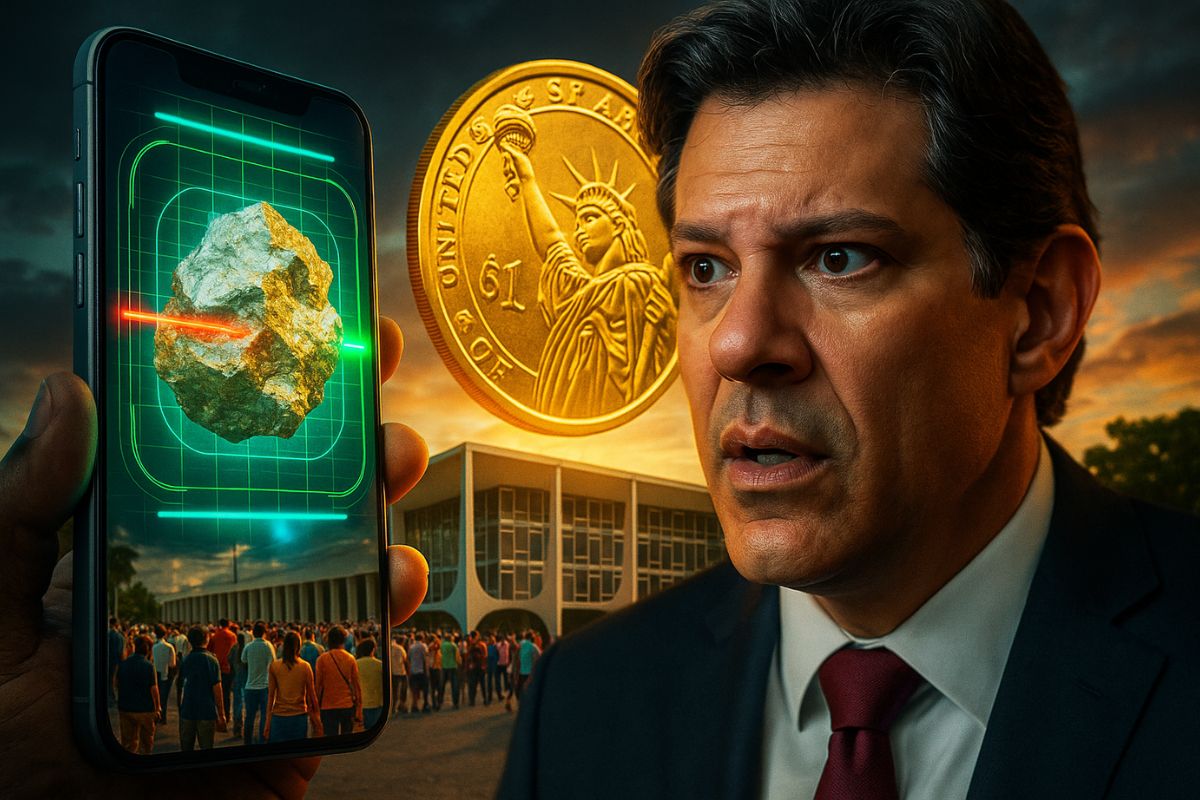
Haddad Admits That Joint Exploration With Americans Could Be a Bargaining Chip to Ease Impact of 50% Tax on Brazilian Exports
The Brazilian government is considering including a possible agreement with the United States on critical minerals and rare earths in negotiations aimed at mitigating the effects of the tariff announced by Donald Trump’s administration. The 50% tax on various Brazilian products is set to take effect this Wednesday, and Brazil is racing against time to try to mitigate the impacts.
The Finance Minister, Fernando Haddad, confirmed in an interview that there are discussions about a cooperation involving these strategic resources, essential for sectors such as electric batteries and artificial intelligence. According to him, Brazil has a supply potential that directly interests the Americans, who are lacking in these minerals.
Critical Minerals and Rare Earths Gain Significance in Economic Diplomacy
The new trade offensive from the United States is not limited to taxation. Behind the tariffs, there is also interest in access to critical minerals and rare earths, such as lithium, niobium, and other strategic elements. Brazil, with its abundant reserves, becomes a key player in this scenario.
-
Brazilian city bets on the business environment to generate jobs and attract investments in the energy sector — secretary reveals strategy at Macaé Energy 2026.

-
50 viaducts, 4 tunnels, 28 bridges, and 40 kilometers of bike paths: BR-262 in Espírito Santo will receive 8.6 billion reais for the largest engineering project in the state’s history, inspired by the Immigrant Highway in São Paulo.

-
Brazil produces too much clean energy and doesn’t know what to do with it: over 20% of solar and wind capacity was wasted in 2025 while investors flee and 509 renewable generation projects were abandoned in the last year.

-
Piauí will produce a new fuel that replaces diesel without needing to change anything in the truck’s engine and reduces pollutant gas emissions by half: truck drivers from all over the Northeast are already celebrating the news that will arrive later this decade.


Haddad indicated that a cooperation agreement could be used as a bargaining tool in negotiations. “We can produce more efficient batteries together,” he said, pointing to a potential technological alliance with the U.S. This shift in focus places natural resources at the center of geopolitical disputes.
Tariff Could Face Adjustments on Eve of Implementation
The tariff announced by Trump could still face last-minute modifications. According to Haddad, new exceptions may still be added to the list, in addition to the more than 700 already recorded, including the orange juice and civil aviation sectors. The window for adjustments goes until the 6th, the final deadline for the implementation of the measure.
Despite the government’s firm stance, aides to President Lula admit that the chances of a significant reversal are small. Even so, Brazil insists on the negotiation table, making it clear that it will not accept the current terms unilaterally imposed by the Americans.
Brazilian Government Prepares Rescue Plan for Impacted Sectors
While trying to avoid the worst-case scenario, the federal government already has a contingency plan ready to protect companies affected by the tariffs. The strategy will include access to credit with special conditions and incentives through government purchases, as Deputy President Geraldo Alckmin has indicated.
The measure will be officially announced by Wednesday. The goal is to avoid immediate losses in foreign trade and ensure breathing room for sectors with a high volume of exports to the U.S. In this context, critical minerals and rare earths also come in as bargaining assets to keep the doors open.
U.S. Pressure Involves Politics and Global Strategy
Unlike what happened with other countries, the Brazilian taxation was also influenced by political factors. The trial of former president Jair Bolsonaro in the Supreme Court may have contributed to the justification given by the Americans for imposing the tariffs.
This political backdrop complicates the negotiations even further. Nevertheless, the government bets that the U.S.’s strategic interest in critical minerals and rare earths may open space for specific agreements, bypassing the more damaging effects of the tariff.
Do you think Brazil should concede in the agreement to protect exports or maintain a firm stance against the U.S.?










Seja o primeiro a reagir!