





 Portuguese
  English
  Spanish
  4 min of reading
  0 comments



Brazil Brings Together Green Energy, Available Space, Local Talent, and Sustainable Goals, Factors That Can Transform It Into a Relevant Hub for Distributed Artificial Intelligence
Brazil can become a relevant center in the artificial intelligence (AI) and network automation market. This assessment comes from Michael Bushong, vice president of data centers at Nokia. In an interview with Tele.Síntese, he highlighted local factors that strengthen this perspective, such as access to energy, available land, the presence of talent, and alignment with environmental goals.
According to the executive, these elements favor the implementation of distributed infrastructures focused on inference and data sovereignty.
“Brazil has access to green energy, space, technological concentration, and is well aligned with sustainable ambitions. This makes it fertile for new technology builds and for AI workloads,” he stated.
-
Artificial intelligence is skyrocketing energy consumption, raising emissions from tech giants and pushing Google, Microsoft, and Meta closer to natural gas.

-
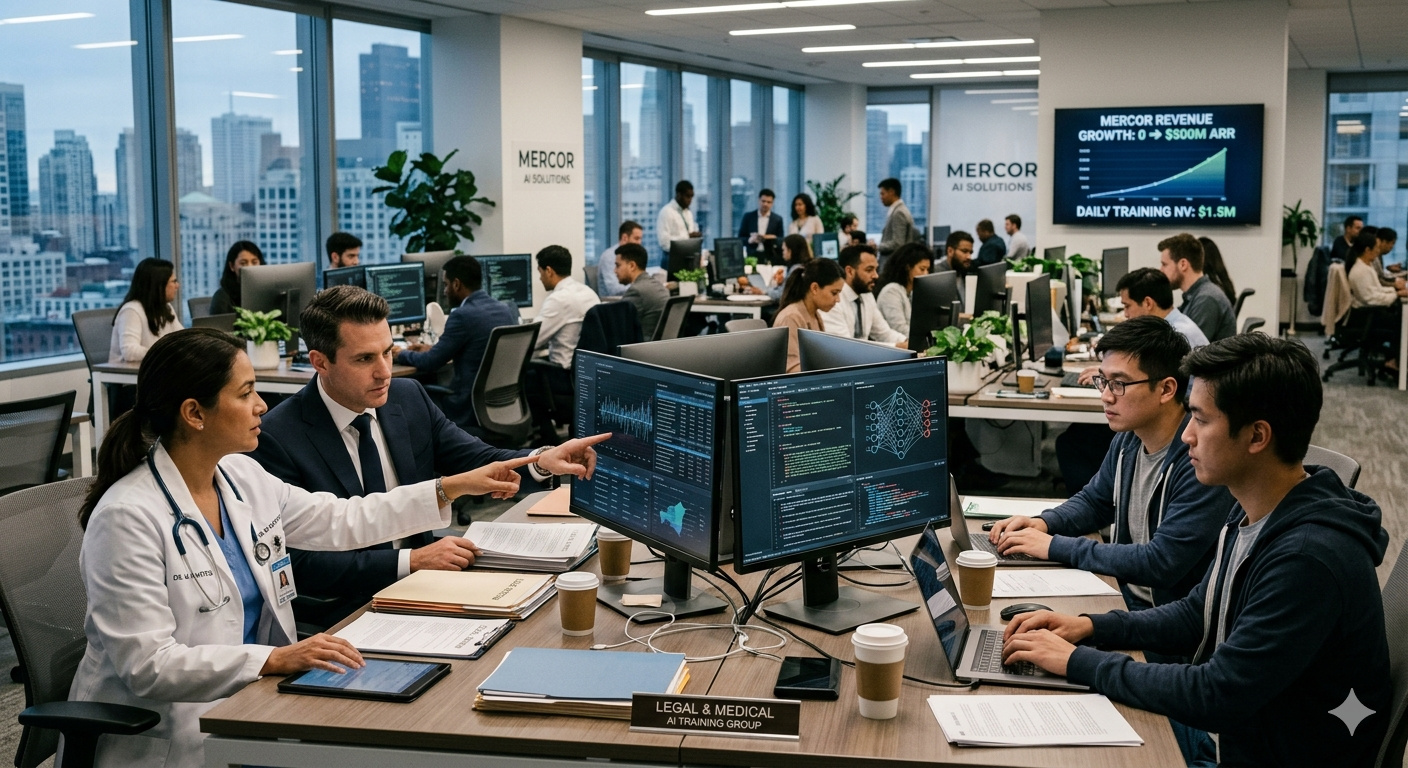
Mercor paid $1.5 million per day for doctors, lawyers, and former Goldman Sachs bankers to teach artificial intelligence to do their jobs, and in 17 months, it went from zero to $500 million in annual revenue while its own contractors accelerated the replacement of their own work.
-
Casio Unveils Moflin, Robotic Pet With Artificial Intelligence Designed To Provide Emotional Comfort And Simulate A Permanent Affectionate Bond

-
Google Maps Revolutionizes GPS Navigation With Gemini Artificial Intelligence, Ask Maps Feature, and Advanced 3D Visualization for Route and Travel Planning

Distributed Artificial Intelligence and Digital Sovereignty
Bushong explained that the AI cycle can be divided into two main blocks. The first involves the training of foundational models, conducted in large centralized data centers.
The second pertains to inference, which requires proximity to the end user to ensure low latency.
In this scenario, the physical distribution of data centers—whether in metropolitan areas or at the edge—gains strategic importance.
“In inference, performance is very important. If users do not receive immediate feedback, they do not use it. This favors distributed data centers,” he emphasized.
Additionally, the executive highlighted the growing need for “sovereign” data centers. For him, outside of the United States, the demand for structures that ensure legal compliance and control over sensitive data is increasingly high. “For most people outside the U.S., sovereign data centers make a lot of sense,” he asserted.
Global Competition: Brazil, the Middle East, and India
The vice president sees room for Brazil to operate not only in the domestic market but also as an alternative for international workloads.
According to him, the limitation of space and energy in Europe opens up an opportunity. “For some workloads, it may make sense for Brazil to try to host part of these computations,” he said, also mentioning European concerns about sustainability.
Bushong also pointed to the Middle East and India as regions that are advancing in attracting AI projects through state subsidies.
Therefore, if Brazil wishes to compete, it needs to reduce short-term barriers with public policies that encourage the installation of new infrastructures.
Automation and Error Reduction
Another point addressed was automation in network operations. For Bushong, the priority should be a “top-down” approach, with multivendor compatibility.
He argues that current networks are fragile and that users seek simple, efficient, and accessible solutions.
“The main reason for automating is not agility, but to avoid human error,” he highlighted.
Nokia’s business model in Brazil envisions partnerships with integrators to distribute products, software, and services.
He cited its collaboration with Lightera (formerly Furukawa) as an example. “We sell with them to end users,” he explained.
ISPs and Inference as a Service
The executive believes that regional providers and operators have unique advantages to explore the advancement of distributed AI.
According to him, ISPs can stand out by investing in edge and inference as a service.
“ISPs have unique advantages: a relationship with the user, real estate, connectivity, and local presence. This can be valuable for delivering solutions with low latency,” he stated.
Artificial Intelligence Market: Hype and Real Value
Bushong acknowledged that there is a lot of hype in the artificial intelligence market. Nonetheless, he believes that demand will remain strong in the coming years.
“Even if many projects fail, demand is far ahead of capacity. This will sustain the market for a few years,” he asserted.
He also highlighted sectors that are likely to capture real value with AI, such as radiology, precision agriculture, oil, gas, and pharmaceuticals.
The reason lies in the relevance of proprietary data. “When information is easy to get, no one makes money from it. But when it is unique, the value is durable,” he concluded.
Presence at an Event in Brazil
Nokia will be present at the TS Data Center, AI & Cloud Summit, organized by Tele.Síntese. The meeting is scheduled for next Tuesday, the 26th, in Santana de Parnaíba, Greater São Paulo.
With information from Tele Síntese.









-

3 pessoas reagiram a isso.