





 Portuguese
  English
  Spanish
  6 min of reading
  0 comments


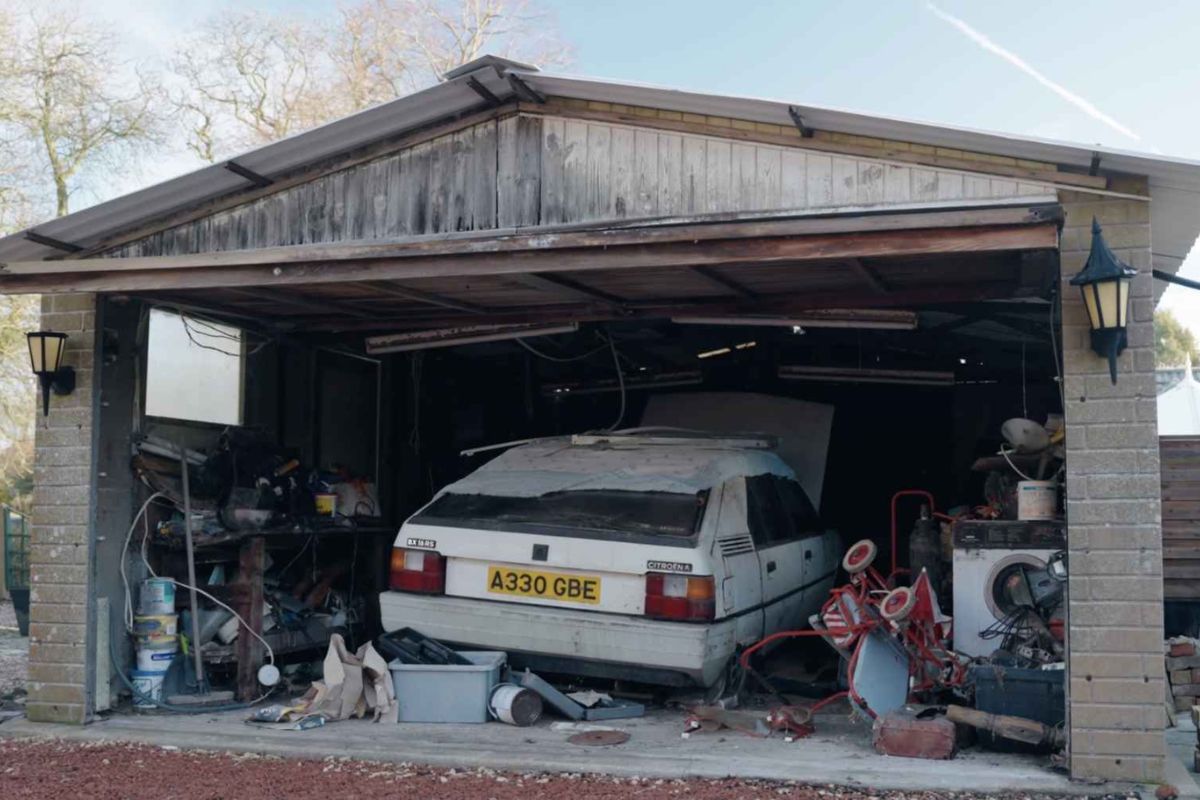
A 1983 Citroën BX 16RS was locked away and untouched inside a barn in Lincolnshire, England, for 38 years until it was rediscovered by the owner’s family, an engineer for the Royal Air Force who helped build the car that broke the world land speed record that same year, and now the forgotten vehicle awaits someone willing to restore it
A new car purchased in 1983 was parked inside a barn in 1988 and no one touched it for almost four decades. When the owner’s family finally opened the barn door in Lincolnshire, England, they found a dusty Citroën BX 16RS, with rust, damage caused by rats, and a missing wheel. The car was exactly where it had been left 38 years earlier, like a time capsule from 1988 that no one had the courage or reason to open.
According to the show The Late Brake Show, what makes this forgotten car a story worthy of a movie is not just the time it spent sitting. It’s who bought it. The owner was a jet engineer for the Royal Air Force (RAF) who helped develop the Thrust 2, the car that broke the world land speed record in 1983 at an official speed of 633 mph. The same man who worked on the fastest vehicle on the planet chose, for his personal use, a family hatchback. And then locked it in the barn and never returned.
The engineer who built the fastest car in the world and stored a hatchback in the barn

The irony is impossible to ignore. In October 1983, Richard Noble drove the Thrust 2 at an official average speed of 633.468 mph, with reports indicating peaks of 650.88 mph, establishing the world land speed record recognized by Guinness.
-
A 250cc motorcycle that can reach 560 km with a 14-liter tank, features disc brakes on both wheels and is among the most well-known in Brazil.
-
Man finds over 200 rare cars abandoned on a lot and tries to do the impossible in 8 hours with a surprise at the end.
-
An irregular parking case gains attention after a Mercedes Classe A was removed in such a strange way that it even raised doubts about damage to the car.

-
Costing R$ 16,000, the new Yamaha features a 125 cc hybrid engine with electric assistance, delivers 8.3 hp, includes ABS, optimized fuel consumption, Y-Connect connectivity, 25 liters of storage space, and a surprising 4-year warranty in the urban segment.


The engineer who helped make that car possible bought, almost at the same time, a Citroën BX 16RS: not a sports car, not a luxury model, but a practical family hatchback.
He used the car for about five years before permanently parking it in the barn in 1988. No one knows exactly why he stopped using the vehicle.
It could have been a trade for another car, a mechanical issue that was never fixed, or simply the habit of saving something for later.
The fact is that the car remained locked, untouched, and forgotten for 38 years, while the world around it changed completely. A sticker on the rear window sums it all up with an unintentionally humorous accuracy: “Loves driving, hates garages.”
What they found inside the barn after 38 years without opening the door
When Jonny Smith, host of The Late Brake Show, was called by the family to inspect the car, the scene was exactly what one would expect from nearly four decades of abandonment.
The Citroën BX was covered in a thick layer of dust, with rust in various spots on the body, damage caused by rats to the upholstery and wiring, a missing wheel, and an engine that refused to start.
Surrounding the car, the barn was filled with tools, boxes, and household items accumulated over the years. The vehicle had become part of the space’s landscape, almost an additional piece of furniture among the clutter.
Despite its deteriorated state, the car maintained its basic structure intact: the body was recognizable, the glass was whole, and the characteristic hydropneumatic suspension of the Citroën BX was still present. To a specialist, it was a wreck. To a restorer, it was an opportunity.
Why a car that sold over 2 million units is now rare
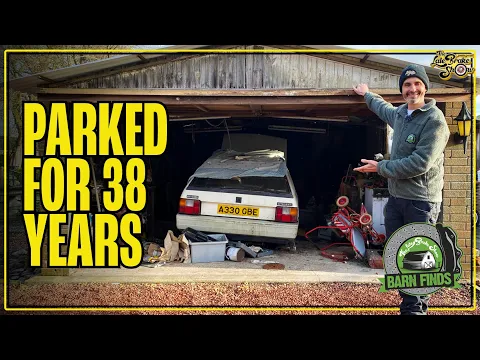

The Citroën BX was never an obscure car. The magazine L’Aventure Citroën records that 2,315,739 units were produced between 1982 and 1994. It was a popular hatchback, known for its hydropneumatic suspension that provided unusual ride comfort for its price range.
But yesterday’s popularity does not guarantee survival today: UK vehicle registration data shows that only 194 Citroën BX models are currently in circulation in the country, with another 1,083 declared as out of circulation.
This scarcity places the car found in the Lincolnshire barn in a different category. It is not just an old abandoned vehicle. It is a rare example of a model that is disappearing, kept in conditions that, while far from ideal, preserved the original set of parts and components.
For classic car collectors, finding a BX with documented history and original parts is becoming increasingly difficult, which makes this barn find something that goes beyond a curiosity and approaches a historical record on wheels.
Restore a 38-year-old car or let it become scrap: the dilemma the family faces
The daughter of the original owner hopes that the right buyer will come along and restore the car instead of letting it disappear. The first restoration attempt failed, which shows that recovering a vehicle in such conditions is not a simple task.
Rust, wiring damaged by rats, compromised suspension, and a non-working engine mean that the car needs a complete restoration that could cost more than the market value of a well-maintained example.
But the value of this car is not measured solely in money. It belonged to an engineer who helped build the fastest vehicle in the world at the time, was frozen in time for 38 years, and is one of the few surviving examples of a model that is disappearing.
For those who restore cars out of passion and not for profit, the story behind the vehicle is worth as much as the body and engine. It is the difference between an old car and a car with a soul.
What a car forgotten for 38 years teaches us about how we treat things
The story of this car connects to a broader debate about how society discards objects that could still have useful life. The European Commission advocates that a circular economy works by keeping products and materials in use for as long as possible.
The European Environment Agency estimates that the premature disposal of consumer goods is linked to 261 million tons of CO2 equivalent emissions and 35 million tons of waste per year in the European Union.
The car that came out of the Lincolnshire barn is not a solution for modern mobility. A 1983 gasoline hatchback does not replace an electric vehicle for daily use.
But restoring a rare car for occasional use, collection, or education is different from advocating that old vehicles replace clean transportation.
What this Citroën represents is the idea that repairing, reusing, and valuing things before discarding them still makes sense in a world that produces waste on an industrial scale.
A car, a barn, and 38 years of silence
A jet engineer who helped build the fastest car in the world bought a family hatchback, used it for five years, locked it in the barn, and never returned.
38 years later, the car reappeared covered in dust, with rust, rats, and a story that no brand new model can offer.
Now, the question is whether someone will give this Citroën BX the second life that the owner’s family hopes for, or if it will end up as scrap, taking with it the story of the man who built rockets and stored a hatchback.
Would you restore a car abandoned for 38 years in a barn? Do you think it’s worth saving such a vehicle or is it better to let it become history? Have you ever found something forgotten for decades and were surprised by what you saw? Leave your comments and share this article with those who love cars and improbable stories.










Seja o primeiro a reagir!