





 Portuguese
  English
  Spanish
  4 min of reading
  0 comments


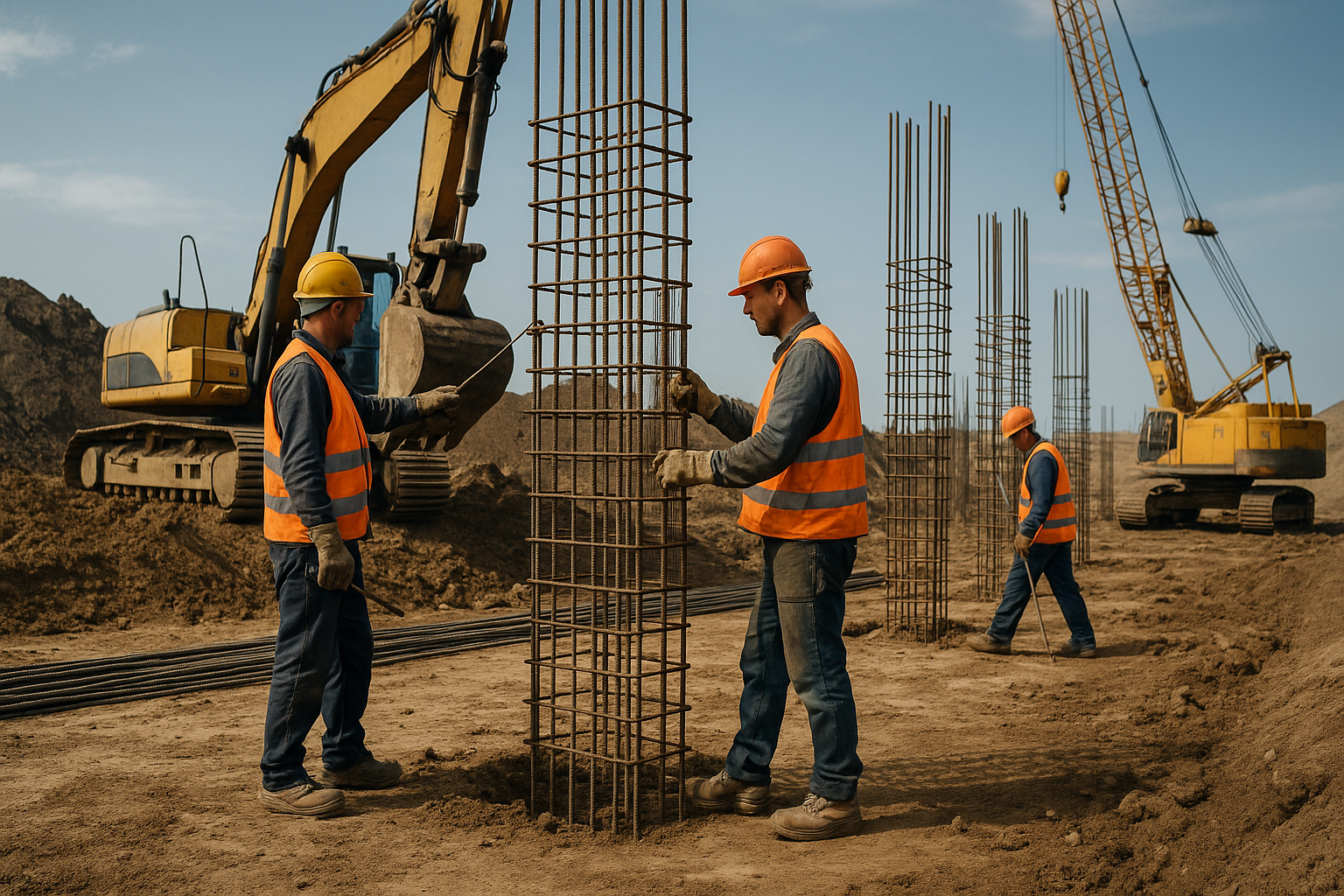
Discover Everything About Heavy Construction Jobs, How the Market Works, What the Opportunities Are, and What You Need to Know to Pursue a Career in a Sector Essential to the Development of the Country.
The Historical Importance of Heavy Construction in Brazil
Heavy construction is the foundation of any country’s development. It marks history with significant urban transformations, infrastructure works, and economic growth.
When we talk about heavy construction jobs, we are referring to a sector that generates thousands of direct and indirect jobs and simultaneously plays a crucial role in the progress of entire regions.
To better understand this job market, it is worth looking at the past and following its evolution.
-
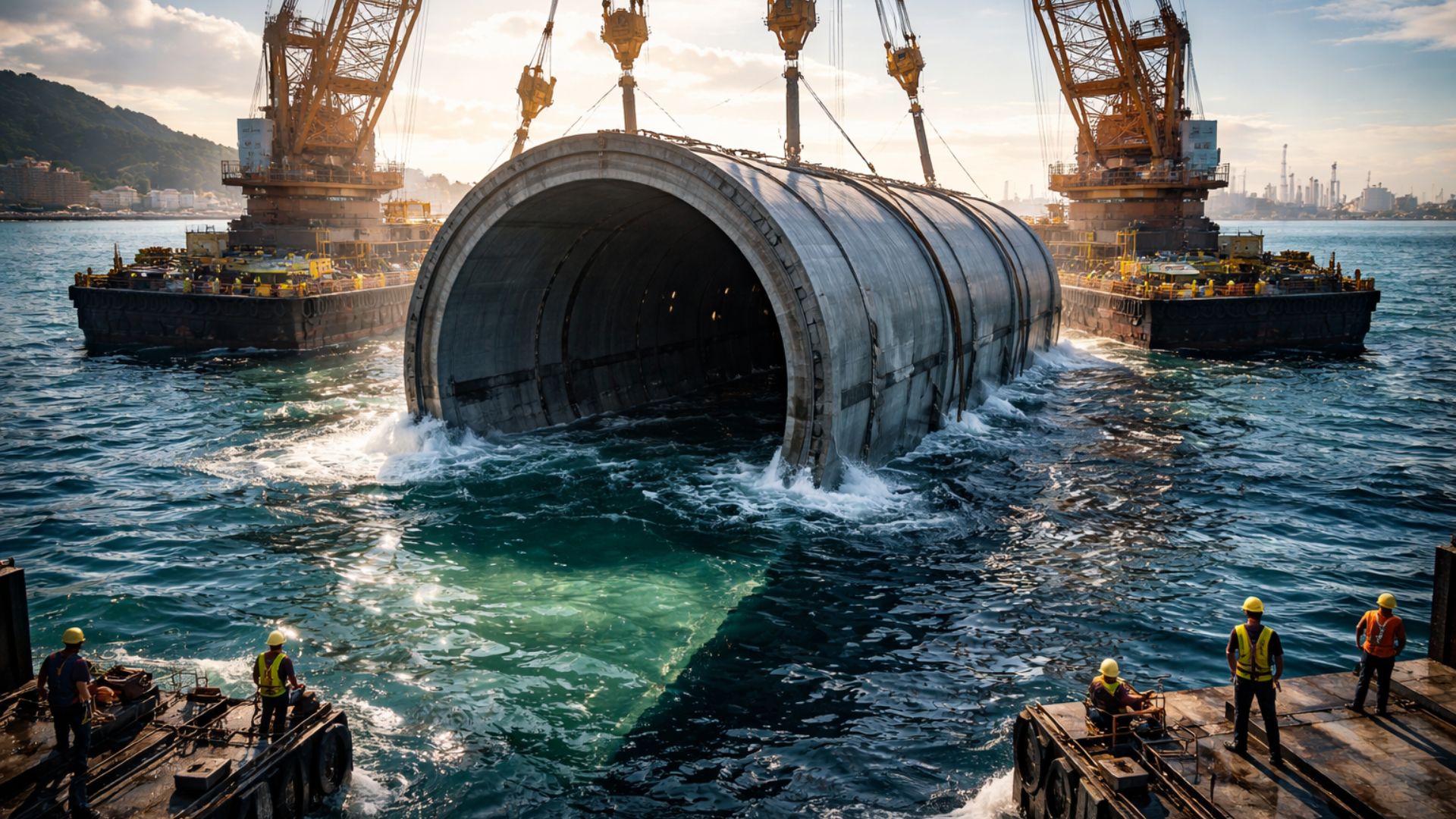
The government opens the vault and deposits R$ 2.6 billion for the construction of Brazil’s first underwater tunnel, with a length of 1.5 km, 870 m under the sea, a total project cost of R$ 6.8 billion, and a 30-year concession.
-
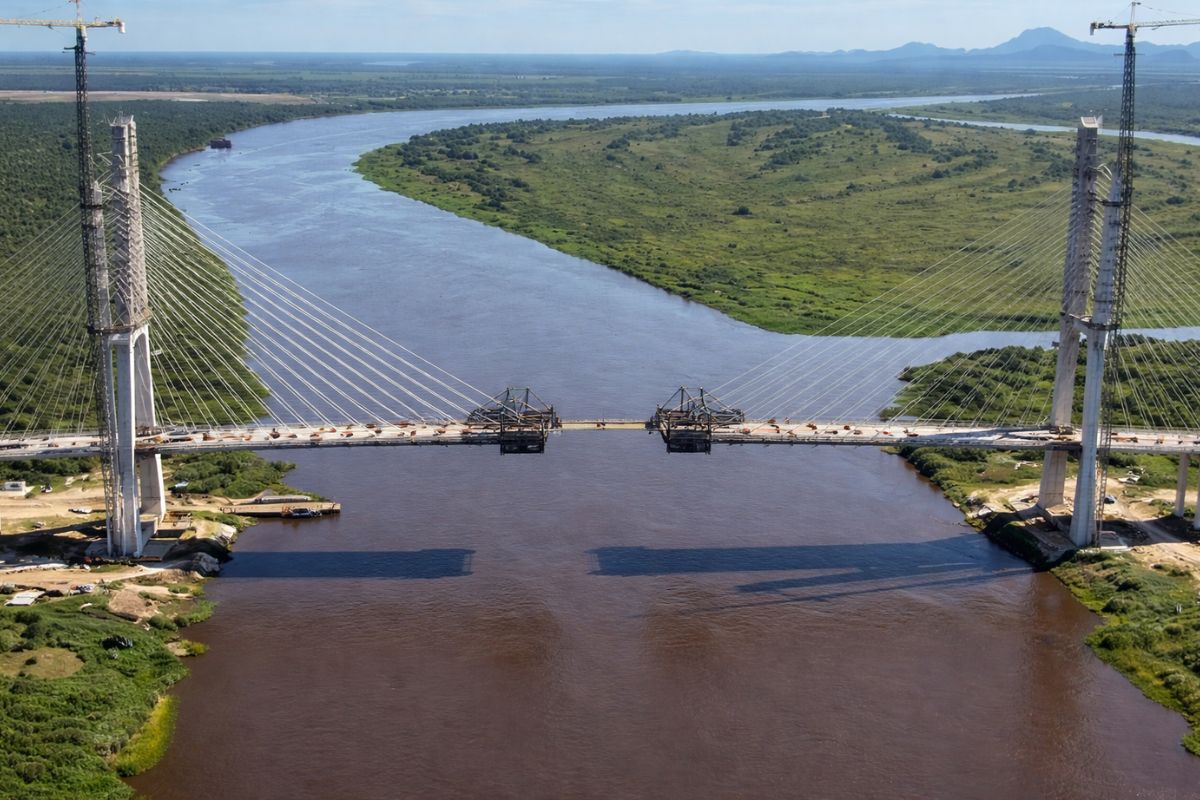
Only 46 meters remain for Brazil and Paraguay to connect via the Bioceanic Route bridge, the project that will link the Atlantic to the Pacific by land and change the logistical map of four countries in South America.
-
The bridge that holds the largest stone railway arch in the world: built over 100 years ago, destroyed in the war, and rebuilt to continue operating to this day, it still carries trains over the Soča River in Slovenia.

-
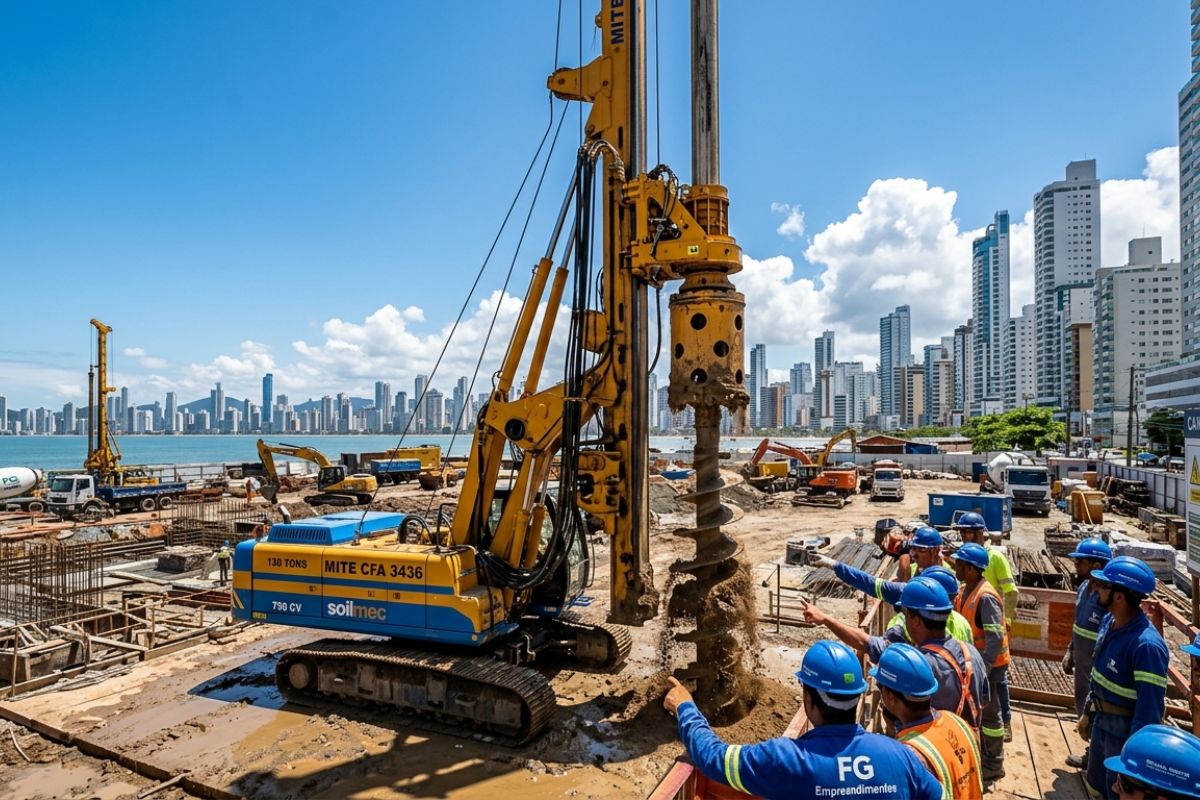
Italian giant of 130 tons arrives at the Senna Tower construction site and accelerates foundations: Mite CFA 3436 drills up to 50 m, 750 hp engine, investment of R$ 20 million, unique in Latin America.
From the construction of the first railways in the 19th century to current urban mobility projects, dams, hydroelectric plants, and highways, heavy construction has always required skilled labor, strength, planning, and technology.
According to the Brazilian Institute of Geography and Statistics (IBGE), the expansion of Brazilian railways between 1850 and 1920 was fundamental in opening paths that promoted national economic development.
During Brazil’s industrialization process, between the 1930s and 1960s, the sector gained significant momentum with the creation of state-owned companies like Petrobras, founded in 1953, and Eletrobras, established in 1962.
These companies stimulated the construction of energy and transportation infrastructure.
The growing demand for energy and mobility led to the construction of large projects across the country, which, in turn, opened many heavy construction jobs.
The Ministry of Infrastructure highlights that in the 1970s and 1980s, Brazil experienced a new growth cycle driven by projects such as the Trans-Amazonian Highway, inaugurated in 1970, and the Itaipu hydroelectric plant, which began operations in 1984.
These projects mobilized thousands of workers, from bricklayers and machine operators to occupational safety technicians.
Moreover, cities grew around these projects, creating new demands for transportation, sanitation, and services, which generated even more opportunities in the sector.
Professional Profiles and Sector Requirements
Even during periods of economic crisis and political instability, heavy construction has remained one of the most important sectors for the country.
Today, it continues to be vital for national development, especially in basic sanitation projects, logistical infrastructure, energy, and public transportation.
The Federal Council of Engineering and Agronomy (CONFEA) reports that in 2023, the civil construction sector in Brazil employed approximately 7 million workers, a significant portion of whom are working in heavy construction.
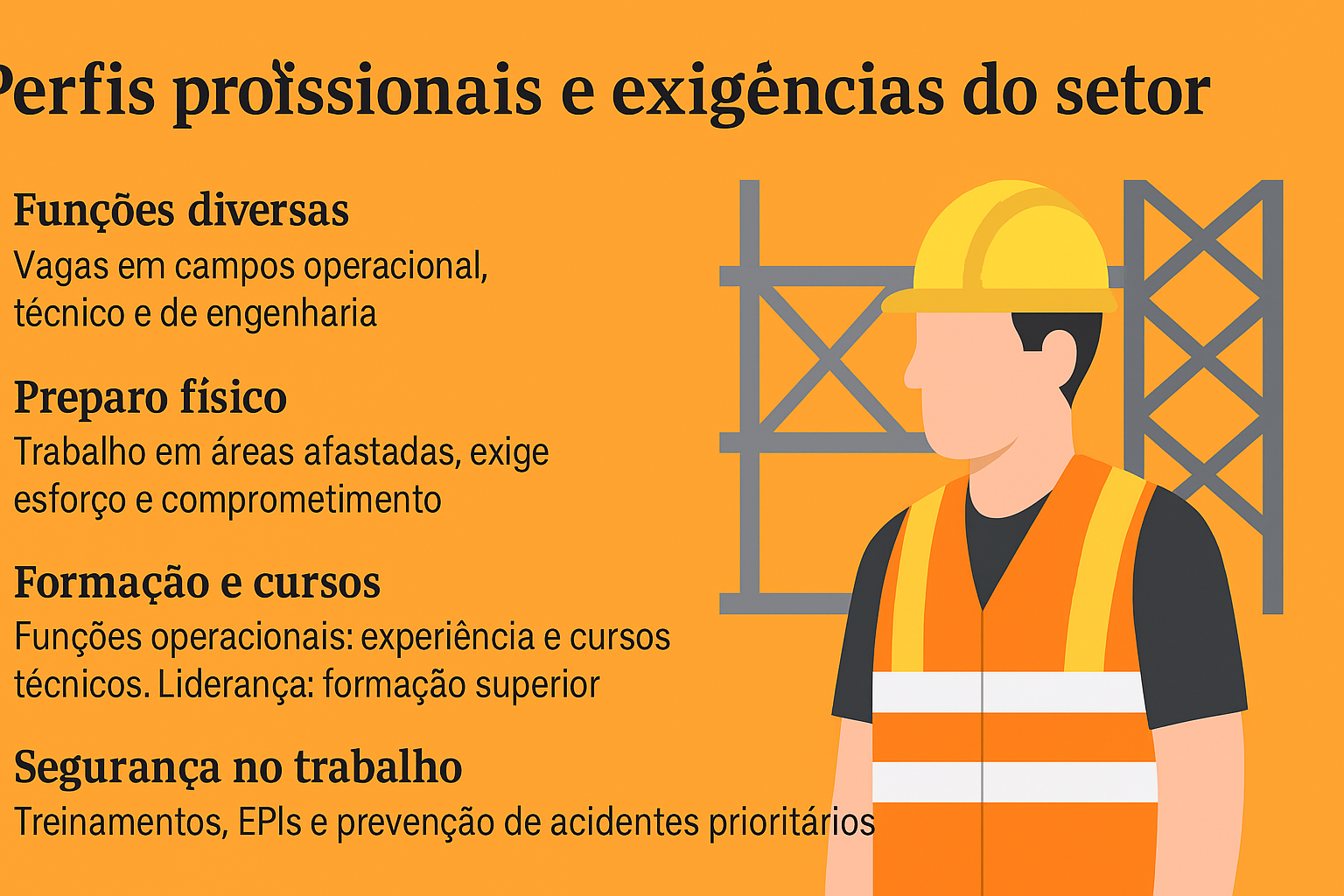
Heavy construction jobs range from operational roles to technical and engineering positions.
These positions include carpenters, reinforcement workers, welders, excavator operators, industrial electricians, dump truck drivers, civil engineers, and building technicians.
Work primarily takes place in the field, often in areas away from urban centers, requiring physical preparedness and commitment.
Training varies according to the role: operational positions require experience and technical courses; leadership roles demand higher education and registration with the professional council.
Companies also value training courses in safety, environmental management, and administration.
Workplace safety is a priority due to the risks associated with handling heavy equipment and working at heights.
Thus, companies invest in training, Personal Protective Equipment (PPE), and accident prevention programs to protect workers and keep projects on schedule.
Furthermore, productivity is key, as timelines are often tight, and contracts involve large sums of money.
Teams need to be disciplined, committed, and flexible, often working in varied shifts and under adverse weather conditions.
Technology, Innovation, and Sustainability in the Sector
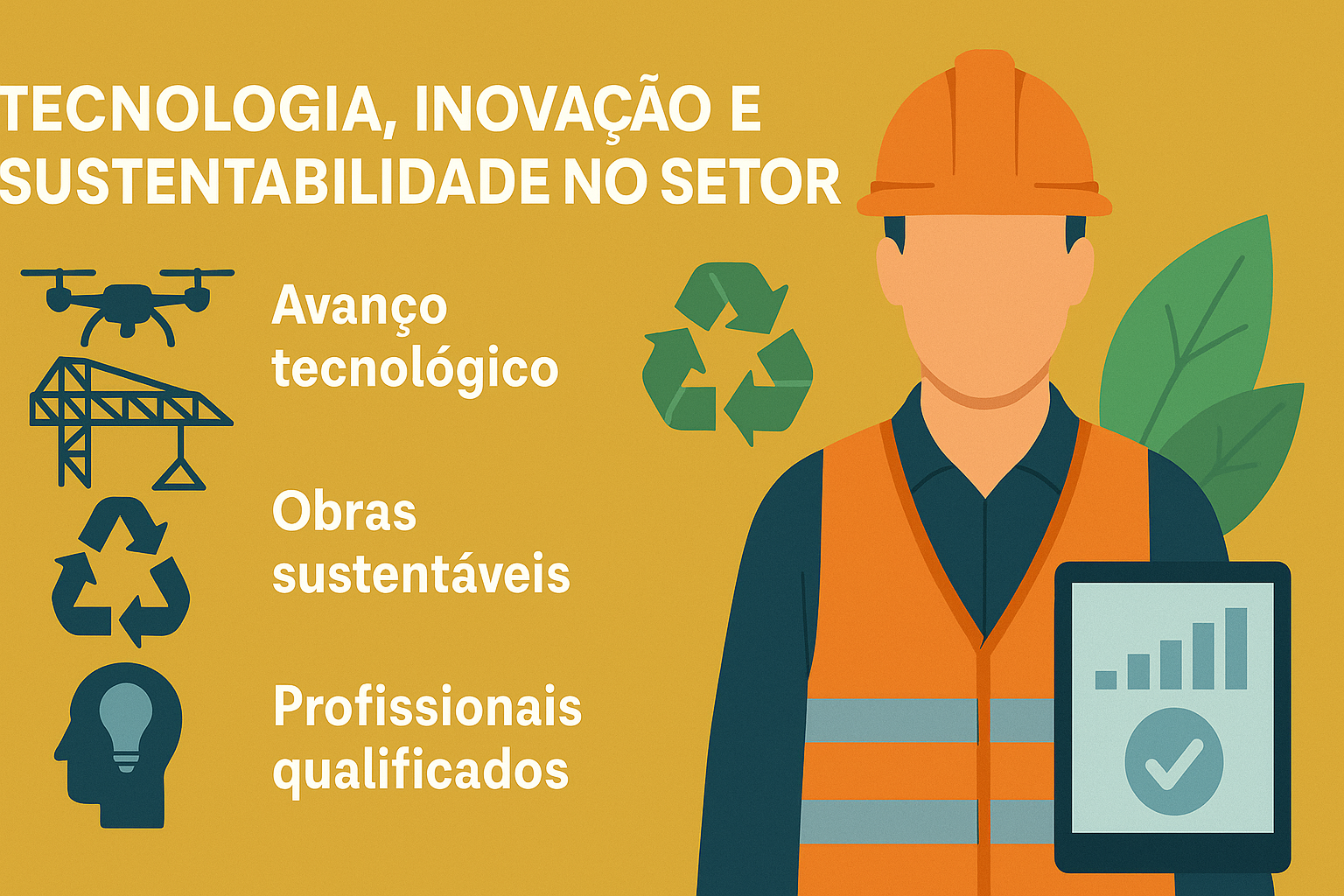
The National Service for Industrial Training (SENAI) emphasizes that between 2018 and 2023, technological training courses enhanced workers’ employability in heavy construction.
With technological advancements, the sector has been transforming rapidly.
Today, construction sites use drones, topography software, monitoring sensors, and integrated management systems.
Therefore, professionals need to combine practical knowledge with digital skills.
Additionally, sustainability has gained ground in major projects.
Recent projects include material reuse, reduction of pollutant emissions, and restoration of degraded areas.
Professionals who master these practices stand out in the market, adding technical value and social-environmental responsibility.
The Growth Acceleration Program (PAC), launched in 2007 by the federal government, is an example of how public investments foster the generation of heavy construction jobs.
Through public-private partnerships and government resources, the PAC has boosted infrastructure, creating new job opportunities.
Even during recessions, the demand for maintenance and improvement of existing projects remains constant.
Moreover, the internationalization of Brazilian companies expands the market, leading professionals to work on projects in Latin America, Africa, and Europe.
This expansion requires professionals with a global profile, language mastery, and willingness to work in different cultures.
How to Find and Prepare for Heavy Construction Jobs

Those wishing to work in the sector should keep an eye on job openings at large construction companies, contractors, and public agencies.
Job sites, trainee programs, competitions, and engineering job fairs are recommended channels.
Having a clear resume, highlighting experience in construction, training courses, and availability for travel increases chances.
Many professionals start in smaller projects or as contractors and gradually secure more stable positions over time.
Networking is also crucial: keeping in touch with colleagues, engineers, and supervisors opens doors and generates referrals.
It is important to remember that heavy construction offers opportunities for growth and professional fulfillment.
Many build long careers, moving from helpers to foremen, or from technicians to coordinating engineers.
The experience gained, the learning from diverse teams, and participation in transformative projects bring pride and satisfaction.
Therefore, when seeking heavy construction jobs, understand the historical, technical, and human dimensions of the sector.
It drives the growth of cities, access to basic services, and the development of essential infrastructure.
Working in this sector is contributing to building the future, one brick at a time.









Seja o primeiro a reagir!