





 Portuguese
  English
  Spanish
  5 min of reading
  0 comments


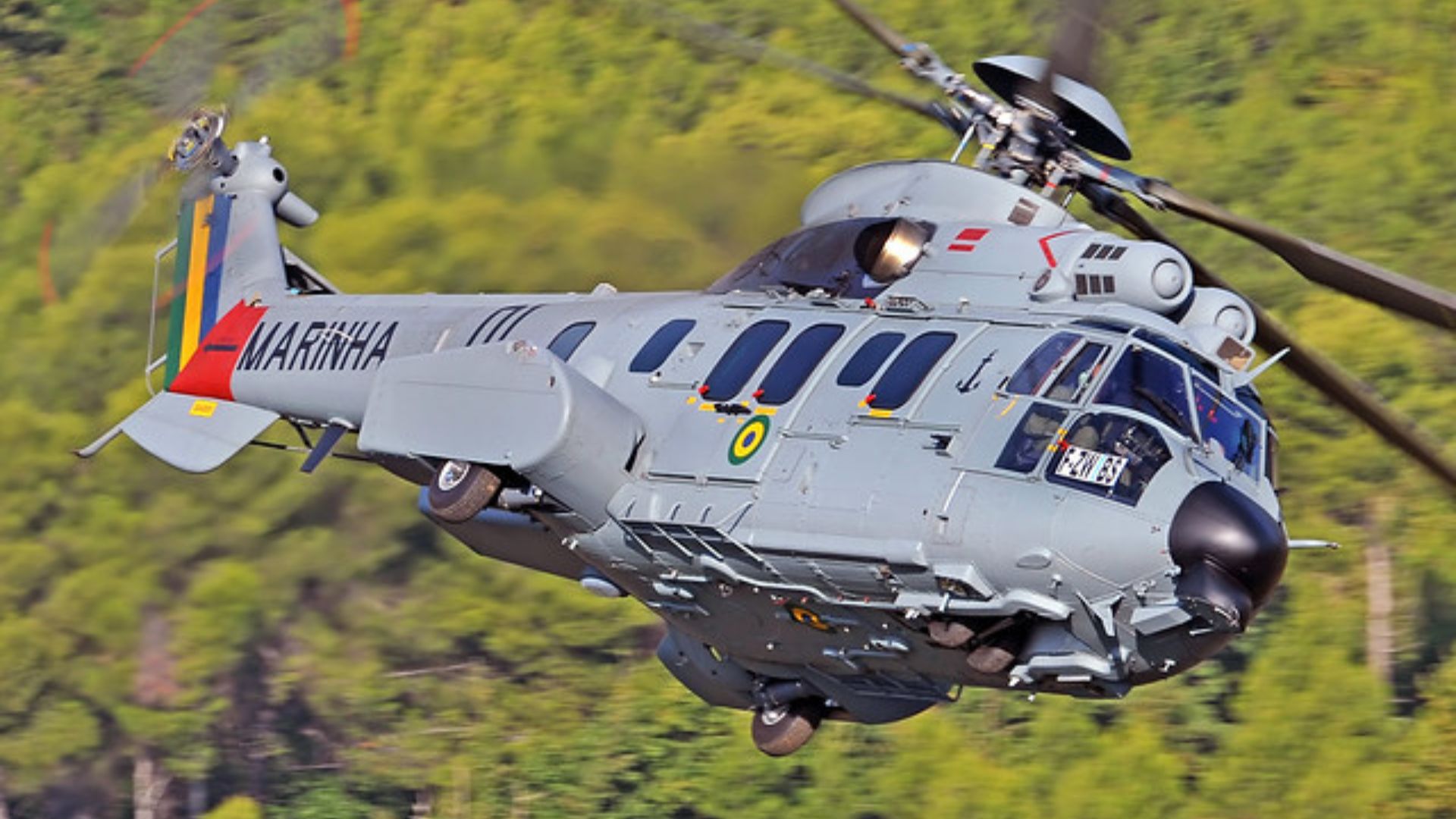
Aerial Technique Transforms Helicopter into Logistics Tool Capable of Moving Equipment and Even Other Aircraft over Areas Without Ground Access, Combining Rigorous Planning, Operational Limits, and Specialized Training to Ensure Safety in Real Missions and Documented Exercises in Brazil.
Seeing one helicopter transporting another, suspended by cables beneath its fuselage, often causes surprise at first glance.
Despite the visual impact, this is a real air logistics technique, established in operational norms and already publicly employed in Brazil for training activities and planned movements.
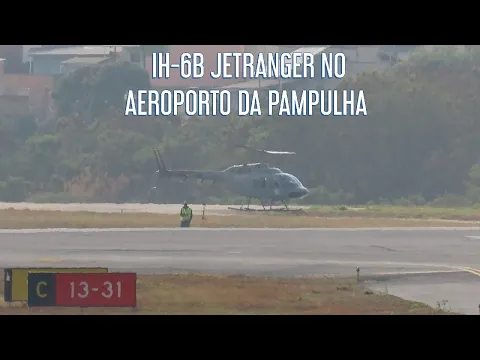
In the context of Naval Aviation, the Brazilian Navy has recorded this type of maneuver using a UH-15 Super Cougar to transport, as external cargo, an IH-6B Bell Jet Ranger, transforming the larger aircraft into a true “flying crane.”
-
Friends have been building a small “town” for 30 years to grow old together, with compact houses, a common area, nature surrounding it, and a collective life project designed for friendship, coexistence, and simplicity.

-
This small town in Germany created its own currency 24 years ago, today it circulates millions per year, is accepted in over 300 stores, and the German government allowed all of this to happen under one condition.

-
Curitiba is shrinking and is expected to lose 97,000 residents by 2050, while inland cities in Paraná such as Sarandi, Araucária, and Toledo are experiencing accelerated growth that is changing the entire state’s map.

-
Tourists were poisoned on Everest in a million-dollar fraud scheme involving helicopters that diverted over $19 million and shocked international authorities.


This mode is officially referred to by the Force as “external load transfer”, a term used to characterize operations where the material does not stay inside the cabin.
Instead, the item is taken from the outside of the aircraft, secured to a hook and supported by cables and certified accessories designed to withstand weight, vibration, and aerodynamic forces throughout the entire flight.
The choice of this method occurs when ground transport imposes significant restrictions or when urgency and terrain conditions make ground transport slow, costly, or simply unfeasible.
Aerial Transport of Suspended Helicopter: When the Maneuver is Necessary
From an operational perspective, the logic is straightforward, even though the result attracts attention.
Whenever the object does not fit in the aircraft, when disassembling it would take excessive time, or when ground routes present obstacles, external cargo is considered a logistical alternative.
In this scenario, the helicopter takes on the role of an air bridge, capable of crossing flooded areas, mountainous regions, dense forests, or locations with poor infrastructure, as long as planning respects technical and safety limits.

In an incident that gained attention for involving two aircraft, the transport was associated with both a logistical necessity and the training of crew members, according to records from the Navy and specialized press.
As reported, the route included the instruction squares area, where basic training of Naval Aviators takes place, and the Naval Aeronautical Base of São Pedro da Aldeia in the interior of the state of Rio de Janeiro.
External Load Completely Alters Flight Dynamics
Transporting an item secured by cables does not merely mean adding weight to the aircraft.
The flight dynamics change because the helicopter begins to operate with a pendulous body below the center of lift, causing small corrections in attitude to generate amplified oscillations in the load.
During turns, accelerations, or variations in speed, this pendulous behavior requires smoother piloting, conservative parameters, and additional margins to maintain the stability of the combination.
When the load is another aircraft, the level of complexity increases considerably.
A light helicopter does not behave like a compact volume; it reacts to the wind, produces drag, and imposes additional maneuverability restrictions, limiting speed, tilt, and flight profile.
For this reason, the mission often follows stricter operational limits, with specific procedures aimed at reducing yaw, unwanted alignment, and oscillations throughout the trajectory.
Ground Planning Defines the Success of the Operation

Much of the complexity of external loads concentrates even before takeoff.
On the ground, technical teams evaluate weight, center of gravity, type of sling, and anchoring points, ensuring the load remains balanced and predictable during all phases of the flight.
Meanwhile, the crew defines routes and altitudes that minimize obstacles and local turbulence, establishing adequate safety areas to handle sudden wind changes.
Weather conditions, in this context, weigh more than in a conventional move.
Variable winds can cause rotation, misalignment, and increased drag, reducing margins in turns and approaches and requiring continuous adjustments of power and attitude.
For this reason, the mission is often restricted to favorable weather windows, with ongoing coordination between the crew, ground teams, and air traffic control bodies.
In the civil environment, this level of control is also evident in regulations.
In Brazil, the National Civil Aviation Agency requires specific authorization for operations with external loads under RBAC 133, establishing technical criteria, documentation, and oversight for this type of activity.
Military Training Broadens Logistical Responses
In institutional communications, the use of external loads is often presented with a focus on safety and operational readiness, rather than as a visual demonstration.
In a statement published on July 31, 2020, the Navy reported that the 2nd General Helicopter Squadron conducted the first night external load flight using night vision goggles.
The communication also notes the presence of ground personnel responsible for maneuver guidance and load safety, in addition to the crew of the UH-15 Super Cougar.
The operational perspective of this type of training is clear.

Mastering the technique expands the capacity to respond in scenarios with limited infrastructure, where ground transport can represent a significant delay in moving materials and equipment.
UH-15 Super Cougar and the Strategic Role in Naval Aviation
The UH-15 Super Cougar is described by the Navy as a multimission helicopter, employed in tasks such as search and rescue, air medical transport, logistical support, and firefighting.
Institutional materials also associate the model with the H225M family and Naval Aviation re-equipping programs, emphasizing its robustness and operational versatility.
In practice, these characteristics expand the aircraft’s operational spectrum.
The external load allows for the transport of bulky equipment, emergency materials, and items incompatible with the cabin, whether due to dimensions, shape, or internal configuration required by the mission.
Why the “Flying Crane” is Not Used in Every Situation
Even with detailed planning, external loads depend on very specific conditions.
The compatibility between the hook, cables, and attachment points is essential, as well as rigorous inspections and tying procedures capable of reducing risks of yaw and instability.
In flight, the priority shifts to the predictability of the load’s behavior.
Trajectories with fewer obstacles, gentle curves, and clear margins for aborting the maneuver are part of the standard adopted in operations of this type.
The visual impact impresses because it reveals a little-known aspect of aerial work.
In certain contexts, aviation ceases to be merely a means of transport and begins to function as a logistical tool capable of moving entire infrastructures and capabilities.
If a helicopter can act as a flying crane to reposition even another aircraft, which logistical operations in Brazil still depend more on ground access than on carefully planned aerial solutions?









-

-

-

-

18 pessoas reagiram a isso.