





 Portuguese
  English
  Spanish
  5 min of reading
  0 comments


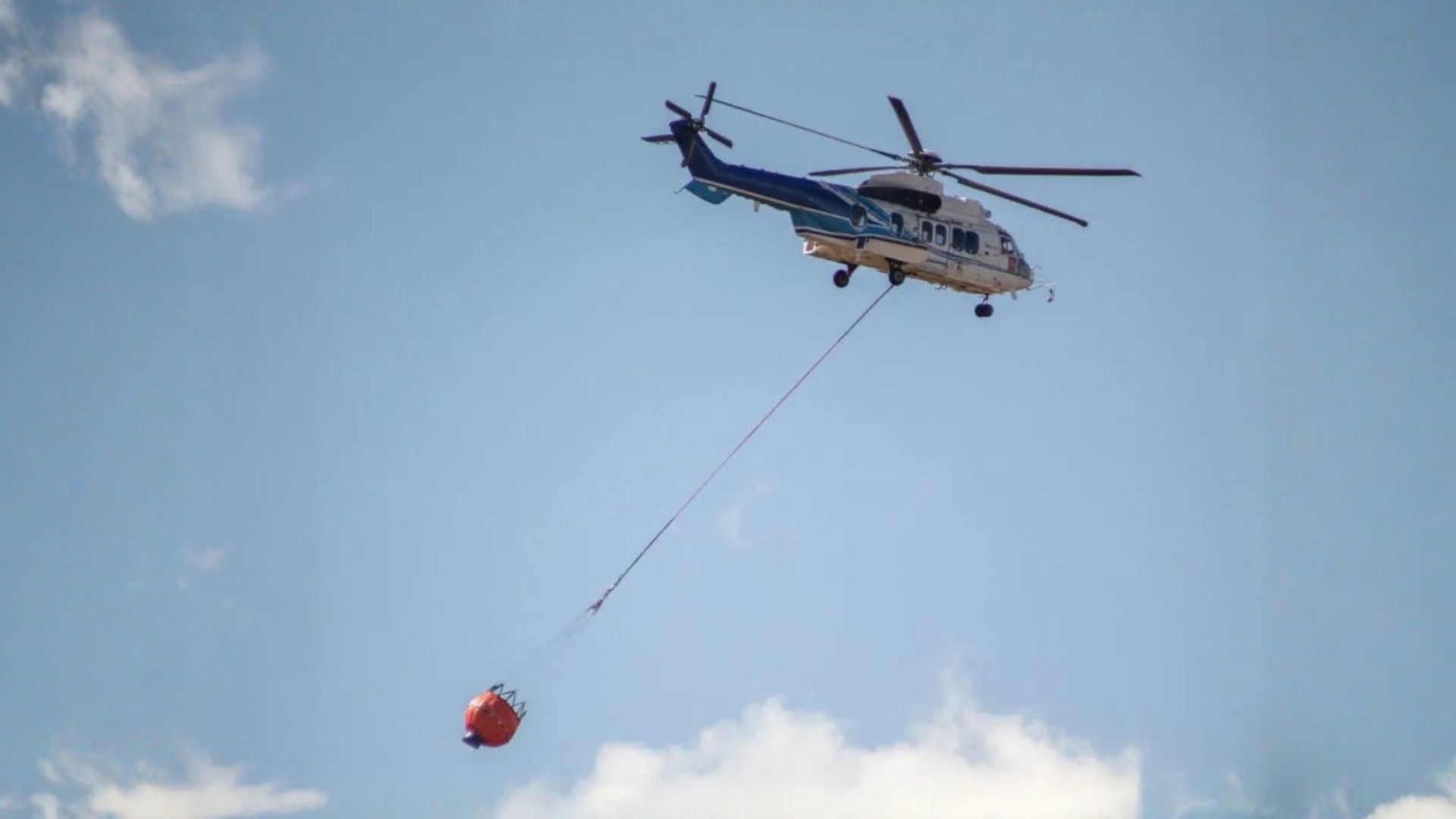
Helicopters Replace Roads In Remote Areas Of Canada And Sustain An Industrial-Scale Reforestation Operation, Transporting Teams, Seedlings, And Equipment Into The Boreal Forest. The Milestone Of 200 Million Trees Planted Exposes The Aerial Logistics Behind Forest Restoration After Harvest.
In one of the hardest-to-access regions of Canada, helicopters have taken on an unlikely role at first glance: sustaining, from the air, a working chain capable of putting trees back in the ground on an industrial scale.
The operation involves taking planting teams, boxes of seedlings, and equipment to areas where land access is limited, seasonal, or non-existent, allowing large stretches of boreal forest to receive new plants after wood harvesting.
The dynamic is straightforward, but requires precision.
-
He started running at 66 years old, broke records at 82, and is now a subject of study for having a metabolic age comparable to that of a 20-year-old, in a case that is intriguing scientists and inspiring the world.

-
Oldest tree on the planet reappears after 130 years of searches: Wattieza, 385 million years old, was 10 meters tall and had no leaves or seeds; Gilboa fossils in New York solved the mystery in 2007.

-
A 48-square-meter house assembled in hours with 4,000 bricks made of recycled plastic that does not absorb moisture, has natural thermal insulation, and costs less than 90,000 reais in a complete kit.

-
Luciano Hang revealed that Havan’s air fleet has already accumulated more than 20,000 landings, 10,000 flight hours, and 6 million kilometers traveled, and he says that without the planes, the company would never have grown so quickly.


Instead of relying on permanent roads, movement occurs through an “air bridge” that connects support bases to clearings and improvised landing spots in remote locations.
In this logic, the helicopter is not just a means of transport; it becomes the logistical link that keeps the replanting pace when the terrain, climate, and distances make continuous movement by trucks unfeasible.
Alberta And The Aerial Logistics In The Boreal Forest
This operational model is associated with the work of Slave Lake Helicopters, a company that operates in Alberta and runs a fleet focused on utility missions.

According to an institutional report published by Airbus, the company reached a symbolic and operational milestone by registering the planting of its 200 millionth seedling in the boreal forests of the province, a number that synthesizes decades of aerial logistics applied to forest restoration in hard-to-reach areas.
The replanting in Alberta is connected to a larger machinery of the local forestry sector.
Airbus’s text describes partnerships with sawmills and operators in the segment who have a responsibility to replant after harvesting, with a replanting ratio indicated as higher than the volume removed.
In this arrangement, the helicopter becomes the tool that allows for meeting reforestation goals even when the temporary roads used for extraction cease to exist or become impassable at certain times, a frequent condition in regions where the soil changes behavior with temperature and moisture variations.
Airbus H125 And The Routine Of Landings In Clearings
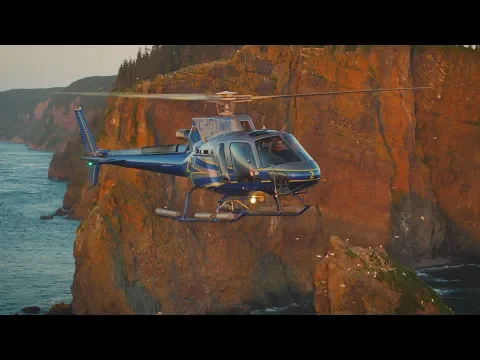
The equipment cited as central to this type of mission is the Airbus H125, a light utility model used to transport people and cargo into the planting “blocks.”
The publication states that Slave Lake Helicopters operates seven H125 units and highlights the recurring use of the helicopter for landings in unprepared areas, at improvised landing spots within the work fronts.
In operations of this kind, each landing must consider natural obstacles, terrain irregularities, and the safety of the crew and aircraft, in addition to maintaining the logistical flow so that planters and seedlings arrive without interruptions.
The scale of reforestation that depends on this air bridge is not measured only by the mark of 200 million seedlings.
The same report indicates that the company regularly engages in missions of this type and attributes its performance to a team of experienced pilots, mechanics, and equipment maintained in operational conditions, asserting that there have been no stoppages associated with the manufacturer’s product throughout its cited history.
Although the number itself is presented as a narrative of operational reliability, it helps explain why, in replanting efforts that must occur in a short window, any logistics failure can reduce productivity and delay schedules.

How Seedlings And Teams Reach The Interior Of The Forest
The image that usually stays with the public is of the helicopter flying over the forest and landing in clearings, but the actual machinery is broader.
For the seedlings to reach the interior of the planting areas, there is a preparation and packaging stage, along with coordination of routes and unloading points.
Utility aviation, in this context, functions like the “truck” that does not rely on roads and, therefore, can carry cargo over considerable distances and, at the same time, pick up teams at the end of the day, maintaining an operational routine in locations where the permanence of fixed structures is limited.
Reforestation And Combating Fires In The Same Operation
In presenting the Alberta case, Airbus also connects this activity to another function that often competes for the same territory: combating wildfires.
The text states that the helicopters used to transport planters and seedlings can also be called upon to support fire response efforts, carrying water and working in partnership with Alberta Wildfire, an agency cited as the interlocutor of the operation.
The coexistence of these uses shows how utility aviation fits into regions where the forest is both a natural environment, an economic base, and a seasonal risk area, requiring the capacity for rapid movement for distinct tasks.
Grand Operation That Transforms Logistics Into Forest Restoration
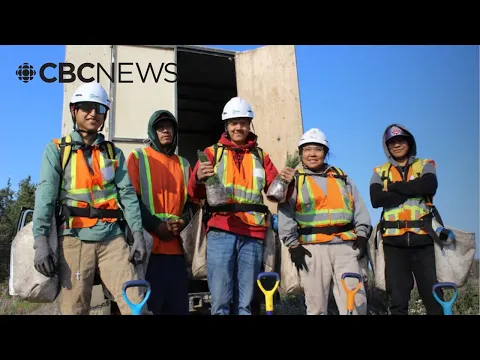
The journalistic interest in this type of story is not just in the number of seedlings, but in the contrast between the image of reforestation and the heavy logistics involved.
Instead of planting associated with small work groups, what appears is an organized operation to feed large work fronts, with recurring flights and a choreography of landings and cargo transport.
The curiosity grows because the solution does not rely on futuristic technology; it uses a work aircraft to solve a classic geographical problem: how to get people and material where the terrain prevents infrastructure.
The logic also helps to understand why the helicopter can change the pace of restoration in remote areas.
When access by road is a bottleneck, the ability to “create access” from the air becomes the difference between planting within the operational window and missing the season.
The result, described by the manufacturer itself when narrating the case, is an accumulated volume that transforms the air bridge into a routine, and not an exception, connecting planting fronts to formal supply chains in the forestry sector.
In a world where the restoration of harvested areas and forest landscape management have become a global theme, the story of helicopters used as a logistical corridor for replanting shows how quiet and repetitive operations, carried out far from roads and cities, can produce numbers that attract attention.
If the forest relies on logistics to exist again after harvesting, how many other regions of the planet could accelerate forest restoration if they had a similar “air bridge”?








-

-

-

-

7 pessoas reagiram a isso.