





 Portuguese
  English
  Spanish
  5 min of reading
  1 comment





Understanding of the STJ on Hereditary Usucaption Reignites Legal Debate and Reveals How Long Occupations in Family Properties Can Redefine Ownership in Successional Disputes.
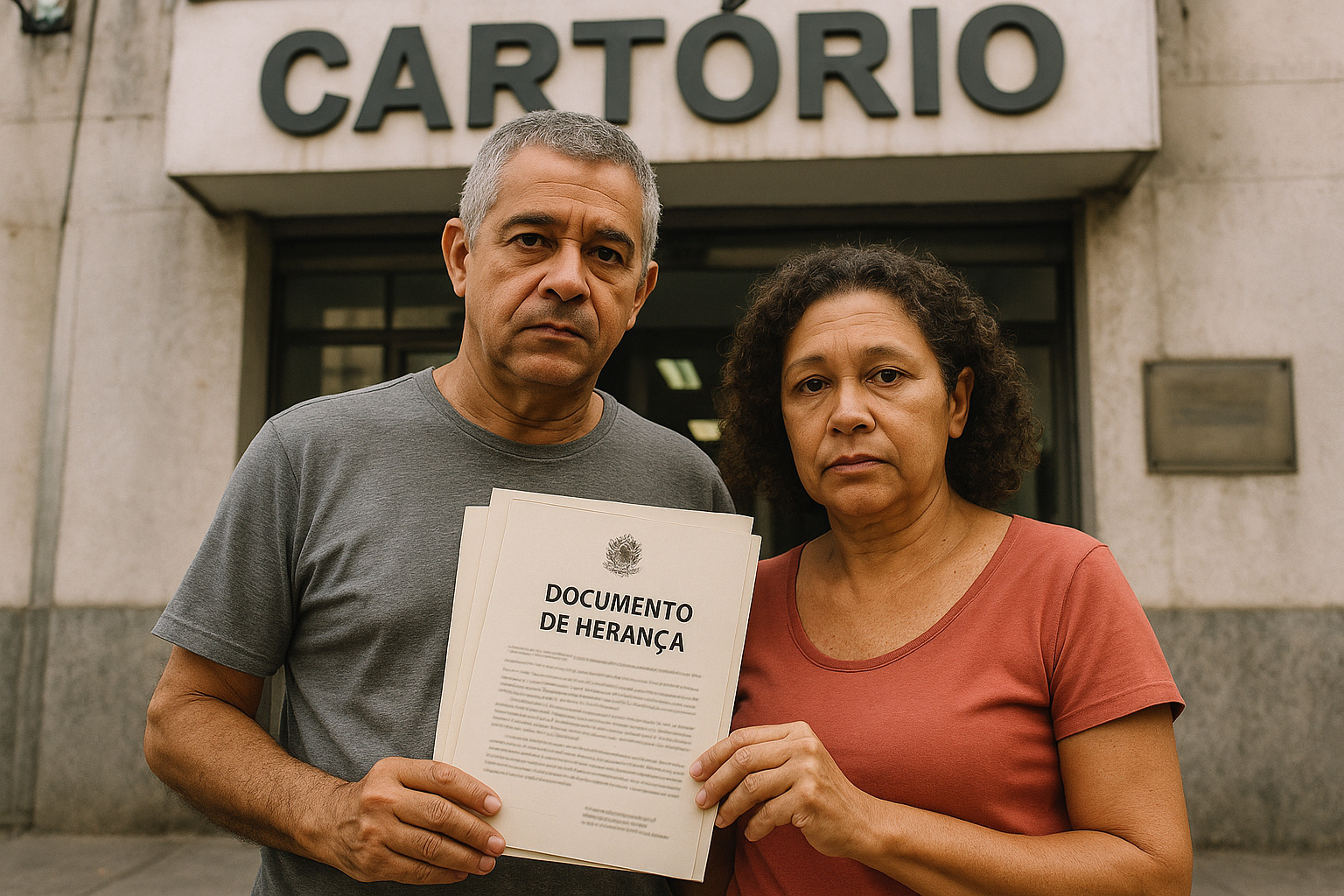
A recent understanding from the Superior Court of Justice (STJ) has paved the way for an heir who lives alone in the property left by their parents, for a long period and without opposition, to request extraordinary usucaption and become the exclusive owner of the asset, even without an initiated inventory.
The guidance, consolidated in Informativo 822, from August 2024, has resonated in the legal community and sparked debates on the limits of possession among family members.
Usucaption of Heir in Legal Highlight
In the example that gained prominence in the press, one of the most cited by specialists, Maria dies and leaves three children.
-
The noise law will no longer be in effect at 10 PM starting in June with a new rule valid during the 2026 World Cup.

-
The Chamber opens a debate on driver’s licenses at 16 years old as part of a reform that includes around 270 proposals to change the Brazilian Traffic Code and may redesign rules for licensing, enforcement, and circulation in the country.

-
The new Civil Code could revolutionize marriages in Brazil with “express divorce” and changes that could exclude spouses from inheritance.
-
Banco do Brasil sues famous influencer for million-dollar debt and intensifies debate on delinquency, risks of seizure, and direct impact on Gkay’s credibility.


None of them initiate an inventory, and Pedro, one of the heirs, remains as the sole occupant of the mother’s house for 15 years.
According to a report published by Folha de S.Paulo, the STJ has responded that Pedro can request recognition of ownership, provided he fully meets the legal requirements.
The court summarizes the jurisprudential position in a passage that has become frequently mentioned: “the heir who has exclusive possession of an inherited property has legitimacy and interest in the declaration of extraordinary usucaption in their own name”.
This understanding appears in recent decisions from the Fourth Chamber and guides rulings based on the evidence of continuous, peaceful possession, without opposition, and with animus domini.
However, specialists emphasize that the STJ does not establish an automatic right.
Extraordinary usucaption, as provided in the Civil Code, requires at least 15 years of uninterrupted possession, which may be reduced to ten years if there is habitual residence or improvements made to the property.
Even so, it is not enough to be physically present; one must act as an owner, assuming expenses, protection, and maintenance of the asset.
Requirements and Evidence Required by the Courts
Usucaption is the mechanism by which someone acquires ownership of a property due to prolonged possession, when acting as an owner, even if they do not possess formal documentation of ownership.
The lawyer Lara Soares, from the Pinho Soares firm, highlighted in an interview reproduced by Folha de S.Paulo that documentary evidence is often crucial.
According to her, payment of property taxes, water and electricity bills, maintenance, and preservation measures help demonstrate the exercise of qualified possession.
Although the understanding is described in a report, this publication does not have binding force.
It serves as an interpretative guide for the Court, gathering decisions that signal the consolidation of a line of judgment.
However, each individual case must be examined separately by state courts, based on the evidence presented.
Why the STJ Corrected Previous Understandings
For Lara Soares, this position corrects first-instance decisions that frequently dismissed actions of heirs even before evidence production.
The lawyer explains that many judges understood that there was a lack of interest in acting, arguing that an heir, having a right to an ideal share of the property, could not usucapir something of which they would already be a co-owner.
The STJ’s position overcomes this reasoning by recognizing that the status of heir does not prevent the attempt to obtain full ownership through usucaption, provided that all legal requirements are present.
Another lawyer consulted by the press, Jaylton Lopes Jr., explains that the situation addressed by the court often occurs when heirs leave the inventory indefinitely pending and one of them continues to exercise exclusive possession.
According to an investigation by Folha de S.Paulo, many family conflicts arise during this interval, when other successors do not formally oppose the occupation, allowing the legal time limit to advance.
Inventory, Opposition and Interruption of the Time Limit
The inventory, meant to list the deceased’s assets, rights, and debts, can be judicial or extrajudicial.
In addition to organizing the division, it protects the interests of heirs who are not in possession.
Lawyers explain that the filing of the inventory can interrupt or even make usucaption unfeasible, especially when there is formal notification of the occupying heir and the property becomes part of a property dispute.
For Jaylton, it is important to differentiate situations. If the occupant is an heir, actions among successors tend to interrupt the time limit of usucaption. However, if someone else is in the property, the inventory does not represent direct opposition.
Possession Before Death Does Not Favor Usucaption
Another point emphasized by Lopes Jr. is that possession exercised before death, when there was tolerance from the parents, does not count towards usucaption.
He reminds that many children live for years in their parents’ properties without the intent of ownership.
In this case, there is permission for use, not qualified possession.
For extraordinary usucaption, it is essential to possess as if the property were one’s own, assuming risks and responsibilities compatible with that condition.
Tax Debate and Attempts at Fraud
The tax dimension also generates discussion.
As usucaption is an original form of acquisition, there is no charge of ITCMD or ITBI.
This could suggest a financial advantage, but specialists warn that replacing an inventory with a usucaption action constitutes fraud.
The newspaper Folha de S.Paulo also pointed out that some heirs attempt to resort to collective usucaption to avoid taxes, but this strategy does not prosper legally because this modality requires exclusive possession.
How Heirs Can Avoid Possession Conflict
To avoid prolonged disputes, lawyers recommend that heirs who do not occupy the property take measures such as:
– Opening an inventory.
– Formalizing internal agreements.
– Initiating rent arbitration, which sets the usage value of the property when only one heir uses it.
In this scenario, the STJ’s understanding reorganizes the dynamics among successors and pressures families to handle succession more promptly.
In light of this, one question remains: to what extent can the lack of dialogue among heirs turn the everyday use of a family property into an irreversible dispute years later?









Eu e meu esposo moramos por 38 anos no imovel…ele faleceu…a casa era do pai falecido a 40 anos sem inventário….e agora vou pra rua? Os herdeiros apareceram.