





 Portuguese
  English
  Spanish
  6 min of reading
  0 comments


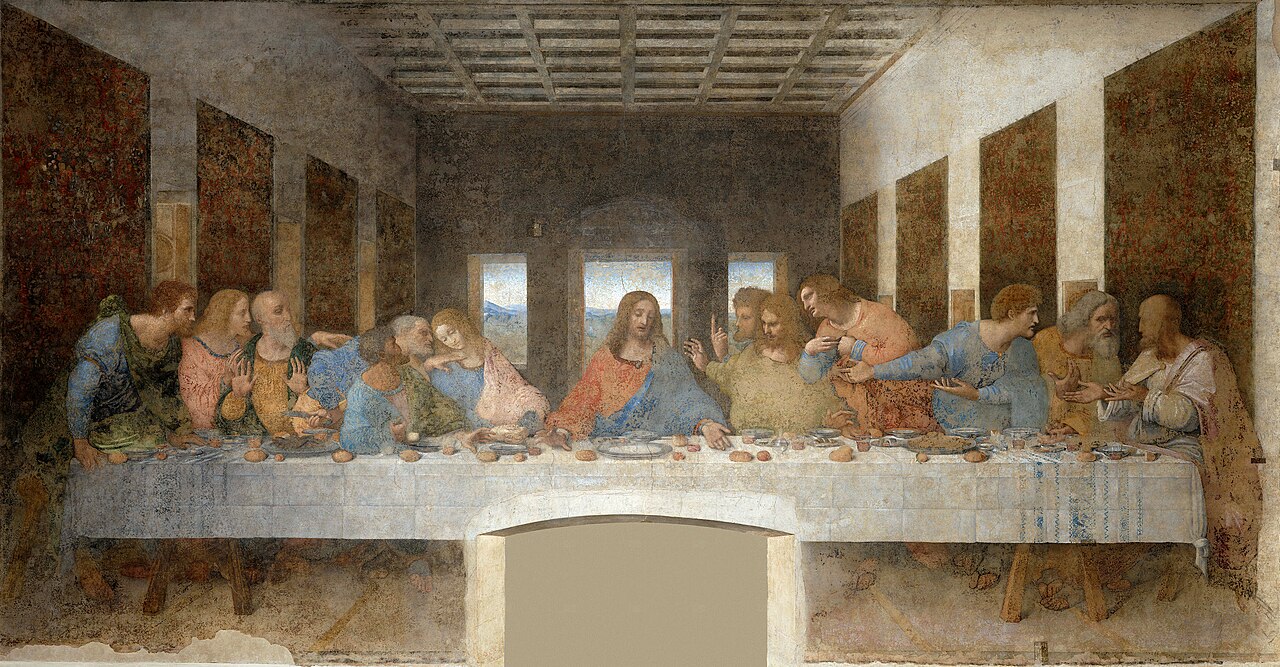
Invisible marks preserved for centuries in one of the most symbolic religious spaces of Jerusalem are back in the spotlight and increase interest in the circulation of pilgrims, the memory of the place, and the vestiges left on the walls.
Medieval inscriptions in the Cenacle are back in the research spotlight
An international team formed by researchers from the Austrian Academy of Sciences and the Israel Antiquities Authority identified and deciphered, with the support of digital techniques, dozens of medieval inscriptions on the walls of the Cenacle in Jerusalem.
The space is traditionally associated, in Christianity, with the Last Supper.
The records, worn by time and in many cases almost imperceptible to the naked eye, include words, drawings, and coats of arms left by pilgrims who passed through the site between the 13th and 15th centuries.
-
One of the most important lakes in the United States for birds, the balance of nature, and the climate has dried to historic levels, leaving boats stranded, revealing salt flats, and showing how the lack of water can transform an entire landscape.

-
It’s not Cristiano Ronaldo or Messi: the richest football player in the world is only 27 years old, has a fortune of 100 billion reais, and is the nephew of a sultan from an Asian country that few people know about.

-
At 77, the king of one of the most famous and powerful crowns on the planet is said to be under pressure to leave the throne, while behind the scenes there are already talks of a new coronation that could cost R$ 260 million.

-
Chinese researchers have created bamboo drones that fly with the same precision as conventional models and have released the flight control software for free to the entire world in a technology that could revolutionize sustainable aviation.


The results were published in 2025 and expand what historical research has already indicated about the circulation of visitors on Mount Zion during the Middle Ages.
In total, the team located about 40 graphic elements in the building, including inscriptions, religious symbols, and five coats of arms attributed to noble European families.
The material was analyzed as part of a project focused on the epigraphic and heraldic corpus of the complex.
The Room of the Last Supper and the Christian tradition in Jerusalem
According to Christian tradition, the Cenacle is the place where Jesus had his last meal with the apostles before the crucifixion.
The current building, however, was erected during the Crusades in the 12th century.

Even so, the space had already been venerated by pilgrims since at least the 4th century, according to the study.
Over the centuries, visitors left marks on the walls, and these vestiges now serve as a source to reconstruct trajectories, origins, and pilgrimage practices.
Medieval pilgrims from different origins
The research also repositions the debate about who arrived in Jerusalem during this period.
For a long time, historiography emphasized sources produced in Western Europe.
The recently deciphered inscriptions, however, indicate a more diverse picture, with records linked to visitors from Armenia, Syria, Serbia, German-speaking areas, and Arabic-speaking Christian communities from the Middle East.
Austrian coat of arms links European nobility to the sacred site
Among the notable finds by the team is a coat of arms linked to Styria, in present-day Austria.
The researchers associated the symbol with the noble Tristram von Teuffenbach, who is said to have participated in a pilgrimage to Jerusalem in 1436.
In that context, Archduke Frederick III, future emperor of the Holy Roman Empire, traveled to the Holy Land accompanied by about a hundred Austrian nobles.
The identification of this emblem connects the vestige found at the site to historical records about the journey.
Armenian inscription reopens historical debate
Another inscription considered relevant in the study is a text in Armenian with the expression “Christmas of 1300”.
For the authors, the record may contribute to the historiographical discussion about a possible passage of the Armenian king Het’um II through Jerusalem after the battle of Wādī al-Khaznadār, fought in Syria in 1299.
The study treats this inscription as a supporting element within this debate, rather than as isolated proof of the entire episode.
Graffiti in Arabic and the diversity of visitors
In addition to these examples, the survey gathered marks left by pilgrims from different origins.
According to the researchers, the largest group of inscriptions identified at the site was produced by Arabic-speaking Christians from the Middle East.
This data, in the team’s assessment, helps to broaden the understanding of the social and geographical composition of visitors arriving in Jerusalem during the Middle Ages.
One of the analyzed fragments contains an inscription in Arabic with the partial reading “…ya al-Ḥalabīya”.
According to the authors, the feminine grammatical form suggests that the graffiti was left by a Christian pilgrim from Aleppo, in present-day Syria.

If this reading is confirmed, the record represents a rare material vestige of female pilgrimage in the medieval period.
Religious symbols preserved on the walls of the Cenacle
The walls of the Cenacle also preserved drawings and symbols linked to the Christian tradition.
Among them, the researchers identified representations of objects associated with the Last Supper, such as a chalice, a plate, and a round bread with a central hole.
These elements were described in the study as part of the devotional repertoire left by visitors in the sacred space.
Digital technology helped reveal erased inscriptions
A large part of these marks remained invisible for centuries due to surface wear.
To recover the traces, the team used multispectral photography and a technique known as Reflectance Transformation Imaging, or RTI.
The method allows for recording the surface under different lighting angles, which helps to highlight grooves, scratches, and almost imperceptible contrasts in direct observation.
After documentation on-site, the images underwent analysis in the laboratory.
At this stage, the photographic records were digitally combined to make the inscriptions more legible.
The application of these techniques, according to the researchers, allowed for the identification of elements that could not be distinguished by the naked eye and opened a new avenue for reading a historical space that has already been extensively studied.
Study expands debate about medieval Jerusalem
Historian Ilya Berkovich, a member of the team, stated in a note released by the Austrian Academy of Sciences that, when viewed together, the inscriptions offer a unique insight into the geographical origin of the pilgrims.
According to him, the diversity indicated by the material is greater than that suggested by part of the traditional research, marked mainly by Western sources.
The results are part of the first stage of a broader project dedicated to the inscriptions and heraldic signs preserved in the Mount Zion complex.
The initiative involves researchers from Israel, Austria, and Armenia, in a collaboration that brings together archaeology, history, epigraphy, and digital documentation.
The study currently focuses on the walls of the Cenacle, but the work may advance to other areas of the complex.

Material vestiges help understand pilgrimage routes
The inscriptions do not function only as individual marks of presence.
For specialists, they help document circulation routes, religious ties, and forms of mobility between Europe and the Middle East in medieval Jerusalem.
Instead of relying solely on chronicles, travel accounts, or administrative records, the research adds material evidence produced by the pilgrims themselves.
This aspect also draws the attention of the academic community.
By analyzing fragmented, dispersed, and long-ignored vestiges, the study expands the repertoire of available sources to understand how different Christian groups traveled to Jerusalem.
The material suggests a broader dynamic of circulation during the period and reinforces the presence of pilgrims from diverse origins in the sacred space.
At the same time, the work shows how visual documentation techniques can alter the reading of already known sites without relying on new excavations.
Discrete, almost erased marks have come to be treated as historical documents capable of adding context to long-standing debates about the city, its visitors, and the religious uses of the space.





Seja o primeiro a reagir!