





 Portuguese
  English
  Spanish
  5 min of reading
  0 comments


Trump Administration Decision Closes NASA’s Historical Library in Maryland, Plans Disposal and Partial Storage of Collection, Integrates Restructuring of Goddard Campus and Generates Criticism About Lasting Scientific Impacts
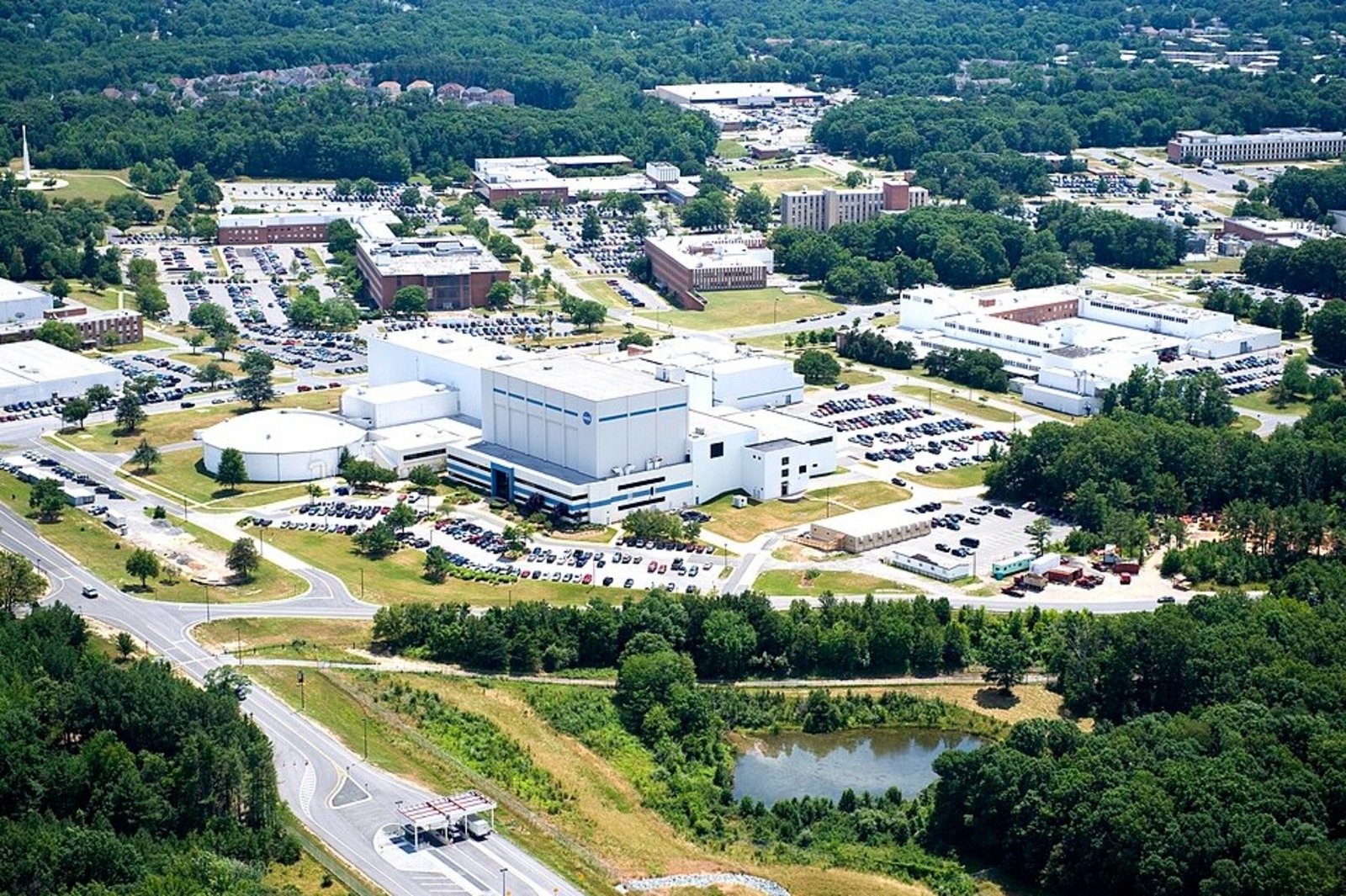
The Donald Trump administration will close NASA’s largest research library at the Goddard Space Flight Center in Maryland this Friday (2), affecting a unique scientific collection, campus restructuring, and access for internal and external researchers.
The library at the Goddard Space Flight Center will close this Friday (2), ending access to tens of thousands of books, documents, and scientific journals.
Many of the materials stored in the library have not been digitized and are not available elsewhere, according to information released by the space agency itself.
-
With a cost per shot close to zero, the DragonFire laser could change naval warfare in 2027 and provide British ships with nearly unlimited defense against drones.

-
A British startup creates tires that generate electricity in electric vehicles when passing over potholes, speed bumps, and cracks.

-
Scientists have created robots made with living cells that have their own nervous system, swim on their own, explore the environment, and self-organize without any genetic engineering, and now they want to do the same with human cells.

-
Students create a solar-powered ambulance that operates without a plug, without fuel, and still keeps medical equipment running in remote areas.


Jacob Richmond, a NASA spokesperson, stated that the collection will undergo review over the next 60 days following the official closure of the facility.
According to Richmond, some materials will be stored in a government facility, while the remainder will be discarded according to current federal regulations.
He stated that the process follows established methods for the proper disposal of properties under federal ownership, used by different agencies of the United States government.
Structural Reorganization of the Goddard Campus
The library’s closure is part of a broader reorganization of the Goddard campus, located in Greenbelt, Maryland, under the Trump administration.
The plan calls for the closure of 13 buildings and more than 100 science and engineering laboratories on the campus by March 2026.
Bethany Stevens, a NASA spokesperson, stated that the measure represents a consolidation rather than a definitive end to the center’s activities.
According to Stevens, the reorganization began before Trump took office and aims to reduce operational costs and address long-standing structural issues.
She estimated that the closure of the facilities would save US$ 10 million per year and prevent US$ 63.8 million in deferred maintenance.
Historical Importance of the Goddard Center
The Goddard Space Flight Center is the first spaceflight complex in the United States and plays a central role in the history of space exploration.
The agency’s own website describes Goddard as the largest organization of scientists, engineers, and technologists dedicated to the development of spacecraft and scientific instruments.
On-site studies are conducted regarding the Earth, the Sun, the Solar System, and the Universe, with strong integration between research, engineering, and advanced technology.
Despite this relevance, the campus has suffered budget cuts, voluntary separation programs, and early retirements over the past year.
These measures reduced the number of federal and private contract workers from over 10,000 to 6,600 active professionals.
Reduction of NASA’s Library Network
The closure of the Goddard library comes after the closing of seven other NASA libraries nationwide since 2022.
So far this year, three of the space agency’s libraries have closed permanently.
Starting next week, only three NASA libraries will remain open in the United States.
They are located at the Glenn Research Center in Cleveland, at the Ames Research Center in California, and at the Jet Propulsion Laboratory in Pasadena.
Employees point out that the reduction of the network limits access to essential technical materials for research and planning of future missions.
Criticism from Employees, Union, and Legislators
Employees at Goddard, union representatives, and Democratic lawmakers from Maryland criticized the accelerated manner of recent closures on the campus.
According to them, the measures were intensified during a federal shutdown, a period when few people were physically present at the site.
These groups claim that there are no concrete plans for the construction of new buildings, contradicting previous modernization forecasts.
The Engineers, Scientists and Technicians Union of Goddard stated that specialized equipment has been removed and discarded.
Among the discarded items were electronics specifically designed to test spacecraft at different stages of development and validation.
Political Reactions and Scientific Impact
Democratic Senator Chris Van Hollen from Maryland stated that the Trump administration has been attacking Goddard and its workforce.
According to him, the closures threaten the center’s critical mission and NASA’s efforts in space exploration and technological advancement.
Van Hollen declared that he will continue to oppose any action that undermines Goddard’s strategic role for science and national security.
To mitigate impacts, NASA informed that researchers will be able to use the digital service Ask a Librarian after the closure.
It will also be possible to resort to interlibrary loans from other federal agencies, as explained by spokesperson Jacob Richmond.
Researchers’ Accounts and Loss of Knowledge with Library Closure
Dave Williams, a retired planetary scientist this year, stated that the library was essential for engineers planning missions to the Moon and beyond.
He highlighted that external researchers also used the space and had access to rare and historical materials from space exploration.
Among the documents were books by Soviet scientists on missions from the 1960s and 1970s, as well as NASA’s experimental records.
Williams spent over three decades organizing exclusive information from the library and uploading relevant content to institutional online archives.
According to him, much of the old data was never converted to digital format, making future retrieval difficult.
Physical Space and Institutional Memory
Santiago Gassó, an atmospheric scientist, reported that he turned to the library to study topics such as chaos theory in old textbooks.
He emphasized the quiet environment, the floor-to-ceiling windows, and the experience of discovering content while exploring physical shelves.
The Coordinated Space Science Data Archive has been offline for several months, raising concerns about the loss of scientific memory.
With the library’s closure, researchers say the agency loses accumulated history and vital information for future missions.
Building 21, which houses the library, cafeteria, and offices, will be permanently closed, also eliminating an informal collaboration space.
Founded in 1959, Goddard built telescopes like Hubble and James Webb and developed scientific missions that are still operational today.
With information from Folha de São Paulo.





-

-

-

3 pessoas reagiram a isso.