





 Portuguese
  English
  Spanish
  6 min of reading
  0 comments


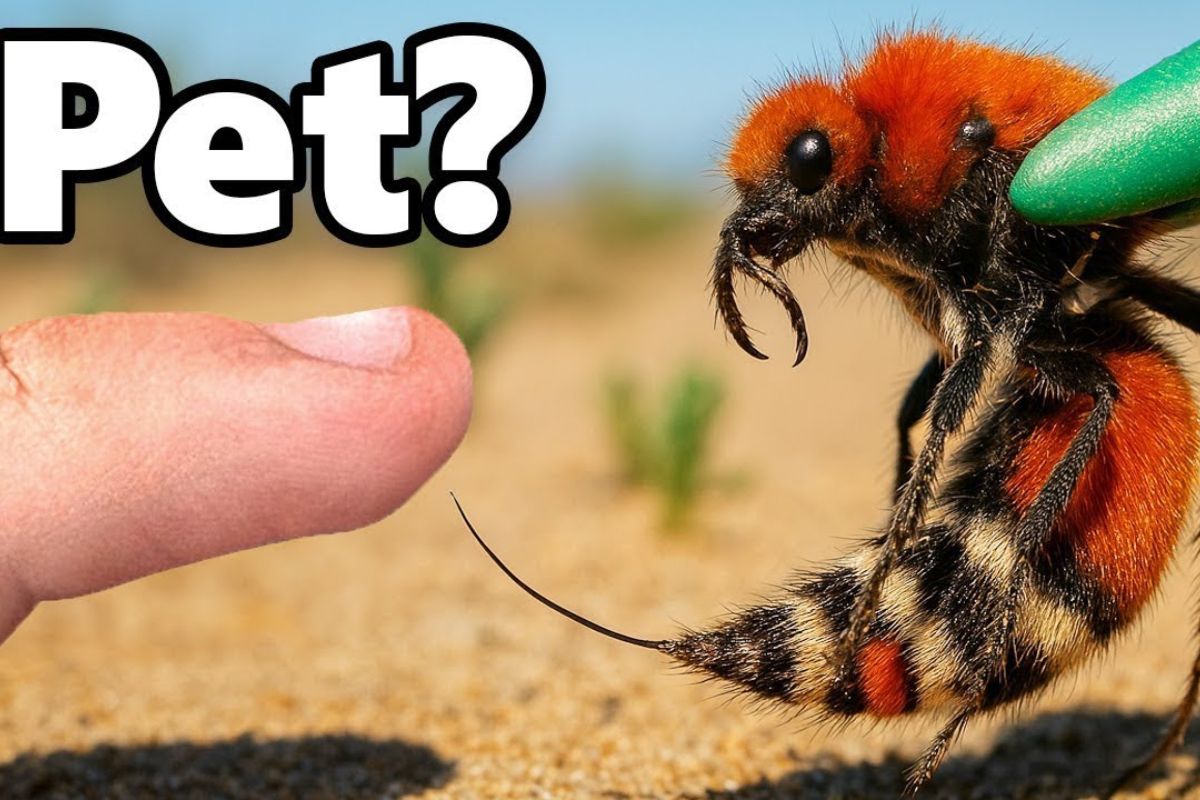
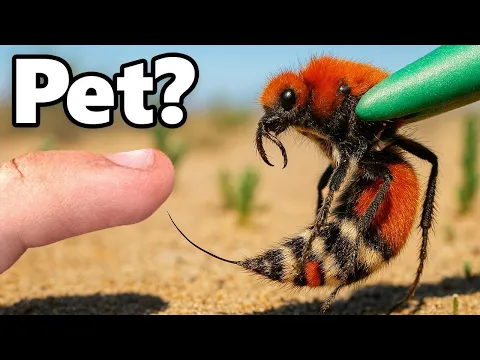
After Seeing Coyote Peterson React to the Sting of a Velvet Ant, Creator Decides to Treat the Insect with the Most Painful Sting in the World as a Pet, Builds a Desert Terrarium with Stones, Sand, and Coal, Tests Nectar Gel, Introduces His Mother, and Records 1 Minute of Contact on His Arm.
The case begins with a viral video: Coyote Peterson allows himself to be stung by a velvet ant nicknamed the “cow killer.” The recording becomes a reference for pain, and from it, a creator decides to buy the insect with the most painful sting in the world as a pet and document every stage, from the terrarium to contact on his arm.
Before the animal’s arrival, he turns the idea into a domestic risk and control test. The plan includes building a terrarium inspired by the desert, ensuring that the lid prevents escape, and finally letting the velvet ant walk for 60 seconds on his arm, without sudden movements and without trying to “force friendship” in fear.
The Viral Video and the Origin of the Name “Cow Killer”

The scene that triggers the story is straightforward: Coyote Peterson receives the sting and reacts intensely, pointing to the velvet ant as one of the most painful experiences observed there.
-
After decades of failed attempts, Brazil is once again looking to space with an orbital rocket measuring 12 meters, weighing 12 tons, costing R$ 189 million, and scheduled for launch in 2026, in a new race to finally achieve autonomous access to orbit.

-
The Earth will plunge into a few minutes of darkness in broad daylight in August 2026, when a total solar eclipse transforms the sky into one of the most impressive astronomical phenomena in recent years.

-
How the terraforming of Mars can transform the planet: artificial aerosols can increase the temperature by up to 35°C in 15 years, creating conditions for liquid water.
-
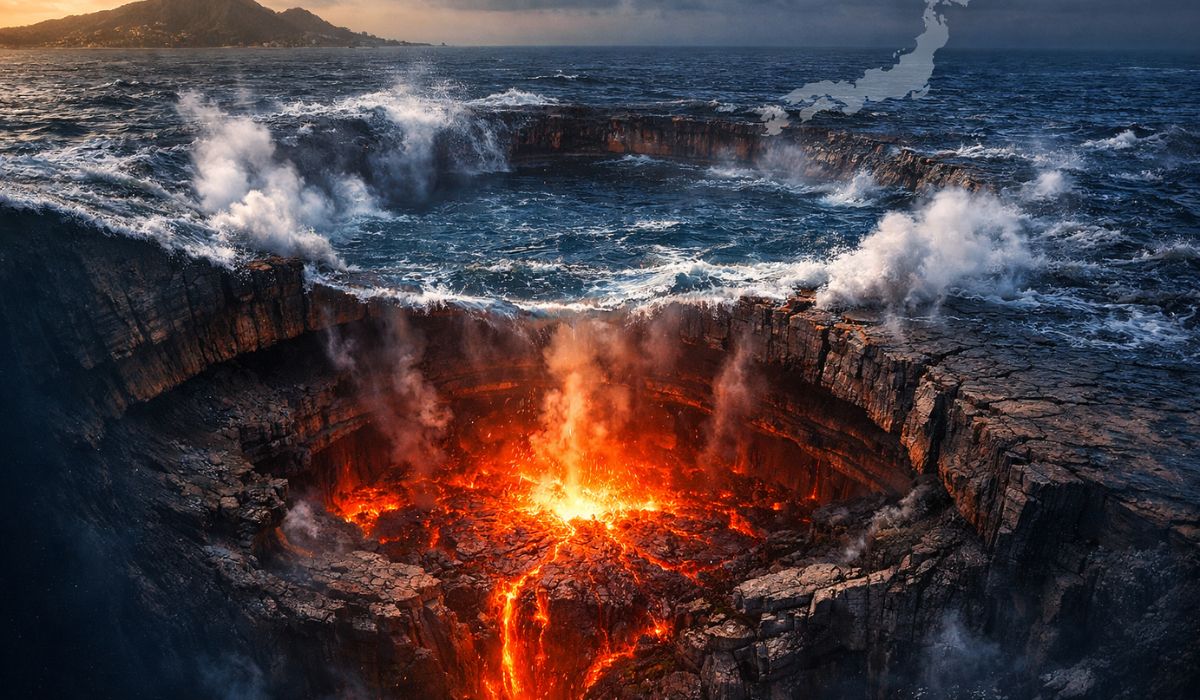
Scientists drilled nearly 8,000 meters into the ocean floor above the fault that caused the 2011 tsunami in Japan and discovered that a layer of clay 130 million years old was responsible for making the wave much worse than any model had predicted.


In the report, the nickname “cow killer” appears as a popular explanation for the strength of the sting, described as capable of “killing a cow.”
The creator himself treats the phrase as an exaggeration and separates myth from real risk.
He maintains focus on what can be observed: the insect with the most painful sting in the world evokes enough fear to require planning, distance, and control of the environment, even when it becomes a pet.
Buying as a Pet and Preparation to Prevent Escape

The decision arises when he finds a website that sells the “cow killer” as a pet.
The purchase is immediate and comes with a repeated concern: if the velvet ant escapes, the problem becomes large.
For this reason, he avoids placing the animal directly in the terrarium before finishing the lid.
When the delivery is delayed, the package arrives with a strange detail: the box indicates “live fish,” even though it contains the insect with the most painful sting in the world inside.
The creator carefully opens it, uses tweezers, and only then reveals the velvet ant under paper towel, confirming that the procedure is for containment, not for “casual handling.”
Desert Terrarium: Expensive Stones, Special Sand, and Coal

The structure of the terrarium begins with stacked stones to resemble a canyon.
He says he chose this material because it looks realistic but notes the impact on the wallet, describing the stones as “very expensive,” without detailing values.
Next, he adds water in a container inside the tank and mixes special sand by hand.
In about a minute, the material turns into moldable clay, described as a ball that “looks like poop.”
The clay is applied between the stones like glue, creating a firm base for the terrarium.
The floor receives a layer of black stone, presented as a resource to absorb extra moisture and reduce the risk of mold.
On top, he mixes sand with a bit of soil to form a more nutritious substrate, arguing that it would help plants and cacti grow better.
The final layer is fine sand, so the terrarium looks like a real desert.
Decoration and Plants: Wood, Succulents, and Cacti
With the scene ready, he spreads “spider wood” throughout the terrarium and uses some of it as small bridges between the “canyons,” allowing the velvet ant to pass.
He then adds longer branches as visual elements and includes logs called “thoya wood,” valued for the holes that provide hiding spots and possible burrows.
The decoration includes a scorpion, but just a plastic one, chosen to enhance the desert aesthetic.
For the plants, he goes to Home Depot and finds the outdoor area empty, attributing this to winter and the transfer of plants indoors.
He buys succulents and cacti, reports spending 20 bucks, and plants them shaking the soil, burying only the roots.
Auxiliary Insects and Test with Larvae
The creator includes springtails in the terrarium and shows thousands of moving white dots, which he describes as tiny and “creepy.”
The purpose is clear: when he sprays water on the plants, the springtails would help consume any mold that may arise with the humidity.
To test interaction, he adds mealworm larvae to the terrarium and expresses curiosity about a possible sting.
Later, when placing a larva near the “cow killer,” the velvet ant climbs on it and shows no interest, returning to search for food scraps in the soil.
Feeding with Gel and Behavior in 20 Minutes
In his research, he finds that the velvet ant can eat nectar, larvae, and adult insects.
The first attempt is an insect gel, described as the same he uses to feed crickets and as a nectar substitute.
The creator places the gel in front of the animal and notes that, in about a minute, it senses the smell and goes straight to it.
The velvet ant remains still and seems to feed for approximately 20 minutes.
After that, he removes the gel to prevent excess, keeping the terrarium as the center of observation for the insect with the most painful sting in the world.
One Minute on the Arm and Controlling Movements
At night, he calls his mother to film and shows the animal inside a small container, again describing the “cow killer” as the insect with the most painful sting in the world.
His mother reacts with astonishment upon hearing that the sting “would kill a cow,” and he reiterates that the verifiable point is the pain.
To transfer the animal, he uses tweezers and says he holds it by the abdomen, considered resistant, almost like a skeleton.
The method seeks to avoid hurting the velvet ant while simultaneously reducing the risk of a sting.
The insect descends from the container and takes its first step on his arm.
The creator keeps his body still, claims he doesn’t want to irritate the velvet ant, and watches the stinger crawling, admitting that he could be stung “accidentally.”
He needs to fulfill the 60-second goal, talks to distract himself, and describes his heart beating at 200 beats per second.
When the timer marks 60 seconds, he tries to guide the “cow killer” back into the container, but the velvet ant circles the edge, falls onto the table, and is only then picked up again.
The result is anticlimactic: there was no sting and the creator names the pet “Killer.”
Still at the end of the video, he suggests that he might accept being stung in another recording if the content generates a spike in subscribers, citing the goal of 100,000 new followers as a trigger to repeat the risk.
What the Episode Exposes About Domestic Risk
The account reveals a contradiction: turning the insect with the most painful sting in the world into a pet depends on repeating simple yet strict controls.
Well-fitted lid, manipulation with tweezers, limited contact on the arm, and constant observation are treated as minimal barriers.
It also becomes evident that the terrarium becomes more than a backdrop.
It functions as containment and as a laboratory, where the “cow killer,” the velvet ant, the gel, and the larvae are placed to measure reaction.
Even without a sting, fear drives each decision.
Between terrarium setup, feeding with gel, and one minute on the arm, the story shows that domestication here is more about containment than about affection: the “cow killer” remains a calculated risk within the home.
In your scenario, would you keep an insect with the most painful sting in the world walking on your arm for 60 seconds?





-

-

-

-

18 pessoas reagiram a isso.