





 Portuguese
  English
  Spanish
  6 min of reading
  0 comments


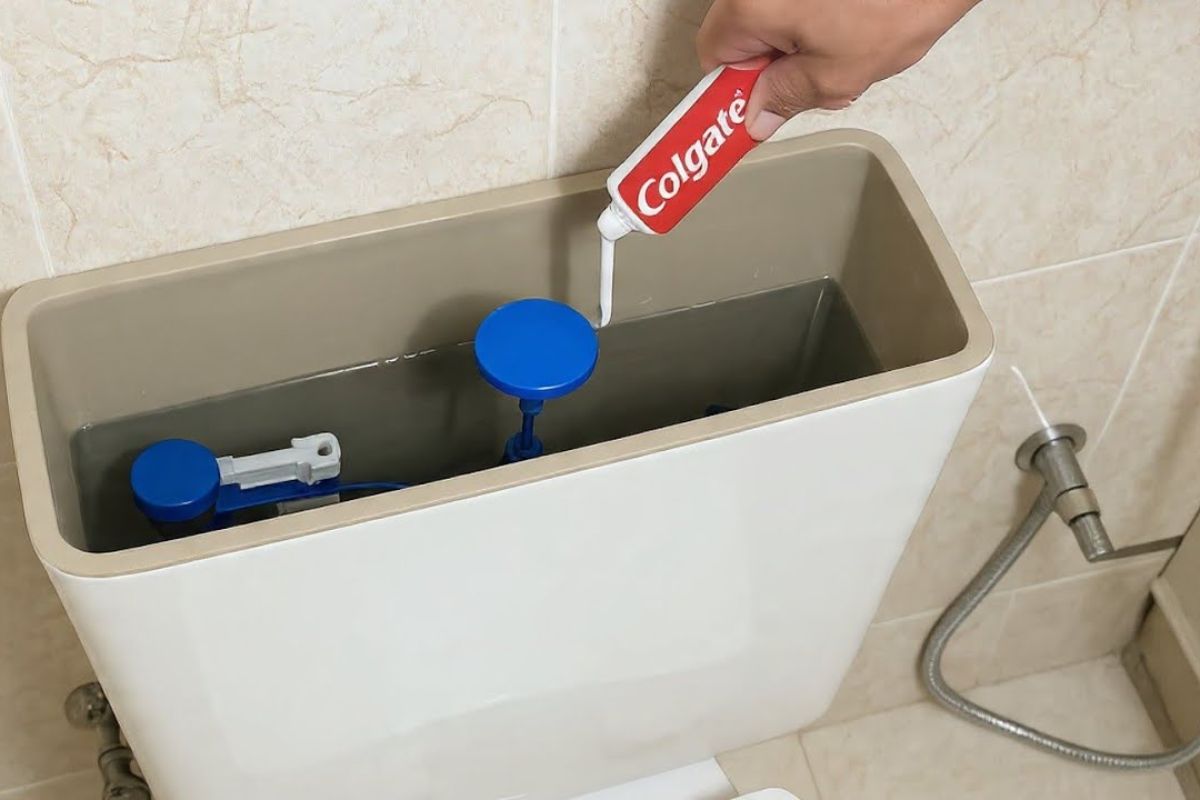
A video shows a man drilling a 70 g tube of toothpaste into a “basket” inside the toilet tank and promising scented water and a cleaner bowl for up to 10 to 15 days. The technique makes cleaning cheaper, but still raises real questions about residues and clogs.
The toothpaste has entered the center of a typical domestic controversy online: a simple, cheap, and visually convincing “trick” that promises to keep the bathroom smelling good and the toilet bowl stain-free for several days. The idea, repeated as a “money-saving tip,” is presented as a solution for those who hate scrubbing and want to reduce spending on products.
At the same time, the video’s own discourse recognizes the sensitive point of the method: if the paste goes down loose, it can lead to a clog. And that’s where the subject shifts from “cleaning hack” to “hidden risk” inside the tank and plumbing, where the problem usually appears late and at a high cost.
What The Video Proposes And Why It Became A Topic
The script is straightforward: the author takes a 70 g tube, makes holes in the packaging with a needle, and cuts the flaps to expose some of the contents. Then, he puts the toothpaste inside an improvised holder, a kind of basket made from another package, to keep the tube secured inside the toilet tank.
-
From sertanejo star to international investor: Ana Castela invests millions in a mansion in the USA, creates a themed accommodation in Orlando, and shows that the “boiadeira” also wants to grow away from the stage.

-
The 10 most stunning motorhomes in the world: a $3 million trailer with a rooftop nightclub and garage for a Ferrari, “palaces on wheels” with Italian marble, private cinema, and five-star hotel luxury for billionaires.

-
Trump wanted to spend $400 million on the White House, but the courts prohibited the million-dollar construction.

-
How the Egyptians erected giant structures like pyramids, temples, and obelisks without modern technology, cranes, or engines still amazes the world and reveals the power of engineering based on ramps, levers, ropes, and colossal organization.


After waiting about 15 to 20 minutes for the water to “mix” with the paste, he closes the tank and flushes. The argument is that with each flush, a small amount of toothpaste dissolves, scents the water, and helps keep the toilet bowl cleaner for up to 10 to 15 days, with the cost cited as being around R$ 2.
The reason for its virality is easy to understand: it’s a simple step-by-step guide, with a promise of quick results and a narrative of savings. And the video also invites the audience to interact, asking people to share where they are watching from, which naturally expands the reach and volume of comments.
Why The Idea “Seems” To Work In Part
There is an intuitive logic behind the appeal: toothpaste is made to clean, has a strong smell, foams, and usually leaves a feeling of freshness. When this material comes into contact with water and circulates through the toilet, it is plausible that some fragrance remains noticeable for a time, especially in small and poorly ventilated bathrooms.
Another point is the argument of abrasiveness. In the video, the author claims that toothpaste is “very abrasive” and therefore helps with cleaning. However, cleaning the toilet bowl doesn’t depend solely on “being abrasive,” because the flush doesn’t scrub surfaces; it just makes the water flow. So when someone sees water draining and smells “clean,” they may conclude that “it worked,” even if the real effect is more sensory than stain removal.
Also at play is the psychological factor: when a person adopts a new trick, they tend to pay more attention to the bathroom for a few days, to flush more often, to keep the lid closed, and to ventilate better. All of this can improve the perception of hygiene, without the toothpaste being the sole cause.
Where It Can Go Wrong: Residues, Clogs, And Tank Parts
The most obvious risk is what the video itself tries to circumvent: if the toothpaste falls loose, it can go into the toilet, and depending on the volume and consistency, it can contribute to clogs, especially in a scenario where there is already previous buildup in the plumbing.
But it’s not just about “clogging the pipe.” The toilet tank has components that work with sealing and movement, and any strange residue can interfere with that.
If part of the toothpaste accumulates in corners, floats, valves, or passage points, it can alter the functioning over time, causing incomplete flushes, intermittent jams, or silent leaks.
There’s also a practical detail: the method depends on the punctured tube staying stable and the water circulating inside the “basket.” If this holder comes loose, turns, or gets misaligned, the paste can concentrate, dissolve unevenly, and create a sort of local “sludge.” The problem with “worked for a few days” is that it can mask the onset of a buildup.
Smell, Stains, And What The Flush Really Resolves

The video promises “odor-free bathroom” and “stain-free,” but these two things are not the same problem. Smell is usually related to ventilation, cleaning of the surroundings, drains, grout, and frequency of use.
The toothpaste inside the tank may scent the water for a period, but that does not guarantee that the bathroom, as an environment, remains odor-free.
Stains on the toilet bowl vary greatly. Some are superficial and come off with light cleaning. Others are deposits that form over time and require mechanical action, contact time, and in some cases, specific products.
The flush does not “work” on stains like a brush does. If the promise is “cleaning for days,” the effect may be more about maintaining the smell and appearance than actual stain removal.
It’s also worth separating “looking clean” from “being clean.” Foam and fragrance give the feeling of hygiene, but do not replace physical cleaning when the toilet bowl already has adherent dirt, stained edges, or hard-to-reach spots.
What To Observe Before Turning Trick Into Routine
Those who see the method as “cheap and harmless” often ignore the central question: what happens when a product meant for the sink goes into a closed system of flush and plumbing? It’s not a matter of demonizing toothpaste but recognizing that its use is outside its original purpose and, therefore, the risk and result vary greatly from home to home.
Frequency also plays a role. A one-time test may seem fine, but repeated habits increase the chance of buildup and constant contact with internal parts. And when a problem arises, it doesn’t always present itself as “clogged right away.” It can appear as weaker flushing, different noises, the need to flush twice, persistent bad odors, leaks that are only noticed on the water bill or with a damp floor.
Finally, the trick often competes with a simple alternative: regular toilet cleaning with scrubbing and attention to the surroundings. This doesn’t go viral but solves the basics with predictability. Real savings come from reducing maintenance risk, not just reducing daily expenses.
R$ 2 Savings Versus Hidden Costs
The appeal of price is strong. The video suggests that a cheap toothpaste keeps the toilet “clean” for 10 to 15 days. However, in domestic accounting, the cost isn’t just the price of the toothpaste. It’s the potential cost of dealing with clogs, replacing tank components, intervention in plumbing, and the time spent discovering the source of the problem.
This is where the debate divides opinions: on one side, those who have tested and say that “it works.” On the other, those who look at the mechanics of the system and see a permanent experiment inside an equipment that requires reliability. A trick that seems perfect in the video can turn into a headache when it’s out of the author’s control and enters different routines.
In the end, the question isn’t just “does it work?” but “does it work without hidden costs?” And that answer, by definition, depends on time, use, and the state of the tank and plumbing in each home.
Have you ever put toothpaste or another “homemade trick” inside the toilet tank to scent or prevent stains?
How long did it work and did any side effects appear afterward? If you had to choose, would you prefer to save money now or avoid any risk of clogs and maintenance in the toilet?








-

Uma pessoa reagiu a isso.