





 Portuguese
  English
  Spanish
  7 min of reading
  1 comment


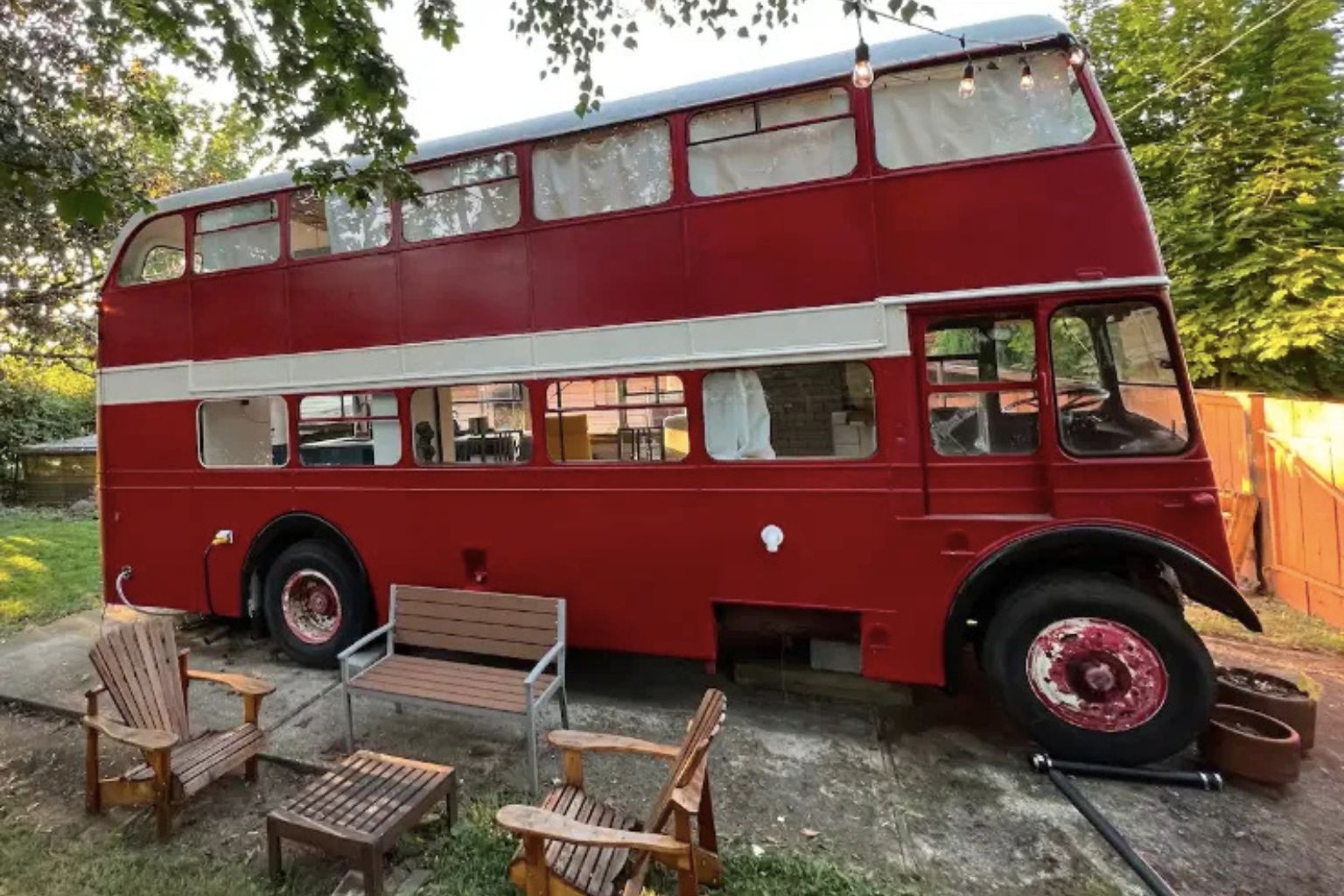

London Double-Decker Bus From 1953 Crosses The Atlantic, Becomes Restaurant In Portland And Ends Up Transformed Into Airbnb Generating Monthly Income After $22,000 Renovation
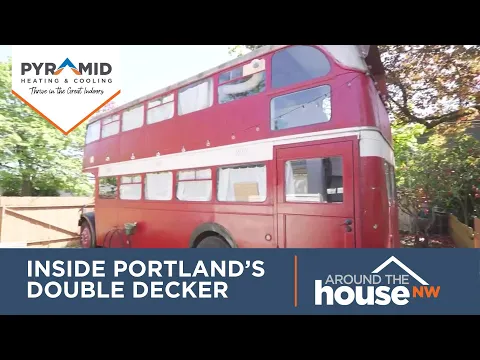
In October 2021, Whit Scott was in Austin visiting his wife when he received an unexpected message from a friend staying at his home in Portland, Oregon. The message came with a curious photo: parked in the garage entrance was a typical red double-decker bus from London, one of those iconic vehicles that usually circulate the streets of the British capital. The friend got straight to the point.
“You’re going to love this thing. Put down $1,000 to make sure he doesn’t sell it to anyone else.”
Scott had never seen the bus in person. Still, he decided to trust his instincts and sent the money immediately. Without even having seen the vehicle in person, he secured the purchase of a historic London bus that would end up completely changing his business. At that moment, Scott had no idea that the vehicle carried a story spanning decades, two continents, and multiple uses — from public transport in England to a roaming restaurant in the United States — before becoming a rented mobile home on Airbnb.
-
The water that may have gone to the Moon with NASA during the Apollo 11 mission and been consumed by the astronauts springs in a Brazilian city at an altitude of 945 meters, famous for its thermal springs, above-average quality of life, and a natural radioactivity so unusual that it attracted Marie Curie.

-
In 200 days, a Finnish man builds with his own hands an 11-meter boat powered by solar energy with “infinite autonomy,” capable of dispensing with refueling and already used as a floating house.
-
Neurologist Richard Restak issues a severe warning to all people over 65: there is a daily habit he recommends completely eliminating from your life because it is destroying your neurons and accelerating memory loss.

-
With 6.1 meters and 33 steps, the spiral staircase of the Loretto Chapel in the United States gained fame worldwide for making two complete 360-degree turns without a central support.

How Whit Scott Transitioned From Video Producer To Tiny House Builder And Mobile Conversions
Before starting to work on alternative construction projects, Whit Scott spent about a decade working in video production. His professional routine basically involved spending hours in front of screens editing images and working with digital content.
In 2012, he decided to move to Portland, a city known for its creative culture and alternative housing projects. A few years later, in 2016, he met an engineer named Cody, who would become a partner in construction projects.
The Beginning Of The Transformation Of The Double-Decker Bus Into Airbnb
Everything started quite simply, during a renovation in Scott’s garage. While they were working on the space, an idea that seemed small at the time emerged: to build a tiny house on wheels that could be rented out to tourists through Airbnb.
To make the project feasible, the two turned to credit cards. One of them bought the trailer that would serve as the base for the tiny mobile home, while the other invested in purchasing wood and construction materials. The project took about a year to complete.
When they finally finished, they parked the tiny house in Scott’s backyard and listed the space for rental on the platform. The result was immediate. Scott’s first tiny house started generating steady income and became the beginning of a new business.
The story had an unexpected twist: the woman who rented that first tiny house ended up becoming his partner. The two got married on New Year’s Eve 2021.
Van Conversions And Business Growth During The Pandemic
With the success of the initial tiny house, Scott began to invest more and more in similar projects. What started as an experiment quickly turned into a professional activity. During the COVID-19 pandemic, when air travel was restricted and many people sought alternatives for mobility, the demand for converted vans for travel increased drastically. Scott then began to adapt vans for clients who wanted to travel between cities like Portland and Austin without relying on airplanes.
He documented the entire conversion process on social media, especially Instagram, showcasing details of the woodworking, internal structure, and creative design solutions.
The posts attracted attention and began to generate inquiries from clients interested in similar projects. The conversion business grew faster than Scott imagined, creating a constant demand for new vehicles to transform. It was at that moment that the London bus appeared in the garage.
The 1953 London Bus That Crossed The Atlantic Before Arriving In The United States
After Scott posted photos of the vehicle on social media, a historic bus enthusiast reached out asking for the bus’s serial number. Days later, he sent a comprehensive dossier with the complete history of the bus. The vehicle had been manufactured in 1953 and originally operated on public transport routes in Huddersfield, Yorkshire, England, although some sources also indicate Manchester as a location of operation.

For nearly two decades, the bus transported passengers on British streets. Then, in the 1970s or 1980s, the vehicle was exported to the United States and crossed the Atlantic.
It ended up in San Francisco, before heading to the state of Washington. There it was used as a tour bus to take visitors to Mount St. Helens, the famous volcano that erupted in 1980. It was during this period that a decisive incident occurred: the bus’s engine caught fire.
From Tour Bus To Roaming Restaurant On The Streets Of Portland
After the engine fire, a buyer acquired the vehicle with the intention of restoring it. The plan was never completed, and the bus ended up abandoned in a backyard, where it served for years as a plaything for the owner’s children.
The history of the vehicle changed again when Matt Breslow, owner of a famous food truck in Portland called The Grilled Cheese Grill, found the bus. Breslow saw potential in the vehicle and decided to transform it into something completely different. The interior was remodeled, stairs were installed, a new door was opened, and artistic murals were painted on the walls.
The bus ended up becoming a roaming restaurant specializing in grilled cheese sandwiches. For nine years the bus operated as a mobile restaurant on the streets of Portland, becoming part of the city’s food culture. When the business decided to end this phase, the vehicle was listed for sale on Craigslist for $8,000. It was at that moment that Scott found the ad.
He didn’t try to negotiate the price.
Bus Renovation Took Ten Months And Cost About $22,000
When the bus arrived in Scott’s backyard, it was in fair condition thanks to the renovations done during its restaurant phase. Still, there were many problems. The vehicle was dusty, with broken windows and missing panels after years of being parked outside.
The biggest challenge was structural. Scott is tall, and the bus’s original ceiling height did not allow someone of his height to stand comfortably in the kitchen or bathroom.
To solve the problem, he decided to modify the ceiling. Part of the structure above the kitchen was removed and raised, while the ceiling over the bathroom was also adjusted. The entry platform also needed to be lowered to allow access without people having to bend down.
To cut costs, Scott sought reused materials whenever possible. A friend had a property with a cedar forest in Molalla, Oregon, where trees needed to be regularly cut down.
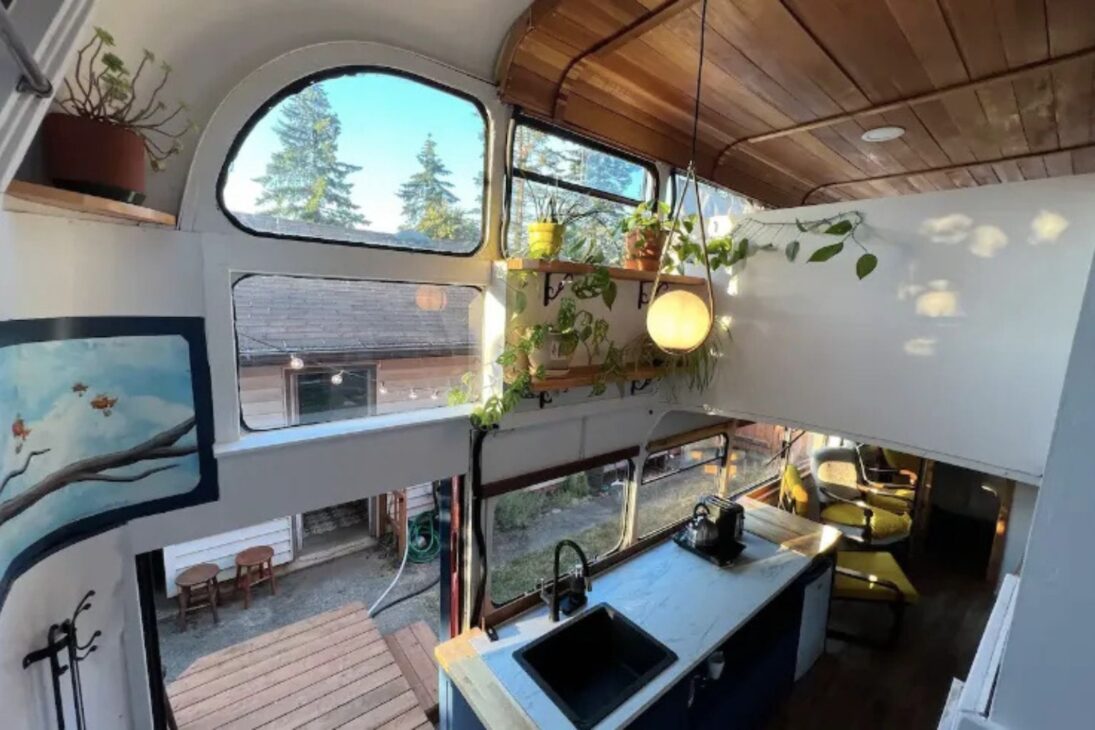
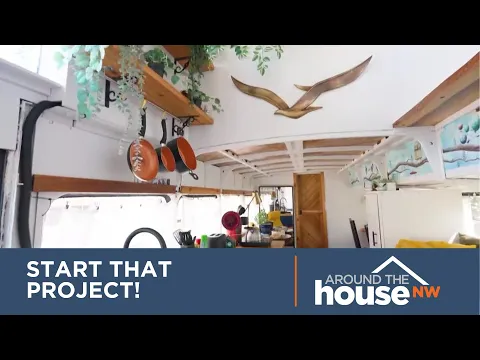
Scott used this wood to cover the walls and ceiling of the upper floor. The curved cedar boards following the rounded shape of the ceiling ended up becoming the most photographed detail of the bus’s interior.
The walls of the lower level were built with reclaimed wood from a door factory in Portland. Scott’s father also participated in the project, driving several times from Los Angeles to Oregon to help with the woodworking. The complete renovation took about ten months and cost approximately $22,000, including the purchase of the bus.
The Interior Of The Bus Became A Two-Story Tiny House With Mid-Century Design
Scott decided to name the project The Royal Scott. The name refers to his full name, Whitney Royal Scott, but also pays homage to an old British railway line called Royal Scot, which connected London to Glasgow in the 19th century. The murals painted during the period when the bus operated as a restaurant were preserved as part of the vehicle’s history.
The interior features an aesthetic inspired by mid-century modern design, with white walls, blue cabinets, natural wood, and brass fixtures matching faucets made of the same material. On the lower floor, a compact kitchen with an Ikea counter, deep black sink, induction cooktop, microwave, toaster, and fridge was installed.
On the opposite side of the kitchen, a padded bench was created that also functions as a storage compartment over the rear axle. The bathroom is near the driver’s cabin and includes a tiled shower, compact sink, and a Nature’s Head composting toilet.
A blue spiral staircase connects the lower floor to the second level. Upstairs is the master bedroom, with a double bed, built-in reading lights, and a curved ceiling covered with cedar wood.
Historic Bus Transformed Into Airbnb Generates About $2,700 Per Month
The Royal Scott began operating as Airbnb accommodation in 2022, parked in Scott’s backyard in Portland. The nightly rates range from $75 to $145, depending on the season.
According to Scott’s statements in an interview with Newsweek, the bus generates approximately $2,700 per month in hosting income. The project gained enormous online visibility, accumulating millions of views on social media and being featured in international reports.
In July 2025, Scott listed the vehicle for sale on Facebook Marketplace for $92,000, more than four times the amount invested in the purchase and renovation. Even so, he continued renting the bus while awaiting a buyer. The reason is not financial. Scott intends to return to working with content creation and brand storytelling.
“Part of this is trying to get rid of some things I’m still carrying,” he explained to the Portland Tribune. “The double-decker is one of them. But I’m not in a hurry. It’s still helping to keep the lights on.”
The bus that started transporting workers in 1950s England, later took tourists to Mount St. Helens and served sandwiches on the streets of Portland has ended up finding the most unlikely destination of all: a tiny house on wheels that generates constant income in the backyard of a former video producer from Oregon.







Only $22? Seriously?