





 Portuguese
  English
  Spanish
  5 min of reading
  13 comments


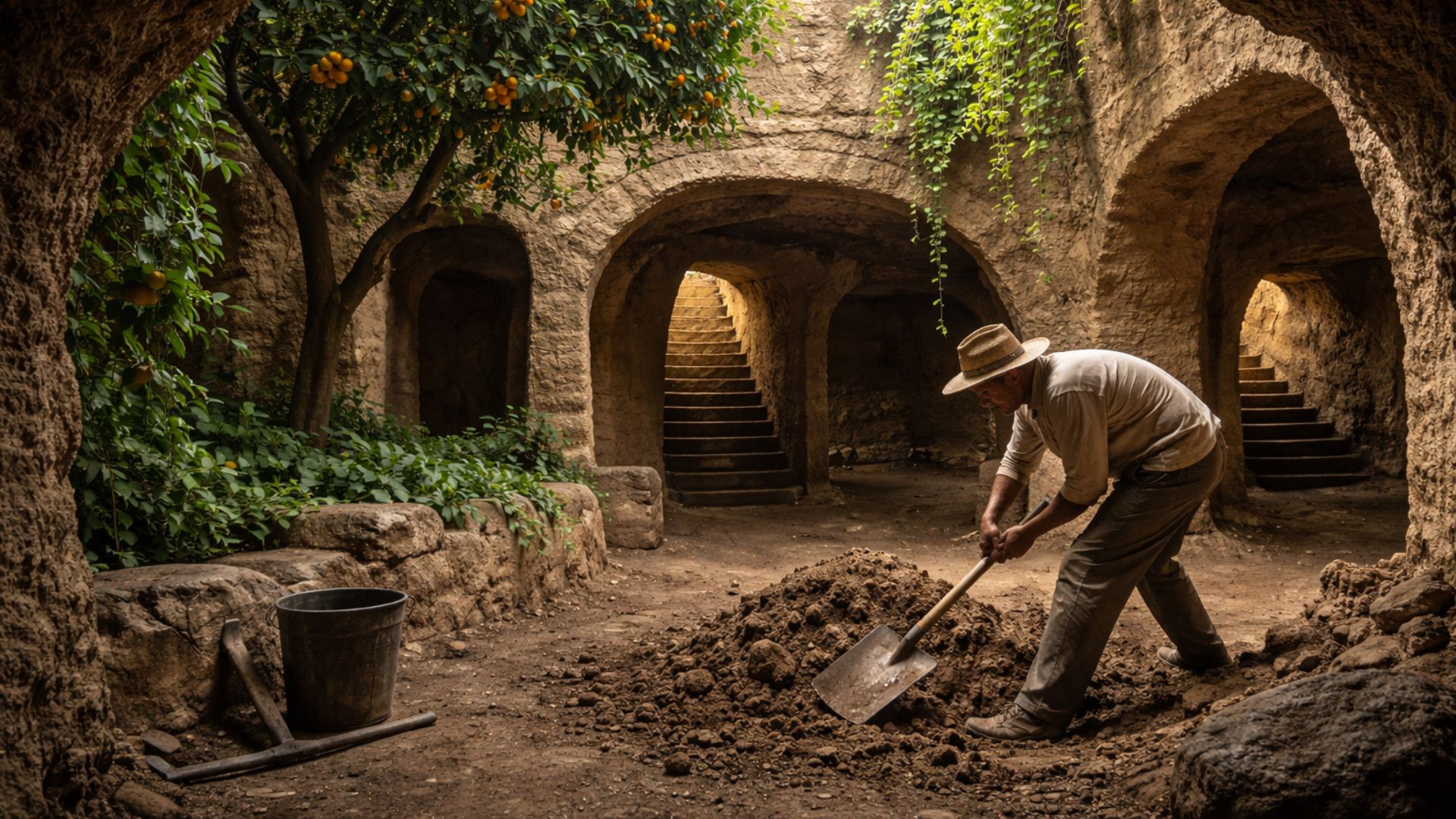


Manually Excavated Underground Complex by Sicilian Immigrant Covers an Area Equivalent to Ten Acres in Fresno, Contains Dozens of Rooms, Patios and Hidden Gardens Beneath the Surface, and Became a Historical Reference in California by Combining Housing, Agricultural Cultivation and Architectural Solutions Adapted to the Extreme Climate of the San Joaquin Valley.
Under the hot and dry ground of the San Joaquin Valley, in Central California, there is an underground labyrinth that extends over a plot of about 10 acres in the city of Fresno and goes unnoticed by those who circulate on the surface.
Known as Forestiere Underground Gardens, the complex features tunnels, patios, chambers and cultivated areas manually excavated by Sicilian immigrant Baldassare Forestiere, who dedicated about 40 years of his life to its construction.
Today, the property is recognized as a California Historical Landmark and is part of the National Register of Historic Places, the federal registry of historic places in the United States.
-
Friends have been building a small “town” for 30 years to grow old together, with compact houses, a common area, nature surrounding it, and a collective life project designed for friendship, coexistence, and simplicity.

-
This small town in Germany created its own currency 24 years ago, today it circulates millions per year, is accepted in over 300 stores, and the German government allowed all of this to happen under one condition.

-
Curitiba is shrinking and is expected to lose 97,000 residents by 2050, while inland cities in Paraná such as Sarandi, Araucária, and Toledo are experiencing accelerated growth that is changing the entire state’s map.

-
Tourists were poisoned on Everest in a million-dollar fraud scheme involving helicopters that diverted over $19 million and shocked international authorities.


Origin of the Work Linked to the Extreme Climate of California
The creation of the complex mixes practical necessity, personal persistence and adaptation to the local environment.
At the beginning of the 20th century, upon arriving in the region and acquiring the land, Forestiere intended to plant and live off agriculture.
However, the plan faced a significant physical obstacle: the hardpan, an extremely compact layer of soil that makes excavations difficult and conventional planting unfeasible.

Faced with this limitation, the project was moved below the surface, with progressive excavations performed manually.
Another decisive factor was the intense heat of the California interior, especially during summer.
In response, Forestiere began creating corridors and cooler underground environments, taking advantage of the natural thermal insulation of the soil.
With the progress of the excavations, what started as shelter eventually transformed into an expanded underground residence, integrated with open patios and recessed gardens.
Manual Excavation Reached Up to 7.6 Meters Deep
The work was carried out exclusively with manual tools, such as shovels and pickaxes, according to the space’s administration.
Over four decades, Forestiere dug different levels of the underground and reached depths of up to 25 feet, about 7.6 meters.
From these excavations, an interconnected network of tunnels, rooms and patios was formed over an area larger than 10 acres.
Even below street level, the environments were designed to receive natural light and allow air circulation.
The scale of the work gained projection in journalistic reports over the years.
A report from the Los Angeles Times described the complex as a labyrinth made up of 65 underground rooms, connected by winding corridors and illuminated by skylights opened in the ground.
This set of structural and spatial solutions contributed to the personal initiative being seen as an architectural reference.
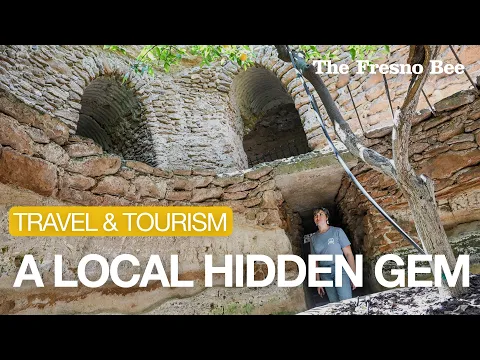

Patios and Skylights Ensure Light and Ventilation Underground
Far from being limited to enclosed corridors, the project incorporates strategically positioned open areas.
Among the most recurring elements are the open-air excavated patios, which function as natural skylights.
Distributed throughout the plot, these openings bring light to the internal spaces and favor cross ventilation.
According to the California Office of Historic Preservation, the complex was carved directly into the hardpan and organized into rooms, passages, and underground gardens over a ten-acre lot.
The official registry also draws attention to the unique method of the work, executed manually in an extremely rigid soil, without the use of large industrial machines.
Underground Gardens Integrate Housing and Cultivation
In addition to architecture, vegetation plays a central role in the project and helps to differentiate the Forestiere Underground Gardens from other underground constructions.
Instead of separating house and garden, Forestiere integrated living areas with cultivation spaces positioned in lowered levels.
These gardens are adjacent to patios and skylights, which ensures sufficient light for the plants’ development.
Descriptions from Visit California point to the site as an underground network that extends over about ten acres, with chambers and tunnels hidden beneath the surface.
According to the official site of the space, fruit trees, shrubs, and vines grow underground, some of them many decades old.

The combination of continuous maintenance and a more stable microclimate created by the mass of earth surrounding contributes to the preservation of vegetation and the reduction of sharp temperature variations.
These conditions help explain the use of the space as a refuge during the hottest periods of the year.
Recognition as a Historical Heritage
Over time, the project ceased to be just a private initiative and began to receive institutional recognition.
The Office of Historic Preservation informs that the property is the California Historical Landmark No. 916 and was included in the National Register of Historic Places on October 28, 1977.
In the National Park Service system, the Forestiere Underground Gardens is associated with areas of relevance such as architecture, landscaping, and agriculture.
This official recognition reinforces the uniqueness of a work that unites housing, underground circulation, and gardens into a single set conceived and executed manually.
Visitation Reveals Underground Daily Life Built Over Decades
Today, the space operates with guided tours and keeps alive the narrative of a work constructed over decades by a single man.
According to the management of the site, the route includes corridors, patios, living areas and cultivation spaces connected to one another.
In media reports, the experience is described as a journey that alternates between shade and light along the way.
As visitors step away from direct sunlight and advance through the excavated levels, the temperature noticeably decreases.
If the project began as a response to extreme heat and soil limitations, it ended as a rare example of subterranean architecture applied to daily life.
What drives a person to dedicate nearly four decades of their life to digging, alone, an entire world beneath the surface of the earth?









Pois É! Imigrante italiano sem bolsa família…
Verdade. E sem um **** como Trump para atrapalhar, também.
Loucura , 40 anos cavando , descobrindo passado, ocupou o tempo com isso
Isso aqui é muito importante. É uma lição de vida, o cidadão criou alternativas de como sobreviver em um local que tem altas temperaturas e buscou de forma inteligente, criar um espaço sustentável para minimizar os efeitos do valor e para uma melhor condição de moradia e isso de forma manual, sem a utilização de mecanismo de alta tecnologia. Parabéns ao cidadão pela sua atitude. O que ele fez, pode ser utilizado em qualquer segmento da sociedade para que dessa forma tenhamos uma sociedade muito mais justa.