





 Portuguese
  English
  Spanish
  4 min of reading
  0 comments


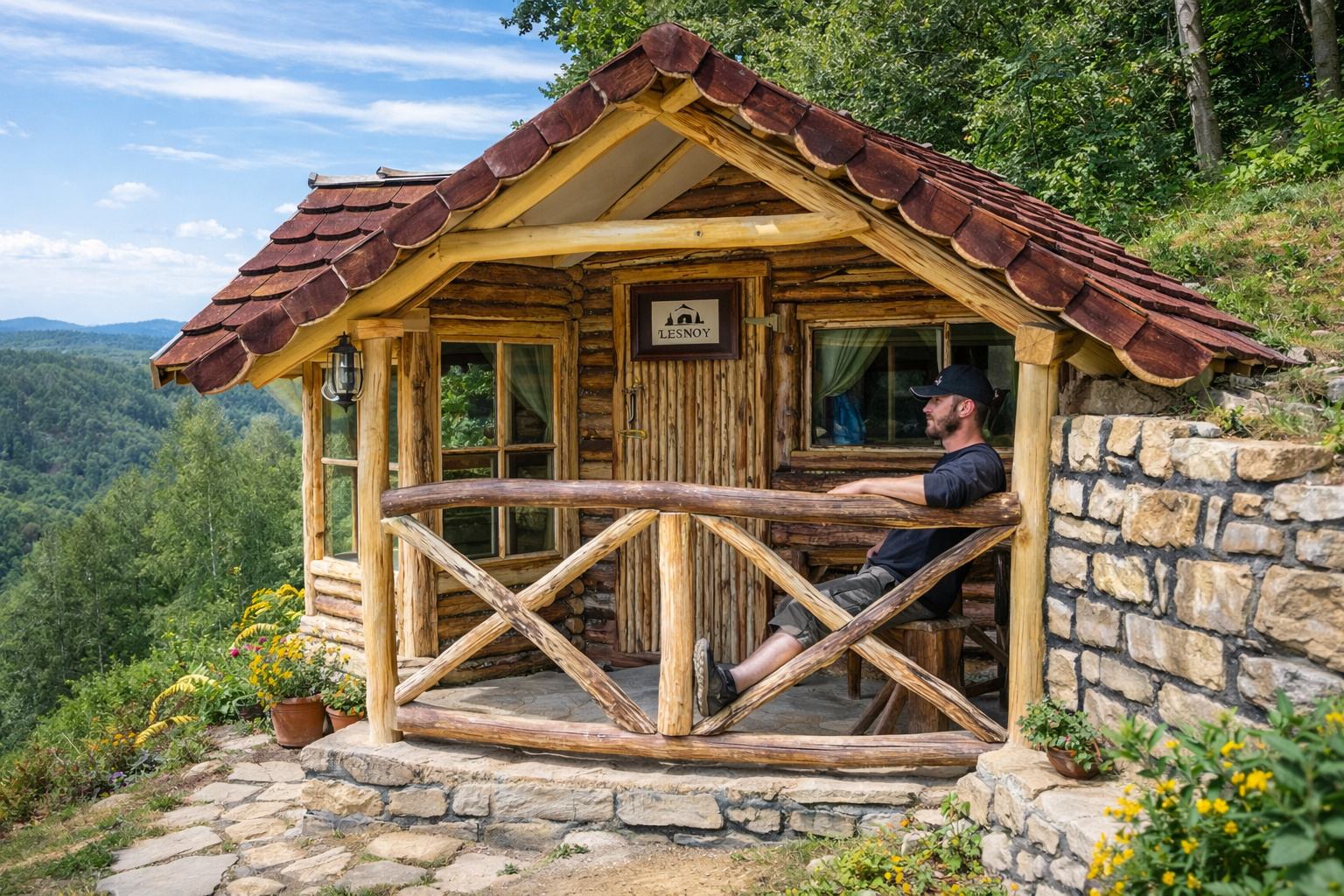
A Man Builds A Stone And Wood Cabin On A Challenging Slope, Laying A Base With Rocks, Raising Solid Wood Walls, And Closing The Structure With A Manually Adjusted Sloped Roof
A man builds a solid stone and wood cabin on a sloping hillside and completely changes the surrounding landscape. What was once uneven ground covered with leaves now supports a sturdy shelter, raised on rocks and enclosed with thick logs.
He starts by digging the earth until he reaches the firmest layer. Next, he positions flat stones, applies light mortar between the joints, and only then begins to raise the solid wood walls. Each step prepares the next.
The process draws attention because it demonstrates, in practice, how manual techniques can solve a real structural challenge. The slope ceases to be an obstacle and transforms into a base for a functional cabin.
-
He started running at 66 years old, broke records at 82, and is now a subject of study for having a metabolic age comparable to that of a 20-year-old, in a case that is intriguing scientists and inspiring the world.

-
Oldest tree on the planet reappears after 130 years of searches: Wattieza, 385 million years old, was 10 meters tall and had no leaves or seeds; Gilboa fossils in New York solved the mystery in 2007.

-
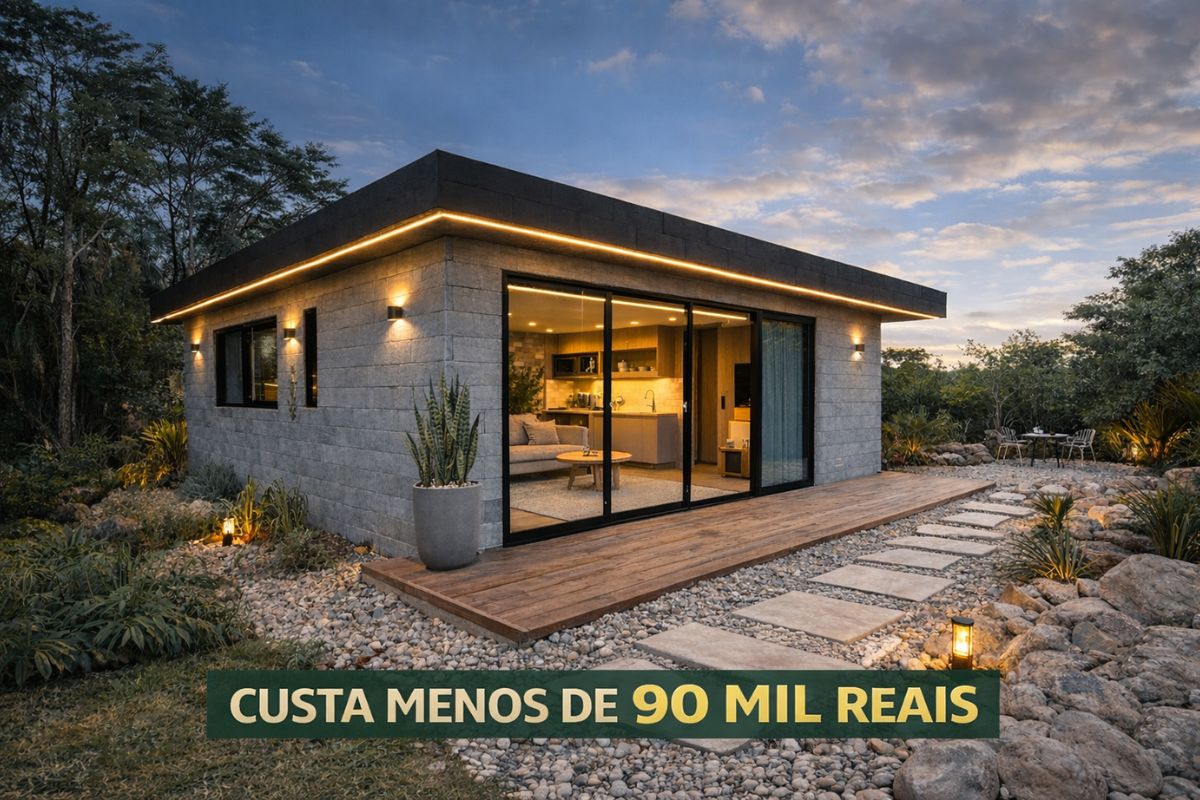
A 48-square-meter house assembled in hours with 4,000 bricks made of recycled plastic that does not absorb moisture, has natural thermal insulation, and costs less than 90,000 reais in a complete kit.
-
Luciano Hang revealed that Havan’s air fleet has already accumulated more than 20,000 landings, 10,000 flight hours, and 6 million kilometers traveled, and he says that without the planes, the company would never have grown so quickly.


The Technical Challenge Of Building A Stone And Solid Wood Cabin On A Steep Slope Without Mechanical Support
A sloped terrain requires immediate correction. The man removes the top layer of soil and levels the space with manual digging. He does not ignore the unevenness; he addresses the problem right at the foundation.
Flat stones are aligned side by side to form the base. Between them, he spreads light mortar with a trowel, filling visible gaps and pressing each block until the irregularities are reduced. The contact between stone and compacted soil is direct.
The result is a base that becomes stable and elevated, protecting the solid wood from direct contact with the moisture of the ground. The upper structure gains uniform support.
The fine adjustment of each stone, with the removal of excess mortar and minor repositioning, shows that stability is born in the details.
How The Man Builds The Solid Wood Walls And Transforms The Stone Cabin Into A Habitable Volume
With the foundation ready, the stripped solid wood logs come in. He positions one on top of the other, forming continuous horizontal rows. The ends have shaped cuts to fit at the corners.
When he notices protrusions, he uses cutting tools to adjust the contact surface. He rotates the log, tests the fit, and only then secures it by its own weight on the previous layer.
With each new row, the stone and solid wood cabin gains height and thickness. The walls become compact, and the interior space begins to take shape clearly.
The physical effort is constant. Lifting, aligning, and fitting heavy logs requires repetition and precision. There is no machine assisting, only manual technique.
Sealing With Stone And Mortar Reinforces The Structure Of The Cabin On A Steep Slope
In external sections, irregular stone blocks are adjusted side by side to compose part of the wall. He applies light mortar in the joints, pressing with a trowel until filling all visible voids.
Then he removes the excess from the surface, leaving the faces of the stones exposed. The contrast between rock and mortar highlights the finish and the care in filling.
This sealing reduces openings and visually integrates the stone base with the solid wood walls. The structure conveys continuity and rigidity.
Professionals who advocate for constructions with natural materials often emphasize this integration. Frank Lloyd Wright once stated that wood is the material closest to humans due to its scale and human texture, something that is confirmed in practice here.

Roof With Wood Beams And Flexible Membrane Closes The Cabin And Defines The Structural Profile
When the walls reach the desired height, he installs wood beams on top, creating a steep slope. The shape of the cabin changes immediately, taking on a well-defined triangular profile.
Over the beams, he unrolls a light flexible membrane and secures it with metal elements using an impact tool. He adjusts the edges to cover the entire surface and avoids excessive folds.
As a result, the interior is no longer exposed. The slope favors the drainage of water and protects the structural wood. The cabin presents itself as a closed and functional volume.
The care in the tension of the membrane and in the alignment of the edges reveals technical mastery even in a fully manual construction.
Interior With Light Panels, Exposed Beams, And External Organization Complete The Cabin On The Slope
Inside, he secures light panels between the ceiling beams, creating a uniform surface under the sloping roof. Part of the structural wood remains visible, reinforcing the sense of robustness.
The panels are manually screwed. Next, fabrics are installed in the side openings as simple curtains, filtering the light that enters and softening the internal environment.
On the outside, cut logs are stacked close to the wall. The slope’s soil shows a trail marked by constant circulation, while larger stones delimit the perimeter around the entrance.
The external organization transforms the stone and solid wood cabin into a functional ensemble, with a clear area for access and a constant supply of firewood at hand.
In the end, what stands out is not just the fact that a man builds a stone and solid wood cabin on a steep slope, but the technical sequence applied with discipline. Level stone base, precisely fitted logs, well-executed sealing, and manually adjusted sloped roof support the entire result.

And you, would you have the willingness to tackle a construction like this only with stone, solid wood, and manual labor? Leave your comment and share it with those who love engineering in practice.









-

-

-

-

-

-

78 pessoas reagiram a isso.