





 Portuguese
  English
  Spanish
  6 min of reading
  21 comments


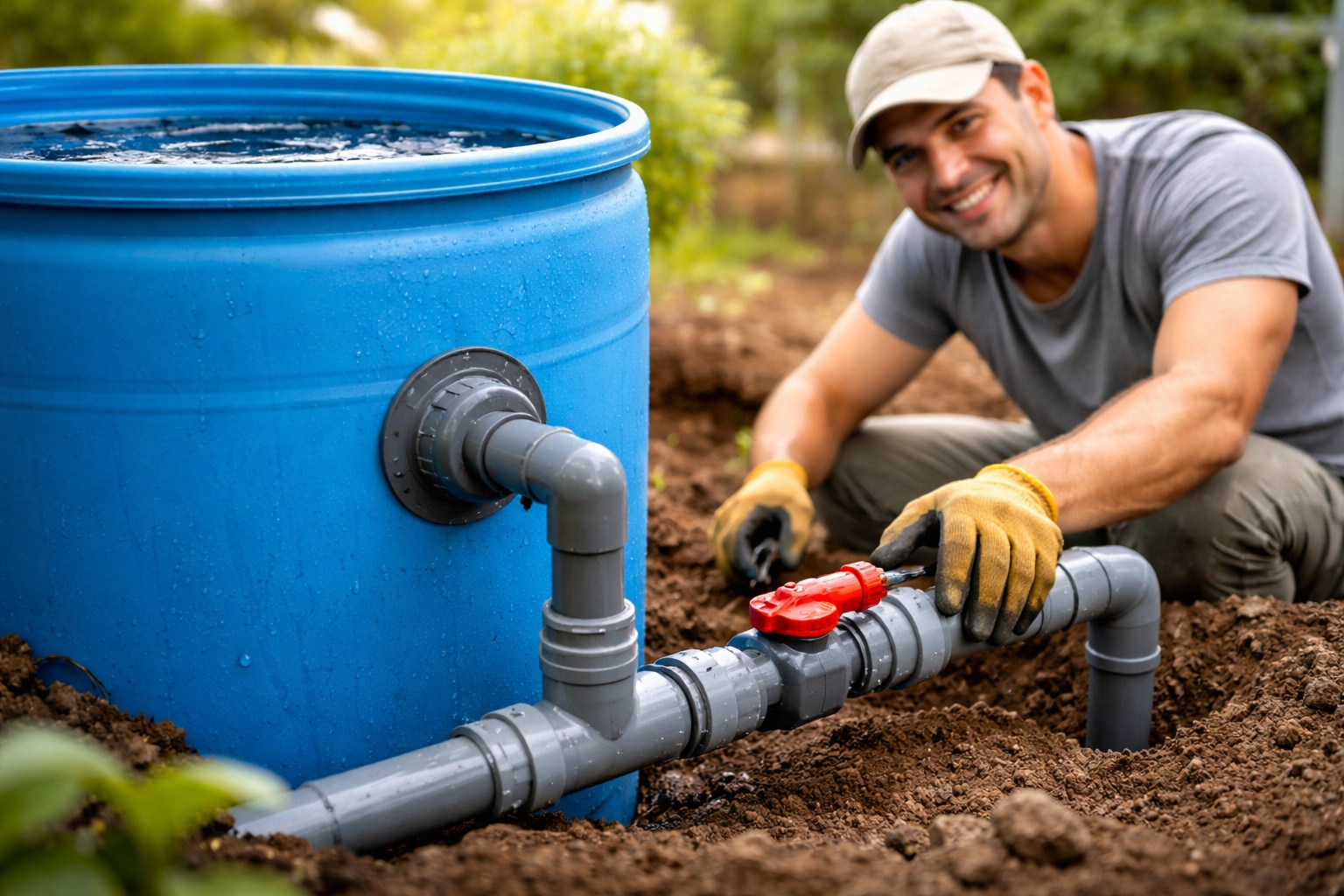


Why Didn’t I Know This Before? Assembly with Barrel and PVC Pipe Creates an Infinite Supply of Free Water with Simple Installation
If you have ever looked at an empty barrel and thought about water, here’s the twist: with a pipe, PVC pipe, and a well-done assembly, you can transform a regular drum into a conduction system that operates with control and without improvisation. And the best part is that the process doesn’t rely on tricks; it depends on fitting, alignment, and sealing at the right point.
The heart of the idea is simple. A plastic reservoir serves as the base, a side passage receives the connection, and the piping gains direction with a bend and a lever valve. In the end, water flows where you want it, when you want it, with opening and closing at your fingertips.
To make this more down to earth, it’s worth remembering a direct alert that appears in public health guidelines: the CDC defines safe storage as water kept in a container that protects against recontamination, after treatment. This doesn’t change the assembly itself, but reinforces the care in usage, handling, and protection of the contents.
-
He started running at 66 years old, broke records at 82, and is now a subject of study for having a metabolic age comparable to that of a 20-year-old, in a case that is intriguing scientists and inspiring the world.

-
Oldest tree on the planet reappears after 130 years of searches: Wattieza, 385 million years old, was 10 meters tall and had no leaves or seeds; Gilboa fossils in New York solved the mystery in 2007.

-
A 48-square-meter house assembled in hours with 4,000 bricks made of recycled plastic that does not absorb moisture, has natural thermal insulation, and costs less than 90,000 reais in a complete kit.

-
Luciano Hang revealed that Havan’s air fleet has already accumulated more than 20,000 landings, 10,000 flight hours, and 6 million kilometers traveled, and he says that without the planes, the company would never have grown so quickly.


Construction of the Water Reservoir Begins with a Barrel and a Well-Chosen Side Point

This is not a scene mystery; it’s work. The blue barrel acts as the main piece, and all attention goes to the side where the connection will cross the plastic. It’s that kind of step that seems small but determines the rest of the journey.
Assembly starts with the PVC piece resting and positioned until it’s aligned. Steady hand, adjustment while turning, orientation testing. No rushing to fit and hoping it works out later.
When this point is defined, everything changes: the barrel stops being just a container and becomes a place with planned entry and exit. This already removes the mess of makeshift openings and sets the stage for the piping to work logically.
Assembly of the Hole in the Barrel to Fit the Pipe and PVC Tube Tight

This is the part that separates a system that holds up from one that gives headaches. The barrel wall needs to have a hole of compatible size, without tearing and without being too loose.
The execution occurs with drilling and cutting. The tool goes in, the plastic gives way, and the goal is to reach a clean cut for the connection to pass through. After that, comes the step many people skip and later regret: testing the fit right there before declaring it “finished.”
The result is a hole that accepts the piece without dancing. When the hole is just right, the connection doesn’t work loosely, and the passage of the tube gains stability from the start.
Sealing in Construction with Tape and Mat to Secure the PVC Tube in Contact with Plastic
This is where the more meticulous side comes in. On the workbench, a dark mat and a wide tape appear, and the task becomes cutting and fitting, in a way that shows it was designed to “embrace” the contact point.
The assembly involves marking, cutting a ring, and pressing the tape over the mat to create layers. No speeches, just hands squeezing, repeating, adjusting, ensuring adhesion and settling.
The practical effect is quite direct: the set becomes more stable where plastic and PVC meet, with less apparent looseness and a more closed fit appearance. This doesn’t promise miracles; it just makes the point firmer and more reliable.
And there’s a detail that emphasizes the seriousness of the process: the manual pressure is repeated several times, always at the same pace, like someone who knows that good sealing doesn’t come just from positioning; it comes from the finishing touches.
Assembly of the Water Way with Pipe, Bend, and Valve in PVC Tube
Now things get exciting because you can see the system taking shape. Gray PVC pipes, connections, and a valve with a red lever come into play, that item that changes the routine by putting the flow control in your hand.
The execution follows the fit logic. A straight section meets a bend, the bend changes direction, and the valve fits into an accessible point. The set is assembled in sequence, with careful alignment to avoid the piping “fighting” against its own path.
The result is a modular system. The bend directs, the pipe conducts, and the valve controls. And this is what matters most in practice, because you don’t need to mess with the barrel to release water; you just activate the valve.
To provide broader context without inventing anything, you can include a reminder about water conservation that is well-known. The EPA notes that rainwater harvesting has been used throughout history, especially where other resources are scarce or difficult to access. The assembly here doesn’t depend on that but relates to the same idea of utilizing and organizing availability.
Installation in the Ground Gives Stability to the Barrel and Protects the PVC Piping
When the assembly leaves the workbench and goes to the ground, the atmosphere changes. In come the shovel, the dirt, and the challenge of leveling and accommodating. The ground is uneven and damp, and the task is to create space for the barrel to sit.
The installation involves digging, positioning the drum in the hole, and keeping the top edge accessible. At the same time, the piping is guided to the side connection, being careful not to force the barrel’s wall or twist the bend.
The consequence is simple and valuable: stability. The barrel does not sit loose on the surface, and the pipe does not hang in the fit. The set begins to work more “stationary,” with less chance of shifting due to touch or weight.
The detail that wraps up this stage is the alignment of the route. The barrel is set in line with the direction of the pipe, avoiding tight curves and tension at the side point, which is exactly where problems usually occur when someone assembles without planning the path.
Water Test with Valve Confirms Flow Control in Pipe and PVC Tube

Now it’s time for the truth. The system appears to be functioning, and water travels through the piping until it emerges at the endpoint. Here, the valve takes center stage, because control happens with a gesture.
The execution is opening and closing, observing, bringing your gaze close to the connection point and checking for any apparent leaks or any piece yielding. It’s a practical, quick, and honest verification, the kind that does not forgive faulty fits.
The result is what everyone wants: water flowing where it was planned and at the intensity allowed by the valve. The barrel stops being just storage and becomes distribution, with simple activation and direct operation.
And to reinforce the care in usage, there’s a straightforward phrase from the safe storage manual that helps to apply the brake when it comes to water for consumption. The WASH manual from IFRC summarizes safe storage as using clean containers with lids and good hygiene practices to prevent contamination during collection, transport, and storage.
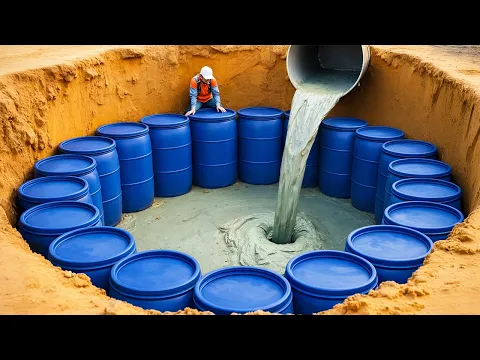

Now tell me: would you assemble this your way or would you change any point of the valve and the pipe’s route? Leave a comment and share with someone who is always solving things in practice.









Meu zovo! Aqui, no semiárido, nós chamamos de cisterna ou caixa para captação de águas pluviais.
A água vem da chuva q cai no telhado! Antes de criticar, preste bastante atenção. As pedrinhas, os carvãos, as Espumas, etc, são um sistema de filtragem natural. A água da chuva é considerada uma água suja devido à poluição, etc., mesmo as vindas dos telhados. Essa água vinda desses tambores com sistema de filtragem deve dar pra lavar áreas, molhar jardins, lavar carros, etc. Sou Administradora, mas achei legal essa forma de captação de água da chuva.
A água veio da 4° dimensão e se materializou no tambor.