





 Português
  Inglês
  Espanhol
  5 min de leitura
  6 comentários


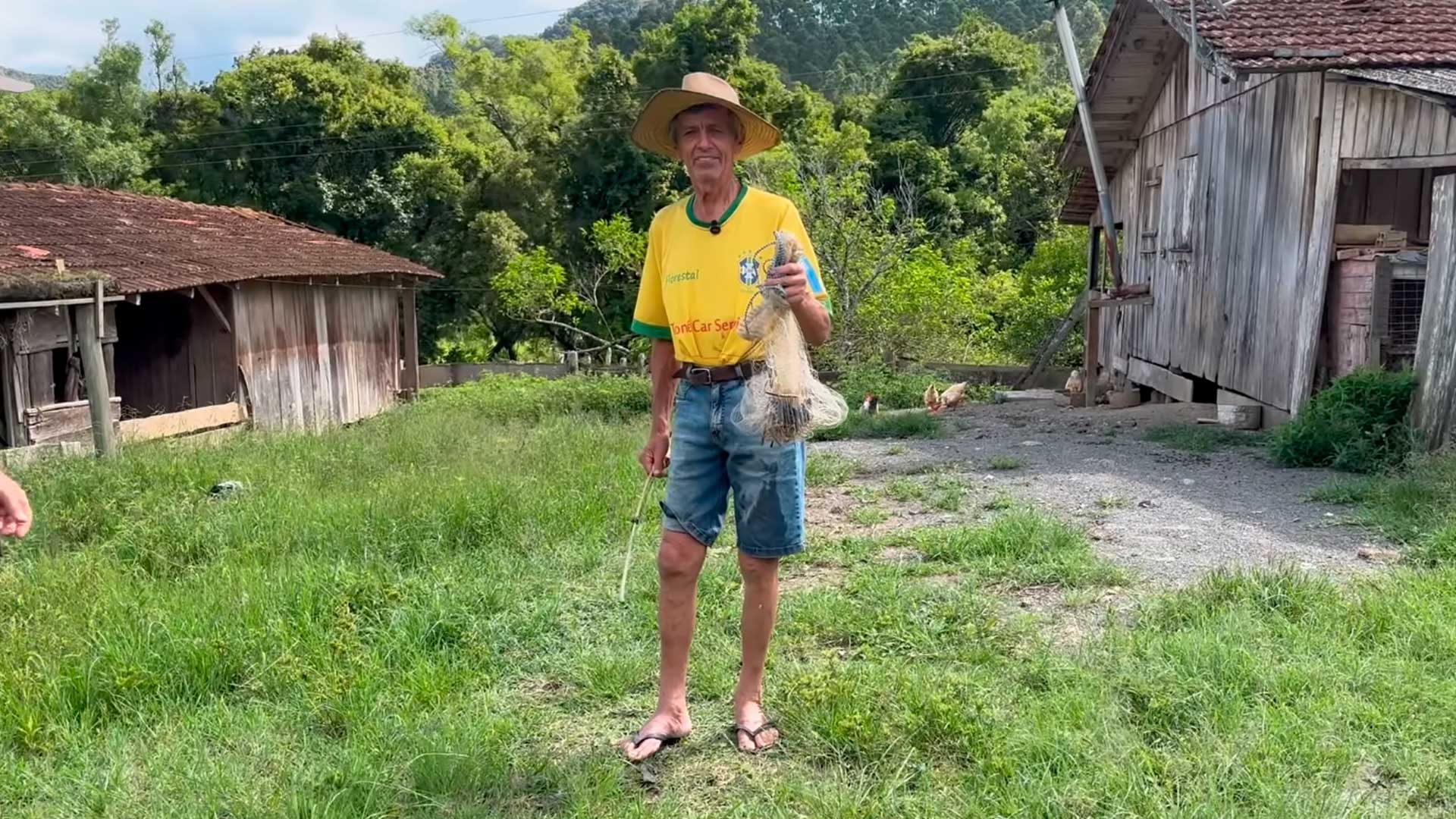


Meeting Recorded by the Channel jj88 Features José Lino, 68, on a Day of Fishing and Conversation in the Rural Community and Rekindles the Discussion About Support for the Elderly Away from the City
A video with a road conversation vibe, filmed in the countryside and published by the channel jj88, has drawn attention for portraying a common yet rare character in today’s Brazil. The channel itself presents itself as a space to showcase life in the countryside and the stories of people who live far from cities, under the guidance of Jaissom Moraes.
This time, the presenter arrives at Serra dos Alves and meets José Lino, 68 years old, who lives alone. In just a few minutes, the recording becomes a vivid portrait of a simple routine, hospitality, humor, and work, featuring fishing, animals in the yard, and neighborhood stories.
What captivates the audience is not an extraordinary feat, but rather the naturalness. José Lino speaks as if he doesn’t need to convince anyone, only to share what he does, what he has learned, and what he still believes.
-
The world’s first octopus farm wants to open in the Canary Islands and is already provoking an international reaction: the plan aims to produce 3,000 tons per year.

-
Drought may be creating stronger superbugs in the soil and helping antibiotic resistance reach hospitals, warns a study highlighting a problem that could grow alongside extreme weather.

-
The biggest scam in history: Napoleon’s France deceived the United States by selling them a territory that was Spanish.

-
Why is the Danakil Desert so dangerous? It has unstable terrain and how extreme temperatures and toxic gases turn the region into one of the most hostile environments on Earth.


At the same time, the video opens up a discussion that always arises when such content goes viral. To what extent does this type of portrayal value life in the countryside and to what extent does it romanticize loneliness and the lack of structure for those who age away from services and family.
Who Is José Lino in the Narrative of the Video and Why the Story Engages
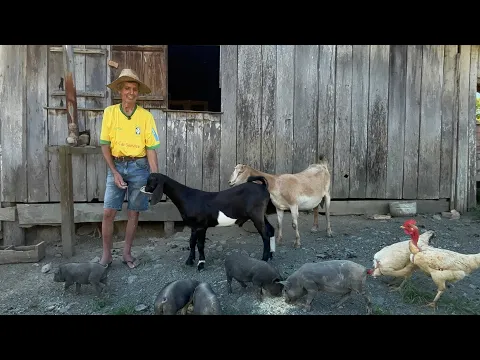

José Lino is presented as someone who does not “miss a trip” when he goes fishing. He claims to catch small fish known as Lambari to fry, describes the speed of fishing, and shows familiarity with the river and the spots in the pool.
The conversation also touches on animal husbandry. He mentions goats, pigs, and piglets, discusses selling prices, and jokes about his way of organizing the space, improvising what he has on hand.
Charisma shows in the details. There’s the improvised “sign” to indicate where he is when he leaves, the joke about finding a girlfriend “on the internet,” and the straightforward way he talks about what he considers right and wrong.
Serra dos Alves in Santa Catarina and the Strength of Rural Communities
Serra dos Alves connects to Alto Vale do Itajaí in Santa Catarina, where the name is linked to Agrolândia and Petrolândia. A study from UFSC, when contextualizing the municipality, records that the Alves Paes family settled in the region in 1913, giving rise to the name of the community called Serra dos Alves.
This type of information helps to understand that it is not just an “isolated place,” but a locality with history and community formation. In such areas, neighborhood and kinship often function as a support network, even when someone lives alone.
The trajectory of nearby municipalities itself shows how the territory has organized over time. In the IBGE Library, the history of Petrolândia mentions oil research in the locality of Rio Galego, on the border with Serra dos Alves, as part of the origin of the municipality’s name.
In the video, this appears less as formal geography and more as belonging. José Lino is portrayed as someone known, visited, remembered, and respected, reminding us that “alone” does not always mean “without ties.”
Even so, the physical distance from services is an implicit point. When the camera shows a simple house, road, and routine based on what is planted, raised, and fished, it becomes clear how much daily life depends on one’s own body and autonomy.
Lambari Fishing and the Subsistence Routine Shown in the Recording
The man describes a quick fishing trip, with many fish saved and the promise of frying them soon after. The scene reinforces a strong trait of the countryside imagination, the food that comes from the river, the yard, and what can be obtained during the day.
José Lino also narrates fishing techniques and stories, talking about fish size, the pool, and how the fish “comes from the ponds” when there is flooding. It is a type of local knowledge passed down practically, without manuals and without romanticization.
Aging in Brazil and the Risk of Romanticizing Loneliness in the Countryside
Brazil is aging at an accelerated pace, and this changes the reading of videos like this. According to the 2022 Census, the population aged 60 and over reached 32.1 million, and the group aged 65 and over reached 22.1 million, a significant increase compared to 2010. (IBGE)
When an elderly person says they live alone, the audience tends to see two extremes. On one side, autonomy and wisdom, as if solitude were always a choice and freedom, and the video feeds a bit into that charm.
On the other side, there is real vulnerability, especially when health, mobility, and income tighten. A study by Ipea discusses how social isolation and loneliness impact the health and well-being of elderly people and that the public response involves health and social assistance, which are not always integrated.
José Lino’s final statement helps to bring the topic back to reality. By advising young people not to fall into drugs, he shows concern for the future of the community, with violence and loss of future, issues that cross both city and countryside.
The lingering controversy is simple and uncomfortable. Videos like this become both tribute and entertainment, but they can also turn into a way of consuming other people’s lives, without the audience questioning whether genuine support exists behind the charm.
What the Video Reveals About Respect, Exposure, and Community Support
There is a clear positive side when the camera captures a resident with dignity, voice, and protagonism. The video allows José Lino to exist beyond statistics, as someone with a story, humor, and opinion.
But there is also a sensitive line between registering and exploiting. When the narrative emphasizes the “man who lives alone” as curiosity, loneliness risks becoming a product, rather than a serious theme.
The best outcome usually appears when the audience transforms curiosity into action. Seeking out the community’s story, valuing rural life without fantasy, and demanding policies that reach where the asphalt does not reach change the ending of this type of story.
In the end, the question the video leaves is not just “how does he live.” It is whether we, as a society, find it admirable that he manages alone, or whether we should ensure that no one needs to manage alone to be admired.
If you watched a video like this, would you feel it is a tribute or an unnecessary exposure of life in the countryside? Is rural loneliness a choice, a lack of options, or a bit of both? Leave your comment and tell us which side you are on in this discussion.









Isso é viver bem e em paz!!!
Fico do lado do senhor Lino ele é feliz do modo q escolheu viver então não tem solidão aí viver longe do barulho da cidade ar puro ouvir só o canto dos pássaros queria eu ter essa chance pq infelizmente tenho ,57 anos e não suporto o barulho dessas motos carros brigas mas não tenho como fugir deixa seu Lino ser feliz 🙏
Modo de vida depende das condições que um indivíduo tem para progredir a evolução faz parte do ser humano e em qualquer ambiente é possível desde que se queira,o mais fácil é estacionar no tempo e deixar a vida sem contribuir ,viver só é acomodação