





 Portuguese
  English
  Spanish
 4 min of reading
  2 comments


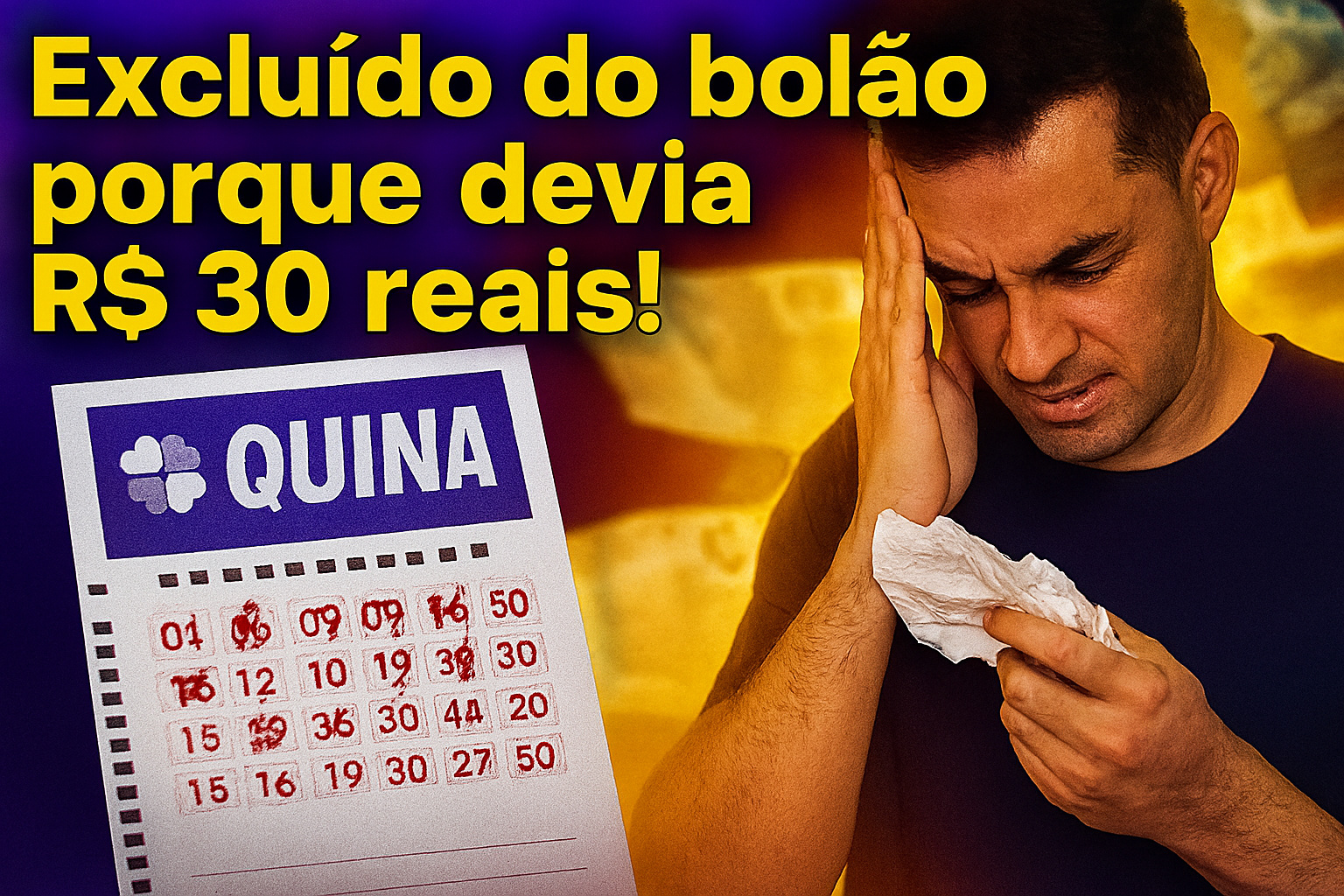


Man From Minas Excluded From Pool That Won R$ 22 Million in Quina for a R$ 30 Debt and Takes Case to Court; Judge Denies Request and Episode Exposes Risks of Informal Pools in Brazil.
Few things in life are as bitter as seeing luck knock at your door — and being barred due to a detail. This is what happened in Passos, in the interior of Minas Gerais, when a local businessman went to court claiming his right to a share of the R$ 22 million prize from Quina, lost after being excluded from the pool for owing just R$ 30 to the group of bettors. The case, which occurred in September 2023, made national headlines and exposed the legal and moral dilemmas surrounding informal pools in Brazil.
According to information confirmed by Correio Braziliense and Itatiaia, the man was part of a group of long-time bettors, about 40 people, who weekly contributed to bet on contests from the Caixa Econômica Federal. In the draw of contest 6,243 of Quina, the group hit the five numbers and won R$ 22 million, divided among the regular participants. But one detail completely altered the miner’s fate: he had not settled a symbolic debt of R$ 30 regarding the last bet before the draw.
From Routine Bet to Lost Million-Dollar Prize
According to the case files, the pool was organized informally, without official registration at a lottery outlet. The businessman had been participating for years, but according to the group, he had accumulated small debts related to his shares of the bets. In the lucky week, the organizer decided to remove his name from the list due to the outstanding amount.
-
A couple who only has Sundays free has built a hand-dug pool, a hamburger joint, a dance hall, and a playground in their own home without hiring a mason, and even with breaks due to accidents and the pandemic, the work has never truly stopped.

-
Furniture made with aluminum and glass does not warp and has become an alternative to replace MDF in Brazil.

-
Finland, the happiest country in the world, wants to hire 140,000 technology professionals and is eyeing Brazilians: visas are issued in just two weeks and salaries with a 37-hour workweek are surprising.

-
Mr. Mário reveals the technique of the caipira papaya: he cuts the fruit in half, discards the seeds from the tip, and plants the ones from the back to increase the chance of a productive female tree.


The Quina draw took place on September 15, 2023, and the next day, the members were celebrating the life-changing event. It was then that the man found out the result and approached the group to claim his share, which would amount to about R$ 550 thousand. The response, however, was a resounding “you didn’t pay”.
Outraged, he hired a lawyer and filed a lawsuit in the Minas Gerais Court of Justice (TJMG), claiming that there was a verbal agreement of continuous participation in the pool and that the overdue amount could not nullify his right to compete.
Court Denies the Request and Decision Generates Debate
The case quickly gained traction. In the first-instance decision, the judge denied the request, stating that there was no material evidence of the author’s effective participation in the winning bet. In addition, the magistrate noted that, without the payment of the corresponding share, the contractual bond between him and the group was not valid.
The businessman’s lawyer appealed, arguing that the client participated in all previous games and that the last-minute exclusion, without formal notice, would constitute bad faith. But the Tribunal maintained the initial understanding, reinforcing that informal pools made without official registration at a lottery outlet depend on good faith and documentary evidence.
The man can still appeal, but experts believe that the case is unlikely to be overturned.
Understand What the Law Says About Pools
According to the Caixa Econômica Federal, pools only have legal validity when officially registered in the betting system. Any game made outside this standard is considered informal, meaning there are no guarantees for prize division, nor automatic legal recognition.
“Without the nominal receipt, there is no obligation for distribution. Everything is based on trust between the participants,” explained consumer rights attorney Rogério Tavares, consulted by Itatiaia.
Cases like the one in Passos are not isolated. In previous years, other groups have also contested million-dollar prizes in courts — including a lawsuit that has been ongoing for over 20 years involving an unregistered winning pool.
A Lost Prize and a Lesson for Bettors
While the R$ 22 million prize has already been divided and withdrawn by the other participants, the former group member continues to try to prove that he deserved part of the fortune. The episode serves as a warning for millions of Brazilians who participate in informal pools without legal guarantees.
Experts emphasize: the only way to secure the right to the prize is to purchase the share directly at a lottery outlet, with a receipt issued by Caixa and the names of the participants printed on the ticket.
The Psychological Impact and the Human Drama
Behind the scenes, friends report that the businessman was emotionally shaken by the situation. After years of group betting, he saw the opportunity to change his life slip away due to a debt smaller than a meal at a restaurant.
“It was like watching your own luck pass by and being unable to touch it,” said a witness to Correio Braziliense.
The case went viral on social media, with thousands of internet users divided between those who defend the strict letter of the contract and those who think it is unfair that R$ 30 cost a fortune.









Se eu compro um “eletrodoméstico” tipo liquidificador em 5 vezes de R$35,00 mas deixo de pagar a última parcela, esse eletrodoméstico não é meu! Portanto, se ele mesmo jogando a anos nesse grupo deixou de pagar a parcela que desencadeou para o prêmio, ele não tem direito a nada! Simples assim!
Que me desculpe o perdedor, mas, se existe um compromisso, o mínimo a fazer é cumprir, caso contrário fica de fora. Me parece injusto com os outros que contribuíram com sua parte.