





 Portuguese
  English
  Spanish
  5 min of reading
  1 comment


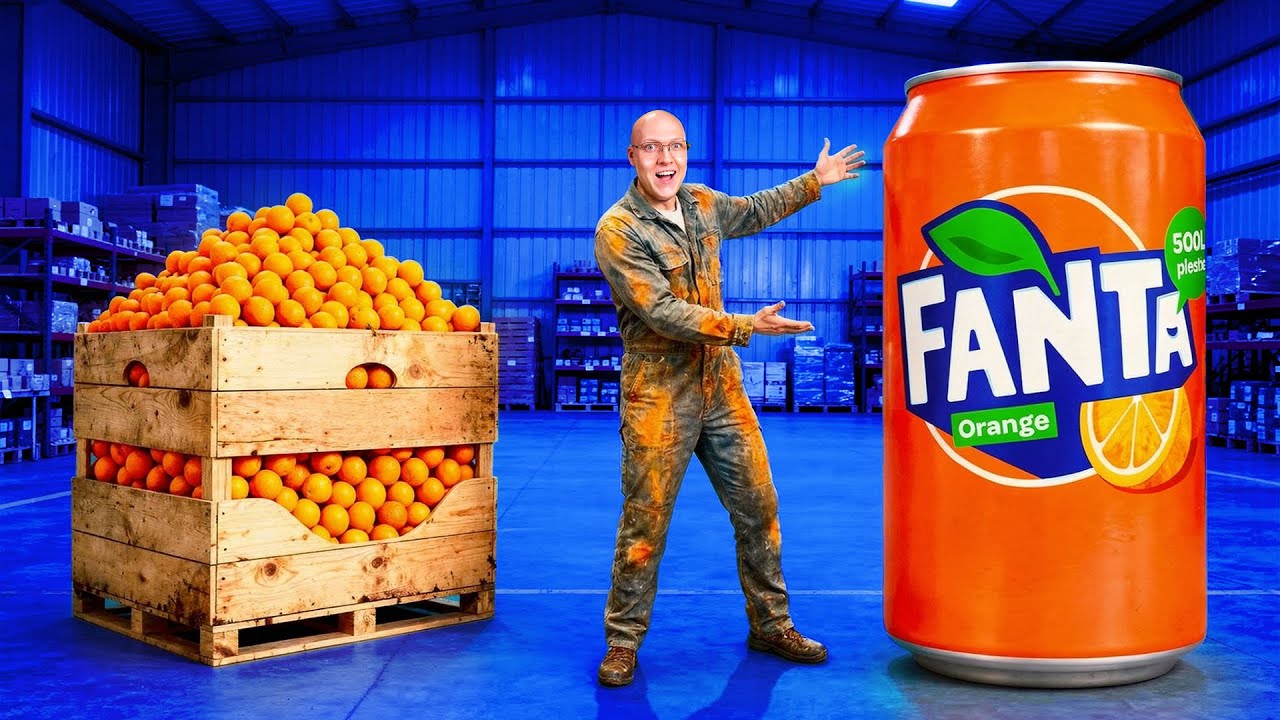


The Documented Experience Shows An Extreme Artisanal Process That Involved The Harvesting Of A Ton Of Oranges, Extraction Of Essential Oils, Production Of Dozens Of Gallons Of Juice, Thermal Reduction, Carbonation And More Than Five Days Of Continuous Work To Reproduce A Fanta On A Giant Scale
The channel Vanzai Cooking documented the production of an artisanal Fanta on an extreme scale, using 55 gallons of orange juice, five-fold reduction, 10 kg of sugar and more than five days of work, to assess technical limits, time and flavor fidelity.
Harvesting And Selection Of Oranges At The Source
The production began with the selection of oranges directly in orchards at the peak of the harvest. A farmer presented sweeter and juicier varieties.
The fruits were harvested by hand, loaded into boxes, and transported in two vehicles to the preparation studio.
-
He started running at 66 years old, broke records at 82, and is now a subject of study for having a metabolic age comparable to that of a 20-year-old, in a case that is intriguing scientists and inspiring the world.

-
Oldest tree on the planet reappears after 130 years of searches: Wattieza, 385 million years old, was 10 meters tall and had no leaves or seeds; Gilboa fossils in New York solved the mystery in 2007.

-
A 48-square-meter house assembled in hours with 4,000 bricks made of recycled plastic that does not absorb moisture, has natural thermal insulation, and costs less than 90,000 reais in a complete kit.

-
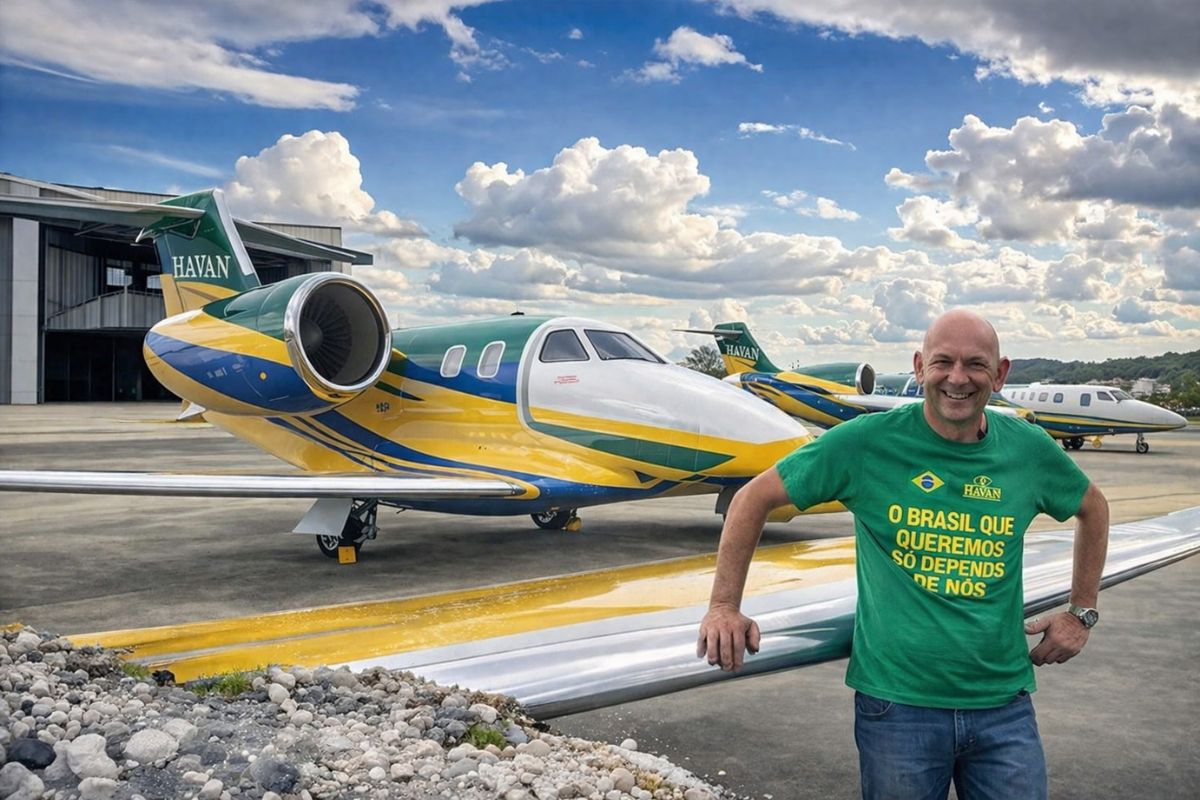
Luciano Hang revealed that Havan’s air fleet has already accumulated more than 20,000 landings, 10,000 flight hours, and 6 million kilometers traveled, and he says that without the planes, the company would never have grown so quickly.

By the end of the day, the collected volume exceeded the initial transport capacity. A second vehicle was used to complete the load required for the project.
The goal was to ensure sufficient raw material for the extraction of peels, essential oils, and juice on a large scale.
Washing, Sorting And Organization Of The Raw Volume
The oranges arrived covered in dust and debris. The boxes were unloaded and taken to the sink, where the fruits were washed in a box with running water. The initial moistening softened the dirt before detailed cleaning.
Next, leaves and damaged fruits were removed. Each orange had its surface washed individually. The process took more than seven hours.
The cleaned fruits were returned to the boxes and transferred to the kitchen, filling a giant compartment prepared for temporary storage.
Extraction Of Flavor From The Peel And Production Of Essential Oils
With the volume organized, the team began peeling the oranges. The thin layer of peel, rich in essential oils, was removed with peelers. The peeled oranges were stacked on a wooden board, while the peels accumulated.
The work of removing the peel lasted about ten hours. Then, the peels were ground in an industrial blender with a wide blade until they turned into fine granules. The ground material was stored in large containers, filling two bins.
To extract the essential oil, small portions of the ground peel were wrapped in gauze and pressed. After six cycles, an entire container was filled with intensely aromatic oil. The total extraction took about ten hours, even with the use of two presses.
Juice Extraction And Comparison Between Methods
With the oranges already peeled, the juice extraction began. Three juicers were used simultaneously, two manual and one electric. The fruits were cut in half and pressed directly into collecting cups.
The electric method demonstrated approximately three times greater efficiency than the manual ones. The obtained juice was strained to remove residual pulp and transferred to larger containers. The complete extraction process took about eight hours.
In the end, 55 gallons of orange juice were obtained. To approximate the flavor profile of Fanta, a small amount of white malic acid pellets was added, carefully mixed into each container.
Acidity Adjustment With Fresh Lemon
The main acidity would not be provided solely by malic acid. To balance the profile, the team harvested fresh lemons from the same orchard as the oranges. Two boxes were filled to reach the desired level.
The lemons were cut and squeezed using the same method. In about an hour, 3.4 gallons of lemon juice were obtained. The liquid was evenly distributed among the already adjusted orange juice containers.
Thermal Reduction And Concentration Of The Juice
The combined orange and lemon juice was transferred to a giant gas-heated pot. During heating, the pulp rose to the surface and was removed with a spatula. The goal was to reduce the total volume by five times.
The reduction increases the intensity of the flavor and extends the shelf life of the concentrate. After reaching the desired point, the liquid was removed from the heat. The same process was repeated in two other pots to treat the remaining volume.
Visual Construction Of The Giant Can
To mix and store the concentrate, a food-grade plastic barrel was used. The container was painted to mimic a metal can. The lid was painted silver and the body was painted orange in five coats.
A vinyl sticker with the logo was applied and smoothed out to remove bubbles. Another sticker simulating the top of a can was fixed. The visual result reproduced a Fanta can on a monumental scale.
Emulsification Of The Aroma And Final Mixing
The orange essential oil could not be added directly to the liquid, as it would float. A spoonful of emulsifier was mixed with the oil using an immersion blender, creating a stable phase capable of integrating with the concentrate.
The reduced concentrate was poured into the barrel, followed by the emulsified aroma. To balance the flavor, 22 pounds of sugar and a small amount of orange food coloring were added. The mixture was homogenized until completely dissolved.
At this point, the barrel contained the artisanal Fanta concentrate, ready for dilution with carbonated water. The next step aimed to replicate the characteristic carbonation of the soda.
Carbonation And Use Of Dry Ice
After diluting with sparkling water, the beverage was tested. The color was similar to the original, but the flavor indicated a lack of bubbles. To intensify the carbonation, dry ice, frozen carbon dioxide, was used.
The initial reaction generated excessive foam, and part of the liquid was lost. After the intense gas release ended, the barrel was closed and secured with a metal clamp to evenly distribute the bubbles throughout the liquid.
Final Test And Evaluation Of The Result
With the carbonation stabilized, the beverage was tested again. The direct comparison with the industrial version indicated a high level of similarity. The team estimated that the flavor reached about 95% proximity to the original product.
According to the channel, the entire process took more than five days. The final volume produced was described as a thousand times larger than a conventional can. The experience served as a practical demonstration of scale, time, and process control.
The video ends with the proposal of a new challenge. If production reaches 200,000 likes, the channel intends to attempt a giant version of 264 gallons of another soda, further expanding the scope of the culinary experiment.
This article was prepared based on content published by the Vanzai Cooking channel, which fully documented the process in video.








Pelo menos não são políticos, pra viver em mansões com dinheiro roubado dos contribuintes e do povo brasileiro.