





 Portuguese
  English
  Spanish
  6 min of reading
  0 comments


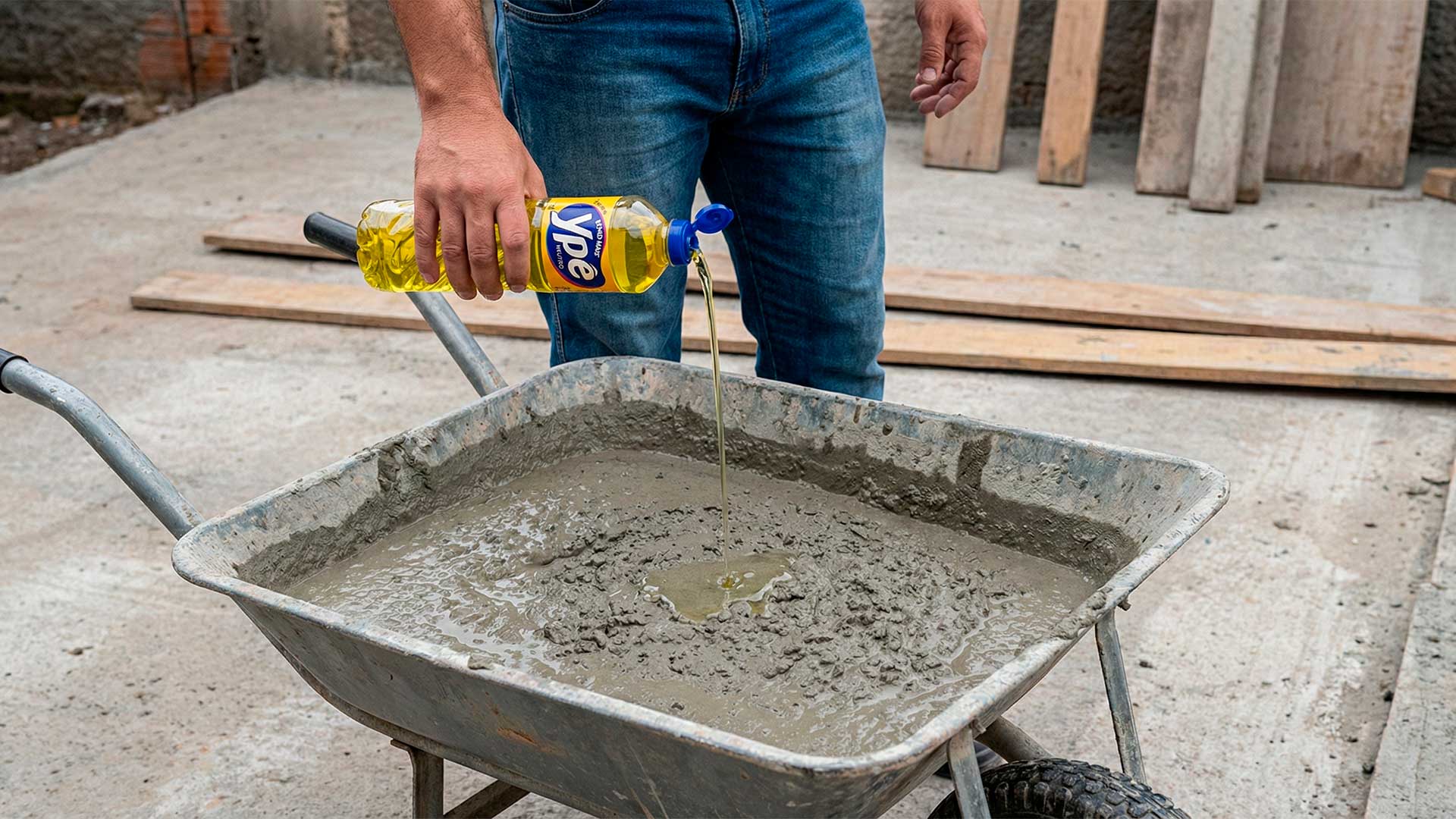
Economic Method Combines AC3 Mortar, Cement, and Detergent to Create a Type of Homemade Liquid Floor, but Specialists Warn About Risks of Compromising Material Strength
The search for economical solutions in construction has led many people to experiment with homemade techniques to renovate their homes. A recent video shows a man from Belo Horizonte applying an unusual mixture, AC3 mortar, regular cement, and kitchen detergent to renew worn floors. The recipe promises to transform sidewalks, garages, and slabs for a fraction of the traditional cost.
The method presented consists of mixing 2 kg of AC3 mortar with 200 g of cement, approximately 1 liter of water, and one tablespoon of detergent.
According to the author of the video, the mixture creates a liquid and homogeneous mass that can be applied with a squeegee over worn concrete surfaces. The visual result impresses with its ease of application and seemingly smooth finish.
-
Spain surprises the world by erecting 62 artificial dunes, mixing sand with natural remains of posidonia, and causing the structure to lose only 1.4% of its volume in 1 year.

-
With 16 Bulava missiles, improvements in acoustic stealth, and a design focused on silent patrols, Russia’s nuclear submarine was born to ensure Moscow’s invisible retaliation and has become one of the pillars of its maritime strength.

-
‘Populous’ city in Rio among the worst in Brazil in national ranking and exposes silent development crisis.

-
Couple buys house in the South Zone of São Paulo, opens a hidden door in the garage, and finds a secret wine cellar with dozens of old wines forgotten since the 1970s.

The technique gained attention on social media for its promise of savings. With just 2 kg of mortar, the applicator claims to have covered almost 2 meters in length by 60 cm in width. Full drying occurs in 24 hours, allowing normal traffic after this period.
AC3 Mortar as the Base of the Homemade Mixture

The choice of AC3 mortar is not random. According to information from the Brazilian Association of Portland Cement (ABCP), this type of mortar has the highest performance level among the adhesive mortars available on the market. It is formulated with special additives that ensure superior adhesion and resistance to severe conditions.
Normally, AC3 mortar is used professionally to fix coverings such as porcelain tiles, natural stones, and mosaics in areas that require high resistance. Its conventional application includes swimming pools, saunas, facades, and places with heavy traffic. The traditional composition combines cement, sand, and specific chemical additives that allow greater adhesion and water retention.
In the homemade method presented, AC3 mortar serves as the structural base of the mixture. The addition of regular cement aims to increase mechanical strength, while water dilutes the material until it reaches the necessary liquid consistency for application with a squeegee. The big technical question lies in the fourth ingredient: the detergent.
The Controversy of Detergent in Construction
The use of detergent in cementitious mixtures is not new in construction, being an old practice among masons seeking to improve the workability of the mass. Detergent acts as an air-entraining agent, facilitating the handling and application of the material. However, this technique divides opinions among professionals and experts.
According to research conducted by the Federal Institute of Santa Catarina (IFSC) and published by Atena Editora, detergent does indeed increase the workability of concrete but compromises its mechanical strength. The study, conducted in 2019 with students of the technical course in Buildings, confirmed that “detergent increases the workability of concrete but decreases its strength,” as reported by authors Simone Aparecida da Silva Souza and Débora Fátima Alberici.
Another technical study on the feasibility of using household detergent as a plasticizing additive found that the inclusion of the product achieves good consistency indexes. However, it was noted that “slight reduction in compressive strength and low growth in void index” occurred in the analyzed samples. These conclusions indicate that although the material is easier to work with, its durability may be compromised.
Construction material specialists explain that the detergent molecules create microbubbles of air in the mixture. While this facilitates application, it makes the mortar more porous and less resistant. Unlike hydrated lime, detergent does not retain water, which can cause premature dehydration of the cement and lead to cracks in the medium and long term.
Application and Yield of the Homemade Liquid Floor
The application process demonstrated in the video follows relatively simple steps. First, it is necessary to broom and thoroughly clean the surface, removing all loose parts and dirt. Proper preparation of the substrate is essential to ensure the adhesion of the material.
After preparing the mixture in a bucket, the material is poured onto the floor and spread using a regular squeegee. The applicator goes over the squeegee several times until a smooth and even finish is achieved. According to the presented instructions, two coats are necessary, with an interval of about one hour between them.
The reported yield impresses with its economy. With 2 kg of AC3 mortar and 200 g of cement, it was possible to cover about 1.2 m². Considering current market prices, where a 20 kg bag of AC3 mortar costs between R$ 25 and R$ 50, depending on the brand and region, the final cost would indeed be below R$ 10 per square meter.
However, it is important to note that this type of application is not recommended for already finished floors with smooth burnt cement. The technique works better on rough concrete surfaces, such as old sidewalks, garages, and uncovered slabs. The material adheres better on porous and irregular surfaces.
Professional Alternatives and Technical Warnings
Construction professionals recommend caution with homemade solutions that alter tested and certified chemical compositions. There are self-leveling mortars and specific products for floor recovery on the market that have been developed with suitable formulations to ensure strength and durability.
According to consulted specialists, AC3 mortar already contains specific additives in its composition that ensure adequate workability when prepared according to the manufacturer’s instructions. The addition of detergent may negatively interfere with this balanced formulation. Products with the ABCP quality seal ensure compliance with Brazilian technical standards.
For applications requiring greater durability, it is recommended to use self-leveling cement or grout, materials specifically developed to create smooth and resistant surfaces. According to a report from the ND Mais portal, a mason from Santa Catarina demonstrated a technique using grout that results in “strength of 50 MPa (Mega Pascal),” much higher than that obtained with improvised mixtures.
Experts also warn that surfaces receiving this type of application must be completely clean and dry.
The presence of moisture, grease, or dust can completely compromise adhesion, causing premature delamination. The ideal is always to consult a qualified professional before carrying out structural renovations.
Cost-Benefit and Long-Term Risks
The main attraction of the homemade method lies in the low initial investment. While a professional floor renovation can cost between R$ 50 and R$ 150 per square meter, depending on the chosen finish, the technique presented promises results for less than R$ 10 per m². For families on a tight budget, this savings seems irresistible.
However, technical studies indicate that initial savings can turn into future costs. According to research from the Federal Rural University of the Semi-Arid (UFERSA), mortars with added detergent showed a decrease in the water/cement factor, leading to shrinkage. “Detergent as an additive for mortar may seem like a viable solution due to its low cost and improvement in some properties. However, over time, this mortar may show defects resulting from these cracks,” concluded the researchers.
The formation of cracks represents a risk of infiltration, especially in slabs. Once water penetrates the cracks, it can compromise the concrete structure and even the internal reinforcement, generating much more expensive problems to solve. On sidewalks and garages, the cracks can evolve rapidly with vehicle traffic.
Civil engineers consulted recommend that for temporary repairs in low-traffic areas, the technique may be considered. However, for permanent solutions or in critical structures like roofing slabs, the use of certified materials and specialized labor remains the safest and most cost-effective choice in the long run.
Have you ever tried any homemade technique in your renovation? Do you believe that economical methods like this can be a viable solution or do you prefer to follow traditional technical recommendations? Share your experience in the comments.








-

-

-

-

-

-

24 pessoas reagiram a isso.