





 Portuguese
  English
  Spanish
  5 min of reading
  0 comments


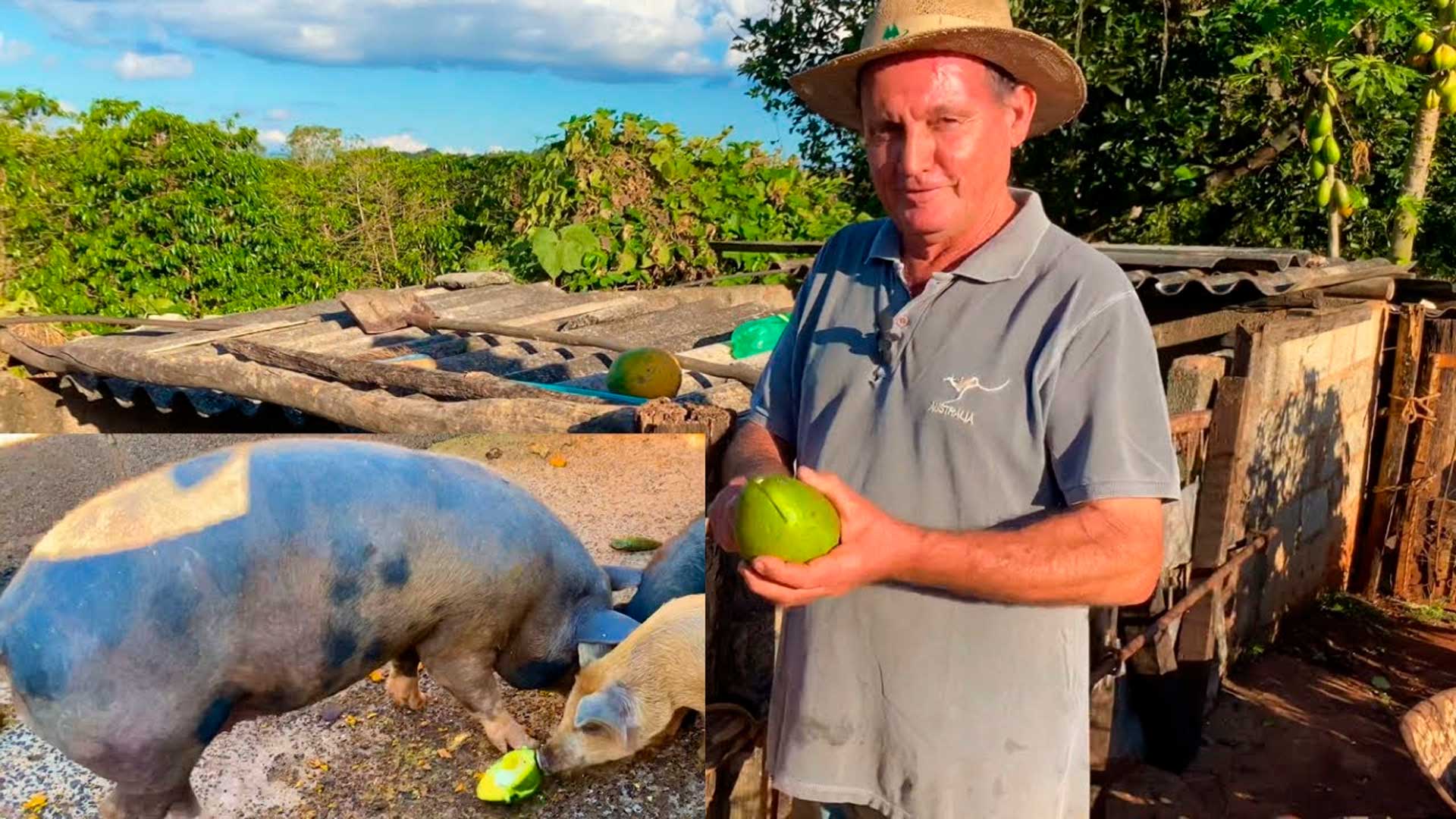
A Creator In Minas Shows The Use Of Discard Avocado And Cassava Peel In Pig Feeding To Reduce Costs. The Practice Is Old In The Field, But Requires Care With Natural Toxins, Mold And Nutritional Balance.
A video recorded in a rural area of São Sebastião do Paraíso, in the southwest of Minas Gerais, brought to light a topic that often remains outside urban discussions. A farmer reports that he fatten pigs using discard avocado and cassava peel that remains from processing, reducing dependence on commercial feed.
The account draws attention because it connects three points that pressure family pig farming. The first is the cost of inputs like corn and soybean meal, which weighs more heavily when production is small and purchase is fractional.
The second is the logic of local utilization. In the video, the producer describes a system where cassava generates food for sale and also leftovers that become ingredients for the animals, while the manure returns to the soil as organic fertilizer.
-
Spain surprises the world by erecting 62 artificial dunes, mixing sand with natural remains of posidonia, and causing the structure to lose only 1.4% of its volume in 1 year.

-
With 16 Bulava missiles, improvements in acoustic stealth, and a design focused on silent patrols, Russia’s nuclear submarine was born to ensure Moscow’s invisible retaliation and has become one of the pillars of its maritime strength.

-
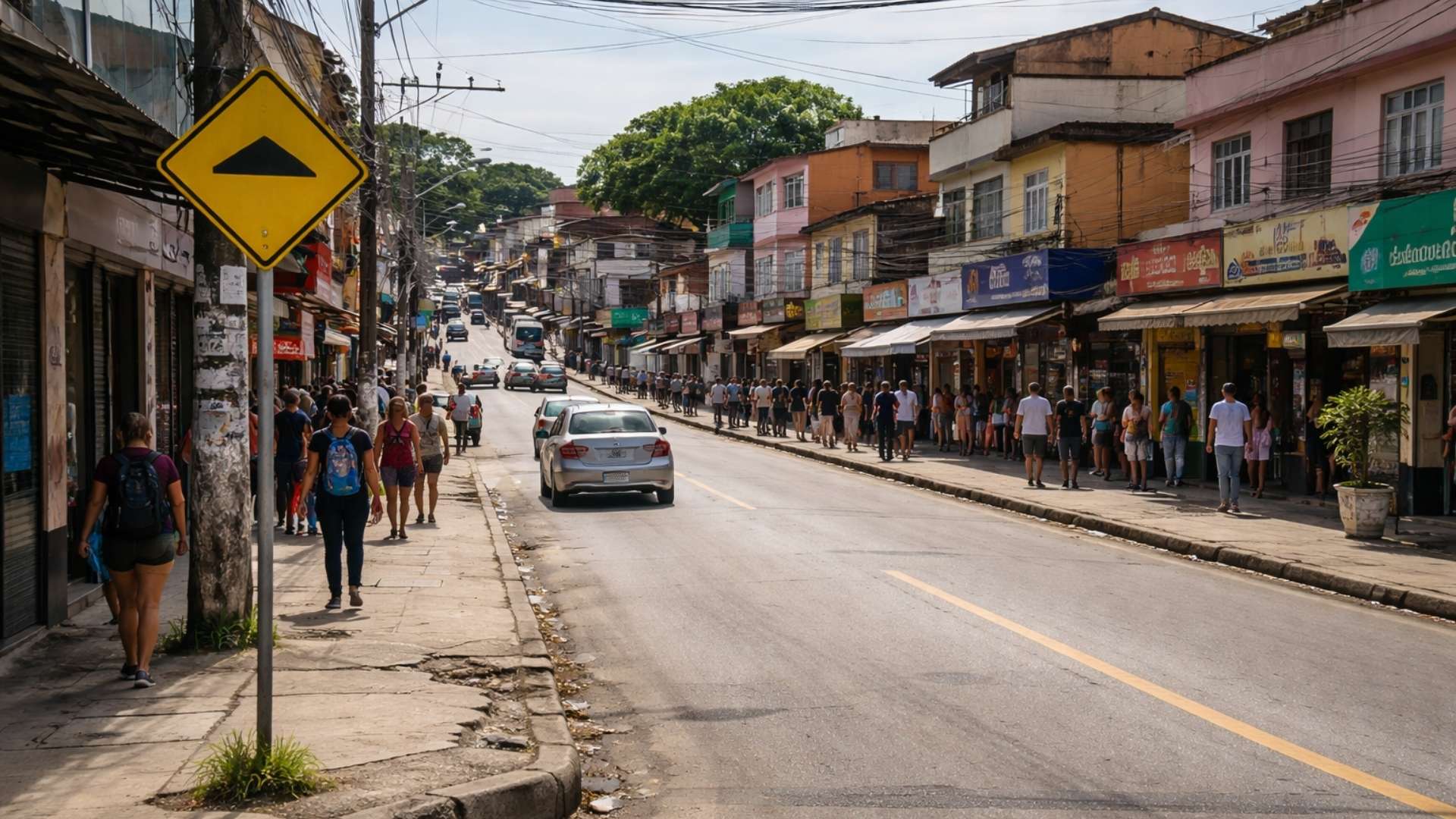
‘Populous’ city in Rio among the worst in Brazil in national ranking and exposes silent development crisis.
-
Couple buys house in the South Zone of São Paulo, opens a hidden door in the garage, and finds a secret wine cellar with dozens of old wines forgotten since the 1970s.

The third is the risk of turning economy into a sanitary problem. Agricultural by-products can be useful, but they are not automatically safe in any quantity, the way they come out of the field or the kitchen.
What The Video Reveals About Family Pig Farming

The scene that captivates the audience is not the sophisticated technique, but the simplicity. The farmer talks about pigs fed with pumpkin, cassava and avocado, with little corn supply, and describes a manual routine that involves peeling, separating and storing the cassava.
This type of content goes viral because it translates a real challenge into direct language. At the same time, it exposes a discussion that divides opinions, as part of the audience sees the practice as sustainability while another part views it as improvisation that could endanger the animals.
Cassava And Peel In Swine Feeding: What Research And Technical Bulletins Say
The use of cassava waste as an ingredient in animal feed has been studied for decades in Brazil. A review published in 2016 highlights that cassava processing generates solid waste such as peels and residual mass, as well as liquid waste like the manioc water, and points out that these materials are often still discarded inadequately, despite their zootecnic potential.
In the same document, there is an important estimate to understand scale and logistics. Peels can account for about 10 to 15 percent of the weight of the roots, depending on the peeling method and appear as a raw material rich in carbohydrates to make feed and reduce dependence on grains.
The most sensitive point is safety. A bulletin from Embrapa about pig feeding states that varieties called “bitter” can intoxicate animals when used immediately after harvest, due to substances that release hydrocyanic acid, and emphasizes the need for prior treatment.
Another technical document from Embrapa explains why this happens. Cassava has cyanogenic compounds such as linamarin, which when hydrolyzed can generate hydrocyanic acid, and the risk classification varies depending on the content, with reference ranges in mg of HCN per kg of fresh root.
Besides the toxic aspect, there is the nutritional one. The same Embrapa bulletin describes cassava as an energy food, with starch as the main component, but with low levels of protein and amino acids, which reinforces that by-products can cheapen the energy of the diet, but they do not solve the balance alone.
Avocado As Food For Pigs: Real Economy And Care With Toxins And Mold
The use of substandard avocado also appears in international studies and veterinary literature, but always accompanied by warnings. The MSD Veterinary Manual describes cases of toxicosis associated with avocado in different species and relates the problem to the compound persin, noting that leaves, fruits and seeds may be involved, with leaves cited as the most toxic part.
In a 2020 scientific article, researchers discuss that tolerance to avocado varies by species and remind that many varieties contain persin, with relevant concentration in seeds. The same work cites results where a paste made from ground fruit waste was included in a finishing diet for pigs without drop in performance, while the risk of toxicity was discussed in relation to the composition and presence of seeds.
In the farming practice, the greatest danger is often less “the avocado itself” and more the condition of the food offered. The MDPI study reports that avocado pulp stored outdoors was quickly contaminated by mold and yeast in a few days, even with a low initial pH, reinforcing that storage management changes everything.
This care aligns with a common recommendation in food safety. A scientific dissemination report from UFSM recalls that fruits are among the foods most prone to fungal contamination and that upon noticing mold, the guidance is to discard the deteriorated food.
When Cheap Feed Becomes Risk And Where Is The Line Between Sustainability And Improvisation
The debate that the video provokes is legitimate. On one side, there are possible gains in reducing waste, using local resources and turning leftovers into inputs, a logic that is interesting for both the wallet and the environment, especially in small properties.
On the other side, there are clear risks when the search for economy ignores limits. In the case of cassava, the presence of cyanogenic compounds is documented and depends on variety, processing and form of offer, which makes it dangerous to generalize the experience of one property to all others.
In the case of avocado, veterinary literature records toxicosis in different species and associates the problem with persin, also pointing out that parts like leaves and seeds may concentrate more risk, which requires caution when using waste and crop leftovers.
The synthesis is simple and uncomfortable. By-product is not synonymous with waste, but it is also not synonymous with complete feed, and the difference between innovation and accident may lie in hygiene details, quantity and formulation that need technical guidance.
Do you think using avocado and cassava peel to fatten pigs is an intelligent solution or a dangerous workaround? In your view, is the field more efficient when it utilizes everything or does this open space for risks that no one sees? Leave your comment and say where you would draw the line between economy and responsibility in animal feeding.








Seja o primeiro a reagir!