





 Portuguese
  English
  Spanish
 6 min of reading
  15 comments





A misguided transfer ended in judicial conviction, refund of R$ 50 thousand, and indemnity for moral damage, after the recipient refused to return the amount, in a case that became a reference on banking errors.
A mistake in a bank transfer ended with a judicial determination for refund of R$ 50 thousand and the imposition of R$ 10 thousand for moral damages.
The case was judged by the Second Chamber of Private Law of the Court of Justice of Mato Grosso (TJMT), which understood there had been improper retention of the amount deposited twice.
The panel recognized that, despite being warned of the error, the recipient refused to return the funds, which constituted unjust enrichment and necessitated judicial intervention.
-
The Argentine government celebrates the lowest poverty rate in 7 years, but experts warn that the methodology has changed, real wages have fallen, unemployment has risen, and the number of people on the streets of Buenos Aires has increased by 57% since Milei took office.

-
7.8 magnitude earthquake in Indonesia frightens the population, triggers tsunami alert, and hits an island with over 200,000 inhabitants this Thursday.

-
Google will finally let you change that embarrassing Gmail address you created in your teenage years without losing any accounts, logins, or old emails: the feature is already available in the United States.

-
Heading to Brazil in a Bonanza F33 single-engine aircraft: a couple departs from Florida on a visual flight, makes technical stops in the Caribbean to refuel and organize paperwork, and begins the staged crossing until they reach the country.


How The Error Began And Why The Refund Was Imposed
The episode stemmed from a loan agreement that authorized repayment by transfer.
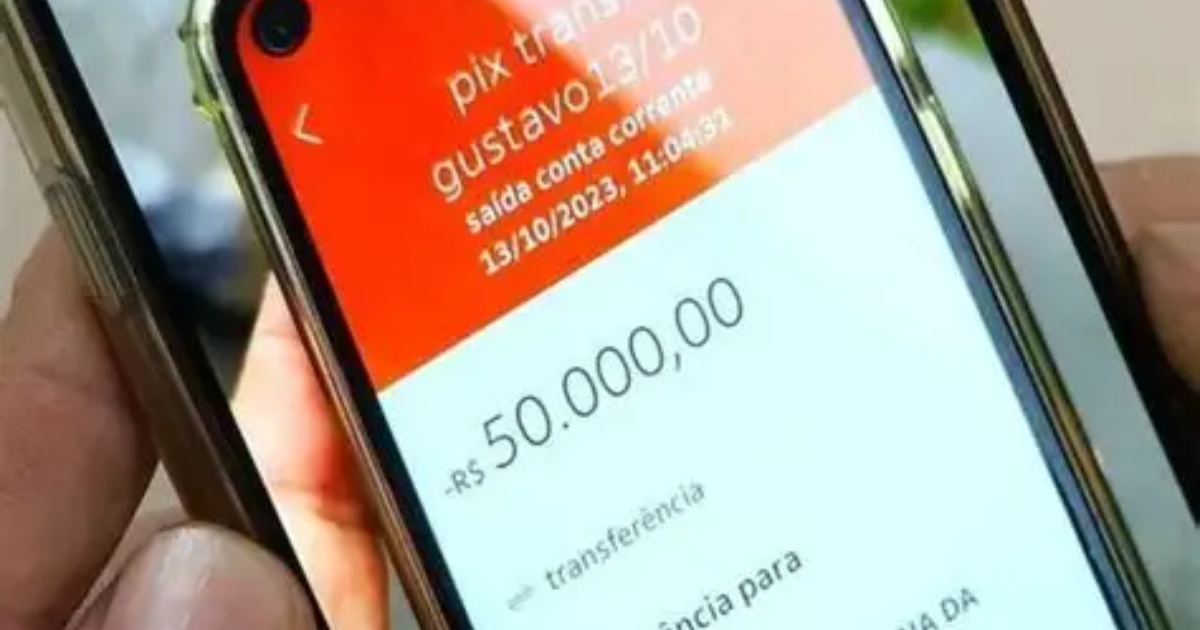
Due to a communication failure and an operational problem, the installment of R$ 50 thousand was sent twice from different accounts of the debtor.
The documentation in the records— bank statements and notarized minutes of app conversations— confirmed the double credit and recorded the recipient’s refusal to return the amount.
In their defense, the recipient claimed compensation for another debt.
However, the justification lacked contractual support.
According to the ruling, the attempt to retain the funds to offset a different debt was inconsistent with what had been agreed upon and violated good faith.
The court was categorical in stating that, “by keeping transferred money twice, without any contractual authorization or valid justification, the recipient engaged in unjust enrichment”.
Evidence That Made A Difference In The Judgment
The report highlighted that the body of evidence was consolidated.
The collection of statements, transfer receipts, and notarized minutes allowed for the reconstruction of the timeline: payment made, repeat deposit, and awareness of the error.
This documentary trail dispelled doubts about the source of the credit and evidenced the refusal to return, reinforcing the conclusion that the retention was unsustainable.
Even though the episode was officially treated as duplicate bank transfer, the dynamics reflect situations common to any electronic operation: amounts sent by mistake should be refunded, and unjustified resistance can have financial and moral consequences.
The court set R$ 10 thousand for moral damage, with updates and interest, and ordered the return of the principal corrected by IPCA, with interest at the Selic rate from the date of the error, acknowledging the distress of the payer who needed to take legal action to request restitution.
What Changes When The Transfer Is Pix
Although the specific case was qualified in the process as a traditional bank transfer, the understanding of TJMT illuminates analogous situations involving Pix.
In instant transactions, those who receive sums that are not due to them also have a duty to return them.
Refusal without justification can open the door to civil liability, including indemnity for moral damage, depending on the circumstances and evidence.
There is, however, an important operational difference in the Pix ecosystem: the Special Return Mechanism (MED), created by the Central Bank.
When there are signs of fraud, scam, or crime, the user can file a request for a refund with their own bank within the timeframe indicated by the monetary authority.
The flow involves communication between institutions and can result in the precautionary blocking of funds in the recipient’s account during the investigation, increasing the chances of recovering the money.
The MED does not replace judicial proceedings but acts as an administrative track that can be activated immediately after identifying the issue.
Recent Jurisprudence On Pix Sent By Mistake
Courts in different states have dealt with cases of mistaken transfers.
In a decision from the 2nd Special Civil Court of Águas Claras (TJDFT), for example, a recipient was ordered to return R$ 4 thousand sent due to an error in the digitization of the Pix.
The court noted that the retention of the funds lacked legal justification, which is why it ordered restitution.
Such situations reinforce the common line: if there is proof of error and communication to the beneficiary, the retention of the amount tends to be disapproved.
Why The Refusal Can Generate Moral Damage
Moral damage does not automatically stem from every mistake in a transfer.
In the case judged in Mato Grosso, the behavior of the recipient weighed against the evidence of the error.
The refusal to return, combined with the need for access to the Judiciary to reclaim a significant amount, was deemed sufficient to cause distress that transcends mere inconvenience.
When arbitrating R$ 10 thousand, the panel observed criteria of proportionality and the educational function of the conviction, without losing sight of the gravity of the episode and the unjustified resistance.
Good Practices For Those Who Transferred By Mistake
In the event of a mistaken transfer, the recommendation is to act immediately.
First, notify the bank and formalize the record of the incident.
In the case of Pix, it is possible to activate the MED within the timeframe provided for fraud, scams, or crime, following the guidelines of the financial institution.
At the same time, keeping receipts, statements, and messages exchanged with the recipient helps build a dossier capable of supporting a potential legal action, should the return not happen voluntarily.
If the administrative solution fails, the judicial route may be necessary.
The history filed in the process—especially when there are notarized minutes reflecting conversations and requests for restitution—often proves decisive in demonstrating the payer’s good faith and the recipient’s awareness, parameters that usually guide judges’ analysis.
The Milestones Of The Mato Grosso Case
The decision was unanimous in the Second Chamber of Private Law of the TJMT, reported by judge Maria Helena Gargaglione Póvoas.
The judgment took place on May 28, 2025, with official disclosure by the court on July 14 of the same year.
The process is registered under the number 1022601-23.2021.8.11.0015.
The ruling confirmed the conviction for restitution of the principal, corrected and with interest, and for moral indemnity of R$ 10 thousand.
One particularity stood out in the records: although the subject is frequently associated with Pix, the court registered the operation as bank transfer and indicated the error on March 7, 2019, a period before the launch of the instant system in Brazil.
This distinction does not change the legal core, which continues to require the return of undue amounts and to prevent unjustified retention.


What Prevales In Judicial Understanding
The guiding thread of recent decisions is based on established civil principles.
Whoever receives what is not due must return it.
The attempt to keep someone else’s money without contractual basis, under the pretext of offsetting parallel debts or mere inertia, violates good faith and characterizes unjust enrichment.
When this behavior forces the payer to seek judicial protection, especially in light of robust evidence of the error, it increases the likelihood that the Judiciary will recognize moral damages and set compensation, in addition to the return of the principal.
Given this landscape, what would be your first move if you noticed an unintended deposit leaving your account: would you contact the bank, activate the MED in Pix, try to talk to the recipient, or seek legal advice?








Blogueiro covarde que apaga os comentários não devia ser considerado jornalista. Esta postagem FAKE NEWS faz jus ao status dos pseudojornalistas que aqui trabalham.
Depositei quatro vezes erradamente porque o nome de quem eu devia era parecido e o bico era o mesmo. Porém tentando entrar em contato com o recebedor ele tinha falecido. Tenho falado com os filhos q ainda não tem posição pois terao que fazer inventário. Estou aguardando. Alguém sugere algo q eu deva fazer por favor.
Este caso e parecido com o caso do motorista de Tocantins, no valor de 100, milhões de reais, e causou grande estresse e trastorno para o motorista, erro gravíssimo do banco 🏦, porém ainda continua sem solução o dinheiro 💰, foi devolvido porém o motorista não foi indenizado, no caso dele o que fazer.