





 Português
  Inglês
  Espanhol
  5 min de leitura
  10 comentários


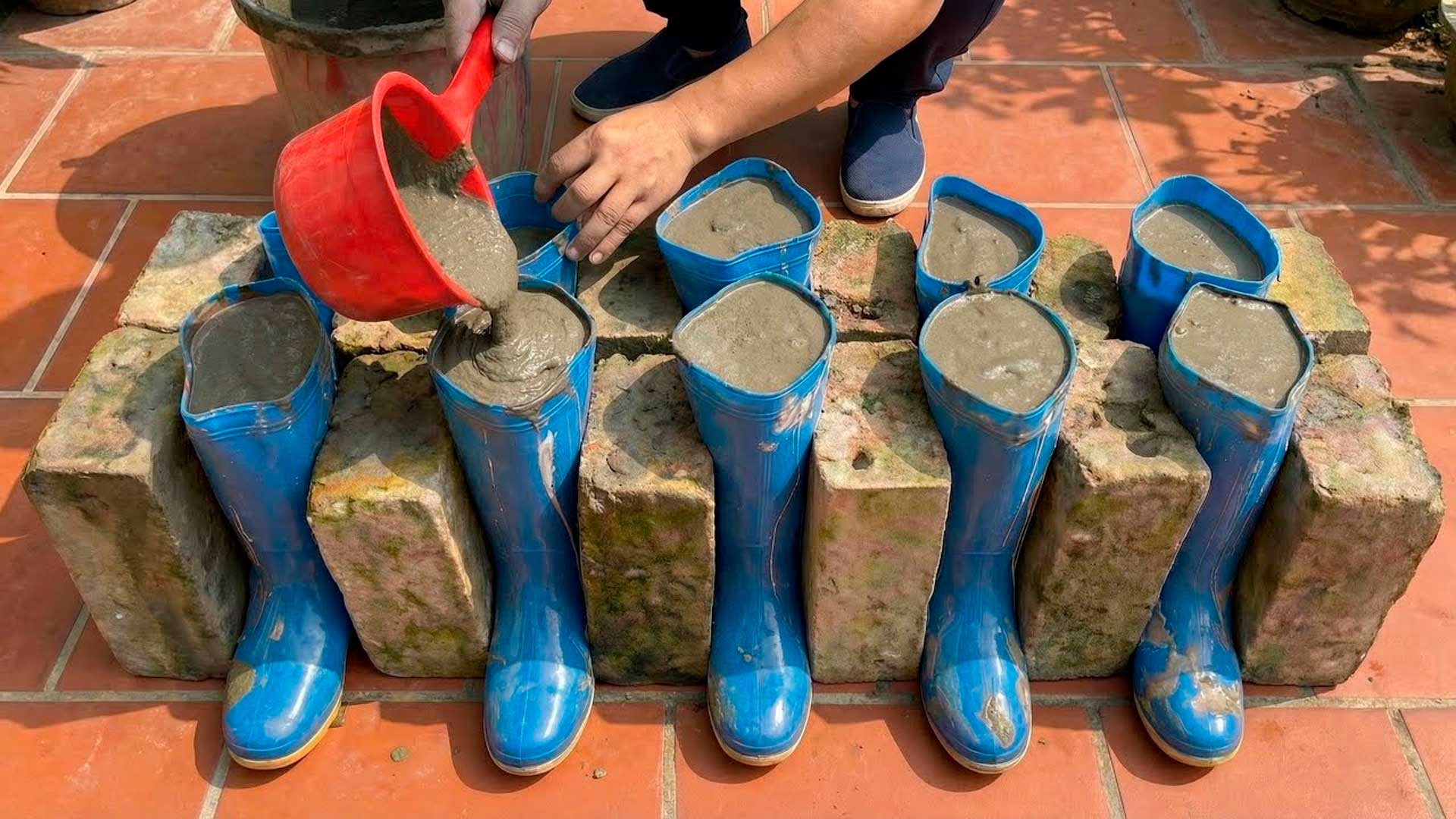


A Creative and Cost-Effective Solution Transforms Rubber Boots into Elegant Plant Pot Holders, Combining Sustainability, Functionality, and Modern Design in a Single DIY Project
Concrete crafts continue to win over decoration and gardening enthusiasts worldwide. The latest trend surprises with its simplicity and final result: pouring concrete into rubber boots to create decorative plant stands.
The technique, which went viral on social media through tutorial videos, offers a sustainable and economical alternative to give new life to shoes that would otherwise be discarded.
According to information from the Crafts Magazine, cement crafts have become popular due to the material’s versatility and the professional results that even beginners can achieve.
-
The world’s first octopus farm wants to open in the Canary Islands and is already provoking an international reaction: the plan aims to produce 3,000 tons per year.

-
Drought may be creating stronger superbugs in the soil and helping antibiotic resistance reach hospitals, warns a study highlighting a problem that could grow alongside extreme weather.

-
The biggest scam in history: Napoleon’s France deceived the United States by selling them a territory that was Spanish.

-
Why is the Danakil Desert so dangerous? It has unstable terrain and how extreme temperatures and toxic gases turn the region into one of the most hostile environments on Earth.


The raw material is accessible, found in any hardware store, and allows the creation of everything from small pots to robust structures like table bases.
How the Cement Boot Technique Works

The process involves using rubber boots as molds to create solid concrete bases. According to experts from Casa Industrial, the ideal concrete ratio for crafts is one part cement to one part sand, with up to 50% water relative to the volume of cement. This mixture ensures adequate density and excellent surface finish.
The great innovation of this technique lies in the functionality added to the design. By pouring concrete into the boots, artisans strategically leave a central hole where the boot’s leg would be. This opening is not just decorative: it serves as an integrated water reservoir in the system.
After the concrete fully cures, which according to the website Supremo Secil Cimentos can take from a few hours to days depending on weather conditions, the rubber boots are removed. The result is solid pieces that maintain the characteristic shape of the footwear, creating a rustic and modern aesthetic simultaneously.
Intelligent Irrigation System with Rope
The technical differential of this creation lies in the capillary irrigation system integrated into the structure. As explained by the blog Sabor de Fazenda, which specializes in organic farming, it is possible to implement an automatic watering system using cotton ropes or thick twine.
The rope functions as a wick that absorbs water stored in the central hole of the concrete boot and transports it by capillarity to the substrate where the plant is positioned. According to information from CicloVivo, a portal specialized in sustainability, this type of homemade irrigation can keep plants healthy for several days without the need for manual watering.
The system is especially efficient for succulents and plants that prefer slightly moist soil. Water is released gradually, avoiding both waterlogging and complete drying of the substrate.
According to the gardening blog Plantei, self-watering pots function on the principle of controlled absorption, where the plant itself “pulls” moisture according to its needs.
Multiple Decorative and Functional Applications
The concrete bases molded in boots are not limited to individual pots. Creative artisans have stacked and combined multiple pieces to create vertical structures, hanging shelves, and even bases for small side tables. According to the portal Viva Decora, large concrete pots are ideal for outdoor areas due to their resistance and durability.
The versatility allows the creation of harmonious sets with different sizes of boots, from traditional tall ones to shorter models.
Each piece can receive personalized finishes like painting, texture application, or even decorative stone cladding.
Advantages of Concrete as a Gardening Material
Concrete has specific characteristics that make it suitable for gardening projects. According to Leroy Merlin Brazil, in its blog specialized in DIY projects, concrete pots retain moisture longer than plastic or ceramic containers, which can be beneficial for certain plant species.
The ready-mix mortar type Grout is recommended by experts as an alternative to pure cement. According to information from the website A Arquiteta, this material offers better workability and a more uniform finish. The recommended ratio is to gradually mix water until a pasty and homogeneous consistency is achieved.
It is important to note that concrete, according to QuintoAndar, has substantial weight. Therefore, these bases are ideal for locations where they will remain fixed, avoiding frequent movements that could damage floors or cause accidents.
Technical Care in Project Execution
To ensure the durability and strength of the pieces, some technical precautions are essential. Casa Industrial recommends adding polypropylene fibers to the mixture, at a rate of 20 grams for every 2 kilograms of cement. These fibers serve as a three-dimensional reinforcement, reducing cracks from shrinkage during curing.
The use of personal protective equipment is mandatory throughout the process. Gloves, masks, and safety glasses prevent allergic reactions and irritations caused by direct contact with cement. Supremo Secil warns that many people develop sensitivity to the chemical components present in these materials.
After demolding, it is advisable to finish with sandpaper to smooth edges and remove imperfections. This process ensures safety in handling and improves the final aesthetic of the pieces.
Sustainability and Creative Economy
The technique represents a sustainable alternative for repurposing materials. Damaged or old rubber boots, which would typically be destined for disposal, gain a new decorative and practical function.
According to the portal MinhasPlantas, which specializes in home gardening, cultivating in concrete pots encourages a connection with more sustainable practices.
The production cost is significantly lower than that of equivalent commercial pots and holders. A 50kg bag of cement, according to research in hardware stores, costs between R$ 25 and R$ 40 and yields multiple pieces. Boots can be purchased at thrift stores and secondhand shops for affordable prices.
And you, have you ever thought about transforming old boots into functional decorative pieces? This cement crafting technique has divided opinions: while some praise the creativity and sustainability, others question the weight and practicality of the pieces. Leave your comment below telling us if you would dare to try this project at home or if you prefer traditional pots.









Realmente horrible!! La técnica podrá ser buena, pero el resultado en este caso es espantoso. Ni loca tengo es maceta en mi jardín.
Madre mía !!!!! Que M…. De video ,parece hecho por un niño de guardería !!!!!!! horribleeeeeeeeee!!!!!!,esa M…. Yo no la quiero ni regalada !!!!!! Me daría vergüenza tenerla en mi casa !!!!!!!!!
Cadê fotos? Matéria enorme sem fotos prá ver na prática!!! As fotos são a alma da matéria!!!
Tienes que ver el vídeo