





 Portuguese
  English
  Spanish
  5 min of reading
  0 comments


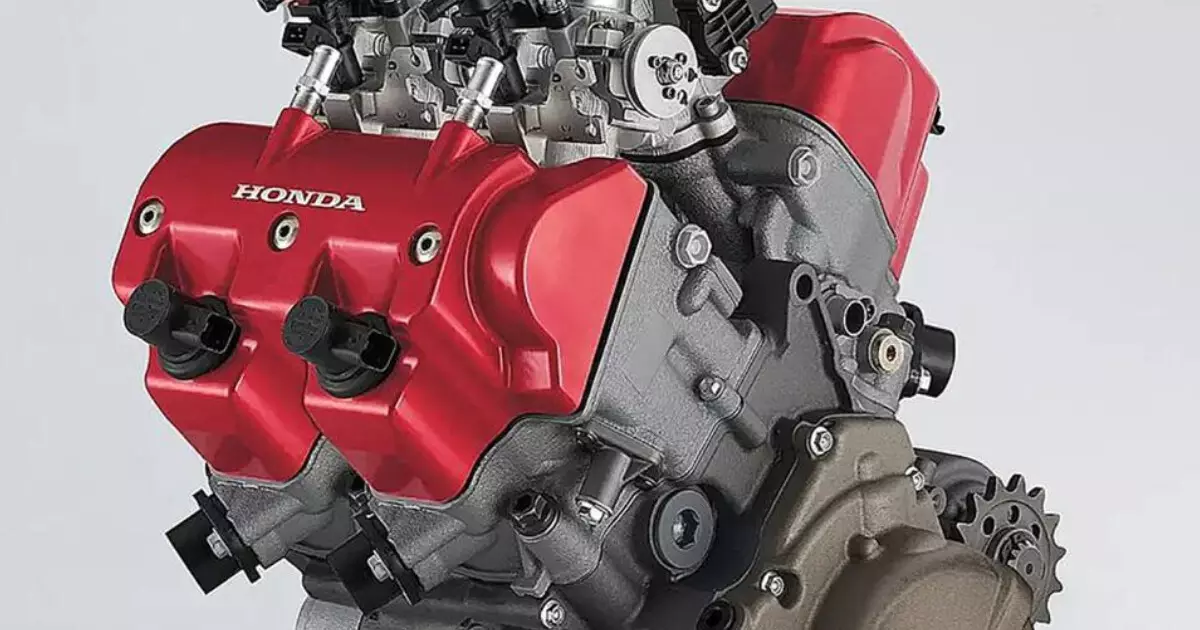
Innovative Technology in Motorcycles: Honda is Developing a New V3 Engine with Three Cylinders in a V Shape, Electric Compressor, and Liquid Cooling System. The New Development Promises to Revolutionize the Performance of High-Displacement Sports Bikes.
Honda has officially confirmed what had long circulated as speculation: the engineering team of the Japanese brand is developing a V3 engine with three cylinders in a V shape, with a 75-degree architecture, for a new generation of high-performance motorcycles. The announcement represents one of the most daring technical innovations in the motorcycle industry in recent years and is expected to mark the manufacturer’s return to the V3 architecture after nearly four decades.
The new engine is not yet installed in any production bike — but it already has a certain destination. Experts and enthusiasts believe it will debut in an unprecedented line of sports bikes or even as a replacement for traditional four-cylinder engines in large models.
The Historic Return of Honda’s V3 Engine
The last time Honda produced an engine with a V3 configuration was in the 1980s with the legendary NS400R, a two-stroke sports bike that made history with its agile performance and unmistakable roar. Now, nearly 40 years later, the manufacturer is reviving this mechanical configuration — but in a completely updated form, with innovative technology for bikes and a focus on performance and efficiency.
-
If you want a car with an SUV look but don’t have the money to buy a new one, there are 5 used models starting at R$ 17,900 with raised suspension and body protection that can handle dirt roads without fear.

-
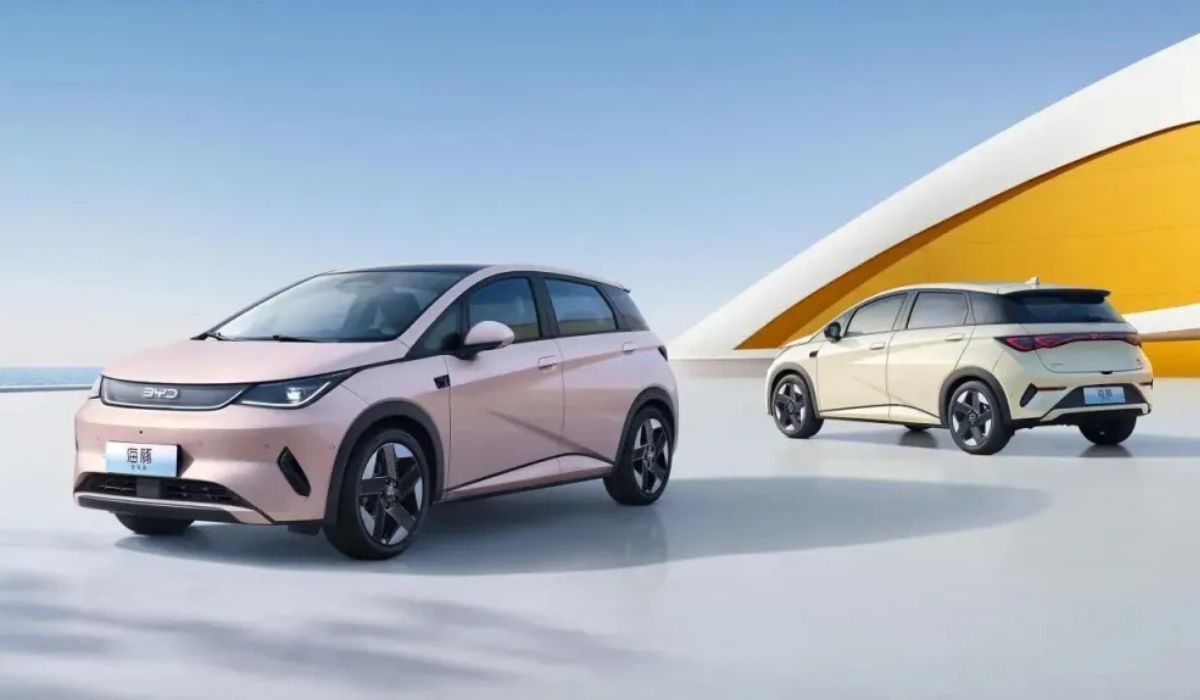
With a new look, more power, more technology, a larger size, and the farewell to a controversial item, the BYD Dolphin 2027 is getting ready to arrive in Brazil in 2026, stronger and more competitive than ever.
-
Is financing a car really worth it? Discover the impact of 25% annual interest and how you could end up paying up to R$ 39,000 more for your vehicle.

-
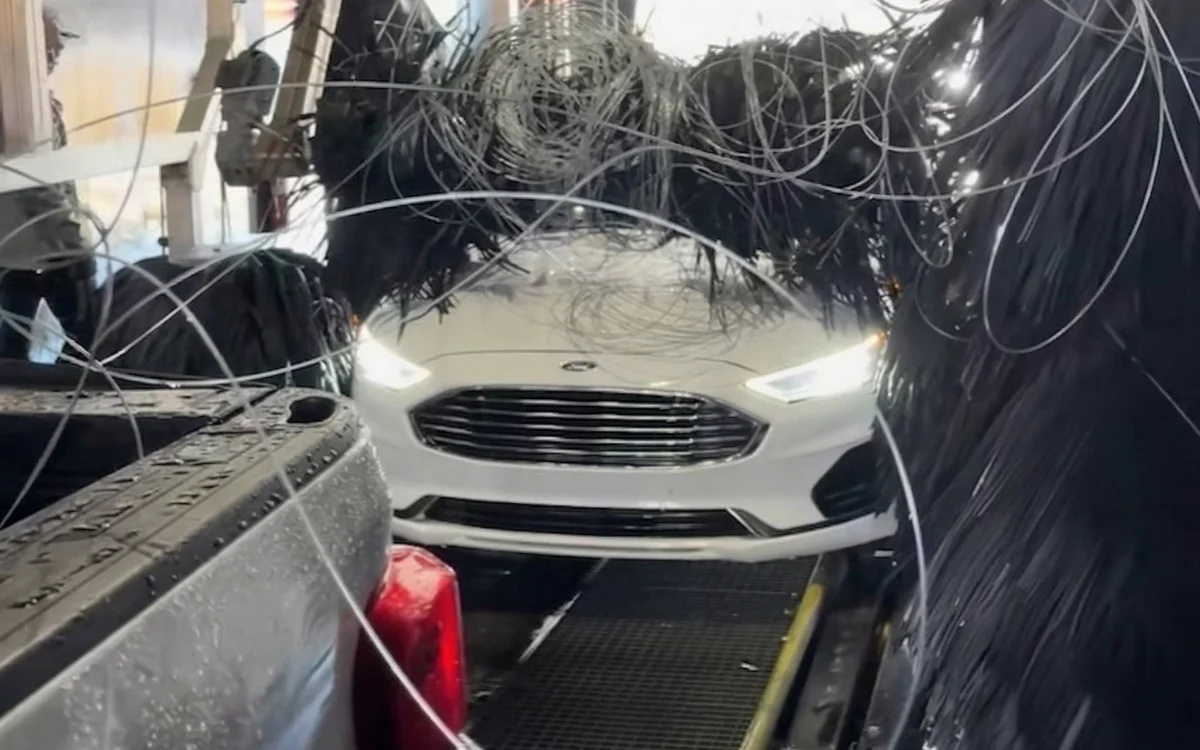
Farmer forgets barbed wire in the pickup truck and destroys Ford Fusion at car wash.

The new V3 engine with three cylinders in a V shape has a 75-degree angle and is designed to be compact, slim, and with excellent mass centralization. According to Honda itself, one of its key differentiators is the freedom that this type of architecture offers when distributing components within the motorcycle’s structure, even with limited space.
Electric Compressor: A Worldwide Debut in Motorcycles
The most innovative aspect of Honda’s new engine is the inclusion of an electric compressor, a feature never before seen in production motorcycles. This system’s main function is to eliminate the famous “turbo lag” — the delay between throttle activation and power increase in forced induction engines.
Unlike conventional turbos, the electric compressor does not rely on exhaust gases to spin the turbine. It is electrically activated, delivering extra torque instantly. This technology is already used in high-end sports cars, such as the Audi SQ7, but its application in motorcycles is unprecedented in the world.
Another highlight is that, due to the thermal efficiency of the design, there is no need for an intercooler, which reduces weight and simplifies the engineering of the system. According to Honda, the new setup offers “high freedom for accommodating components” and significantly improves mass centralization, which is crucial for stability and handling at high speeds.
New Engine Developed for High-Displacement Motorcycles
While Honda has not yet confirmed which motorcycle will be the first equipped with the new engine, it is already known that it was specifically designed for large-displacement models. This means it is not an experimental engine or aimed at scooters or low-power bikes — but rather a true high-performance engine, possibly intended for the sports, roadster, or even high-performance touring segments.
The V3 architecture has the advantage of providing an interesting balance between power, weight, and physical size, being smaller than an inline four-cylinder and yet more balanced than V2 twin-cylinder engines. Combined with the electric compressor, this new Honda engine could deliver performance similar to that of 1,000 cm³ engines with a reduced displacement — a strategic move in light of increasingly stringent emission standards.
Compact Design and Mass Centralization: The Engineering Advantage of Honda’s New Engine
One of the points emphasized by Honda in developing the new engine for bikes is its ultracompact architecture. The brand claims that the project was designed with a focus on space optimization, allowing all components to be positioned close to the motorcycle’s center of gravity, which favors a more agile and controlled riding experience.
The elimination of bulky parts, such as intercoolers or external piping, combined with the narrow V design, allows the engine to be installed in motorcycles with more compact dimensions, without compromising comfort or thermal capacity.
This care with mass distribution and cooling is particularly important for sports bikes, which demand absolute balance between structural rigidity, weight, and dynamic behavior in curves.
What to Expect from the Debut of the V3 Engine with Compressor?
The big question now is: what will be the first bike to receive Honda’s new engine? Although there is no official confirmation, there are speculations that the launch could debut in a new super sports bike that would occupy an intermediate range between the brand’s 600 cc and 1000 cc models.
Other rumors point to the possible use of the engine in a spiritual successor to the NS400R, but with updated technology and a focus on the premium audience. Even though the project is in the final development phase, it is believed that the official presentation of the first model with this engine could happen as early as 2025, with global launch expected in 2026.
Why the V3 Engine is a Bold and Strategic Bet?
With advancements in electrification and tighter emission regulations in Europe, Japan, and North America, motorcycle manufacturers are being forced to seek alternative solutions to maintain performance without increasing environmental impact. In this context, the V3 engine with electric compressor emerges as an innovative mechanical solution that preserves the joy of riding and responds to environmental challenges.
Besides representing a technical revolution, the project also signals that Honda continues to invest heavily in internal combustion engine engineering — especially for motorcycles — even with the gradual transition to hybrid and electric models.
Comparison: V3 with Compressor vs Traditional Engines
While inline four-cylinder engines continue to be standard in many sports bikes, the V3 architecture with compressor can offer strategic advantages:
- Better weight distribution and lower center of gravity;
- More immediate torque thanks to the electric compressor;
- Smaller physical size, ideal for more compact motorcycles;
- Reduction of auxiliary components, such as intercoolers or turbo piping.
In practice, this can translate into lighter, more agile bikes that respond faster to the throttle, something highly valued by riders and enthusiasts.
The announcement of Honda’s new engine with three cylinders in a V shape and electric compressor is more than a technical advancement: it is a demonstration of boldness and a forward-looking vision. At a time when most manufacturers are betting on downsizing and quiet electrification, Honda presents a mechanical solution that unites tradition, innovation, and performance — with the potential to set a new standard in the sports motorcycle segment.
Expectations are high now. As the world awaits the reveal of the first model to receive this engine, what is already known is that Honda is back in the game in full force — and more willing than ever to reinvent the engineering of two wheels.








Seja o primeiro a reagir!