





 Portuguese
  English
  Spanish
  6 min of reading
  3 comments


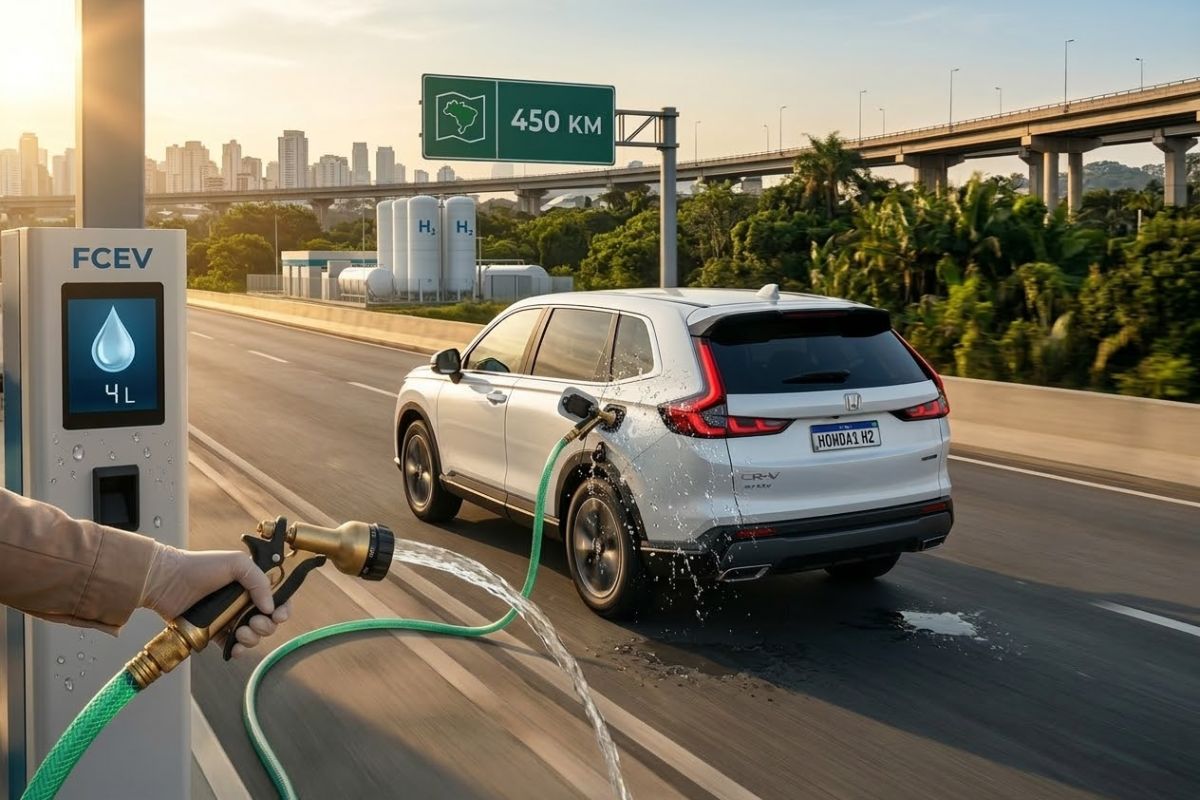


The Hydrogen-Powered CR-V That Honda Brought to Brazil Operates on Green Hydrogen, Converts Fuel into Electricity, Combines Fuel Cell with Battery, and Shows a Long-Range Solution with No Local Emissions, Although It Still Depends on Rare Stations, Expensive Infrastructure, and a Restricted Experimental Phase in the Country Today.
The Hydrogen-Powered CR-V that Honda brought to Brazil attempts to answer one of the central dilemmas of electric mobility: how to extend range without significantly increasing battery weight. The proposal combines green hydrogen, fuel cell, and rechargeable battery to generate electricity on board, travel about 450 kilometers with just 4 kg of fuel, and maintain virtually zero local emissions.
The model arrived in the country as a unique unit for testing in the Federal District, alongside an experimental green hydrogen production plant and a high-pressure refueling station. What is being evaluated is not just a car, but a complete system that involves generation, storage, refueling, and use of electricity produced within the vehicle itself.
How the Hydrogen-Powered CR-V Works in Practice
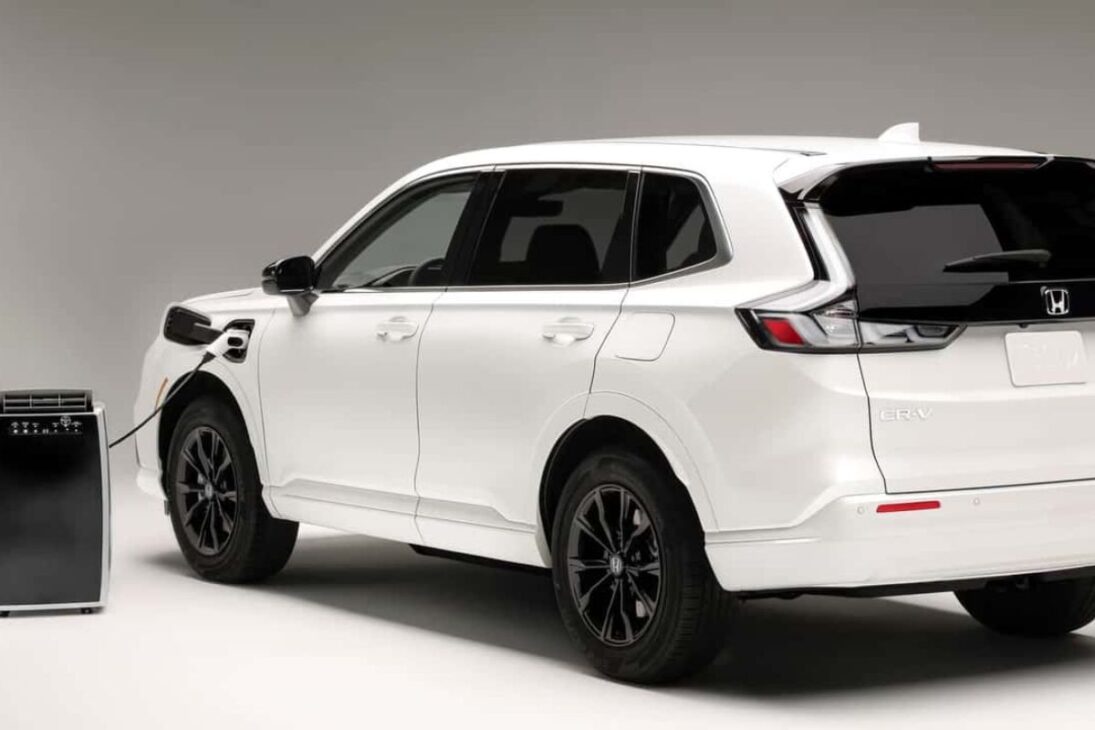
The Hydrogen-Powered CR-V is presented by Honda as the fifth generation of its fuel cell vehicles, continuing the FCX, FCX Clarity, and Clarity projects.
-
Around R$ 24,000: 4 used Ford SUVs with up to 253 hp, V6 engine, all-wheel drive, 7 airbags, panoramic sunroof, and a complete package that surprises with its price and performance in Brazil.
-
A brand new car starts at around R$ 75,000 in Brazil, but what stands out the most is seeing streets filled with SUVs and expensive sedans in a country where millions remain in debt.

-
For R$ 32,000, a brand new Hyundai car is a rival to the Kwid with a 1.2 engine producing 82 hp, 6 airbags as standard, multimedia with wireless Android Auto, up to 391 liters in the trunk, and a refreshed look for 2026 in India.
-
He bought a new car in 1983, locked it in the barn in 1988, and no one opened the door for 38 years until the family discovered what was stored inside and realized it looked like something out of a movie.

Launched in 2024 in the United States and Japan, it operates there on a leasing basis, without conventional sales, precisely because of technical complexity and limited infrastructure.
In Brazil, the unit brought for testing serves to demonstrate how the technology can fit into a market that still lacks a wide public refueling network.
Under the hood, what appears is not a conventional engine, but the fuel cell responsible for converting hydrogen into electricity.
This assembly generates 92 kW and can directly power an electric motor with 176 horsepower and 31.6 kgfm, or send energy to the 17.7 kWh battery.
This allows the SUV to operate as electric, hybrid, and fuel cell vehicle simultaneously, depending on the usage situation.
Where Water Comes In and How Green Hydrogen Is Produced
Water enters the process at the start of the chain. In the experimental plant shown next to Brasília, the production of green hydrogen begins with treated water and goes through electrolysis, a process where H2O molecules are separated using intense energy.
Oxygen is released while hydrogen is stored in cylinders that operate at high pressures. In the mentioned facility, there are tanks at 350 bar and 900 bar, with the capacity to store dozens of kilos of the gas produced daily.
The car’s logic repeats this chemistry in a useful way for mobility.
When the Hydrogen-Powered CR-V receives gas stored at 700 bar, the fuel cell combines this hydrogen with compressed air taken from the atmosphere and generates electricity to power the system.
The final result of the process is water or steam. This is why the vehicle does not “burn water,” but depends on hydrogen extracted from it to produce clean energy on board.
What This System Delivers in Range, Refueling, and Weight
With 4 kg of hydrogen in the two cylinders, the SUV travels about 450 kilometers, and it can even exceed that in favorable conditions.
The battery alone allows for up to 46 kilometers in pure electric mode, and this is an important point because the model also accepts external charging, something that the presentation highlights as unusual among hydrogen cars.
In practice, the car is not stuck to a single usage logic, as it can leave the outlet, use the battery, and resort to hydrogen to extend its range.
This arrangement directly addresses the classic problem of battery electric vehicles. To gain range, a conventional electric car needs more cells, more weight, and in many cases, more power to move this larger assembly.
Honda tries to break this spiral by making the Hydrogen-Powered CR-V use a relatively smaller battery and complement the system with instant production of electricity within the car itself.
The gain lies in combining electric behavior with a range close to that of an internal combustion vehicle.
Why Rapid Refueling Still Doesn’t Solve Everything
Refueling the Hydrogen-Powered CR-V is one of the strongest arguments for the technology. Instead of waiting long periods for a charge, a complete refuel can be done in about 5 to 10 minutes, with hydrogen at high pressure and low temperature.
This brings the user experience closer to what is known in gas and diesel stations, something especially relevant when considering long trips and intensive use.
But the structural problem persists in Brazil. The test itself takes place in a very controlled environment because there are almost no refueling points available.
The station used by Honda is described as the country’s first private high-pressure station, while other similar structures are still linked to universities and research centers.
In other words, the car exists, works, and drives, but the network needed to support it practically does not exist yet.
How Much It Costs and Why the Numbers Are Still Difficult
The limitation of infrastructure directly affects the cost. According to the presentation, there is currently no consolidated price for a kilogram of hydrogen in Brazil, precisely because the market is still restricted and experimental.
In the United States, where this network has become more extensive, the cited value is around 40 dollars per kilogram. Based on estimates presented, Brazilian production could be about 40% lower than that, leading to something around R$ 120 per kilogram.
This calculation helps to outline the challenge. A tank with 4 kg would end up costing something comparable to refueling a premium gasoline car, but this still depends on scale, supply, and distribution network.
Green hydrogen requires a lot of electricity to be produced, in addition to investment in compression, storage, safety, and transportation.
Without industrial scale and logistics network, the technology remains technically promising and commercially narrow.
Why Honda Insists on This Path Anyway
The answer from Honda is less about the isolated passenger car and more about what this architecture can represent for long-distance mobility.
To some extent, battery electric vehicles do well in urban and regional displacements. Beyond that, the weight of the battery increases, the charging time weighs more, and efficiency starts to take its toll.
In this scenario, green hydrogen emerges as an alternative for applications where stopping little and traveling a lot makes more difference.
For this reason, Brazil appears as a strategic testing ground.
The country has significant potential for producing green hydrogen and a demand for clean solutions on long routes, including for buses and trucks. The own project shown next to Brasília points in this direction.
More than proving that the Hydrogen-Powered CR-V can drive, the goal seems to be testing whether the system makes sense in a Brazilian energy chain that is still forming.
What the Model Reveals About the Immediate Future
There is also a component of technological transition in this story.
The current fuel cell of the SUV was developed in partnership with General Motors, a partnership that is no longer ongoing, as Honda prepares for a new generation of systems.
The current model will be discontinued at the end of the year precisely to make way for this next leap. This shows that the car being tested in Brazil is not a final point, but an intermediate stage.
Even so, what it delivers today is already relevant for the debate. The Hydrogen-Powered CR-V shows that it is possible to generate electricity on board, maintain an electric car’s response, reduce local emissions, and refuel in minutes.
The problem is no longer about proving that the technology works, but solving whether it will be able to expand beyond the laboratory and truly enter the realm of real mobility.
In the end, the arrival of the Hydrogen-Powered CR-V in Brazil does not represent an immediate market turnaround, but a concrete demonstration that Honda is treating green hydrogen as a complementary route to battery electrification.
The SUV works, drives, recharges, refuels quickly, and produces electricity without local pollution, but still relies on a rare, expensive, and experimental infrastructure.
The question that remains is less about the car and more about the country. Will Brazil be able to turn its potential in green hydrogen into a practical refueling and usage network, or will the Hydrogen-Powered CR-V remain a technological showcase for a solution that has yet to find scale? Share your opinion in the comments.









Por mais que a fake news seja desmentida no corpo do texto, ainda assim há divulgação de informações mentirosas no título, um desserviço na divulgação científica. Não existe algo que gere energia elétrica a partir da água. Eh exatamente o OPOSTO.
Comecei a estudar o potencial do hidrogênio como fonte energética há mais de 40 anos. Até hoje a barreira é a mesma: custos elevados de produção, uso intensivo de energia elétrica e, principalmente, a necessidade de estruturação de uma rede de distribuição nacional. O mercado de carros elétricos que já se instalou e vem se consolidando no país há mais de 10 anos ainda não conta com uma rede de abastecimento rápido que justifique a disrupção definitiva e o consolide. Por mais que simpatize com o conceito não vislumbro a viabilidade desse mercado no Brasil e nem no mundo, exceto em nichos muito restritos.
Interessante seu posicionamento e informação, obrigada.