





 Portuguese
  English
  Spanish
  5 min of reading
  3 comments


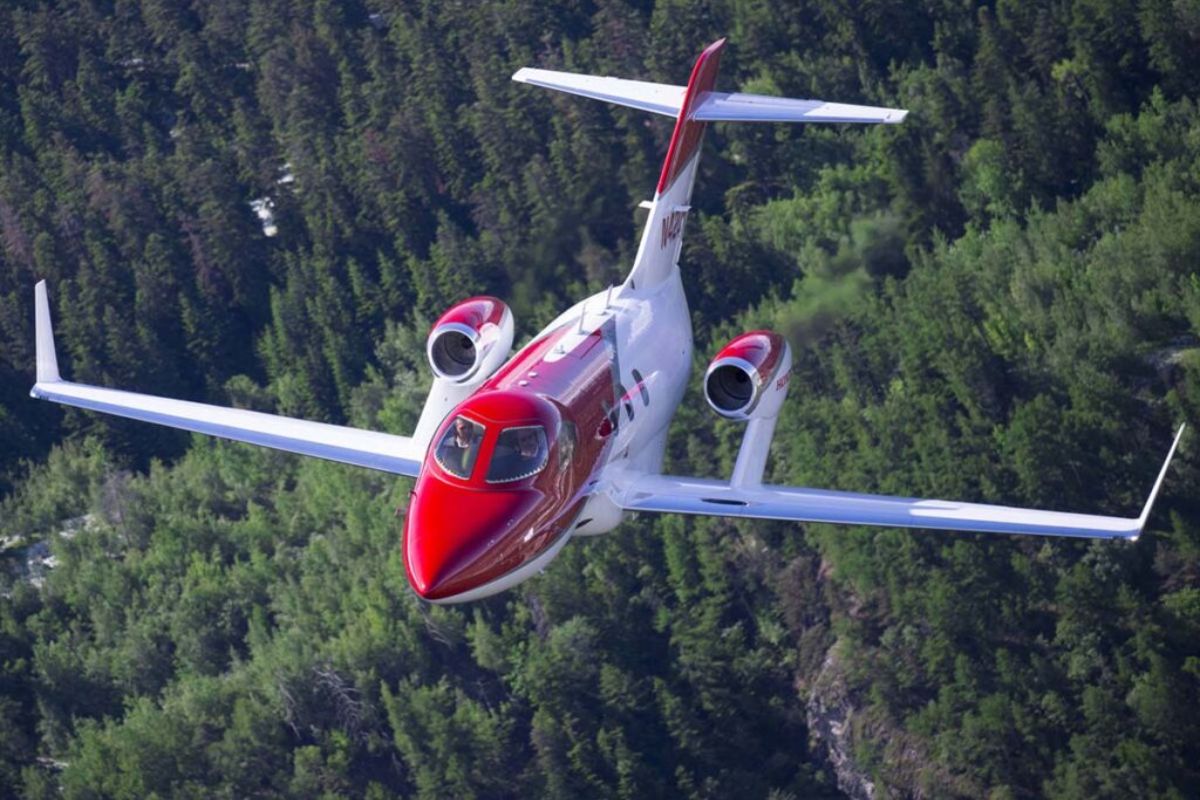


With FAA Certification, The HondaJet Elite II Inaugurates A New Level Among Light Business Jets: The Emergency Autoland Can Detect Pilot Incapacity, Declare Emergency, Select Compatible Airport, Conduct Approach And Complete Landing With Automatic Braking, While The Manufacturer Advances To Validate The Technology In Other International Markets As Well.
The HondaJet Elite II occupies a unique place in business aviation by receiving certification to operate the Emergency Autoland, becoming, according to Honda Aircraft Company, the first certified light twin-engine business jet with this feature approved by the FAA. This milestone changes the conversation about emergency response within this category.
The regulatory decision occurs in a context of practical demand from owners and operators in the United States and opens a second strategic front for the manufacturer: to bring the same functionality to other countries through new certifications. The result is a scenario in which safety, operation, and perceived value of the aircraft are now evaluated under new criteria.
Unprecedented Certification And The Regulatory Weight In The Light Segment
The FAA certification does not function merely as a technical seal. It represents the validation that the system onboard the HondaJet meets formal requirements for a critical function: taking control of the aircraft in case of pilot incapacitation. In market terms, this differentiates the model within a range where efficiency, range, and operational cost have always dominated the debate.
-
While the world looks at oil, the war with Iran is already disrupting helium supply from Qatar, affecting car and iPhone chips, threatening AI expansion, and putting pressure on aluminum packaging at the highest value in four years.

-
Global warming will expose a treasure hidden under the ice of Antarctica and may spark an international dispute over gold and valuable minerals.

-
A street vendor from Praia Grande built a robot made of scrap from scooters and washing machines that pulls his popcorn cart on the beach, emits sounds, and interacts with customers, becoming an attraction on the coast of São Paulo.

-
The specifications of the Xiaomi 18 Pro Max have been leaked, and the highlight is a dual 200 MP camera with a new 22-nanometer technology that promises to consume less energy and capture details in shadows and bright areas using LOFIC HDR.


When a safety feature of this kind enters certified production, the discussion shifts from hypothetical to operational. Those who buy, operate, and finance aircraft begin to consider not only performance and comfort but also the automatic response capability in rare, high-impact scenarios. This is where the HondaJet repositions its role in the light twin-engine segment.
How The Emergency Autoland Works From Detection To Complete Landing
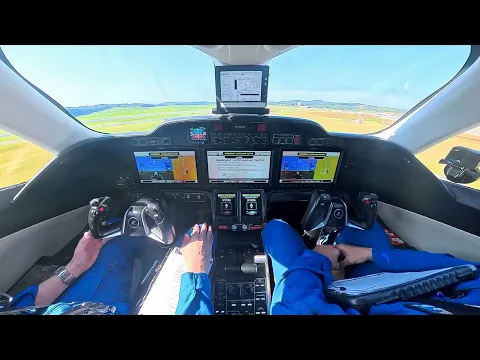

According to the Aeroin portal, the Emergency Autoland was designed to act when there is an emergency related to pilot incapacitation. In the HondaJet, activation can occur in two ways: manually, via button, or automatically, when the system detects the pilot’s lack of response. From this point, the flight logic switches to emergency autonomous mode.
With the system active, the aircraft transmits an emergency code and conducts radio communications to alert air traffic control. This detail is central because it integrates the automated response with the external control environment, reducing the risk of operational isolation during a critical event. It is not just “flying alone”; it is entering a complete emergency protocol.
Next, the system evaluates operational variables and chooses the most suitable alternate airport. In this analysis, weather conditions, terrain, available fuel, and runway dimensions are taken into account. Subsequently, the Emergency Autoland manages the aircraft’s configuration, approach navigation, landing, and braking until a complete stop. In the executive context, this automated cycle represents a concrete change in safety standards.
The Technical Foundation Of The Advance: Autothrottle And Certification Trials
Prior to the current announcement, the HondaJet Elite II had already reached another milestone in October 2024: becoming the first light twin-engine business jet with autothrottle. This automatic power control was not a peripheral detail but an essential technical layer to support the predictable behavior required in an autonomous emergency sequence.
As for the timeline, test flights for the certification of the Emergency Autoland were completed in October 2025, a step that paved the way for the certification announced now. This sequence of events shows that the evolution did not occur in a single leap: there was a chain between control technology, flight validation, and regulatory approval.
Practical Impact For Operators, Owners And Fleet Decisions
In the United States, the manufacturer reported that the availability of the Emergency Autoland was anticipated by owners and operators of the HondaJet Elite II. This indicates a specific point of demand: the feature does not emerge merely as a technological showcase, but as a response to a real expectation of use in operational routines.
On the international front, Honda Aircraft Company stated that it is in the process of certification with other regulatory authorities to bring the functionality to markets outside the U.S. Where this validation advances, competitive pressure on the light segment is expected to grow: aircraft without an equivalent solution may lose attractiveness in negotiations where operational safety is already a decisive factor.
For those considering acquisition or fleet renewal, the question shifts from merely “which aircraft delivers better performance per flight hour” to include “which aircraft reduces exposure in extreme scenarios.” At this point, the HondaJet adds a decision-making variable that directly relates to perceived risk by companies, families, and corporate operators.
Elevated Safety, Without A Promise Of Invulnerability
The advancement is significant, but the technical reading requires balance. The certification of the Emergency Autoland in the HondaJet enhances the response capability in a specific and critical condition, which is pilot incapacitation. This raises the standard of the segment but does not eliminate the need for training, operational discipline, and rigorous safety management.
Still, the milestone is clear: the concept of safety in light business aviation now includes, in a certified manner, the possibility of complete autonomous landing in emergencies. In a market where operational confidence is central, this change may redefine the expectations of passengers, operators, and investors regarding what to consider “minimum acceptable” in embedded technology.
The HondaJet Elite II enters a new stage by uniting regulatory certification, advanced automation, and practical application in real emergencies. With this, light business aviation gains a concrete reference for how technology, system integration, and official validation can converge to reduce vulnerabilities in flight.
If you were deciding on a purchase or hiring executive flights today, how much weight would you give to a system that lands itself in an emergency? In which type of route in your reality would this differential make the most sense: short regional trips, frequent business travel, or flights with family?








La Gran mentira de HONDA Cirrus jet fue el primer en aterrizar en un aeropuerto el mismo si pasara algo con el piloto de emergencia además es el único avión de su categoría que tiene inclusive un paracaídas
En viajes ejecutivo largo, mas seguro..!
Honda, how we move you