





 Portuguese
  English
  Spanish
  6 min of reading
  2 comments


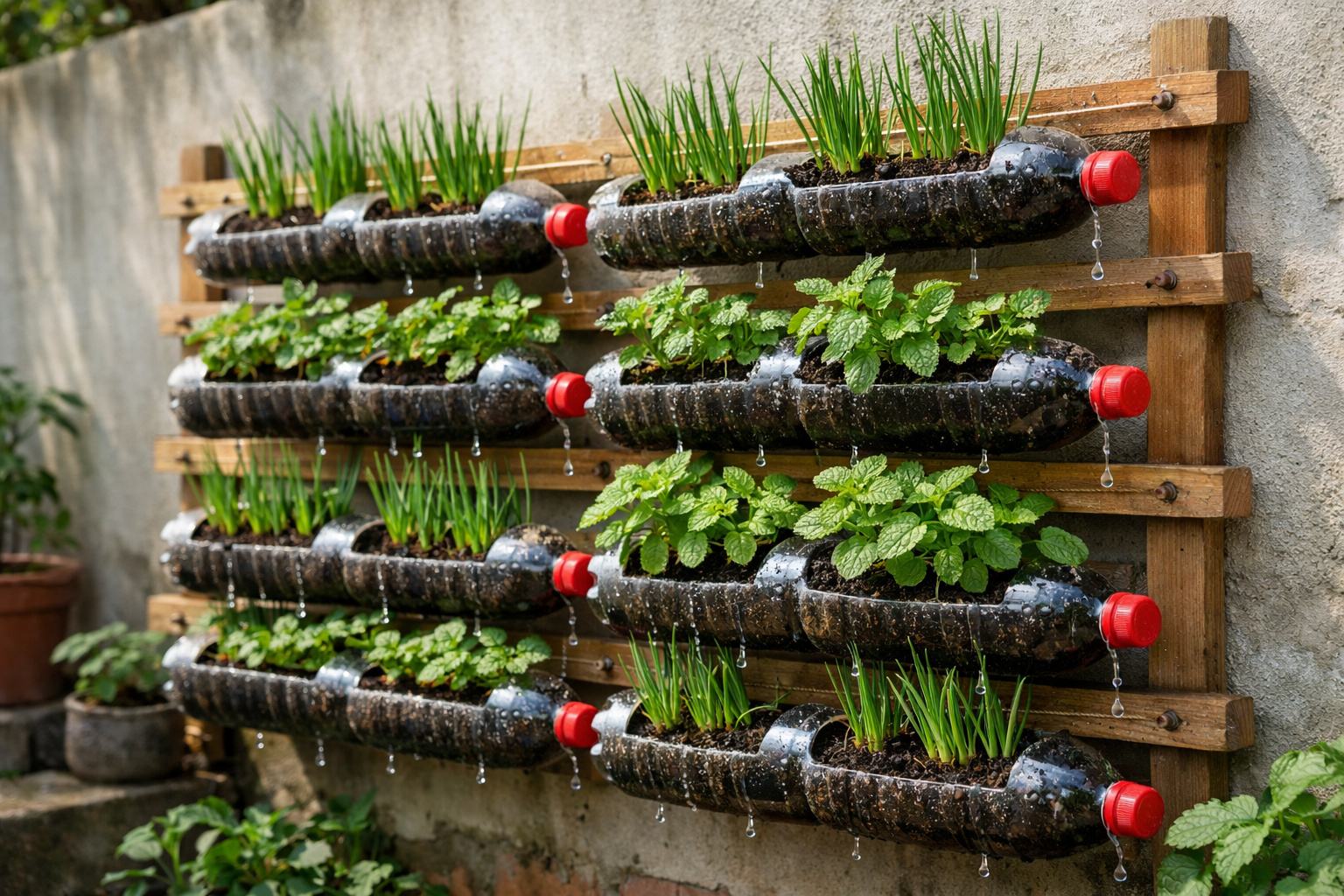


Vertical Garden with PET Bottles Allows Growing Herbs and Vegetables on Walls, Saving Up to 80% of Space and Using Simple Gravity Irrigation.
Growing food at home is no longer a practice limited to large backyards or rural properties. In recent years, a simple solution has gained ground in urban areas and also on small properties: the vertical garden made with reused PET bottles.
The technique consists of transforming common plastic bottles into small hanging pots that are fixed to walls, fences, or vertical structures. This allows a minimal space to turn into a productive area capable of growing aromatic herbs, vegetables, and medicinal plants.
An Efficient Strategy for Food Production in Spaces with Limited Space
According to urban agriculture manuals and guidance from institutions like Embrapa and FAO, vertical cultivation is one of the most efficient strategies for producing food in spaces with limited space. By using walls or suspended structures, it is possible to significantly expand the cultivation area without occupying the soil.
-
China rejected an entire shipment of beef from Argentina after detecting an antibiotic so dangerous that it has been banned for human consumption for over 30 years, and now the export sector is facing a crisis of international trust.

-
With nearly 500 thousand tons per year, barley production is growing in Brazil, while a decline in beer consumption among Generation Z raises alarms in the sector.

-
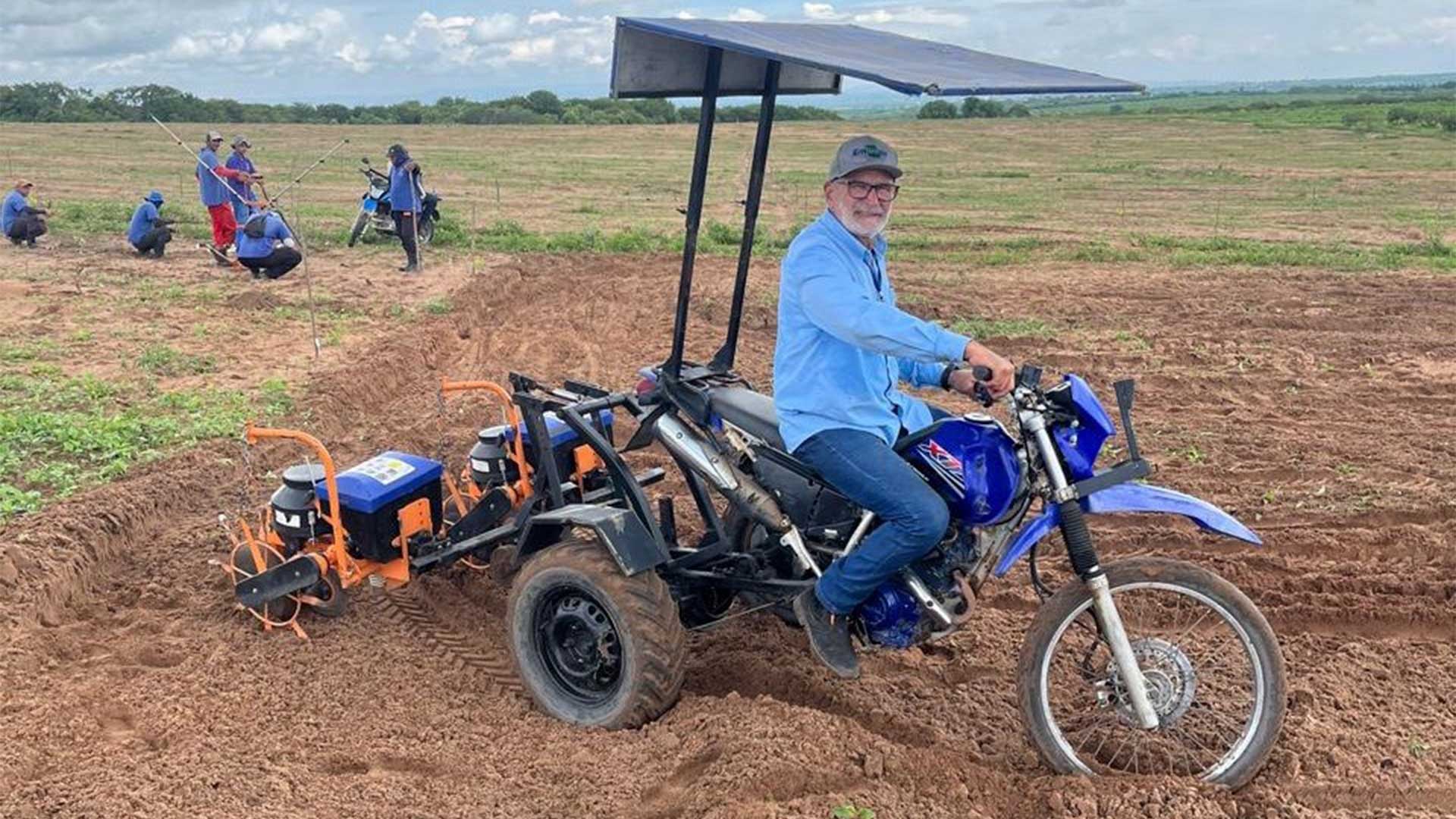
With tractors out of reach for small producers, a tricycle created by Embrapa Algodão becomes a cheap and efficient solution and gains national prominence.
-
From 130 producers in the year 2000 to just 15 today: the dramatic decline of passion fruit in Araguari shows how the lack of labor in the Brazilian countryside is killing a decades-old agricultural tradition, even with Brazil being the largest producer in the world.


In the case of gardens made with PET bottles, the system allows for the use of walls that are only a few square meters, creating a small home planting area with a constant yield of fresh herbs. Furthermore, the method uses few materials and can be assembled with simple tools, which explains its popularity in different regions.
How the Vertical Garden with PET Bottles Works
The system works in a very straightforward manner. Each PET bottle acts as a small planting container that holds soil, organic substrate, and plant seedlings. Typically, the bottles are cut laterally or punctured, forming an opening where the soil is placed. Small holes are made at the bottom of the bottle to allow for water drainage.
After that, the bottles are secured to vertical structures such as the external walls of houses, backyard fences, metal grids, and wooden panels. When organized in rows, these bottles form a kind of productive wall, where each container functions as a small garden bed.
This model allows for the cultivation of dozens of plants in an extremely reduced area. This vertical utilization of space is the main reason the technique can save up to 80% of space compared to conventional gardens.
Why the Technique Saves So Much Space
In traditional gardens, plants occupy only the surface of the soil. This means that the available area directly determines the amount of cultivation possible. In the vertical garden, the logic is different. Plants are distributed at different levels along the wall, allowing for the use of the entire height of the structure, not just the ground.
On a wall of approximately 2 square meters, several rows of PET bottles can be installed, creating dozens of cultivation points. This arrangement transforms an area that previously had no productive function into a small agricultural system.

This concept of vertical cultivation is widely used in urban agriculture projects around the world precisely because it increases the efficiency of space use.
Gravity Irrigation System Reduces Water Consumption
Another important point of this cultivation model is the simple irrigation system. In many vertical gardens made with PET, the containers are arranged so that water flows from one pot to another. The irrigation works as follows:
- Water is poured into the highest bottle of the structure
- Small holes allow excess water to drain slowly
- The water passes to the lower bottles
This flow creates a gravity irrigation system, which distributes water along the structure. Besides being simple, this system helps to avoid water wastage.
In small home gardens, weekly consumption can be extremely low since each pot receives only the amount necessary to keep the soil moist. The combination of small containers and controlled irrigation significantly contributes to reducing water consumption.
Which Plants Adapt Best to This Type of Cultivation
Not all agricultural species thrive in small containers. However, several vegetables and herbs have short roots and a quick growth cycle, making them easier to grow in PET bottles. Some of the most common plants in this type of garden include: scallions, parsley, cilantro, basil, mint, lettuce, and arugula.
These plants are widely used in cooking and have fast growth, allowing for frequent harvests throughout the year. Under good light conditions and adequate management, these vegetables can be harvested between 30 and 50 days after planting, depending on the species. This allows the garden to produce continuously over time.
The Importance of Sunlight in Vertical Cultivation
Just like in any agricultural system, sunlight is essential for plant development. Experts recommend that vegetables grown in containers receive between four and six hours of direct sunlight per day. Therefore, vertical gardens are usually installed on walls facing the sun, well-lit balconies, external fences, and yards.
Very shaded environments can compromise plant growth and reduce production. The better the sunlight exposure, the greater the development of the vegetables tends to be.
Reusing PET Bottles Reduces Plastic Waste
Another important aspect of the technique is the reuse of materials. PET bottles are among the most common plastic waste in the world. Using them as planting pots extends their lifespan and reduces immediate disposal.

This type of reuse has become common in environmental education projects, urban agriculture, and community gardens. Moreover, the use of recycled materials reduces the implementation cost of the garden, making the system accessible to many families.
The combination of food production and waste reuse explains why the technique has spread rapidly in different countries.
Basic Care to Keep the Garden Productive
Despite being simple, the vertical garden requires some care to maintain healthy plant growth. Among the main ones are:
- Periodic fertilization: The volume of soil inside the bottles is small, so nutrients are depleted more quickly. Replenishment can be done with organic compounds.
- Irrigation control: The soil should remain moist, but not soggy.
- Pest observation: Insects like aphids can appear even in home gardens.
- Replacement of old plants: Short-cycle vegetables should be replanted regularly to maintain production.
When these cares are maintained, the garden can remain productive for long periods.
Urban Agriculture Grows in Various Cities
The growth of vertical gardens is linked to the advancement of urban agriculture. In various cities around the world, home cultivation initiatives have been encouraged as a way to increase food security and reduce dependence on foods transported over long distances.
Research on urban agriculture indicates that vertical systems can transform small urban spaces into productive areas, increasing the supply of fresh food. Moreover, these gardens help bring people closer to the food production process.
A Wall Can Be Transformed into a Small Productive Area
The vertical garden made with PET bottles shows how simple solutions can transform limited spaces into productive environments. With few materials and basic planning, a wall can become a small cultivation system capable of producing fresh vegetables for much of the year.
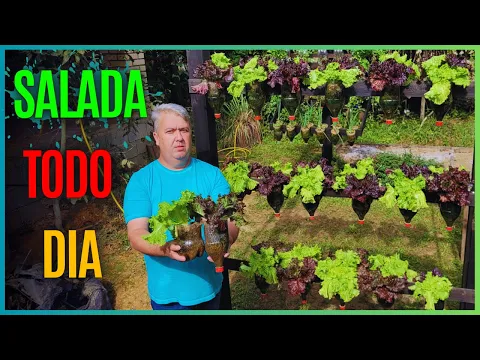

In addition to contributing to home food production, the technique also encourages material reuse and efficient space utilization. This type of cultivation demonstrates how simple urban agriculture practices can expand access to fresh food even in environments with little available space.










Muy interesante. A ponerlo en práctica
Bela ideia. Vou fazer na minha casa. Onde posso pegar maiores detalhes construtivos?