





 Portuguese
  English
  Spanish
  4 min of reading
  0 comments


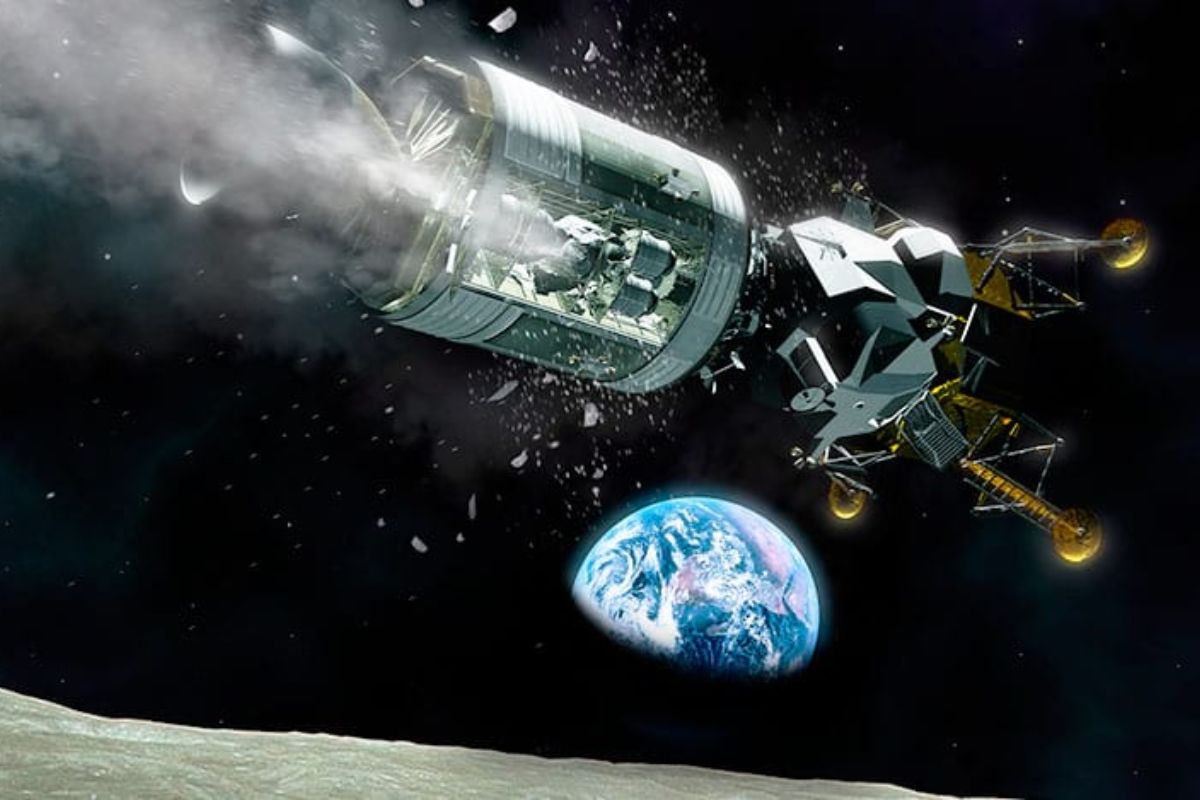
330,000 Km From Earth, An Explosion Disabled The Apollo 13 Spacecraft. This Is The Story Of How, With No Power, No Water, And Time Running Out, Engineers Used Duct Tape, Cardboard, And Ingenuity To Bring Three Men Back Home.
In April 1970, the Apollo 13 mission launched to be the third to land on the Moon. For NASA and for the public, it was almost routine. Onboard, Commander Jim Lovell, Command Module Pilot Jack Swigert, and Lunar Module Pilot Fred Haise were preparing for another chapter in space exploration. But 56 hours into the flight, the calmest and most terrifying phrase in the history of space exploration echoed through Mission Control in Houston: “Okay, Houston, we’ve had a problem here.”
The mission to land on the Moon was dead. The new mission, much more complex and desperate, was simply to survive. This is not just a story of an accident, but the greatest example of how human ingenuity can turn a sure disaster into one of the proudest moments of technology.
The Explosion: What Really Happened To The Oxygen Tank?
The “problem” was a catastrophic explosion. One of the two oxygen tanks in the Service Module, the spacecraft’s “engine,” exploded. The root cause, discovered later, was a trivial defect in a thermostat that, during a routine ground test weeks before the flight, allowed the tank’s internal wiring to be damaged. In space, a spark from an internal fan detonated the damaged tank.
-
Remains with battle wounds of over 100 soldiers from the Roman Empire are found beneath a football field in Vienna, leaving everyone surprised.

-
Elon Musk notes Brazil and lowers the price of his internet, Starlink, promising to connect all corners of the country with affordable plans, 10,000 satellites, and 1 million active users in the national territory!

-
Man creates an infinite source of FREE electricity at home with a PVC wind turbine using a repurposed motor.
-
An aquatic seed consumed for centuries in Asia is going viral in the West after studies highlighted its antioxidant compounds and potential anti-inflammatory properties. It pops like popcorn, has low fat content, and is already being called the new functional snack.


The explosion not only eliminated half of the crew’s oxygen supply but also damaged the second tank and destroyed the fuel cells that provided power and water to the Command Module “Odyssey,” the astronauts’ home. Within minutes, the main spacecraft was dying.
The Lifeboat: The Decision To ‘Shut Down’ The Main Ship
With the mothership doomed, Flight Director Gene Kranz and his team in Houston made a bold and unprecedented decision: to use the Lunar Module “Aquarius” as a “lifeboat.” The Aquarius, designed to carry only two men to the lunar surface for two days, would now have to support three men for nearly four days on a long, cold journey around the Moon to gain the momentum back to Earth.
To conserve the little battery left in the Command Module for re-entry, it was completely shut down. The astronauts moved into the Aquarius, which was powered on and became the control center for NASA’s most critical mission in history.
The ‘Quick Fix’ Of A Million Dollars: Solving The CO2 Crisis
Quickly, a deadly problem arose. With three men in the small Lunar Module, the carbon dioxide (CO2) exhaled by them was building up to toxic levels. The filtration system of the Aquarius couldn’t handle it. There were backup filters in the Command Module, but they were square-shaped. The fittings of the Aquarius system were round. It was the classic “square peg in a round hole” problem.
In Houston, engineers threw all the items that the astronauts had at their disposal onto a table: flight manual covers (cardboard), plastic bags, socks, and, most importantly, rolls of silver duct tape. In a race against the clock, they designed, built, and tested an improvised adapter. The instructions were read step by step to the crew, who replicated the “hack” 330,000 kilometers away. It worked. The air became breathable again.
Navigating Blind: How To Pilot A Spacecraft Without A Computer
With the main navigation system turned off, Apollo 13 was adrift. To get back on the correct trajectory, a crucial engine burn needed to be performed. But how to align the spacecraft for thrust without the computers?
The solution was worthy of ancient navigators. Using the window of the Lunar Module, Commander Lovell had to center the Earth in his sights and use the Sun as a reference point to control the rotation of the spacecraft. It was a manual, imprecise, and tense procedure, but it put Apollo 13 on the way home.
Reactivating A Frozen Giant: The Reentry To Earth
The final challenge was to abandon the lifeboat Aquarius and reactivate the Command Module “Odyssey,” which was frozen and inert. The reactivation, a process that normally took hours and followed a long list of procedures, had to be reinvented to consume the least amount of power from the dangerously weak re-entry batteries.
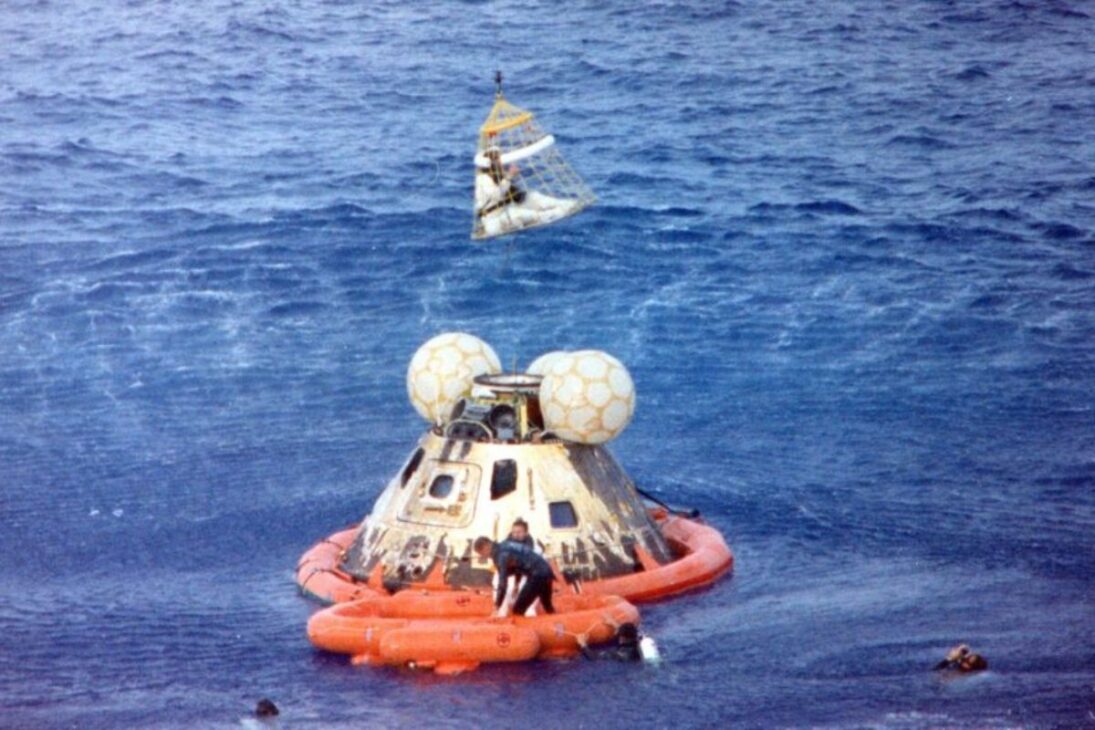
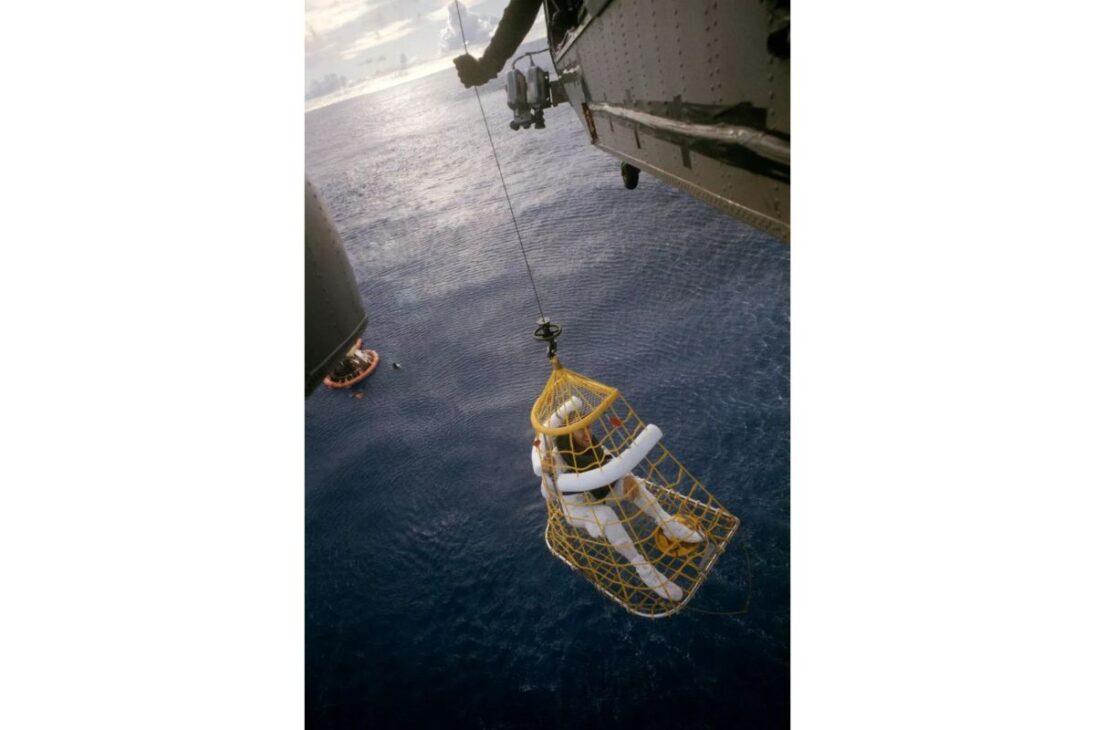
With the spacecraft’s internal walls covered in condensation, there was a real risk of short-circuits. Following the new instructions from Houston, the astronauts re-engaged the essential systems in a tense and precise sequence. The spacecraft came back to life. After separating from the service and lunar modules, the Odyssey plunged into the Earth’s atmosphere, withstanding the heat of re-entry and landing safely in the Pacific Ocean on April 17, 1970.
The mission to land on the Moon failed, but the mission to bring three men back from the brink of death, using creativity, teamwork, and engineering under pressure, became NASA’s greatest triumph.
In your opinion, what was the most ingenious engineering solution of the Apollo 13 mission? Do you know another story where improvisation was crucial to success? Comment below!





Seja o primeiro a reagir!