





 Portuguese
  English
  Spanish
 4 min of reading
  0 comments


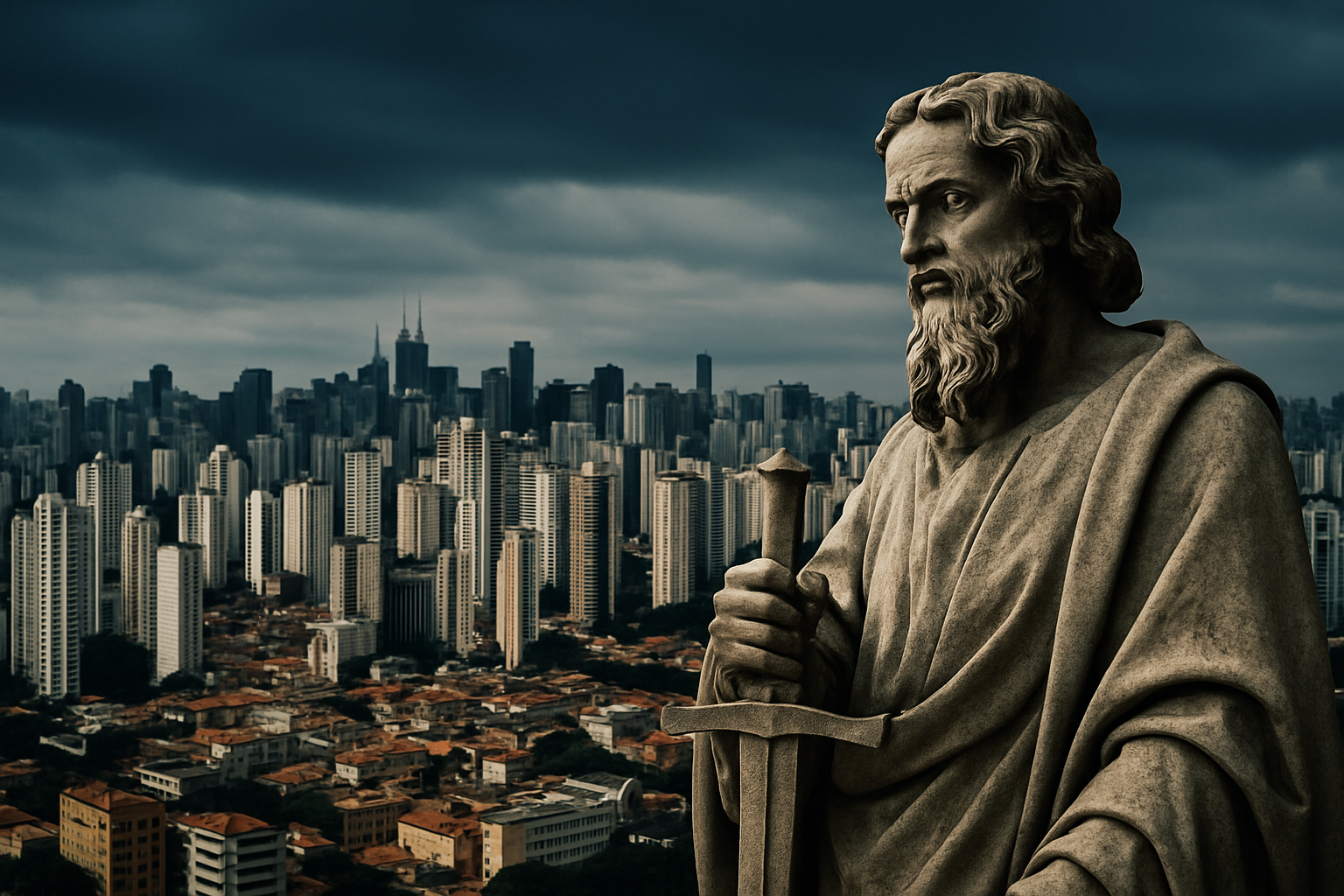
It All Started with a Mass in 1554. Jesuit Priests Founded a School and Began the History of the Future City of São Paulo
The largest metropolis in the Americas had a modest beginning. On January 25, 1554, Jesuit priests held a mass in the indigenous village of Piratininga. The religious ceremony marked the beginning of the history of the city of São Paulo. It was also the starting point for the establishment of a school that would change the region.
A Mass on the Mountain
The village chosen by the Jesuits was located on the Piratininga plateau. The site was inhabited by the Guaianás, an indigenous people of the region. According to the writer Marcello Rollemberg, the name Piratininga comes from the Tupi language and means “place where fish dry.”
The mass was celebrated on a Thursday by 13 priests. They climbed the trail of the Serra do Mar starting from the village of São Vicente on the coast. Among the clergy were Manoel da Nóbrega, Manoel de Paiva, Afonso Brás, and the novice José de Anchieta.
-
Friends have been building a small “town” for 30 years to grow old together, with compact houses, a common area, nature surrounding it, and a collective life project designed for friendship, coexistence, and simplicity.

-
This small town in Germany created its own currency 24 years ago, today it circulates millions per year, is accepted in over 300 stores, and the German government allowed all of this to happen under one condition.

-
Curitiba is shrinking and is expected to lose 97,000 residents by 2050, while inland cities in Paraná such as Sarandi, Araucária, and Toledo are experiencing accelerated growth that is changing the entire state’s map.

-
Tourists were poisoned on Everest in a million-dollar fraud scheme involving helicopters that diverted over $19 million and shocked international authorities.


The Goal Was to Evangelize
The Jesuits belonged to the Society of Jesus, linked to the Catholic Church. They aimed to expand catechesis into the interior. Thus, they decided to found the São Paulo de Piratininga School, dedicated to the education of indigenous people.
The school was only completed in 1556, but the mass of 1554 is considered the official landmark of its founding. The small village began to form around the school, where today the Pateo do Collegio and the church dedicated to São José de Anchieta are located.
Prior to this, Father Manoel da Nóbrega had already been to the village. In 1553, he baptized 50 indigenous people at the site and returned the following year to settle permanently.
São Paulo: From Village to City
Over time, the village grew. However, it was not until 1711 that it was officially recognized as a city. Until then, it was known as Vila São Paulo de Piratininga. The name was shortened to São Paulo when it received city status.
The village had strategic importance and gradually became a political and economic hub. Over time, it gave rise to the capital of São Paulo, which today has nearly 12 million inhabitants.
Why Is the Name São Paulo?
The choice of the city’s name is linked to the date of the mass. January 25 is celebrated by the Catholic Church as the day of the conversion of the apostle Paul of Tarsus.
This apostle, later called Saint Paul, is also the patron saint of the city of Rome. To honor him, the Jesuits named the school after him. Thus, the village that emerged around it also came to be known as São Paulo.
According to the Vatican website, every year the Church celebrates the date of Paul’s conversion on the same day. The choice of date for the mass was therefore symbolic and religious.
The Painting That Immortalized the Moment
The famous mass that gave rise to São Paulo was depicted in a painting only centuries later. The work “Foundation of São Paulo” was created between 1903 and 1907 by Oscar Pereira da Silva.
The painting is part of the collection of the Museu Paulista at USP. It shows an imagined scene of how the celebration between Jesuits and indigenous people might have been.
According to a newspaper from USP, this representation was important for building the imaginary of São Paulo’s history in the 20th century. The painting contributed to creating symbols and valuing the city’s role in the national context.
Imaginary and Identity
The historian Michelli Cristine Scapol Monteiro analyzes the work in a study for the National History Association. She states that the painting served as a mechanism for creating heroes and myths.
The canvas reflects more the period in which it was painted than the event itself. Still, it is considered a valuable piece for understanding how the past was told and consumed by society.
A Past That Lives in the Present
The mass celebrated in 1554 marked the beginning of a transformation. From catechism in the village to the formation of one of the largest cities on the planet, São Paulo grew without erasing its roots.
The last important piece of information is that, although the historical landmark was the mass of 1554, the title of city was only officially granted in 1711.
With information from National Geographic Brasil.









-

-

-

8 pessoas reagiram a isso.