





 Portuguese
  English
  Spanish
 4 min of reading
  6 comments


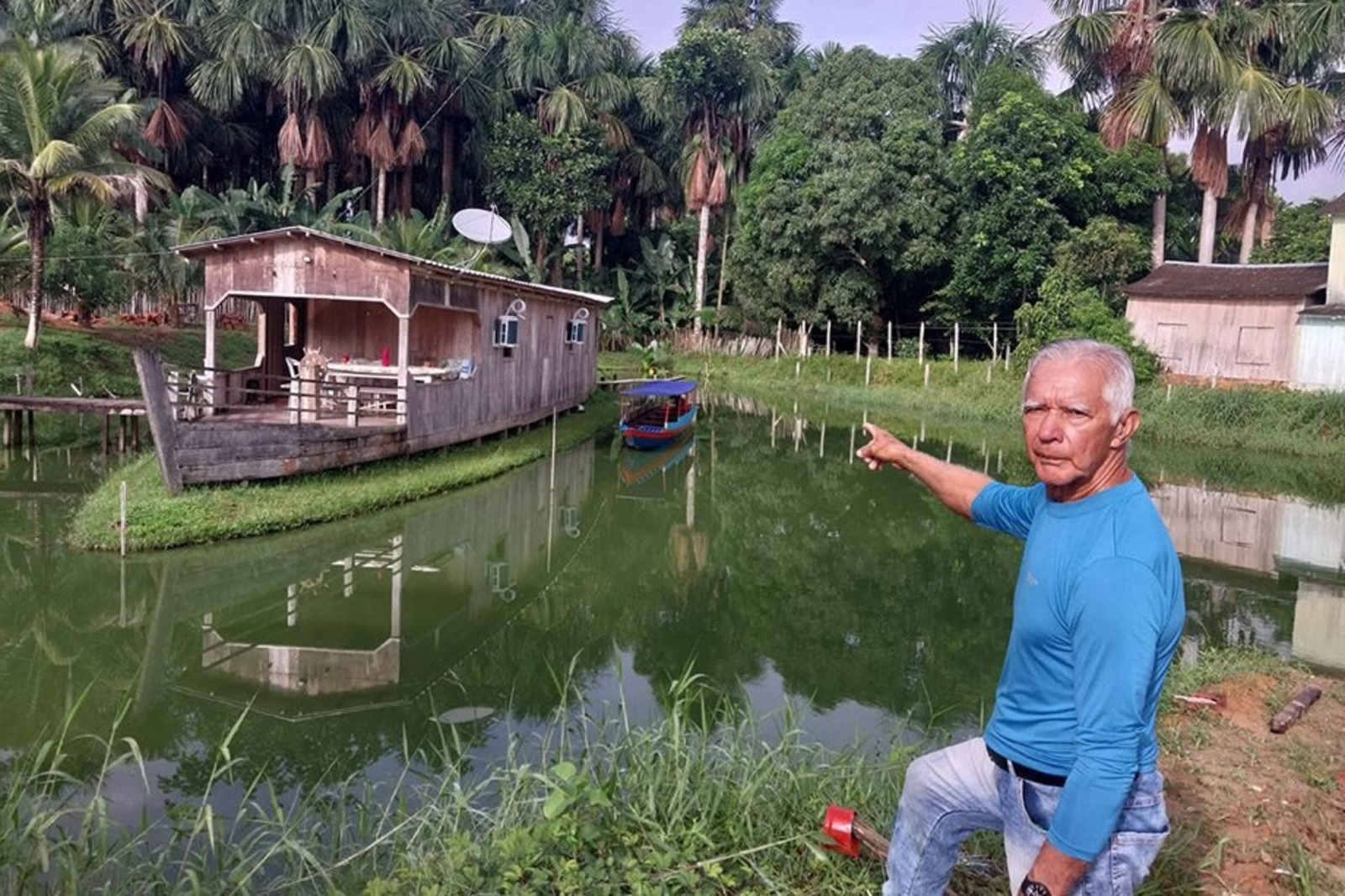


Valdemar Negreiro’s Story Shows Handcrafted Construction of a Fixed House-Boat in the Interior of Acre, Uniting Ingenuity, Family Labor, Environmental Recovery of the Land, and Riverine Routine Built Over Decades in the Amazon
Since he was 10 years old, on the banks of the Juruá River, Valdemar Negreiro dreamed of living on a boat. More than 70 years later, he lives with his wife in a fixed house-boat, built by him, in Mâncio Lima, in the interior of Acre, where the project draws attention for its ingenuity.
Old Dream
The house-boat was entirely built from wood and began to take shape in mid-2019, when the location did not yet exist as a structured lake, nor had it received its current name.
The space where the Lago Verde is currently located was a garbage dump used as an irregular disposal site, with discarded tires, old cars, and animal remains.
-
The Argentine government celebrates the lowest poverty rate in 7 years, but experts warn that the methodology has changed, real wages have fallen, unemployment has risen, and the number of people on the streets of Buenos Aires has increased by 57% since Milei took office.

-
7.8 magnitude earthquake in Indonesia frightens the population, triggers tsunami alert, and hits an island with over 200,000 inhabitants this Thursday.

-
Google will finally let you change that embarrassing Gmail address you created in your teenage years without losing any accounts, logins, or old emails: the feature is already available in the United States.

-
Heading to Brazil in a Bonanza F33 single-engine aircraft: a couple departs from Florida on a visual flight, makes technical stops in the Caribbean to refuel and organize paperwork, and begins the staged crossing until they reach the country.

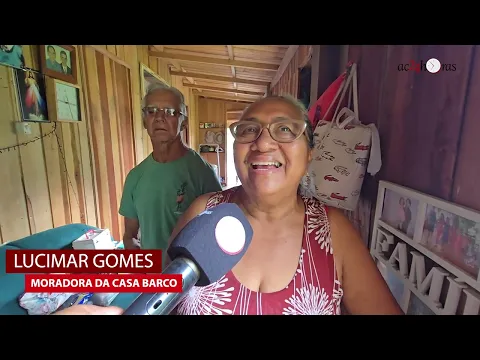
Lucimar Gomes, Valdemar’s wife, reports that the couple manually removed the trash, using a tripod and wheelbarrow, with the support of family throughout the process.
The couple has 11 children, 23 grandchildren, and three great-grandchildren, who witnessed the transformation of the land and the realization of the dream cultivated since childhood.

Handcrafted Construction
The house’s blueprint was designed by Valdemar himself, who envisioned a structure 25 meters long and 5 meters wide, entirely conceived for habitation.
The property has 10 windows, two bedrooms, a bathroom, kitchen, living room, and leisure areas positioned at both the bow and stern.
According to Valdemar, during construction, he heard comments that he was crazy, but after completion, there were interested buyers for the structure.
During a visit from college students, the house received up to 40 people at the same time, attracted by curiosity regarding the project.
Water Without Motors
At the bow of the house is a sink supplied with water from a well built without pumps or motors, designed to operate solely by gravity.
Valdemar dug two meters deep, installed a pipe, and filled in the area, ensuring a continuous supply of natural water for domestic use.
This solution eliminates the need for electrical or mechanical equipment, reinforcing the autonomous and functional nature of the floating residence, despite being fixed.

Family Interior
From the bow, access leads directly to the living room, with a sofa and television, configured as a typical Brazilian home environment, warm and familial.
A long corridor connects all the rooms of the house-boat, accompanied by windows along the entire structure, illuminating the internal spaces.
Bedrooms, bathroom, and kitchen are distributed along the central walkway, decorated with family objects that reinforce the feeling of home.
Fishing and Routine at Home
Lucimar states that the bedroom is her favorite space, but emphasizes the kitchen as essential, from where meals are prepared with fish from the lake.
On special occasions, the couple fishes in Lago Verde using only a bottle and a hook, a practice that Lucimar describes as a domestic market.
The lake is home to species like curimatã, piranha, tilapia, matrinxã, and pirarucu, forming part of the family’s dietary routine.
Fixed Structure of the House-Boat
Despite its boat shape, the house has no motor nor navigates, being a fixed structure designed for stability and permanent resistance.
Valdemar says that the hardest part was the lower base, where the house is anchored, requiring the use of several truckloads of clay.
The structure completely surrounded the lake, ensuring firmness to the whole and preventing displacements, even during periods of water level fluctuations.

Connection with the Rivers
Next to the house, a small boat with a capacity for six people is docked, used by Valdemar for occasional trips.
With this boat, he navigates the Moa River, in the Serra do Divisor region, on the border between Brazil and Peru.
Valdemar recalls that he transported goods, snacks for schools, riverine communities, and tourists, before reducing regular travel.
Productive Surroundings
A bridge, referred to by him as a dock, connects the house-boat to the rest of the land, allowing access to other areas of the property.
In the surroundings, there are spice plantations, duck and chicken farming, and a workshop where Valdemar manually produces new furniture.
The intention is to expand the structure of the house, equipping the rooms with boat-shaped furniture, maintaining the identity of the project.
A table with a boat design has already been built by him, and new modifications are expected to occur as his imagination allows, even with planned small renovations.
With information from Náutica.








Aí sim Marinheiro…tamojunto nesta ideia NÁUTICA;Pretendo morar um dia numa embarcasa desta.
Fascinante coisa boa de se ver, show
Sensacional…! Parabéns ao senhor Lucimar pela obra e composição. 😃👏🏻👏🏻👏🏻