





 Portuguese
  English
  Spanish
 4 min of reading
  3 comments


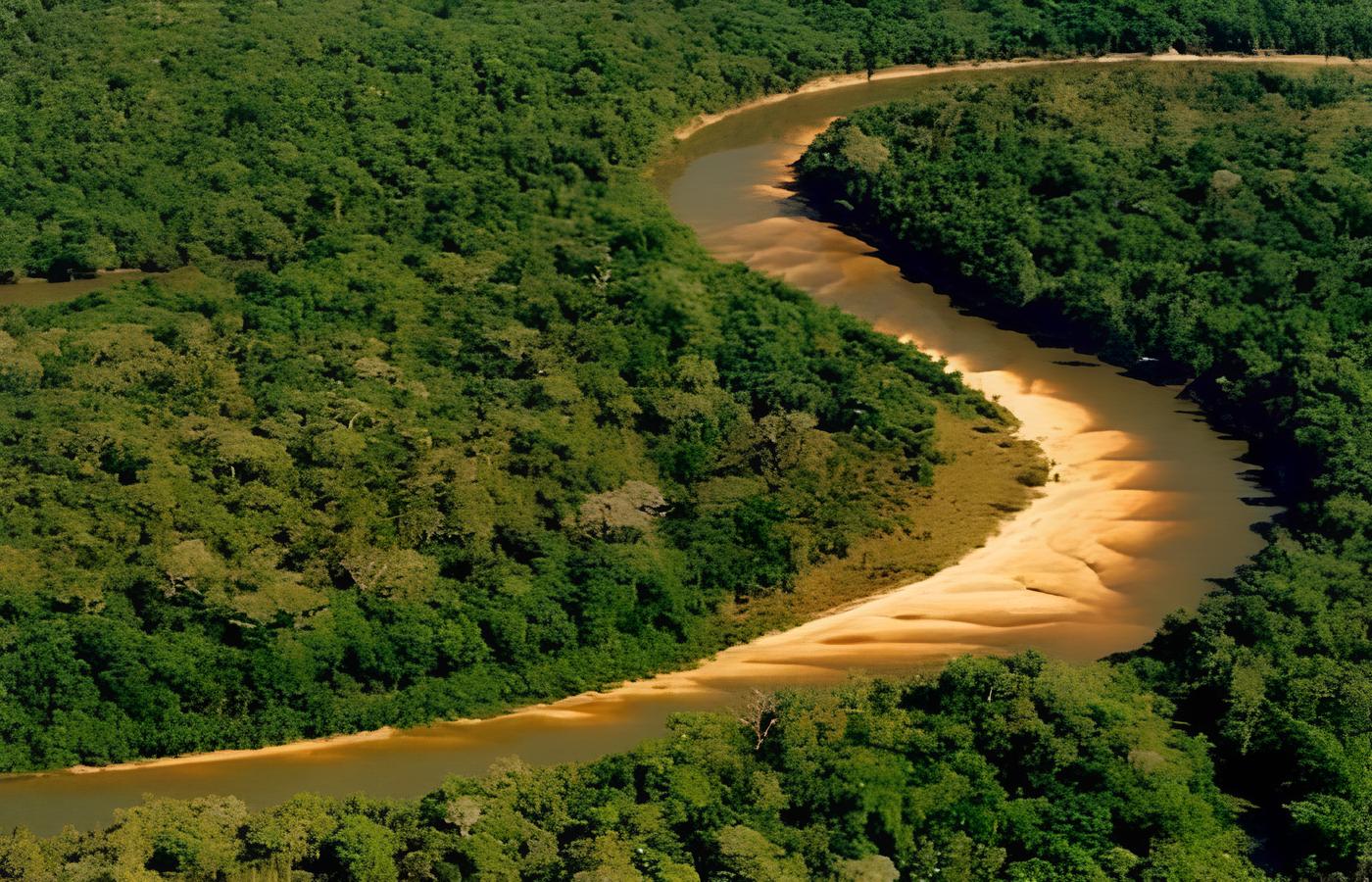


With 20,000 km², Bananal Island in Tocantins Is Larger Than Israel and the Largest River Island in the World. A Natural Giant That Unites Cerrado, Amazon, and Indigenous Cultures.
In the heart of Brazil, between the Araguaia and Javaés rivers, lies a natural giant that few truly know: Bananal Island. With approximately 20,000 km² in area, it is so large that it surpasses entire countries, such as Israel, Slovenia, or El Salvador, and holds the official title of the largest river island in the world.
Located in the state of Tocantins, the island stretches over 350 km in length and up to 80 km in width, forming an immense floodplain. Its grandeur impresses not only by geographical size but also by the richness of ecosystems it hosts: Bananal Island is the meeting point of two of the country’s most important biomes, Amazon and Cerrado.
The Formation of a Giant
Bananal Island was shaped by thousands of years of action from the Araguaia and Javaés rivers. These two waterways, by dividing their currents, isolated a portion of land that began to grow continuously due to sediment deposition.
-
Bokashi, a Japanese technique of controlled fermentation, becomes the organic fertilizer that revitalizes the soil: it activates microorganisms and earthworms, improves pH and moisture retention, gradually releases nutrients, and helps prevent pests in the garden.
-
Archaeologists found giant shoes over 30 centimeters near Hadrian’s Wall that survived nearly two thousand years buried and now raise a mystery: who were these Roman soldiers so different from the others?
-
Meta’s new smart glasses are not just for seeing; they use artificial intelligence, analyze your food, summarize messages, and can even change the way you work in professions like engineering.

-
According to an analysis by NASA, only one human-made structure is visible from space, and it is not the Great Wall of China or the Pyramids of Egypt.



The result is a massive island, where the waters create a mosaic of lagoons, floodable fields, gallery forests, and open cerrados.
During the flood season, vast areas are submerged, turning the landscape into a water mirror dotted with vegetation. In the dry season, extensive river beaches and endless green fields emerge. This alternation between flood and drought makes the island a living laboratory of ecological resilience.
Unique Biodiversity on the Planet
Bananal Island is considered an ecological sanctuary. Its biodiversity includes:
- More than 800 bird species, including hyacinth macaws, Jabirus, and Harpy eagles.
- About 200 fish species, such as peacock bass and catfish.
- Jaguar, tapirs, giant anteaters, and marsh deer, among the more than 100 recorded mammals.
- Iconic reptiles, such as caimans and anacondas, which find ideal breeding environments in the flooded areas.
This diversity is favored precisely by the alternation of environments: sometimes dry fields, sometimes lakes and wetlands that renew each season. Additionally, the island plays an essential role as an ecological corridor, connecting areas of Cerrado and Amazon.
The Indigenous Territory of Bananal Island
The island is not just nature: it is also living culture. It is home to indigenous peoples such as the Javaé, Karajá, and Xerente, who preserve ancient traditions linked to the river, fishing, and ancestral stories.
For these peoples, Bananal Island is sacred territory. Their villages, rituals, and cosmologies reside there. The Karajá, for example, believe that the island harbors protective spirits that inhabit the waters. Their artifacts, such as dolls and ritual masks, are part of Brazilian cultural heritage.
Today, the island area is divided between the Araguaia National Park, established in 1959, and the Bananal Indigenous Reserve, which ensures the cultural and territorial preservation of indigenous peoples.
Challenges of Environmental Preservation
Even with protected area status, Bananal Island faces constant threats:
- Advancement of agribusiness in the surrounding area, which pressures the ecosystem and contaminates rivers with pesticides.
- Predatory fishing, which undermines the balance of aquatic species.
- Uncontrolled tourism, which can cause impacts without adequate planning.
- Climate change, which alters the natural cycle of floods and droughts, harming species that depend on this alternation.
Environmental organizations and public agencies are working to promote sustainable tourism. Boat tours, birdwatching, and regulated sport fishing are already expanding alternatives, but there is still a long way to go to balance preservation and economic development.
An Invisible Giant to Brazil
Despite its ecological and cultural importance, Bananal Island is still little known to the general public. While destinations like the Pantanal and Amazon receive international spotlight, the largest river archipelago in the world remains in the shadows, remembered only in school books or occasional news reports.
This invisibility contrasts with its relevance: preserving Bananal Island means preserving not only a Brazilian territory but a world heritage. It ensures the continuity of indigenous peoples, endangered species, and a unique ecosystem.
Why Bananal Island Matters
Bananal Island is proof of Brazilian grandeur. It is the materialization of how nature, over millennia, can create settings as vast and complex as any human-made work.
Its conservation is vital not only for Brazil but for the planet, as it plays a crucial role in maintaining biodiversity and regional climate balance.
It is also a reminder of the need to look inward: the country holds treasures that often go unnoticed, while the entire world recognizes them as unique.
More than a geographic curiosity, Bananal Island is a symbol of resistance of nature and indigenous culture. The future of its preservation will depend on the ability to balance tourism, environmental protection, and cultural appreciation.
If Brazil can maintain this balance, Bananal Island could establish itself not only as the largest river island in the world but as a model of harmonious coexistence between society and the environment.






Por que comparar a ilha do Bananal com um país que não existe?
País que não existe é a Palestina, pelo menos até agora. Israel é uma das nações mais antigas do mundo. Israel tem história, tem um povo que superou obstáculos e nenhum império da história os destruiu e jamais destruirá. Tu reconhecendo ou não, o mundo aceitando ou não, Israel sempre será Israel. Israel prevalecerá e você verá. O Deus de Israel não dorme.
Palestina ainda não existe como país reconhecido por todos os demais país independentes. Eu defendo a existência de um Estado Palestino, mas em um território que seja de fato deles.