





 Portuguese
  English
  Spanish
  8 min of reading
  1 comment


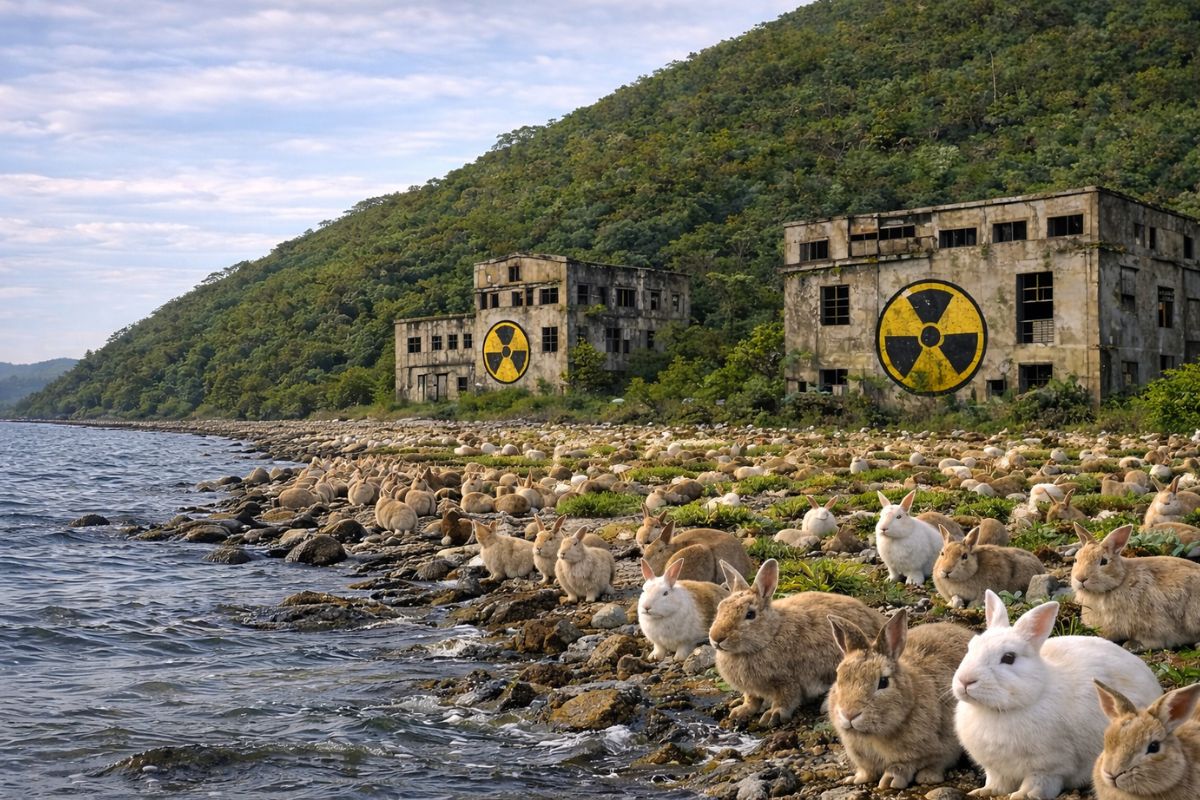


How The Rabbit Island In Japan Hid Chemical Weapons And Toxic Gas In The History Of Okunoshima And Today Lives Off Tourism On The Rabbit Island.
The Rabbit Island in Okunoshima seems today like a scene from a Japanese fairy tale: hundreds of rabbits running free, tourists taking photos, children laughing and ferries arriving all day long. But behind this cute image lies a past that Japan tried to hide from the world. Just a few kilometers from Hiroshima, this tranquil island was once synonymous with war, toxic gas, and official silence.
For decades, the rabbit island simply did not exist on official maps. While civilians took boats to work every day, the Imperial Japanese Army used the place to produce chemical weapons on an industrial scale. Today, military ruins, the toxic gas museum, and discreet monuments coexist with rabbits eager for tourist food, recent stories of mistreatment, and a declared effort to transform horror into a message of peace.
A Paradise Of Rabbits A Few Kilometers From Hiroshima

The rabbit island is approximately 60 kilometers from Hiroshima, a city marked by the atomic bomb. From the coast, Okunoshima is just another island among many on the Japanese coast.
-
Italian researchers have detected what appears to be a second Sphinx buried under the sands of Egypt, and satellite scans reveal a gigantic underground megastructure hidden beneath the Giza Plateau for over 3,000 years.

-
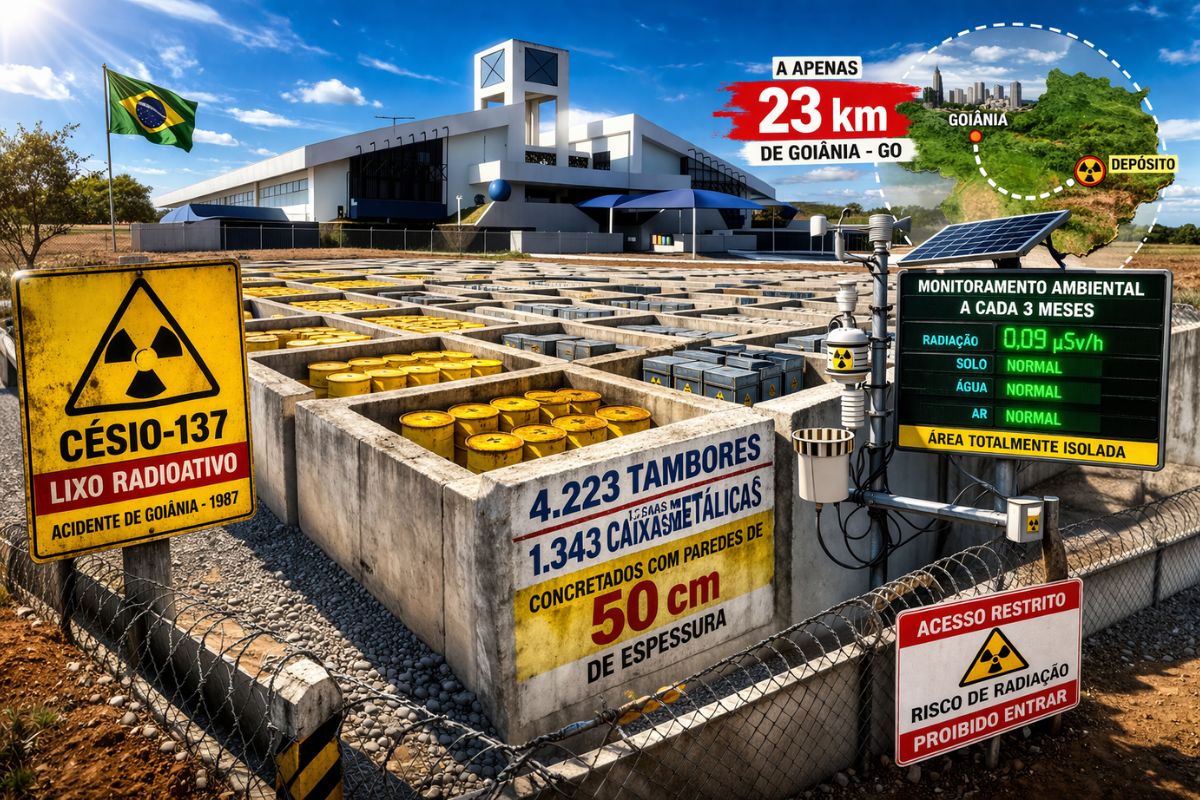
There are 4,223 drums and 1,343 metal boxes concreted with 50-centimeter walls that store the radioactive waste from Cesium-137 in the worst radiological accident in Brazil, just 23 kilometers from Goiânia, with environmental monitoring every three months.
-
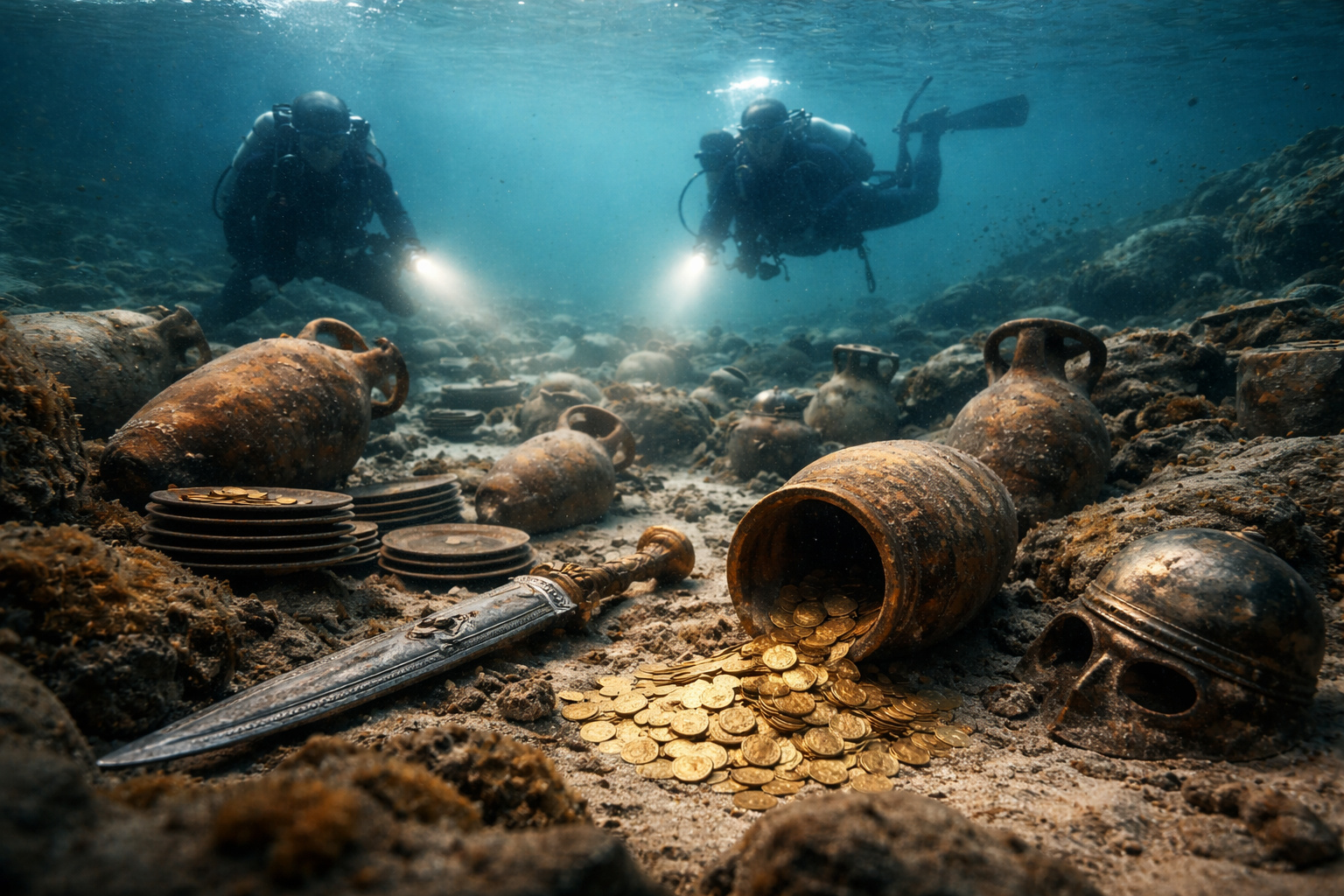
Giant Roman treasure found at the bottom of Lake Neuchâtel in Switzerland reveals an advanced trade system, circulation of goods, and armed escort in the Roman Empire about two thousand years ago.
-
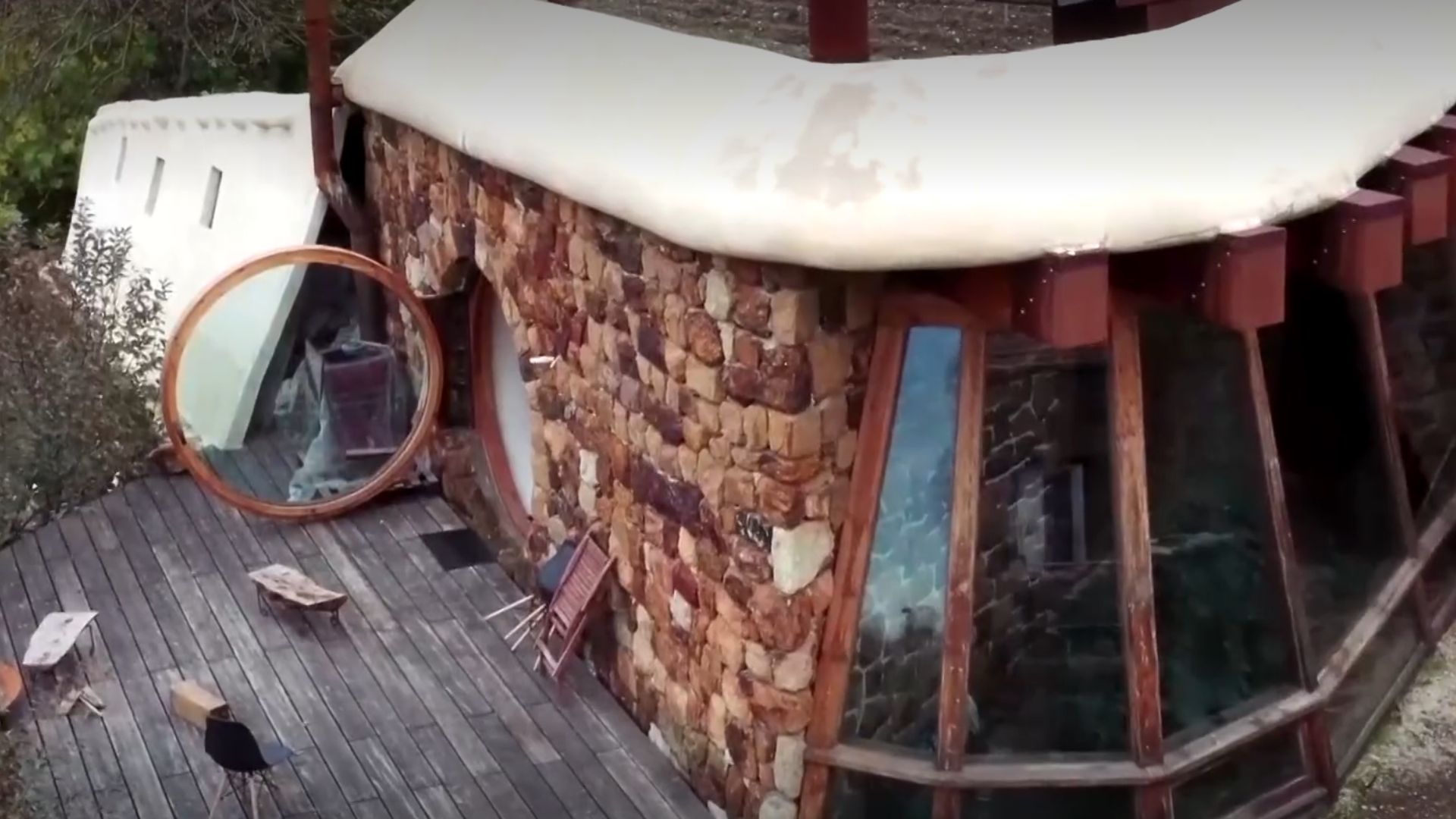
He buried 1,200 old tires in the walls to build his own self-sufficient house in the mountains with glass bottles, rainwater, and an integrated greenhouse.

Up close, it’s a different story: trails, cliffs, ruins, a large hotel with a restaurant, barbecue areas, a visitor center, and rabbits everywhere.
It is said that there are now about 500 rabbits living freely on the island. Before the pandemic, the estimated number was around a thousand. They approach visitors, follow people, tug on bags, and wait for food. Basically, the rabbits’ food supply depends on tourism, which brings people and food throughout the year.
How The Rabbit Island Became A Secret Base For Chemical Weapons
Long before it was known as Rabbit Island, Okunoshima played a completely different role.
In 1902, the site was established as a military fort for aerial and naval defense. Over time, the structure grew: batteries, cannons, defensive positions, anti-aircraft, and anti-ship bases.
By around 1924, the darkest phase began. The island started to be used to manufacture toxic weapons. Different types of gases, such as lewisite, were produced there and stored in large tanks.
Each storage facility could hold several ten-ton tanks, totaling tens of tons of gas in a single location.
In total, around 6,600 tons of toxic gases were produced on that small island. It was a secret military program, directly tied to the Imperial Army.
Many tests were conducted on people, including Chinese individuals used as guinea pigs, something that is now openly presented in the historical materials of the site.
The Museum Of Toxic Gases And The Attempt To Transform Horror Into Peace
Among the ruins overtaken by vegetation and abandoned buildings, a discreet space draws attention: the Museum of Toxic Gases. It’s a small museum, but it focuses on the most direct part of the official narrative about the island’s past.
Here it is explained, in simple language, that the island was used for research, production, and storage of chemical weapons.
Panels remind visitors of human testing, the impact on civilians’ health, and the military decisions that transformed Okunoshima into a sensitive point in modern Japanese history.
The museum’s declared goal is to raise awareness about the misuse of chemical weapons, emphasizing that what was done there was wrong and that such weapons should not exist in the world. There is a clear effort to connect the past of Rabbit Island to a message of peace and historical responsibility.
The Island That Was Erased From Official Maps

During World War II, the secret was taken to the extreme. The production of gases was considered so sensitive that the island simply did not appear on official maps.
The situation was paradoxical. The island was easily visible from the coast. People took boats to go to work there every day.
But, in official documents, it had “disappeared”. In practice, this was facilitated by the fact that the region was full of islands: with so many patches of land in the sea, one more or one less island did not draw much attention.
With no internet, no modern verification systems, and in the midst of war, almost no one outside the military circle noticed the maneuver. The Rabbit Island was, at that moment, a physically existing island that did not exist on paper.
Post-War: Tanks Dumped Into The Sea And Civilians Falling Ill
When Japan lost the war in 1945, a race began to dismantle factories, hide evidence, and try to get rid of gas stockpiles.
Tanks full of gas were thrown into the sea in an attempt to quickly eliminate the risk while simultaneously erasing traces.
The problem is that this choice had consequences. Reports indicate that the local population began to suffer from skin diseases, respiratory problems, and other side effects associated with contact with toxic substances. Decades later, civilians were still suffering from impacts related to what had been dumped.
In 1985, a monument was erected in honor of the affected people and in protest against what happened there.
The message is clear: hiding the truth does not protect anyone in the long run. Hiding the island’s history was detrimental both to the population and to the country’s memory.
From Chemical Experiments To Tourist Rabbits: The Theories About Their Origin
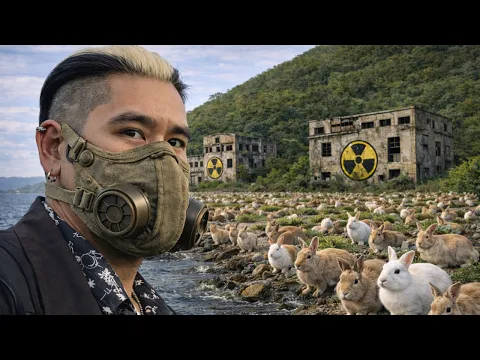

Today, everyone knows Okunoshima as Rabbit Island, but there is no single official version of how these animals took over the place. There are two main theories, repeated by those who visit or study the island.
One of them says that the rabbits were used in chemical experiments during the military period. At the end of the war, they would have been released on the island. Without natural predators, the population grew freely.
The other theory, more recent and more “comfortable” for many, states that in the 1970s, a group of students brought nine rabbits to the island and released them there. Over time, without predators and in a favorable environment, the number of animals exploded.
Today, it matters little which theory is true. The fact is that the island has become a very popular tourist destination. The image of rabbits running free among military ruins has become the hallmark of the place.
Cute Rabbits, Intense Tourism, And A Delicate Balance
The typical experience of those who visit Rabbit Island involves taking the ferry, buying food in bags at the terminal, walking or renting a bicycle, and spending the day feeding and photographing rabbits. Many animals allow tourists to approach, touch, and pet them. Their fur is described as very soft, almost like a kitten’s.
The rabbits follow people, surround those with food, and even try to pull on bags. It is very relaxing to observe their expressions as they eat, with half-closed eyes, focused on the food.
At the same time, this dependence on tourism is fragile. During the Covid pandemic, the drop in the number of visitors reduced the amount of food and, according to reports, the number of rabbits also decreased. It is unclear whether there is a structured feeding program when the flow of tourists is low.
77 Rabbits Dead In 2024: The Dark Side Of Mass Tourism
Behind the cute scenes, not everything is good news. In November 2024, 77 dead rabbits were found on the island, all with one common pattern: broken bones. The number shocked those who follow the routine of Okunoshima.
Months later, tourists caught a Japanese visitor kicking a rabbit. They called the police and the local security team.
When questioned, he said he wanted to see how the rabbits reacted to the harassment. He did not confess to being directly responsible for the previous deaths, but admitted that he had started kicking rabbits in October 2024, a month before the bodies began to appear.
This case exposes the more uncomfortable side of tourism: the same visibility that protects the island can also attract people willing to mistreat animals, even in a place that gained fame precisely for being a “cute refuge”.
Shinto Shrine, Religion, And Memory On Rabbit Island
Amid ruins, a museum, and rabbits, Okunoshima also houses a small Shinto shrine. A typhoon destroyed the main structure a few years ago, but people continue to leave coins, make reverences, and treat the place as sacred.
Shintoism, Japan’s native religion, gained prominence during the imperial era. The emperor is the central figure of this belief, and there was an explicit policy to strengthen Shinto temples over Buddhist ones, even demolishing many Buddhist temples to balance the number of both types.
On Rabbit Island, this religious layer adds to the military, chemical, and tourist layers. Okunoshima functions as a physical summary of various phases of modern Japanese history, from imperialism to mass tourism.
Hotel, Bicycles, Slow Bus, And The Routine Of An Island Full Of Rabbits
The island’s infrastructure is relatively simple, but sufficient to accommodate many visitors. There is a large hotel with a café and restaurant, serving dishes with rice, octopus, soup, pickles, sashimi, and beer.
To explore everything, many people rent bicycles, as the complete round trip is long to do only on foot. By bicycle, the journey takes about half an hour, passing through empty areas, high cliffs, and hidden spots with few rabbits. In some stretches, the feeling is one of total isolation.
From the hotel to the ferry terminal, there is a free bus. It goes very slowly because it has to swerve to avoid rabbits crossing the road.
There are warnings about sudden stops. Even so, the pace is about ten kilometers per hour, almost a leisurely walk.
The ferry arrives full, the visitor center sells food, families sit in barbecue areas, and the rabbits dig holes in the lawn. It is, at the same time, an extremely cute island and a place with one of the heaviest histories in the region.
A Cute, Tragic Island Full Of Unanswered Questions
When searching today for Okunoshima on the map, the island appears without mystery. The path is relatively easy, with a feasible bullet train detour and regular ferries.
Everything is visible, marked, and open. But the memory of what was hidden there remains present in the walls, signs, and discreet monuments.
The Rabbit Island is, at the same time, a sanctuary for friendly animals, a laboratory of historical consciousness, and an example of how a place can carry trauma and affection in the same landscape.
The military ruins, toxic gas museum, rabbits running, filled hotel, bus swerving around animals, the Shinto shrine without structure but filled with coins, all coexist within a few square kilometers.
In the end, the question that remains is simple and uncomfortable: how to balance tourism, war memory, and animal protection in a place that became a symbol of cuteness but was born from secrecy and violence?
And you, knowing all this history of Rabbit Island, would you like to visit Okunoshima to see everything up close or do you prefer that this type of place remain just a distant curiosity on your cellphone screen?









Gostei da história